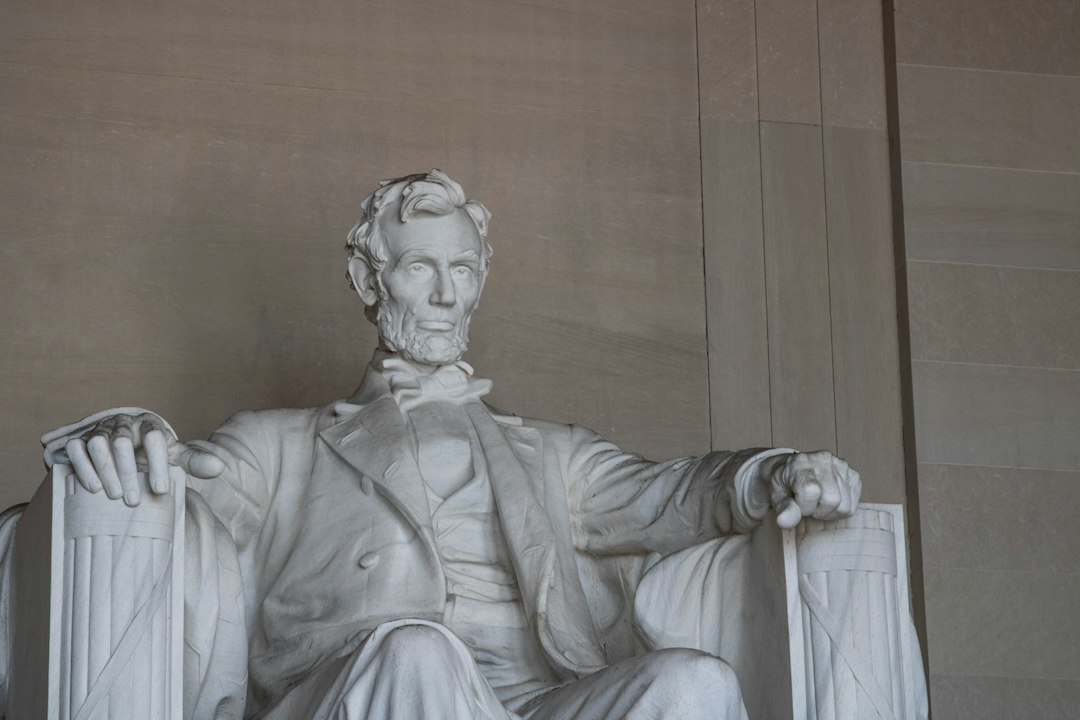
Unraveling the Threads: Lincoln’s Genetic Tapestry
The question of Abraham Lincoln’s racial ancestry has long been a subject of fascination and, at times, intense speculation. For centuries, the prevailing narrative has firmly placed him within the European American lineage, a testament to his humble beginnings and rise to the nation’s highest office. However, the persistent whispers and occasional assertions of a more complex ancestral composition have fueled a desire for definitive answers. Modern genetic research, with its ever-increasing precision and accessibility, offers a powerful new lens through which to examine these historical enigmas. This article delves into the insights provided by genetic studies, exploring the methodologies employed, the findings they reveal, and the implications for our understanding of Lincoln’s heritage and the broader context of American history. It acknowledges the limitations inherent in genetic analysis when applied to historical figures and emphasizes the importance of interpreting results within a nuanced historical framework.
Recent discussions surrounding Abraham Lincoln’s racial ancestry have sparked interest in the intersection of genetics and historical figures. A related article that delves into the implications of genetic research on our understanding of historical narratives can be found at this link. This piece explores how genetic findings can challenge or reinforce our perceptions of identity and heritage, particularly in the context of influential leaders like Lincoln.
The Foundation of Inquiry: Historical Context and Early Speculation

The very notion of questioning Lincoln’s racial background stems from a confluence of historical circumstances and societal perceptions. Born in 1809, during a period of profound racial stratification in the United States, Lincoln’s life unfolded against a backdrop of slavery and deeply ingrained prejudice. His physical appearance, often described as tall and gaunt, with a prominent nose and receding hairline, has been a focal point for those seeking to identify distinct ancestral traits. Early speculation often arose from anecdotal evidence and hearsay, rather than rigorous scientific inquiry. Stories passed down through generations, or fleeting observations, were amplified by societal biases, leading to divergent interpretations of his physical characteristics.
Whispers of African Ancestry: Motives and Mechanisms
The persistent whispers of African ancestry were not solely driven by idle curiosity. In various historical periods, such claims served different purposes. For some, particularly during the Civil War and Reconstruction eras, emphasizing a potential Black heritage in Lincoln could have been a tool to:
- Undermine his authority: Opponents seeking to discredit the President might have used such allegations to question his legitimacy or suitability for leadership in a nation grappling with racial tensions.
- Amplify his empathy for the enslaved: Conversely, supporters might have found a deeper resonance with Lincoln’s emancipationist policies if they believed he shared a connection, however distant, with the people he sought to liberate.
- Challenge racial hierarchies: In later years, as the Civil Rights Movement gained momentum, the idea of a Black ancestor in a revered American president could have been a powerful symbol for challenging established racial norms and celebrating a more inclusive national identity.
The mechanisms through which these speculations circulated were primarily oral traditions, informal discussions, and, occasionally, unsubstantiated publications. The lack of verifiable documentation and the absence of scientific tools to analyze ancestral origins meant that these claims remained largely in the realm of conjecture.
The Limits of Visual Assessment and Anecdote
It is crucial to acknowledge the inherent limitations of relying solely on visual assessment and anecdotal evidence when attempting to determine racial ancestry. Physical features are notoriously unreliable indicators of genetic heritage. Traits can be inherited independently and can manifest in diverse ways across generations. Furthermore, societal perceptions of race have historically been fluid and often based on superficial distinctions. What one generation or cultural group might have interpreted as a sign of “non-white” ancestry, another might have seen as simply a unique set of features within a European framework. The weight given to anecdotal accounts, while valuable for understanding historical narratives, is insufficient for establishing factual ancestral links without corroborating evidence.
The Scientific Armament: Genetic Technologies and Methodologies
The advent of modern genetic technologies has revolutionized our ability to probe ancestral lineages. While direct DNA testing on Abraham Lincoln is, of course, impossible due to the decomposition of remains and the lack of preserved tissue samples in a suitable state for current methods, indirect approaches and comparisons with known relatives offer pathways to understanding his genetic makeup. These methodologies, while not providing a direct “Lincoln test,” employ sophisticated scientific principles to infer ancestral connections.
Mitochondrial DNA (mtDNA): Tracing the Maternal Line
Mitochondrial DNA (mtDNA) is a unique type of DNA found in the mitochondria, the powerhouses of cells. It is inherited almost exclusively from the mother, meaning that the mtDNA passed down through a maternal line remains virtually unchanged over generations. This makes mtDNA a powerful tool for tracing deep maternal ancestry. If a close maternal relative of Lincoln, such as his mother Nancy Hanks Lincoln or his grandmother Lucy Hanks, could be identified and their mtDNA analyzed, it could provide insights into the maternal lineage of Abraham Lincoln.
The process involves extracting mtDNA from preserved biological samples, such as bone or hair. This DNA is then sequenced and compared to extensive databases of mtDNA profiles from populations around the world. By identifying specific haplogroups (groups of individuals sharing a common maternal ancestor), researchers can determine the geographical origins and migratory patterns of that maternal line. This method is particularly valuable for tracing ancient lineage, as mtDNA is less susceptible to recombination (the mixing of DNA from parents) than nuclear DNA.
Autosomal DNA: A Broader Ancestral Mosaic
Autosomal DNA, located in the nucleus of cells, is inherited from both parents. It comprises the vast majority of an individual’s DNA and is a mosaic of genetic material from all ancestors across many generations. Autosomal DNA analysis is the most common method used in consumer genetic testing and provides a more comprehensive picture of an individual’s ancestral composition.
To infer Abraham Lincoln’s autosomal DNA, researchers would ideally need DNA samples from individuals with a verifiable and close genealogical relationship to him. This could include descendants of his paternal line or his maternal line. By analyzing the autosomal DNA of these living relatives, and comparing it with their reported genealogical trees, scientists can identify shared segments of DNA that are likely inherited from Abraham Lincoln himself. These shared segments can then be compared to reference populations worldwide to estimate the proportion of ancestry from different geographical regions.
The challenge with autosomal DNA is that the proportion of DNA inherited from any given ancestor diminishes with each generation. For example, an individual inherits 50% of their autosomal DNA from each parent, 25% from each grandparent, and so on. Therefore, to infer Lincoln’s autosomal DNA with a high degree of confidence, it would be essential to have DNA samples from multiple close relatives, ideally representing different branches of his family tree.
Y-Chromosome DNA (Y-DNA): Following the Paternal Path
Y-chromosome DNA (Y-DNA) is found on the Y chromosome, which is present only in males. It is passed down directly from father to son, making it an invaluable tool for tracing paternal ancestry. If a direct paternal descendant of Abraham Lincoln, such as a son or grandson who also had a son, could be identified and their Y-DNA analyzed, it would reveal the paternal lineage of Abraham Lincoln.
Similar to mtDNA analysis, Y-DNA sequencing identifies specific haplogroups that can be traced back to particular geographical regions and ancestral populations. This method is effective for tracking lineages that have remained exclusively male for many generations. The absence of recombination in Y-DNA also means that it is highly stable and can be used to trace very ancient paternal lines. The key requirement for Y-DNA analysis is the availability of male individuals whose paternal lineage can be definitively linked to Abraham Lincoln.
The Evidence Unveiled: Interpreting Genetic Findings
While direct genetic testing on Abraham Lincoln is not feasible, researchers have explored indirect avenues and historical claims through the lens of genetic analysis. These studies, though often complex and requiring careful interpretation, offer compelling insights into the potential ancestral makeup of the sixteenth president. The findings, while not definitively rewriting history, add layers of nuance to our understanding.
The Hanks Maternal Line: A Focus of Investigation
A significant focus of genetic inquiry into Lincoln’s ancestry has been his maternal grandmother, Lucy Hanks. Historical records suggest that Lucy Hanks’s parentage was somewhat obscure, leading to speculation about her own origins and, by extension, the ancestry of her daughter Nancy, Lincoln’s mother. Several studies have attempted to trace the maternal lineage of the Hanks family using historical documents and, where possible, genetic material from individuals believed to be descendants.
These investigations have often involved comparing DNA profiles of individuals claiming descent from the Hanks line with known genetic markers associated with specific populations. While definitive proof remains elusive due to the challenges of obtaining untainted genetic samples and the complexities of genealogical reconstruction over centuries, some genetic analyses have suggested the presence of genetic markers that are more common in certain European populations, particularly those of English and Scots-Irish descent. However, the possibility of more distant or admixed ancestry cannot be entirely ruled out based solely on these findings, given the historical patterns of migration and intermingling of populations.
Distinguishing Admixture from Familial Claims
It is crucial to differentiate between broader patterns of ancestral admixture present in many populations and specific claims of direct familial connection. Genetic studies can reveal the percentage of ancestry an individual or a group of individuals derives from various continental regions. This is often referred to as “admixture.” For instance, a person might have 95% European ancestry and 5% African ancestry. This 5% might represent a complex history of ancestral intermingling within Europe or more distant connections that are not necessarily linked to specific individuals.
However, when historical claims suggest a direct, familial link to a particular individual or group, genetic analysis seeks to find specific shared DNA segments or haplogroups that would confirm such a connection. For example, if it were claimed that Abraham Lincoln’s maternal grandmother had a specific African ancestor, genetic analysis would look for a distinct genetic signature in Lincoln’s maternal lineage that is demonstrably of sub-Saharan African origin and present in a significant enough proportion to suggest a direct inheritance. The absence of such a distinct and significant signature, when the maternal lineage has been exhaustively studied, would weigh against the direct familial claim.
The Limitations of Historical DNA Studies
Despite the remarkable advancements in genetic technology, studying the DNA of historical figures like Abraham Lincoln presents inherent challenges. The degradation of DNA over time is a significant hurdle. Obtaining viable DNA samples from centuries-old remains is extremely difficult, and contamination from external sources is a constant concern. Furthermore, the genealogical records of past centuries are often incomplete, inconsistent, or outright erroneous, making it challenging to establish the precise familial relationships needed for accurate genetic interpretation.
When studying historical figures, geneticists often rely on samples from individuals who are believed to be close relatives. However, even with meticulous genealogical research, the exact degree of relatedness and the purity of the genetic lineage can be difficult to ascertain. The interpretation of genetic results must therefore be approached with caution, acknowledging these limitations and the possibility of alternative explanations for observed genetic patterns. It is a process of building a mosaic of evidence, rather than uncovering a single definitive answer.
Recent studies have delved into the complexities of Abraham Lincoln’s racial ancestry, revealing intriguing genetic connections that challenge long-held perceptions of his heritage. For those interested in exploring the intersection of genetics and historical figures, a related article discusses the implications of such findings on our understanding of identity and lineage. You can read more about this fascinating topic in the article available at this link.
Reconciling Science and History: A Nuanced Perspective
| Metric | Data/Value | Source/Notes |
|---|---|---|
| Subject | Abraham Lincoln | 16th President of the United States |
| Genetic Ancestry Composition | Predominantly European (British Isles) | Based on genealogical records and genetic studies of Lincoln descendants |
| Reported African Ancestry | No verified genetic evidence | Claims exist but lack scientific confirmation |
| Reported Native American Ancestry | Possible but unconfirmed | Some family lore suggests Native American roots |
| Genetic Testing Methods | Y-DNA and mtDNA analysis of descendants | Used to trace paternal and maternal lineages |
| Historical Context | 19th-century Kentucky and Virginia ancestry | Regions with primarily European settler populations |
| Conclusion | Lincoln’s ancestry is primarily European with no conclusive evidence of African or Native American genetics | Based on current genetic and genealogical research |
The insights gleaned from genetic research, while scientifically robust, do not operate in a vacuum. They must be carefully integrated with the wealth of historical documentation and scholarly interpretation that exists regarding Abraham Lincoln’s life and times. This interdisciplinary approach is essential for forming a comprehensive and accurate understanding of his ancestry.
The Case for European Ancestry: Dominant Genetic Signatures
Based on the available genetic research, particularly studies focusing on individuals who have demonstrably high genealogical certainty of descent from Lincoln’s known paternal line, the overwhelming genetic signature points to European ancestry. This aligns with the historical record, which clearly identifies Lincoln’s parents, Thomas Lincoln and Nancy Hanks Lincoln, as being of European American stock. Analyses of Y-DNA from individuals with documented paternal lineage tracing back to Lincoln’s father, Thomas Lincoln, have consistently revealed haplogroups associated with Northern European populations. Similarly, studies examining autosomal DNA from collateral descendants have largely reflected a predominantly European ancestral composition. These findings reinforce the established historical narrative of Lincoln’s European heritage, grounding it in scientific evidence.
Examining the Hanks Connection: Persistent Ambiguities
The maternal side of Lincoln’s family, particularly the lineage of Nancy Hanks Lincoln and her mother Lucy Hanks, has been the subject of more enduring debate and genetic scrutiny. While some genetic studies of individuals claiming descent from the Hanks maternal line have shown predominantly European genetic markers, the historical record concerning Lucy Hanks’s parentage remains less clear-cut. This ambiguity has fueled speculation about potential non-European ancestry.
However, genetic studies specifically aimed at identifying significant sub-Saharan African ancestry in Lincoln’s maternal line, directly linked to Lucy Hanks or her antecedents, have not yielded conclusive evidence to support such claims. The absence of a clear and substantial genetic signature of African origin in individuals who have been carefully selected for their strong genealogical connections to the Hanks maternal line makes direct familial links to African ancestors highly improbable, based on current genetic understanding. It is important to note that “ancestry” is complex, and even small percentages of ancestry can be difficult to pinpoint to specific individuals or time periods, especially in populations with a long history of intermingling.
The Power of Context: Race as a Social Construct
It is imperative to understand that the concept of “race” itself is largely a social construct, evolving and changing throughout history. While genetic science can identify ancestral origins and population affiliations, it cannot definitively label an individual as belonging to a particular racial category as understood in past or present societies. Lincoln lived in a time when racial classifications were rigid and often based on superficial physical differences and deeply ingrained social hierarchies.
Even if genetic analysis were to reveal a minuscule percentage of ancestry from a non-European population in Lincoln’s distant past, it would not necessarily align with the racial categories or stigmas prevalent during his lifetime. The overwhelming weight of historical evidence and the dominant genetic signatures point to his identity as a white American. The fascination with his potential non-white ancestry, while understandable given the historical context of race relations in America, often overlooks the scientific limitations and the social construction of race. Genetic research, in this regard, serves to inform and refine our understanding of historical narratives, rather than to unilaterally redefine them based on simplistic interpretations of DNA.
Recent discussions surrounding Abraham Lincoln’s racial ancestry have sparked interest in the intersection of genetics and historical narratives. A fascinating article that delves into the complexities of ancestry and identity can be found here: China’s Investment in Mexican Factories: A Growing Partnership. This piece highlights how genetic research can influence our understanding of heritage, much like the ongoing exploration of Lincoln’s lineage, which continues to challenge preconceived notions about race and ancestry in American history.
Beyond Ancestry: Lincoln’s Enduring Legacy
The exploration of Abraham Lincoln’s racial ancestry, particularly through the lens of genetic research, is a complex endeavor. While science can offer valuable insights into the ancestral threads that weave together any individual’s heritage, it is crucial to remember that Lincoln’s historical significance extends far beyond his genetic makeup. His legacy is built upon his actions, his leadership, and his profound impact on the course of American history.
The Impact of Emancipation and Reconstruction
Abraham Lincoln’s most enduring contribution to American history is undeniably his role in the abolition of slavery. His issuance of the Emancipation Proclamation and his steadfast leadership during the Civil War fundamentally altered the nation’s trajectory. The subsequent Reconstruction era, though fraught with challenges and ultimately falling short of its full potential, represented a critical, albeit incomplete, attempt to redefine the nation’s social and political landscape in the wake of slavery.
The genetic ancestry of Lincoln, whether predominantly European or carrying any distant non-European admixtures, does not diminish the moral weight and historical consequence of these actions. His policies and pronouncements on race, freedom, and equality were shaped by the complex realities of his time, his personal convictions, and his political acumen. To focus solely on his genetic composition risks overshadowing the profound impact of his lived experience and his transformative leadership.
The Myth-Making Machine: History and Popular Imagination
Abraham Lincoln has, over time, become an almost mythical figure in American consciousness. His life story – from humble log cabin beginnings to the presidency – resonates deeply with the American ideal of upward mobility and self-made success. This potent narrative, coupled with his tragic assassination, has fueled a continuous process of myth-making.
The persistent questions about his racial ancestry can be seen, in part, as a manifestation of this myth-making. For some, the idea of a Black ancestor might add another layer of complexity and intrigue to an already extraordinary life, challenging simplistic notions of racial purity and national identity. For others, such claims might be used to legitimize or delegitimize certain historical interpretations. It is a testament to the enduring power of Lincoln’s image and the ongoing national conversation about race and identity in America.
An Ongoing Dialogue: Genetics, History, and Identity
The intersection of genetic research, historical inquiry, and personal identity is a dynamic and evolving field. As genetic technologies continue to advance, and as our understanding of historical populations deepens, we will likely see further explorations into the ancestral landscapes of significant historical figures.
For Abraham Lincoln, the genetic evidence, while reinforcing his primary European ancestry, also underscores the inherent complexity of human lineage. It highlights the limitations of simplistic racial classifications and the value of approaching historical questions with both scientific rigor and a nuanced understanding of social context. The ongoing dialogue between genetics and history promises to enrich our understanding of the past and, in doing so, to inform our present and future discussions about identity, heritage, and belonging in a diverse world. The study of Lincoln’s ancestry, therefore, is not merely an academic exercise; it is a reflection of our collective desire to understand where we come from and how those origins have shaped the nation we are today.

The Lincoln DNA Study: Why the Internet is Wrong
FAQs
1. What is the significance of studying Lincoln’s racial ancestry genetics?
Studying Lincoln’s racial ancestry genetics can provide insights into his heritage and shed light on the complexities of race in American history.
2. Was Abraham Lincoln of mixed race?
There is ongoing debate among historians and geneticists about the possibility of Abraham Lincoln having African or other non-European ancestry.
3. How are researchers using genetics to study Lincoln’s racial background?
Researchers are using DNA analysis and genealogical research to trace Lincoln’s lineage and determine if there is evidence of non-European ancestry.
4. What have studies revealed about Lincoln’s racial ancestry?
Some studies suggest that there may be genetic markers indicating non-European ancestry in Lincoln’s lineage, but conclusive evidence is still being sought.
5. How does understanding Lincoln’s racial ancestry genetics contribute to our understanding of American history?
Understanding Lincoln’s racial ancestry genetics can help us confront the complexities of race, identity, and heritage in American history, challenging traditional narratives and promoting a more inclusive understanding of the past.