The Greenland ice sheet, a vast and formidable expanse of frozen territory, harbors secrets beneath its shimmering surface. Among these buried relics of the past is Camp Century, a United States military installation established during the height of the Cold War. Once a bustling hub of activity, its existence was intentionally veiled from the public eye, shrouded in the secrecy befitting its strategic purpose. For decades, Camp Century remained largely lost to memory, a ghost of a bygone era. However, recent scientific endeavors, driven by the need to understand the changing Arctic and the lasting environmental impacts of human activity, have brought this forgotten outpost back into the light. The discovery and ongoing study of Camp Century’s remains offer a poignant glimpse into the geopolitical tensions of the mid-20th century and the profound, often overlooked, environmental legacy of human endeavors in extreme environments.
The genesis of Camp Century is deeply intertwined with the escalating tensions of the Cold War. As the United States and the Soviet Union engaged in a prolonged ideological and military struggle, both nations sought to establish strategic advantages in the Arctic region. Greenland, a Danish territory with vast, sparsely populated landmasses, presented a unique opportunity. Its strategic location, bordering the Arctic Ocean and offering proximity to both North America and Europe, made it a prime candidate for military installations. The idea of a permanent military presence on the ice sheet was conceived as a way to project power, conduct research, and potentially house critical infrastructure that would be shielded from conventional attacks.
A Product of Strategic Vision
The overarching strategic vision behind Camp Century was multifaceted. It was designed to be more than just a military base; it was intended as a research facility, a staging ground for potential future operations, and a demonstration of technological prowess. The idea was to prove that it was possible to establish and maintain a significant presence deep within the Arctic ice, even in the face of extreme conditions. This ambition was fueled by a desire to outmaneuver the Soviet Union, which was also actively exploring the military potential of the Arctic. The very nature of the Cold War, characterized by a constant quest for technological and strategic superiority, spurred such audacious projects.
The Technological Imperative
The creation of Camp Century was a testament to the technological ambitions of the era. Building and sustaining a base within the ice sheet presented formidable engineering challenges. The United States poured significant resources into developing innovative construction techniques and life support systems capable of withstanding the crushing pressure of the ice and the brutal Arctic climate. This technological imperative was not solely for military purposes; it also pushed the boundaries of what was thought possible in terms of human habitation in extreme environments, contributing to advancements that had broader scientific and engineering applications.
The recent discovery of Camp Century remains beneath the Greenland ice has sparked interest in the implications of climate change and military history. This topic is closely related to discussions on security strategies in the face of environmental challenges. For further insights into how nations are adapting their security approaches in response to such changes, you can read the article on security strategies at Demystifying the Security Shoring Strategy.
Unearthing the Arctic Anomaly: The Rediscovery of Camp Century
For decades after its decommissioning, Camp Century faded into relative obscurity. The unforgiving nature of the Greenland ice sheet, coupled with the inherent secrecy surrounding its operations, meant that its location and the fate of its infrastructure became largely a matter of historical record rather than a physical reality readily accessible to researchers. However, as the Arctic has become a focal point for climate change research, scientists have increasingly turned their attention to areas that were once the domain of military strategists. This renewed interest, combined with advances in remote sensing and ice-penetrating radar, has led to the remarkable rediscovery of Camp Century’s remnants.
The Role of Climate Change Research
The changing climate of the Arctic has been a pivotal factor in the rediscovery of Camp Century. As temperatures rise and ice melts at an accelerated rate, previously inaccessible areas are being exposed. Scientists studying the Greenland ice sheet have been employing various technologies to map its subsurface and understand its dynamics. During these investigations, anomalies were detected that suggested the presence of buried structures. These findings, initially perplexing, pointed towards the possibility of a significant human presence beneath the ice, prompting further investigation into historical records.
Advancements in Geophysical Techniques
The rediscovery of Camp Century was significantly aided by advancements in geophysical techniques. Ice-penetrating radar, in particular, has become an indispensable tool for glaciologists and archaeologists alike. This technology allows researchers to effectively “see” through layers of ice, revealing subsurface features that would otherwise remain hidden. By analyzing the radar signatures, scientists were able to identify linear features and geometric patterns consistent with buried structures. These sophisticated imaging techniques provided the initial evidence that sparked a more dedicated search for the lost camp.
Cross-referencing Historical Archives
The geophysical findings were then cross-referenced with declassified historical archives. The United States military’s meticulous record-keeping, even for classified projects, proved invaluable. Documents detailing the construction, purpose, and eventual abandonment of Camp Century, along with maps and operational plans, helped researchers pinpoint the general location of the forgotten base. The convergence of modern geophysical data with historical evidence created a compelling narrative of rediscovery, transforming what was once a vague historical footnote into a tangible archaeological site.
The Hidden City Beneath the Ice: Life and Purpose at Camp Century
Camp Century was not merely a collection of tents or a temporary outpost; it was a remarkably sophisticated and ambitious undertaking, designed to function as a self-sufficient subterranean city. Established in 1959, its primary stated purpose was scientific research, particularly in the fields of glaciology and meteorology. However, beneath this veneer of scientific inquiry lay a more strategic, and indeed, clandestine objective: the construction of a network of tunnels and facilities capable of housing and launching nuclear missiles, a project codenamed “Project Iceworm.”
The Illusion of Scientific Endeavor
The façade of scientific research was a deliberate strategy to maintain secrecy and justify the immense cost and logistical complexities of building a base in such an inhospitable environment. Camp Century was presented to the public and to Denmark, the sovereign nation of Greenland, as a hub for cutting-edge scientific exploration. Researchers worked diligently, collecting invaluable data on ice cores, atmospheric conditions, and the geological makeup of the ice sheet. This scientific output was genuine and contributed significantly to our understanding of the Arctic environment.
Project Iceworm: The Strategic Undertaking
The true heart of Camp Century’s strategic importance lay in Project Iceworm. This audacious plan envisioned a vast network of underground tunnels, some extending for miles, designed to house mobile intercontinental ballistic missile launchers. The sheer scale of this project was staggering. The idea was that the ice sheet itself would serve as a natural shield, making the missile silos virtually undetectable and invulnerable to conventional attack. The mobile nature of the launchers would further enhance their survivability and operational flexibility.
The Practical Realities of Subglacial Habitation
Life at Camp Century, despite its technological sophistication, was undoubtedly a profound exercise in human resilience. The camp was constructed primarily by excavating tunnels and cavities within the ice, creating a network of interconnected modules and facilities. These included living quarters, laboratories, power generation units, and even a chapel. The operational challenges were immense, from maintaining a stable internal temperature against the crushing external cold to managing waste and ensuring a constant supply of power. The psychological toll of living in a confined, subglacial environment, far from civilization, must also have been considerable.
The Unforeseen Legacy: Environmental Concerns and the Future of Camp Century
The eventual abandonment of Camp Century in 1967, due to the shifting ice and the overwhelming logistical challenges, did not mark the end of its story. As the ice sheet slowly but inexorably moves, it carries with it the buried infrastructure of the former base. The rediscovery of these remains has brought to the forefront a new set of concerns: the potential environmental impact of a forgotten military installation now being slowly unearthed by a warming Arctic.
The Specter of Contamination
The most pressing environmental concern associated with Camp Century is the potential for contamination. The camp housed not only personnel and equipment but also a significant amount of fuel and potentially hazardous materials. As the ice melts and the structures are exposed, there is a risk that these substances could leach into the surrounding environment. This poses a threat to the fragile Arctic ecosystem, including its unique flora and fauna, and could potentially impact freshwater sources.
The Shifting Ice Sheet and its Consequences
The primary reason for Camp Century’s abandonment was the dynamic nature of the Greenland ice sheet. The ice is not a static entity; it flows and shifts, causing the buried structures to buckle and deform. This natural process, exacerbated by climate change, means that the camp’s remnants are gradually being moved towards the coast and potentially into the ocean. This migration presents a complex challenge for any potential remediation efforts, as the site is constantly changing and becoming more difficult to access and manage.
The Moral and Ethical Imperative
Beyond the immediate environmental risks, the rediscovery of Camp Century also raises moral and ethical questions. It serves as a stark reminder of the environmental footprint of past military endeavors, often undertaken with little consideration for long-term consequences. There is a growing imperative to address these forgotten legacies, not only to mitigate current risks but also as a lesson for future generations about responsible stewardship of sensitive environments. The burden of dealing with these remnants falls upon the current generation, who are tasked with rectifying the environmental oversights of the past.
Recent discoveries about the remains of Camp Century beneath the Greenland ice have sparked interest in the implications of climate change on historical sites. As scientists continue to study these remnants, it is essential to consider how rising temperatures are affecting other vulnerable regions around the world. For instance, the Maldives is facing a dire situation due to rising sea levels, which threatens its very existence. To learn more about this pressing issue, you can read about it in this article on the Maldives, a nation on the brink of collapse. For further details, visit this link.
Lessons from the Lost City: A Cold War Echo in a Warming World
| Location | Depth | Temperature | Condition |
|---|---|---|---|
| Greenland | Around 35 meters | Below freezing | Preserved due to ice |
The story of Camp Century, from its clandestine inception to its rediscovery beneath the melting ice, offers a profound and timely narrative. It is a testament to human ambition, ingenuity, and the often-unforeseen consequences of geopolitical conflict and technological advancement. As the world grapples with the accelerating impacts of climate change, the buried secrets of Camp Century serve as a potent reminder of the enduring environmental legacy of human activities, particularly those undertaken in fragile and remote regions.
The Double-Edged Sword of Technological Progress
Camp Century exemplifies the double-edged sword of technological progress. The same ingenuity that allowed for the construction of a subterranean base in the Arctic also laid the groundwork for potential environmental contamination. The pursuit of military advantage led to the creation of a site that now poses a threat to the very environment it was built upon. This serves as a crucial lesson: technological advancements must be tempered with a deep understanding of their potential long-term environmental and societal impacts.
A Symbol of a Bygone Era and a Foreboding Future
The lost Cold War camp is more than just an archaeological find; it is a potent symbol. It represents the intense paranoia and strategic posturing of the Cold War, a period when vast resources were dedicated to projects that were often hidden from public scrutiny. Simultaneously, its rediscovery in a rapidly warming Arctic world casts a foreboding shadow over our present and future. The melting ice that is revealing Camp Century is also a harbinger of the broader environmental challenges humanity faces.
The Call for Remediation and Responsible Stewardship
The ongoing discovery and assessment of Camp Century’s remains present a clear call for action. While complete removal of the buried infrastructure may be logistically impossible and environmentally damaging in itself, there is a pressing need for responsible stewardship and mitigation strategies. This includes meticulous monitoring for potential leaks, research into effective containment methods, and the development of plans to address the inevitable exposure of the site. Ultimately, the fate of Camp Century’s remnants underscores the urgent need for proactive environmental policies and a commitment to learning from the past to protect our planet’s future. The scientific community, in collaboration with governments and international bodies, must find a way to manage this complex and delicate situation, ensuring that the lessons learned from this subglacial ghost town contribute to a more sustainable and environmentally conscious future.
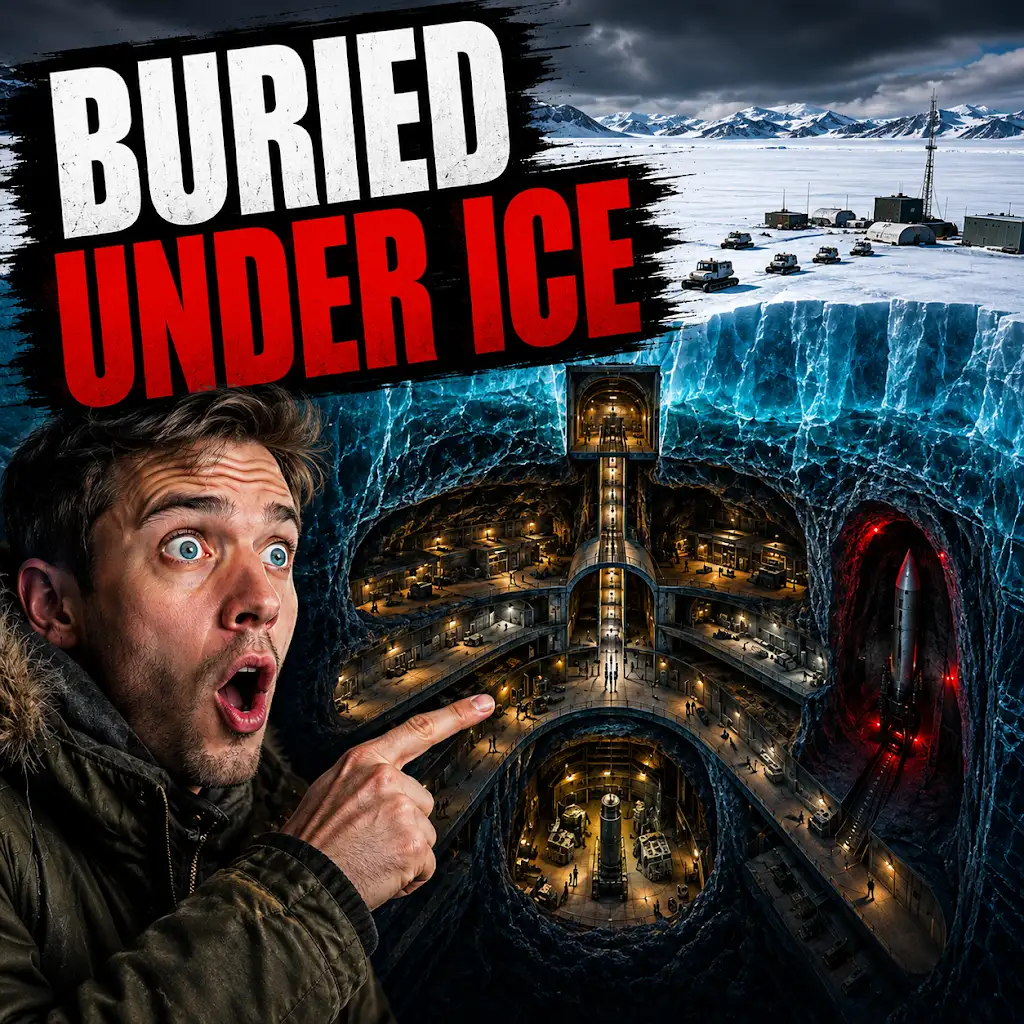
The U.S. Built a Nuclear City Under Greenland. The Ice Won.
FAQs
What is Camp Century?
Camp Century was a military base built by the United States in Greenland in 1959 as part of a secret Cold War project known as “Project Iceworm.” It was intended to house nuclear missiles and was also used for scientific research.
Why is Camp Century in the news?
Camp Century is in the news because a recent study has found that the remains of the camp, including buildings, sewage, and other waste, are at risk of being exposed as the Greenland ice sheet melts due to climate change.
What are the environmental concerns related to Camp Century?
The environmental concerns related to Camp Century stem from the fact that the camp was abandoned in 1967, leaving behind various pollutants and waste materials. As the ice sheet melts, these pollutants could be released into the environment, posing a threat to local ecosystems.
What are the potential geopolitical implications of the Camp Century remains being exposed?
The potential geopolitical implications of the Camp Century remains being exposed are related to the fact that the camp was built without the knowledge or consent of the Danish government, which has sovereignty over Greenland. This could lead to diplomatic tensions between the United States and Denmark.
What is being done to address the situation at Camp Century?
Efforts are being made to monitor the situation at Camp Century and assess the potential environmental and geopolitical implications. Additionally, discussions are ongoing between the United States and Denmark regarding the responsibility for addressing the remains of the camp.