The sands of time, ever-shifting and relentless, have buried countless secrets of humanity’s past. Among the most captivating are the whispers of lost technologies, marvels of engineering and understanding that seem to defy our current comprehension of ancient capabilities. These are not mere mythical artifacts; rather, they are tantalizing glimpses into a past where innovation flourished, only for its knowledge to fade, leaving behind enigmatic ruins and perplexing artifacts that fuel our curiosity and inspire awe. The study of these lost technologies is a journey into the unknown, a testament to the ingenuity of our ancestors and a constant reminder of how much we have yet to rediscover.
The discovery of the Antikythera Mechanism in 1901, aboard a Roman-era shipwreck off the coast of the Greek island of Antikythera, was nothing short of revolutionary. This incredibly complex geared device, dating back to the 2nd century BCE, is widely considered the world’s first analog computer. Its intricate arrangement of bronze gears, dials, and pointers suggests a sophisticated understanding of astronomy and mathematics that was previously thought to be centuries beyond the grasp of the ancient Greeks.
Decoding the Celestial Orrery
The primary function of the Antikythera Mechanism appears to have been astronomical prediction. Through its complex interlocking gears, it could accurately track the cycles of the sun and moon, predict eclipses, and even model the irregular motion of the planets as observed from Earth. The level of precision involved in its construction implies a deep and detailed knowledge of celestial mechanics, a level of understanding that was not fully replicated in European clockwork until the Renaissance.
The Astronomical Dials and Their Purpose
The mechanism features several distinct dials. The most prominent is the lunar dial, which tracks the phases of the moon and its position within the zodiac. Another dial likely represented the metonic cycle, a 19-year period that aligns the solar and lunar calendars, essential for accurate timekeeping and religious observances. The presence of pointers for the known planets – Mercury, Venus, Mars, Jupiter, and Saturn – further solidifies its role as a sophisticated astronomical calculator.
Gears of Unprecedented Complexity
The sheer number and precision of the gears within the Antikythera Mechanism are staggering. Some gears have as few as 23 teeth, while others have over 200. Their arrangement and meshing are so precise that even minute adjustments would have been necessary for accurate functioning. The manufacturing techniques required to create such finely wrought gears were thought to be impossible for the era, leading to extensive research and technological advancements in our ability to analyze and even replicate its internal workings.
The Mystery of its Creators and Demise
The origin and precise purpose of the Antikythera Mechanism remain subjects of debate. While it’s generally attributed to Greek ingenuity, the exact workshop or individual responsible is unknown. Theories suggest it may have been a teaching tool, a navigational aid, or even a sophisticated calendrical device for important civic or religious events. Its sinking with a shipwreck likely prevented its further dissemination and the eventual loss of its intricate knowledge.
The exploration of forgotten technology in ancient civilizations reveals fascinating insights into how these societies adapted to their environments and utilized available resources. For instance, the article on paleoclimate data highlights how understanding ancient climate patterns can shed light on the technological advancements of civilizations that thrived in challenging conditions. To learn more about this intriguing connection, you can read the article here: Uncovering Ancient Civilizations Through Paleoclimate Data.
The Legendary Pyramids of Giza: Engineering Marvels of the Ancient World
The pyramids of Giza, particularly the Great Pyramid of Khufu, stand as enduring testaments to the architectural and engineering prowess of ancient Egypt. For millennia, these colossal structures have captivated imaginations, prompting questions about the methods employed in their construction, the precision of their alignment, and the sheer human effort involved. While mainstream archaeology offers explanations, the scale and accuracy of these monuments continue to inspire debate and a sense of wonder.
Precision in Planning and Construction
The precision with which the pyramids were constructed is remarkable. The base of the Great Pyramid is almost perfectly square, and its sides are aligned with astonishing accuracy to the cardinal directions. The sheer scale of the blocks, some weighing many tons, and their seamless fitting together, present a significant engineering challenge.
The Enigma of Stone Quarrying and Transportation
Ancient Egyptians possessed the ability to quarry and transport massive blocks of stone, some weighing upwards of 80 tons. The exact methods used are still debated, but likely involved a combination of copper tools, levers, ramps, and possibly water for lubrication. The sheer logistical undertaking of moving these blocks from distant quarries to the construction site is a feat in itself.
The Role of Ramps and Lifting Mechanisms
Theories surrounding how the Egyptians raised these colossal stones to such heights vary. The most popular hypothesis involves elaborate systems of ramps, either straight, spiraling, or internal. However, the scale of such ramps for the Great Pyramid is immense, and evidence for their existence is debated. Other theories propose the use of levers, counterweights, or even a form of primitive crane, though definitive proof is scarce.
Astronomical Alignments and Purpose
Beyond their sheer scale, the pyramids exhibit remarkable astronomical alignments. The Great Pyramid, for instance, is precisely aligned to true north, a feat that would have required sophisticated astronomical observation and measurement techniques. The internal passages and chambers also possess specific alignments that have led to theories about their connection to celestial events or a deeper spiritual purpose.
The “King’s Chamber” and the “Queen’s Chamber”
The internal structure of the Great Pyramid, with its intricate passages leading to the King’s Chamber and the Queen’s Chamber, has long been a source of speculation. The precise dimensions and the alignment of these chambers, particularly the sarcophagus in the King’s Chamber, have led to theories connecting them to specific constellations or astronomical phenomena.
The Theories of a “Power Plant” or “Energy Generator”
Some fringe theories propose that the pyramids were not simply tombs but served as massive energy generators or even electrical power plants. These theories are often based on interpretations of the internal structure and the presence of certain materials, though they lack substantial scientific evidence and are not widely accepted by mainstream archaeology.
The Baghdad Battery: An Electrical Enigma from antiquity

The “Baghdad Battery,” also known as the Parthian Battery, is a collection of three clay jars, each containing a copper cylinder and an iron rod, discovered in Khuzistan, Iran, near the ancient city of Ctesiphon. Dating to the Parthian or Sasanian periods (roughly 250 BCE to 650 CE), these artifacts have sparked considerable debate about their potential use as rudimentary electrochemical cells, a form of ancient electricity generation.
The Electrifying Discovery and Hypothesis
When filled with an acidic electrolyte, such as vinegar or grape juice, the combination of copper and iron within the jars would create a galvanic reaction, producing a small electrical current. This has led to the hypothesis that these devices were used to generate electricity.
The Material Composition and Assembly
The jars are approximately 15 centimeters (6 inches) tall and 5 centimeters (2 inches) in diameter. Inside each jar, a hollow copper cylinder is found, and within the cylinder, an iron rod is placed. The precise arrangement suggests a deliberate design for generating an electrical current.
The Electrolyte: The Missing Piece of the Puzzle
While the jars themselves suggest a potential for generating electricity, the electrolyte that would have been used to complete the circuit is missing. However, the availability of acidic substances like vinegar, wine, or even fermenting fruit juices in ancient Mesopotamia makes the hypothesis plausible.
Potential Applications and Historical Context
The functional use of the Baghdad Battery remains a subject of speculation. If indeed they produced electricity, their applications could have been varied and, for their time, quite advanced.
Gilding and Electroplating
One of the most frequently suggested uses is for electroplating or gilding metal objects. A weak electrical current could have been used to deposit a thin layer of gold or other precious metals onto less valuable metals, a technique that would have been highly desirable for decorative purposes.
Medical and Therapeutic Uses
Another theory suggests they might have been used for rudimentary medical treatments, such as electroacupuncture or to create mild electrical shocks for therapeutic purposes. Ancient texts hint at various methods of pain relief and healing that involved electrical phenomena, though concrete evidence for this specific application is lacking.
Religious or Ritualistic Significance
It is also possible that the batteries had a religious or ritualistic purpose, perhaps to create a mysterious “divine spark” or to power small, glowing objects for ceremonial use. The element of surprise and the inexplicable nature of electricity could have been attributed to supernatural forces.
The Antediluvian Civilizations: Lost Knowledge of the Deep Past
Beyond the well-documented ancient civilizations, there are persistent whispers and enigmatic artifacts that hint at even older, more advanced cultures – civilizations that may have predated recorded history. These “antediluvian” societies, often relegated to myth and legend, are sometimes credited with possessing knowledge and technologies far beyond what is typically associated with the ancient world.
The Legends of Atlantis and Lemuria
The most famous of these legendary civilizations is Atlantis, described by Plato as a technologically advanced island nation that met a catastrophic end. While its existence is debated, the enduring fascination with Atlantis has fueled speculation about the possibility of other lost, advanced societies, such as Lemuria, often depicted as a Pacific island civilization.
Plato’s Account and Archaeological Speculation
Plato’s detailed descriptions of Atlantis, its advanced society, and its advanced architecture have led some to believe that there might be a historical basis for the legend, even if its exact location remains undiscovered. Archaeological finds that are anomalous or unexplained are often attributed to such lost civilizations.
The Search for Physical Evidence
The search for tangible proof of these antediluvian civilizations continues, often focusing on underwater ruins, megalithic structures that defy conventional explanation, and artifacts with anachronistic characteristics. However, definitive evidence remains elusive, often interpreted through the lens of myth and speculation.
Anomalous Artifacts and Unexplained Structures
Throughout history, numerous artifacts and structures have been unearthed that challenge our understanding of ancient capabilities. These often involve materials, construction methods, or levels of sophistication that seem out of place for the attributed time periods, leading some to posit the existence of forgotten, advanced cultures.
The “Out-of-Place Artifacts” (OOPArts)
OOPArts are objects found in geological contexts that are considered to be older than the manufactured item itself. Examples include the Antikythera Mechanism, the Baghdad Battery, and objects like the London Hammer (a hammer found embedded in rock) or the Nazca Lines, all of which prompt questions about their origins and creators.
Megalithic Sites and Their Construction
Beyond the pyramids, numerous megalithic sites worldwide, such as Stonehenge, Puma Punku, and Göbekli Tepe, feature massive stone constructions that are exceptionally precisely cut and fitted. The sheer scale and the methods required for their construction, especially with primitive tools, often lead to speculation about advanced engineering techniques or lost knowledge.
Ancient civilizations are often remembered for their monumental achievements, yet many of their technological innovations remain overlooked. One fascinating example is the use of Egyptian blue, a pigment that not only served artistic purposes but also had unique properties that intrigued scientists for centuries. For those interested in exploring this vibrant hue and its significance in ancient art and technology, you can read more in the article on Egyptian blue pigment. This forgotten technology highlights the ingenuity of ancient cultures and their understanding of materials long before modern science rediscovered them.
The Unanswered Questions: The Future of Lost Technology Research
| Ancient Civilization | Forgotten Technology | Description | Estimated Age | Known Uses |
|---|---|---|---|---|
| Ancient Egypt | Damascus Steel | High-quality steel with unique patterns, known for strength and sharpness | ~3000 years | Swords, tools, and weapons |
| Mesopotamia | Bitumen Waterproofing | Use of natural asphalt for waterproofing boats and buildings | ~4000 years | Waterproofing canals, boats, and walls |
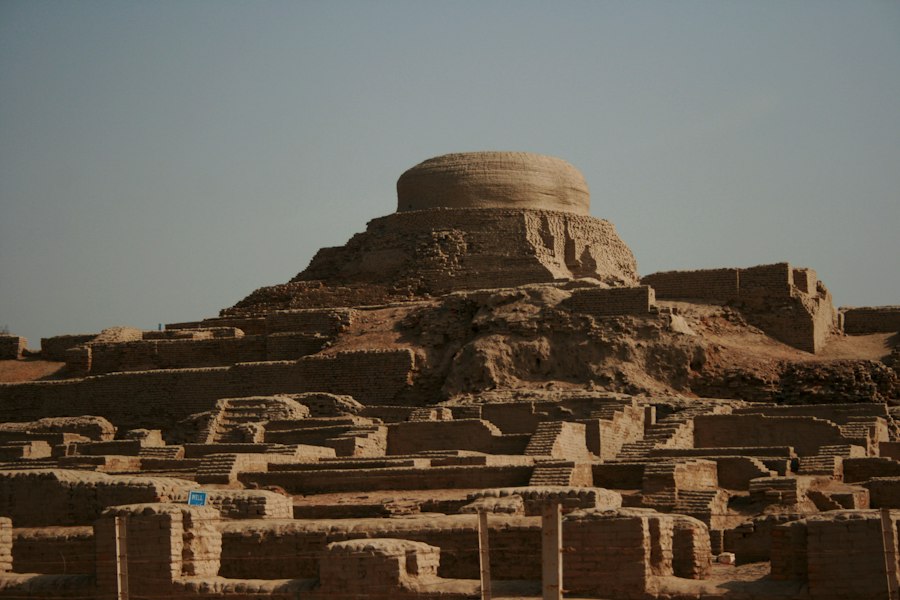
| Indus Valley | Advanced Urban Drainage Systems | Complex sewage and drainage systems integrated into city planning | ~4500 years | Sanitation and flood control |
| Ancient Greece | Antikythera Mechanism | Early analog computer used to predict astronomical positions and eclipses | ~2100 years | Astronomy and calendar calculations |
| Roman Empire | Roman Concrete | Durable concrete that could set underwater and last millennia | ~2000 years | Construction of aqueducts, buildings, and harbors |
| China (Han Dynasty) | Seismograph | Device to detect and indicate the direction of distant earthquakes | ~1800 years | Earthquake detection and early warning |
The study of lost technologies is not merely an academic pursuit; it is a continuous exploration driven by curiosity and the desire to understand the full spectrum of human ingenuity. As our scientific tools and analytical capabilities advance, so too does our ability to re-examine ancient evidence and uncover new clues.
Advancements in Archaeological and Scientific Methods
Modern archaeology employs sophisticated techniques such as ground-penetrating radar, lidar, and advanced material analysis, which allow for non-destructive examination of sites and artifacts. These tools can reveal hidden structures, analyze the composition of ancient materials with unprecedented precision, and provide new insights into ancient practices.
The Role of Digital Reconstruction and Simulation
Digital technologies play an increasingly vital role in understanding lost technologies. 3D scanning and modeling allow for detailed reconstructions of complex artifacts like the Antikythera Mechanism, enabling researchers to simulate their functions and test hypotheses about their operation.
Interdisciplinary Collaboration and New Perspectives
The investigation of lost technologies benefits greatly from interdisciplinary collaboration. Archaeologists, historians, engineers, physicists, and metallurgists working together can bring diverse perspectives and expertise to bear on complex problems, leading to innovative solutions and deeper understanding.
The Philosophical Implications of Rediscovery
The rediscovery of lost technologies carries profound philosophical implications. It challenges our linear progression of human knowledge and suggests that innovation may not always be a steady march forward. It prompts us to consider the cyclical nature of knowledge, the fragility of cultural memory, and the potential for entire epochs of advanced understanding to be lost to time.
Reassessing Our Place in History
The existence of advanced ancient technologies forces a reevaluation of our understanding of human history and our perceived technological dominance. It suggests that our current level of advancement may not be an unprecedented achievement, but rather a reawakening of capabilities that have been dormant or lost for millennia.
The Importance of Preservation and Knowledge Transfer
The ongoing quest to understand lost technologies underscores the critical importance of preserving ancient sites and artifacts, as well as actively documenting and disseminating existing knowledge. The loss of information, whether through neglect or destruction, represents an irreparable blow to our collective understanding of human potential.
The journey into the realm of lost technologies is an ongoing one, filled with mystery and wonder. Each discovery, each solved puzzle, only serves to deepen the enigma and inspire further exploration. The past, it seems, holds far more secrets than we can currently fathom, and within those secrets lie the echoes of human brilliance, waiting to be unearthed and understood.

How Ancient Cities Stayed Cool Without Air Conditioning
FAQs
What is the forgotten technology of ancient civilizations?
The forgotten technology of ancient civilizations refers to advanced techniques and knowledge that were used by ancient societies to create impressive structures, tools, and artifacts.
What are some examples of forgotten technology from ancient civilizations?
Examples of forgotten technology from ancient civilizations include the construction of the pyramids in Egypt, the precision stone-cutting techniques used in Machu Picchu, and the advanced metallurgy skills of the ancient Greeks.
Why is this technology considered “forgotten”?
This technology is considered “forgotten” because the specific techniques and knowledge used by ancient civilizations to create these marvels have been lost over time. Modern researchers and archaeologists are still trying to understand how these feats were accomplished.
How did ancient civilizations develop such advanced technology?
Ancient civilizations developed advanced technology through a combination of experimentation, observation, and knowledge passed down through generations. They often had a deep understanding of mathematics, engineering, and materials science.
What can we learn from studying the forgotten technology of ancient civilizations?
Studying the forgotten technology of ancient civilizations can provide insights into the ingenuity and capabilities of past societies. It can also inspire modern innovations and advancements in various fields such as architecture, engineering, and materials science.