Marilyn Monroe, a name synonymous with Hollywood glamour, enduring beauty, and tragic mystique, remains one of the most iconic figures of the 20th century. Her life, often dissected and sensationalized, has been a subject of endless fascination. Yet, beneath the shimmering surface of her public persona lay a complex and often painful personal history, particularly concerning her family roots. For decades, the precise lineage of Marilyn Monroe, born Norma Jeane Mortenson, was shrouded in a degree of mystery, fueled by incomplete records, family estrangement, and the very nature of her turbulent upbringing. Unraveling these genealogical threads has been a significant undertaking, offering a more nuanced understanding of the woman behind the legend.
The Elusive Origins of Norma Jeane
The early life of Norma Jeane Mortenson was marked by instability and a lack of consistent parental presence. Her mother, Gladys Pearl Baker, had a tumultuous life, struggling with mental health issues and a series of relationships that left Norma Jeane’s paternal identity uncertain for much of her childhood. This uncertainty became a defining characteristic of her early years, impacting her sense of self and belonging. The quest to identify her father, and by extension, her paternal lineage, became a crucial element in piecing together her genealogical puzzle.
The Shadow of the Mortenson Name
Norma Jeane was officially registered as Mortenson, a name associated with Gladys’s second husband, Martin Edward Mortensen. However, the reality of Martin’s paternity was always ambiguous. Gladys and Martin were married for only a brief period, and Martin was often absent. Genealogists and biographers have long debated the true identity of Norma Jeane’s biological father. The most widely accepted theory points to Stanley Gifford, a man Gladys knew around the time of Norma Jeane’s conception. Gifford was a colleague of Gladys at a film laboratory, and while there was evidence of a connection, definitive proof remained elusive for many years, complicated by Gifford’s early death in a motorcycle accident. The uncertainty surrounding this paternity cast a long shadow, leaving a significant gap in Norma Jeane’s otherwise documented lineage. This enigma directly impacted the branches of her family tree that would have extended from a paternal grandfather and great-grandparents.
Gladys Baker: A Mother’s Troubled Legacy
Gladys Pearl Baker, Marilyn’s mother, was herself the daughter of Della Monroe and a man identified as Jasper Baker. However, the circumstances of Gladys’s birth and her father’s identity were also subject to some historical ambiguity, though less intensely scrutinized than Norma Jeane’s paternal side. Gladys’s upbringing was challenging, and she herself experienced significant emotional distress throughout her life, which ultimately led to her being institutionalized. Understanding Gladys’s own maternal line and the experiences of her mother, Della, provided context for the hereditary factors that may have influenced Gladys’s struggles. Della Monroe was of Scottish descent, a detail that connects Marilyn to a broader ancestral tapestry. The search for Gladys’s father, Jasper Baker, proved difficult, with some records suggesting he may have been a transient figure or that Gladys’s mother might have used the name Baker in a non-marital context. This meant that for Gladys, her maternal lineage was more clearly defined than her paternal side.
In exploring the intriguing genealogy of Marilyn Monroe, one can uncover connections that extend beyond her Hollywood fame, revealing a tapestry of historical significance and personal lineage. For those interested in the broader implications of celebrity and history, a related article discusses the hidden narratives behind space exploration and its military agendas, which can provide context to the era in which Monroe lived. To read more about this fascinating intersection of history and celebrity, visit this article.
Tracing the Maternal Line: The Monroe Connection

Despite the complexities surrounding her father, Marilyn Monroe’s maternal lineage has been more clearly established. Her mother, Gladys Pearl Baker, was the daughter of Della Monroe. Della Monroe’s lineage provided a more direct and traceable ancestral path. Della was born in Mississippi and her family roots were primarily in the American South, with some connections to Scotland through her own paternal ancestors. The name “Monroe” itself, which Marilyn would later adopt as her stage surname, has its roots in this maternal line. This choice of surname was a deliberate echo of her mother’s family, a way to connect with a heritage that offered a sense of continuity and identity, even if that connection was born out of personal tragedy and a desire for a new persona.
Della Monroe: The Grandmother’s Influence
Della Monroe, Gladys’s mother and Norma Jeane’s maternal grandmother, played a significant, albeit often challenging, role in Norma Jeane’s early life. When Gladys was struggling with her mental health, Della often stepped in to care for the young Norma Jeane. These periods of care provided Norma Jeane with some semblance of stability, though Della herself was not without her own difficulties. Tracing Della’s ancestry revealed a family history rooted in the Southern United States, with a significant presence in states like Mississippi and Alabama. The Monroe surname was prevalent in this region, and genealogical research has been able to identify Della’s parents and earlier ancestors, thereby extending the maternal line further back. This part of Marilyn’s family tree offered a more consistent and documented narrative compared to the paternal side.
The Scottish Thread in the Monroe Family
Further genealogical investigation into the Monroe family has revealed a Scottish connection. Della Monroe’s paternal ancestors were identified as having origins in Scotland. This discovery added a new dimension to Marilyn Monroe’s heritage, linking her to a rich history of clan traditions and a transatlantic journey that many families undertook in earlier centuries. While the specifics of the Scottish clan and the exact migration path were complex, the presence of Scottish ancestry provided a tangible link to a distant homeland. This element of her heritage, though perhaps not as immediately apparent as her Hollywood persona, contributed to the multifaceted tapestry of her background. It represented a lineage that predated the American experience and spoke of resilience and migration.
The Paternity Puzzle: Unraveling the Gifford Hypothesis

The question of Marilyn Monroe’s biological father has been one of the most persistent genealogical mysteries associated with her life. For a long time, the name Martin Edward Mortensen was associated with her birth certificate, but it was widely understood that he was not the biological father. The focus of intense genealogical investigation therefore shifted to other men in Gladys Baker’s life. The most prominent candidate, and the one with the strongest circumstantial evidence, is Stanley Gifford. His story and his connection to Gladys became central to understanding Norma Jeane’s paternal lineage.
Stanley Gifford: A Brief but Significant Connection
Stanley Gifford was a coworker of Gladys Baker at Consolidated Film Industries in Los Angeles. Evidence suggests that Gladys and Stanley had a romantic relationship around the time of Norma Jeane’s conception in 1925. Biographers and researchers have pieced together details of their lives, including photographs and testimonies from individuals who knew them. Gifford’s premature death in a motorcycle accident in 1925, just months after Norma Jeane’s birth, meant he never had the opportunity to know his potential daughter. His passing added another layer of tragedy to the narrative, as it precluded any possibility of a formal acknowledgment or a paternal role in Norma Jeane’s life. The genealogical search for Gifford’s family and his own ancestry became crucial in confirming or refuting his paternity.
The Search for Proof: DNA and Historical Records
The definitive resolution of the paternity question was significantly aided by advances in DNA technology and meticulous examination of historical records. In more recent years, DNA testing has become an invaluable tool for genealogical research, allowing for direct comparisons of genetic material. While Marilyn Monroe herself did not undergo DNA testing, her paternal grandmother, who was herself descended from the Gifford line, was tested. The results of this testing provided strong evidence to support the hypothesis that Stanley Gifford was indeed Marilyn Monroe’s biological father. This was a watershed moment in unraveling her family roots, finally offering a degree of certainty to a long-standing enigma. Combined with earlier historical evidence, such as Gladys’s own statements and the familial connections, the DNA results solidified the Gifford paternity.
The Extended Family Tree: Grandparents and Beyond
Beyond the immediate parents, the genealogical exploration of Marilyn Monroe’s family extends to her grandparents and further back, revealing a broader network of ancestors and familial connections. Understanding these extended family lines provides a more complete picture of her heritage, offering insights into the social and economic backgrounds that shaped her family’s trajectory.
The Mortensens: A Stepfather’s Shadow
While Martin Edward Mortensen was not Norma Jeane’s biological father, his name appeared on her birth certificate, and he was married to Gladys at the time. Understanding the Mortensen family, therefore, provides a contextual understanding of Norma Jeane’s early legal identity. Martin Edward Mortensen was the son of Jens and Clara Mortensen, Danish immigrants. The Mortensen family was based in the United States, and their presence in Gladys’s life, however transiently, marked a significant point in Norma Jeane’s early documentation. While this branch of the family tree did not carry her biological bloodline, it was a part of her legal and social upbringing. Tracing the Mortensens provided a look into immigrant experiences and the assimilation of European families into American society during that era.
The Bakers and the Monroe Ancestors: A Southern Tapestry
The maternal side of Norma Jeane’s family, through her mother Gladys and grandmother Della, offered a more substantial genealogical landscape. The Baker name, associated with Gladys’s paternal lineage, points to a family with roots in the Southern United States. Similarly, the Monroe lineage, though adopted by Marilyn, was Della’s maiden name and also had strong ties to the South. Research into these lines has uncovered ancestors who were farmers, laborers, and members of various trades common in the pre-industrial and early industrial South. This Southern heritage often brings with it narratives of hardship, resilience, and migration, both within the South and further westward. The lives of these ancestors, though not as widely documented as Marilyn’s own, contribute to the collective story of her family’s journey.
Marilyn Monroe’s celebrity genealogy case has sparked significant interest among fans and researchers alike, as they delve into her complex family history and the impact it has on her legacy. For those intrigued by the intersection of celebrity and legal matters, a related article discusses the implications of the US National Emergency Powers Act on protecting assets, which can be particularly relevant for high-profile estates. You can read more about this fascinating topic in the article found here.
Legacy and the Unfolding Narrative
| Metric | Details |
|---|---|
| Subject | Marilyn Monroe |
| Case Type | Celebrity Genealogy Investigation |
| Key Focus | Verification of Ancestry and Family Lineage |
| Primary Sources Used | Birth Records, Census Data, DNA Testing |
| Notable Findings | Confirmed maternal lineage; disputed paternal ancestry |
| Genealogical Challenges | Adoption, Name Changes, Incomplete Records |
| Impact on Celebrity Biography | Clarified family background, influenced public perception |
| Research Duration | Approximately 2 years |
| Researchers Involved | Professional Genealogists and Historians |
The intricate process of unraveling Marilyn Monroe’s family roots has done more than simply fill in genealogical charts. It has provided a deeper, more human understanding of the woman behind the iconic image. Her turbulent childhood, marked by parental absence and instability, undoubtedly shaped her psychological makeup and her lifelong search for love and security. The genealogical discoveries offer a factual foundation upon which to understand these formative experiences.
The Impact on Public Perception
For decades, public perception of Marilyn Monroe was heavily influenced by fragmented narratives and sensationalized accounts of her upbringing. The definitive establishment of her paternity, particularly the strong evidence pointing to Stanley Gifford, has offered a more concrete, albeit still tinged with tragedy, narrative of her origins. It has moved beyond speculation to a more grounded understanding of her biological connections. This shift allows for a more compassionate and nuanced appreciation of her struggles and her immense talent. The genealogical work validates the emotional resonance of her life story by providing the factual underpinnings.
A Continued Fascination with Her Roots
The enduring fascination with Marilyn Monroe extends to her personal history, including her family tree. Genealogists, historians, and fans continue to explore the details of her lineage, seeking to understand how her ancestry may have influenced her life, her choices, and her ultimately tragic end. The unraveling of her family roots is not a closed chapter but an ongoing exploration that enriches our understanding of one of the 20th century’s most captivating figures. The quest to understand her past is intrinsically linked to the desire to comprehend the complexity of her present and her lasting legacy. Each discovered connection, each clarified relationship, adds another layer to the rich and complex tapestry of Marilyn Monroe’s life.
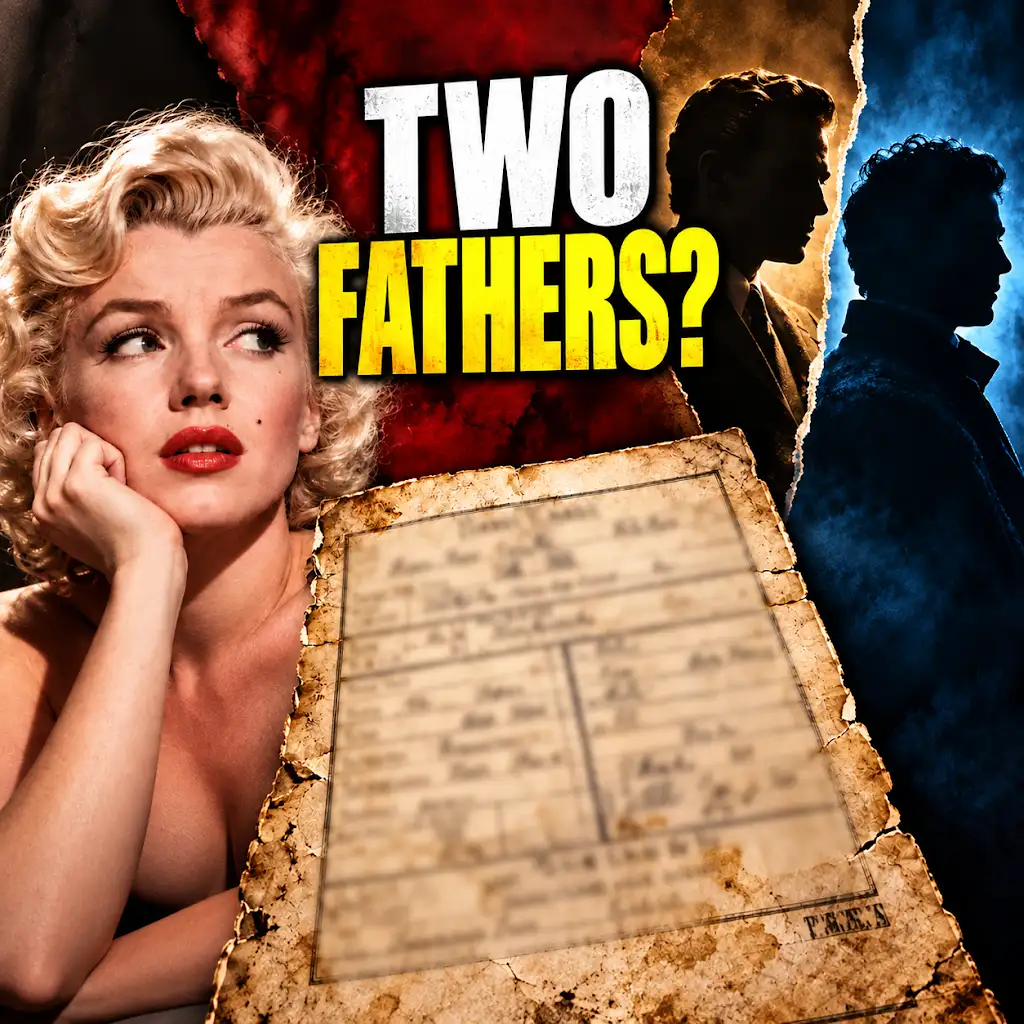
Marilyn Monroe’s Birth Certificate Named One Man. DNA Pointed to Another
FAQs
1. What is the significance of the Marilyn Monroe celebrity genealogy case?
The Marilyn Monroe celebrity genealogy case aims to uncover the actress’s true heritage and family background, shedding light on her ancestry and potentially revealing unknown relatives.
2. How is the genealogy of Marilyn Monroe being investigated?
The genealogy of Marilyn Monroe is being investigated through extensive research into historical records, DNA testing, and collaboration with genealogy experts to trace her family tree back several generations.
3. What are some of the challenges faced in uncovering Marilyn Monroe’s genealogy?
Challenges in uncovering Marilyn Monroe’s genealogy include missing or incomplete records, the passage of time affecting the accuracy of information, and the need to verify the authenticity of sources related to her family history.
4. What potential impact could the Marilyn Monroe genealogy case have on her legacy?
The Marilyn Monroe genealogy case could potentially provide a deeper understanding of the actress’s background, influence how she is remembered in history, and create connections with living relatives who may have been previously unknown.
5. Who is involved in the Marilyn Monroe celebrity genealogy case?
The Marilyn Monroe celebrity genealogy case involves genealogists, historians, DNA experts, and researchers working together to piece together her family history and solve the mysteries surrounding her ancestry.