Marilyn Monroe, a name synonymous with Hollywood glamour and enduring mystique, continues to captivate audiences decades after her untimely death. While her on-screen persona and personal life have been dissected countless times, one enduring enigma remains: the identity of her biological father. Born Norma Jeane Mortenson on June 1, 1926, Marilyn’s parentage was always a subject of speculation, a shadow that loomed over her formative years and, arguably, her entire life. Her mother, Gladys Pearl Baker, a troubled woman with a history of mental illness, offered conflicting accounts and ultimately provided little clarity, leaving a void that biographers and fans alike have sought to fill. Exploring the various theories about Marilyn Monroe’s biological father offers a glimpse into a deeply personal aspect of her complex history, highlighting the search for identity that often accompanies fame and the persistent human desire to uncover the truth about our origins.
The Shadow of Gladys Baker: A Mother’s Uncertain Legacy
Gladys Pearl Baker, Marilyn Monroe’s mother, remains a pivotal figure in any discussion of Marilyn’s paternity. Her life was marked by instability, mental health struggles, and a series of tumultuous relationships, all of which contributed to the ambiguity surrounding Norma Jeane’s birth. Gladys herself was married and divorced multiple times, and her recollections of Norma Jeane’s father were often inconsistent, further fueling the mystery. This uncertainty was not merely a footnote in Marilyn’s biography; it was a foundational element of her upbringing, contributing to her feelings of abandonment and her lifelong search for stability and love.
The Conflicting Narratives of Gladys
Gladys’s accounts of Norma Jeane’s father varied significantly over time. At various points, she identified him as either Stanley Gifford or Martin Edward Mortensen. These conflicting testimonies, often delivered under duress or during periods of emotional distress, created a confusing tapestry of potential paternal figures. Biographers have grappled with these discrepancies, attempting to piece together a coherent narrative from Gladys’s fragmented memories. The lack of definitive documentation and the passage of time have made it exceedingly difficult to verify any of her claims with absolute certainty.
The Impact of Parental Absence on Norma Jeane
The absence of a clear paternal figure had a profound impact on Norma Jeane’s childhood. Raised largely by foster families and in an orphanage, she craved a sense of belonging and a stable family unit. The unknown identity of her father likely exacerbated these feelings of insecurity and contributed to her deep-seated need for validation. This early experience of abandonment and uncertainty can be seen as a precursor to some of the emotional challenges she faced throughout her adult life, including her struggles with relationships and her pursuit of love and acceptance.
The theories surrounding Marilyn Monroe’s biological father have long intrigued historians and fans alike, sparking numerous discussions about her lineage and the impact it may have had on her life and career. For those interested in exploring more about hidden truths and secrets, a fascinating read can be found in the article titled “Uncovering the Secrets Beneath Antarctica’s Ice,” which delves into the mysteries of the past and how they shape our understanding of history. You can read the article here: Uncovering the Secrets Beneath Antarctica’s Ice.
Stanley Gifford: The Elusive Leading Man
One of the most prominent theories surrounding Marilyn Monroe’s biological father centers on Stanley Gifford, a young man who worked at Columbia Pictures at the time of Norma Jeane’s conception. The theory gained traction due to several factors, including Gladys’s alleged admissions and the superficial resemblance between Gifford and the young Marilyn. While compelling to many, this theory has faced significant challenges in terms of concrete proof.
Gladys’s Alleged Admissions to Gifford
According to some accounts, Gladys Baker confided in close friends and family that Stanley Gifford was Norma Jeane’s father. These alleged admissions, while not documented in official records, have been cited by various biographers and researchers. The idea is that Gladys, perhaps feeling guilty or wanting to provide some semblance of truth, shared this information with individuals she trusted. However, the reliability of these anecdotal accounts is inherently difficult to ascertain, especially given Gladys’s own often unreliable statements.
The Resemblance and Circumstantial Evidence
Proponents of the Stanley Gifford theory often point to a perceived resemblance between Gifford and Marilyn. Photographs of a young Gifford do show a certain youthful charm and some facial similarities to the future screen siren. Furthermore, the circumstantial evidence of their connection – Gladys working at Columbia Pictures where Gifford was employed – provides a plausible setting for their relationship. However, resemblance is a subjective measure and circumstantial evidence, while suggestive, is not conclusive proof. Without DNA evidence or more direct testimony, Gifford’s paternity remains speculative.
The Gifford Family’s Stance
The Gifford family, particularly Stanley Gifford’s brother, had a public stance on the matter. While they acknowledged the possibility of a connection, they were also hesitant to definitively confirm it. Some family members reportedly expressed skepticism, while others were more open to the idea. This internal division within the Gifford family further complicates the narrative and offers no definitive resolution to the paternity question. The lack of enthusiastic embrace or outright denial from the family leaves the door open for continued speculation.
Martin Edward Mortensen: A Shifting Identity
Another significant contender for the role of Marilyn Monroe’s biological father is Martin Edward Mortensen, an automobile mechanic. This theory is particularly intriguing because it is the name that appears on Norma Jeane’s birth certificate as her father. However, the circumstances surrounding this inclusion are far from straightforward and have led to further debate.
The Birth Certificate and Its Ambiguities
Norma Jeane’s birth certificate lists Martin Edward Mortensen as the father. This document, typically a cornerstone of genealogical research, is rendered problematic by the fact that Gladys Baker was not married to Mortensen at the time of her daughter’s birth. Furthermore, it has been suggested that Gladys may have listed Mortensen’s name without his knowledge or consent, or that Mortensen himself was not fully aware of his paternity. The certificate, therefore, becomes less of a definitive record and more of another piece of the puzzle, open to interpretation.
Mortensen’s Background and Connection to Gladys
Martin Edward Mortensen was a relatively transient figure in Gladys Baker’s life. Their relationship, if it existed beyond the birth certificate, was not one of enduring partnership. Mortensen was known to have moved frequently, making it difficult to establish a consistent connection with Gladys or Norma Jeane. While Gladys did have relationships with men during this period, the specific nature and duration of any relationship with Mortensen remain unclear. The lack of strong emotional or familial ties reported between Gladys and Mortensen makes his paternal role questionable for many.
The Possibility of a Different “Mortensen”
Adding another layer of complexity to the Mortensen theory, some researchers have proposed that the name on the birth certificate might refer to a different individual named Mortensen, possibly a relative of Gladys’s first husband, Albert Stanley Baker. This theory suggests a potential familial connection that might have led Gladys to use the name, even if Martin Edward Mortensen himself was not the biological father. This highlights the convoluted nature of family relationships and how names, rather than individuals, can sometimes become entangled in records.
The Role of Other Potential Fathers
Beyond the two most frequently discussed possibilities, Stanley Gifford and Martin Edward Mortensen, other men have been posited as potential biological fathers to Marilyn Monroe. These theories, while less widely accepted or well-documented, add to the rich tapestry of speculation surrounding her origins. The sheer number of potential candidates underscores the uncertainty and the perhaps deliberate obfuscation surrounding her parentage.
Unidentified Lovers and Fleeting Relationships
Gladys Baker was a woman who experienced numerous romantic entanglements. It is entirely plausible that Norma Jeane’s biological father was a man whose name was never recorded, or whose connection to Gladys was so brief that it left no lasting imprint on her memory or on official documents. The era in which Marilyn was conceived was one where unwed mothers often faced social stigma, and a desire to protect their children or themselves could have led to a suppression of the truth. This leaves a wide, unexplored realm of possibility.
The Case of Edward G. Robinson Jr.
One notable theory, though largely dismissed by many biographers, suggests that Edward G. Robinson Jr., the son of the famous actor, could have been Marilyn’s father. This theory is based on anecdotal evidence and reported friendships between Marilyn and Robinson Jr. However, there is very little substantive proof to support this claim, and it often relies on hearsay rather than verifiable facts. The age difference and the timeline of their lives also present challenges for this particular theory.
The Perpetuation of Mystery
Ultimately, the existence of these alternative theories speaks to the enduring mystery of Marilyn Monroe’s paternity. It highlights how, even in the age of advanced DNA testing, some questions can remain tantalizingly unanswered. The lack of definitive proof allows for continued speculation, and perhaps, in a way, this ambiguity has become an intrinsic part of Marilyn’s legend – a final, personal secret that remains elusive to the public.
Theories surrounding Marilyn Monroe’s biological father have long intrigued historians and fans alike, leading to various speculations about her lineage. Some researchers have delved into the complexities of her family background, suggesting potential connections that could shed light on her enigmatic life. For those interested in exploring more about the mysteries of ancestry and the impact of familial ties, an insightful article can be found here: unearthing ancient control technology, which discusses how historical narratives can shape our understanding of personal identities.
The Impact of Paternity Uncertainty on Marilyn’s Life
| Theory | Claimed Biological Father | Supporting Evidence | Counterarguments | Historical Impact |
|---|---|---|---|---|
| Official Record | Charles Stanley Gifford | Listed as father on Marilyn Monroe’s birth certificate | Gifford denied paternity; no confirmed relationship | Accepted by most historians and biographers |
| Joe DiMaggio Theory | Joe DiMaggio (baseball player) | Speculation based on close relationship with Marilyn later in life | Joe DiMaggio was married to another woman at the time of Marilyn’s birth | Considered a romantic myth rather than factual |
| Edward Mortensen Theory | Edward Mortensen (family friend) | Claims from some biographers about a relationship with Marilyn’s mother | Lack of concrete evidence; Mortensen denied involvement | Minor impact on Marilyn’s biography |
| Unknown Father Theory | Unidentified man | Marilyn’s mother, Gladys, was known to have multiple relationships | No DNA or definitive proof to identify father | Leaves Marilyn’s paternity officially uncertain |
The question of who Marilyn Monroe’s biological father was is not merely a historical footnote; it is a deeply personal aspect of her life that likely influenced her emotional well-being and her perception of herself. The search for identity, particularly the roots of one’s origins, is a fundamental human drive, and for Marilyn, this search was complicated by a lack of clarity and consistency.
The Quest for a Father Figure
Throughout her life, Marilyn Monroe gravitated towards older, paternal figures. This can be interpreted as a subconscious search for the father she never knew. Men like Johnny Hyde, her agent, and later, even figures like Joe DiMaggio and Arthur Miller, whom she married, represented different forms of security and emotional support. Her yearning for a stable, loving paternal presence was a recurring theme in her relationships and her personal struggles.
The Influence on Her Performances and Persona
The insecurities stemming from her fragmented childhood and unknown paternity may have also influenced her on-screen persona. Her vulnerability, her desire to be loved and admired, and her search for validation could all be seen as echoes of her early experiences. The “Marilyn Monroe” persona, a carefully crafted image of glamour and allure, might have, in part, served as a shield for the deeper emotional wounds she carried. The constant need to perform and to please could be linked to a lifelong effort to gain the affection and recognition she felt she had been denied.
The Legacy of Unanswered Questions
Even after her death, the question of Marilyn Monroe’s biological father continues to fascinate. It is a testament to the enduring power of her mystique and the human desire to understand the origins of even the most iconic figures. The unresolved nature of her paternity adds another layer to her complex biography, reminding us that behind the dazzling smile and the Hollywood legend was a woman grappling with profound personal questions. The pursuit of this particular truth, however elusive, remains a vital part of exploring the multifaceted legacy of Marilyn Monroe.
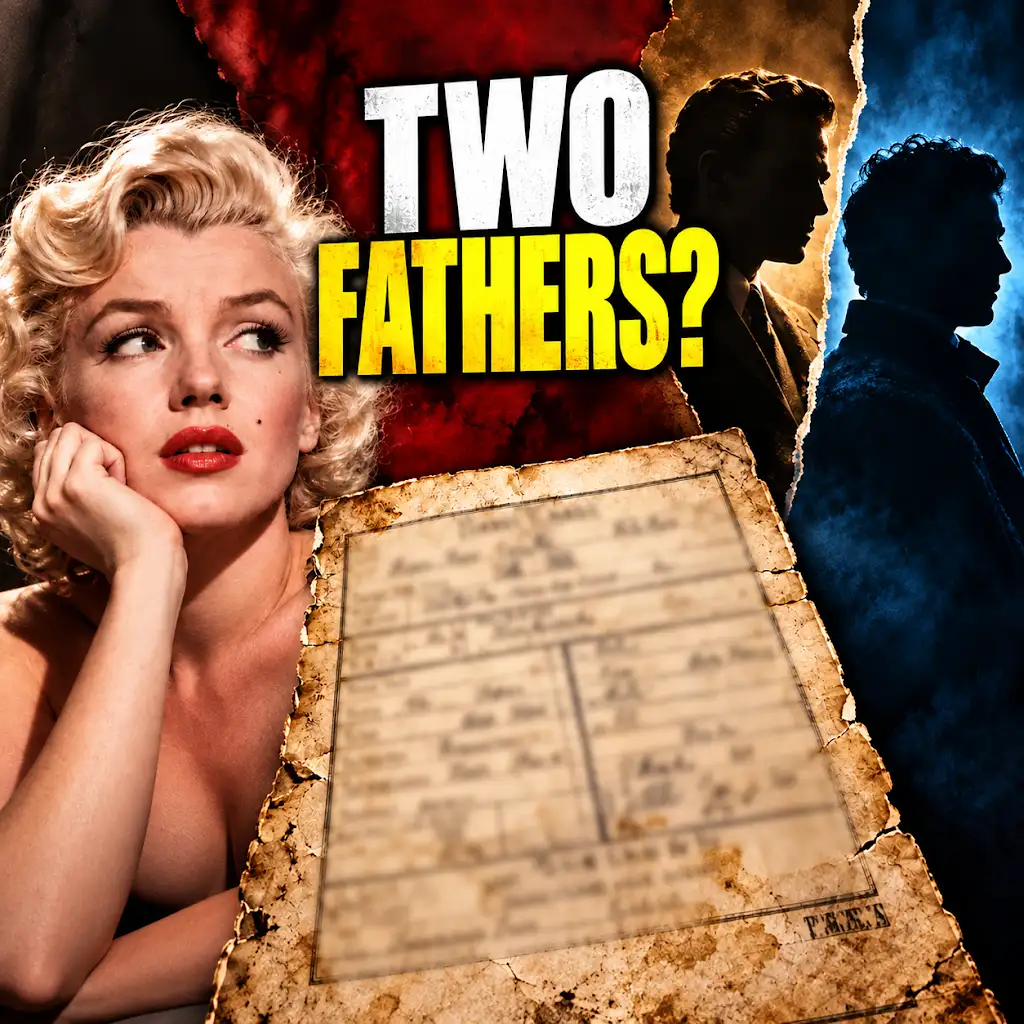
Marilyn Monroe’s Birth Certificate Named One Man. DNA Pointed to Another
FAQs
1. Who is believed to be Marilyn Monroe’s biological father?
There are several theories about Marilyn Monroe’s biological father, with some speculating that it could be Stanley Gifford, C. Stanley Gifford, or Charles Stanley Gifford.
2. What evidence supports the theory that Stanley Gifford is Marilyn Monroe’s father?
Supporters of the Stanley Gifford theory point to the fact that he was a colleague of Marilyn’s mother, Gladys Baker, and that he bore a resemblance to Marilyn. Additionally, Marilyn’s birth certificate lists “Martin E. Mortensen” as her father, which some believe could be a pseudonym for Stanley Gifford.
3. Why is there speculation that C. Stanley Gifford could be Marilyn Monroe’s father?
C. Stanley Gifford was another colleague of Gladys Baker, and some believe that he had a close relationship with her that could have resulted in him being Marilyn’s biological father. However, there is limited concrete evidence to support this theory.
4. What is the theory behind Charles Stanley Gifford being Marilyn Monroe’s father?
Charles Stanley Gifford was a successful businessman who had ties to Gladys Baker through her work at the RKO Studios. Some theorists suggest that their relationship may have led to him being Marilyn’s biological father, although this theory is also speculative.
5. Are there any DNA tests or conclusive evidence to confirm Marilyn Monroe’s biological father?
As of now, there is no definitive DNA evidence or conclusive proof to confirm who Marilyn Monroe’s biological father is. The various theories remain speculative and continue to be a subject of debate among historians and researchers.