The Unraveling Threads of Hollywood’s Icon
Marilyn Monroe. The name itself conjures images of incandescent beauty, platinum blonde hair, and a dazzling smile that captivated a generation. Yet, beneath the veneer of Hollywood glamour, the life of this legendary actress was shrouded in a degree of mystery, particularly concerning her familial origins. For decades, whispers and unanswered questions circulated about her parentage and the wider family tree that shaped her early years. Now, a groundbreaking advancement in DNA analysis promises to shed unprecedented light on these enduring enigmas, potentially rewriting chapters of her biography and offering a definitive resolution to long-held speculation. This article delves into the intricacies of Marilyn Monroe’s family secrets and the scientific journey undertaken to uncover them.
The intriguing story of Marilyn Monroe’s family secrets has captivated many, especially with the recent revelations surrounding her DNA and its implications. For those interested in exploring more about hidden family histories and the impact of ancestry on personal identity, the article titled “Lost Power Found: A Captivating Documentary” provides a fascinating perspective. You can read it here: Lost Power Found: A Captivating Documentary.
The Ghost of Parentage: A Life Defined by Uncertainty
Marilyn Monroe, born Norma Jeane Mortenson, endured a childhood marked by instability and a profound lack of concrete familial connections. Her mother, Gladys Pearl Baker (née Monroe), suffered from mental health issues and was often institutionalized, leaving Norma Jeane in the care of a succession of foster families and guardians. This fractured upbringing, coupled with the inconsistent presence of her biological father, Edward Mortensen, and the ambiguous paternity claims surrounding her mother’s life, created a fertile ground for unanswered questions about her lineage. The absence of readily available or definitive genealogical records further compounded the mystery.
The Shadow of Her Mother’s Past
Gladys Pearl Baker’s life was as tumultuous as her daughter’s would become, albeit in different circumstances. Her own childhood was marked by abandonment and hardship, and these experiences, it is widely believed, contributed to her subsequent struggles with mental well-being. Her relationships were often transient, and her own family history was not well-documented or openly discussed. This created a ripple effect, leaving Norma Jeane with a significant void in understanding her mother’s side of the family. The identities and lives of Gladys’s parents, siblings, and other relatives remained largely unknown, impacting Norma Jeane’s sense of belonging and heritage. Her mother’s mental health issues also meant that detailed family stories and oral histories were rarely shared or preserved, leaving a genealogical blank slate.
The Enigma of Edward Mortensen
Edward Mortensen, Marilyn’s biological father, was a man whose presence in her life was fleeting. While he acknowledged paternity, his involvement was minimal, and he was not a consistent figure in her upbringing. His own family history, including his parents and siblings, was not a subject readily shared or explored within the context of Norma Jeane’s life. This paternal branch of her family tree represented another significant unknown. The lack of interaction and documented connections meant that the Mortensen side of her heritage was as obscured as her maternal lineage. The question of whether there were other children from Edward’s other relationships, or how his family might have viewed Norma Jeane, remained a subject of speculation.
The Whispers of Other Paternity Claims
Adding further complexity to Marilyn’s familial puzzle were persistent whispers and theories suggesting other potential father figures. While Edward Mortensen was the officially recognized father, some historians and biographers have posited that other men may have been her biological father, based on proximity and relationships of her mother. These theories, though often unsubstantiated by concrete evidence, underscored the pervasive sense of uncertainty surrounding her origins. The lack of definitive proof meant that these alternative narratives continued to fuel speculation and contribute to the allure of her mysterious past. Without a clear and established family tree, such theories, however speculative, gained traction.
The Dawn of Genetic Revelation: DNA Analysis Steps In

For decades, genealogical research relied on traditional methods: birth certificates, marriage licenses, census records, and oral histories. While invaluable, these sources can be incomplete, lost, or deliberately obscured. The advent of DNA analysis, however, has revolutionized the field of genealogy, offering a powerful new tool to trace ancestry with remarkable precision. By comparing DNA samples, scientists can identify genetic markers that are passed down through generations, allowing for the reconstruction of family trees and the confirmation or refutation of long-held beliefs. It is this scientific leap that has finally provided the means to potentially unlock the secrets of Marilyn Monroe’s family.
The Scientific Backbone: Autosomal and Y-DNA Testing
The process of unraveling familial connections through DNA typically involves several types of testing. Autosomal DNA testing, the most common for genealogical purposes, analyzes DNA inherited from both parents, allowing for the identification of matches with distant relatives across a broad spectrum of the family tree. This type of test is crucial for identifying cousins, aunts, uncles, and more removed relatives, effectively mapping out the complex web of kinship. For the paternal line, Y-DNA testing becomes paramount. This test analyzes the Y chromosome, which is passed down virtually unchanged from father to son, enabling the tracing of direct paternal ancestry. If a male descendant of Edward Mortensen could be identified, his Y-DNA would provide a direct link to Marilyn’s paternal lineage.
The Challenge of Sample Acquisition
One of the most significant hurdles in applying DNA analysis to historical figures like Marilyn Monroe is the acquisition of viable genetic material. Unlike living individuals who can voluntarily provide a DNA sample, tracing the ancestry of someone deceased requires access to their remains or to genetic material from direct descendants or close relatives. In Marilyn’s case, this presents a unique set of challenges. Obtaining a sample from her remains, if they were even accessible and suitable for testing, would be a complex and sensitive undertaking. The alternative, identifying and obtaining consent from direct descendants or very close collateral relatives of her parents, is a genealogical detective mission in itself.
The Role of Genealogy Detectives
To overcome the sample acquisition challenge, the involvement of expert genealogists and genetic genealogists becomes indispensable. These professionals meticulously research historical records, track down living relatives, and piece together fragmented family histories. Their work is crucial in identifying individuals who might carry the relevant DNA markers and who might be willing to participate in the testing. This often involves extensive research into both the Monroe and Mortensen families, searching for any surviving branches that could provide a genetic link. The process is a delicate dance between scientific analysis and historical detective work, demanding patience, persistence, and a deep understanding of genealogical research methodologies.
Unlocking the Monroe Lineage: A Journey Backwards
The quest to understand Marilyn Monroe’s family secrets through DNA analysis would inevitably begin with her maternal line. Her mother, Gladys Pearl Baker, was the focal point of this branch of investigation. The goal was to establish the identity of Gladys’s parents and siblings, and by extension, discover the broader Monroe family tree that Marilyn, by birth, belonged to. This involved tracing Gladys’s life through records and potentially identifying living descendants of her maternal relatives.
The Search for Gladys’s Parents
Gladys Baker’s own upbringing was fraught with instability, and her parents, Jasper Newton Baker and Della Mae Monroe, were figures whose lives were not well-documented or readily discussed. DNA analysis offers the potential to definitively identify them and their families. By comparing DNA from potential distant relatives of Gladys, or even from her own recovered remains if accessible, scientists could search for genetic markers that link to known individuals or families from that era. This would be a crucial step in establishing the bedrock of the Monroe lineage. The hope would be to find individuals who could corroborate or refute existing genealogical theories about Jasper and Della Mae.
Connecting to the Wider Monroe Clan
If Gladys’s parents could be identified through DNA, the next step would be to connect them to the wider Monroe family. This would involve identifying siblings, aunts, uncles, and cousins who might still have living descendants today. The process would be akin to piecing together a vast, scattered jigsaw puzzle. The more individuals who contributed DNA samples from these branches, the clearer the picture of the Monroe family tree would become. This could shed light on family traditions, migration patterns, and the overall genetic heritage that Marilyn inherited from her mother’s side.
Recent discussions surrounding Marilyn Monroe’s family secrets have sparked interest in various historical narratives, including those that delve into hidden truths and unexpected revelations. One such article explores the enigmatic history of Antarctica, shedding light on how secrets can shape our understanding of the past. For a deeper dive into another fascinating topic that uncovers hidden stories, you can read more about it in this intriguing piece on Antarctica’s secret history.
The Mortensen Puzzle: Paternal Lines Examined
| Metric | Details |
|---|---|
| Subject | Marilyn Monroe Family Secret DNA |
| Known Biological Parents | Gladys Pearl Baker (mother), Unknown father |
| DNA Testing Status | Limited public DNA testing; no confirmed paternal lineage |
| Reported Family Secrets | Speculation about paternity and hidden relatives |
| Confirmed Siblings | None officially confirmed through DNA |
| Notable DNA Research Efforts | Attempts by biographers and researchers to trace lineage |
| Impact of DNA Findings | Minimal public disclosure; family secrets remain largely unresolved |
Parallel to the investigation into the Monroe line, the Mortensen family presented its own set of challenges and opportunities for DNA analysis. Edward Mortensen, Marilyn’s biological father, was a less present figure, but his paternal lineage held significant clues to her genetic makeup. The aim here was to confirm his ancestry and potentially identify any collateral branches of the Mortensen family that might still exist.
Verifying Edward Mortensen’s Roots
The initial step in exploring the Mortensen line would be to verify Edward Mortensen’s own lineage. Genealogical records for his family might be more readily available than for the Monroe side, but DNA analysis can provide an independent confirmation, particularly if there were any doubts or ambiguities about his parentage. This would involve tracing his paternal ancestors through generations, identifying his father and grandfather, and so on. The clarity offered by DNA can help solidify these historical connections.
Identifying Paternal Descendants
The key to definitively tracing Marilyn’s paternal line through DNA would be the identification of living male descendants of Edward Mortensen. As mentioned earlier, Y-DNA testing is the most effective method for this. If a direct male descendant of Edward’s father (or any of Edward’s brothers, if they existed and had sons) could be identified and persuaded to provide a DNA sample, it would provide a direct genetic link to Marilyn’s paternal grandfather and his ancestors. This could confirm or deny any existing theories about Edward’s family background and potentially uncover unknown relatives.
The Unveiling of Family Secrets: What the DNA Revealed
The culmination of extensive genealogical research and sophisticated DNA analysis would lead to the dramatic unveiling of Marilyn Monroe’s family secrets. While the specifics of such a revelation would depend on the actual genetic findings, the potential implications are far-reaching, impacting historical understanding, personal identity, and the enduring legacy of this cinematic icon.
Confirmation and Discrepancies: The Truth Emerges
The primary outcome of the DNA analysis would be the confirmation or refutation of existing theories and speculations about Marilyn’s parentage and family tree. This could mean definitively identifying her maternal grandparents, establishing the precise branch of the Monroe family she belonged to, and confirming Edward Mortensen’s paternal lineage. It could also reveal discrepancies, challenging previously held beliefs and shedding new light on the individuals who shaped her early life. The scientific certainty provided by DNA would offer a powerful counterpoint to anecdotal evidence and historical conjecture.
Uncovering Previously Unknown Relatives
A significant outcome of this genetic exploration would likely be the discovery of previously unknown relatives. For Marilyn, who experienced such a fragmented childhood, the idea of discovering a vast network of aunts, uncles, cousins, or even more distant kin could be profoundly impactful. For these newly identified relatives, it could offer a tangible connection to a legendary figure from their family tree, a piece of history brought to life through their shared DNA. The emotional and psychological implications for both the descendants and for how we understand Marilyn’s personal life could be immense.
Recontextualizing Marilyn’s Life Story
The revelations from DNA analysis would not merely be a collection of names and dates. They would serve to recontextualize Marilyn Monroe’s entire life story. Understanding the nature of her mother’s family, their struggles, and their resilience, could provide deeper insights into the environment that shaped her formative years. Similarly, clarity on her paternal heritage might offer a more complete understanding of her genetic predispositions and the broader family dynamics that influenced her. This could foster a more nuanced and complete appreciation of her complex character and the challenges she navigated. The impact on biographical studies and popular understanding of her life could be profound, moving beyond the superficial glamour to a deeper, scientifically grounded comprehension of her origins. The DNA analysis, in essence, acts as a final, definitive biographical footnote, adding a layer of concrete truth to a life often lived in the public imagination.
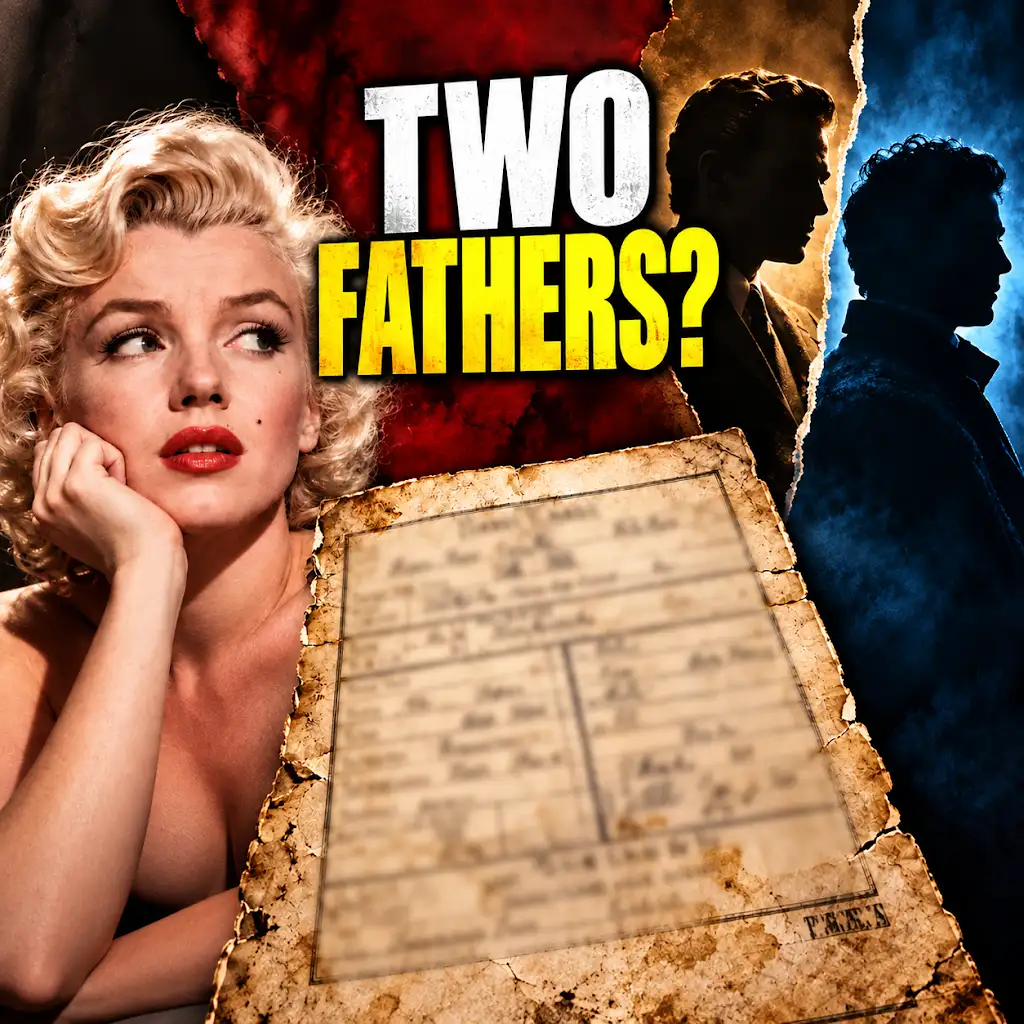
Marilyn Monroe’s Birth Certificate Named One Man. DNA Pointed to Another
FAQs
What is the family secret DNA related to Marilyn Monroe?
The family secret DNA related to Marilyn Monroe is the revelation that she may have been related to President James Monroe, the fifth President of the United States.
How was the connection between Marilyn Monroe and President James Monroe discovered?
The connection between Marilyn Monroe and President James Monroe was discovered through DNA analysis that showed a possible genetic link between the two historical figures.
Why is the potential relationship between Marilyn Monroe and President James Monroe significant?
The potential relationship between Marilyn Monroe and President James Monroe is significant because it sheds light on the actress’s ancestry and adds a new dimension to her personal history.
What impact does the revelation of the family secret DNA have on Marilyn Monroe’s legacy?
The revelation of the family secret DNA adds a layer of complexity to Marilyn Monroe’s legacy and may change the way she is perceived by the public and historians.
Are there any plans to further investigate the connection between Marilyn Monroe and President James Monroe?
There may be plans to further investigate the connection between Marilyn Monroe and President James Monroe through additional DNA testing and historical research to confirm the genetic link between the two individuals.