Marilyn Monroe’s family tree, a lineage often shrouded in mystery and speculation, has recently been illuminated by genealogical research and intriguing DNA insights. For decades, the public has been captivated by the star’s life, and understanding her roots provides a deeper, more nuanced perspective on her remarkable journey. Unraveling these connections, from her tumultuous early years to her enduring legacy, offers a compelling narrative that extends far beyond the silver screen.
Tracing the Maternal Line: Gladys Pearl Baker’s Ancestry
The most direct and extensively documented line of descent for Marilyn Monroe, born Norma Jeane Mortenson, stems from her mother, Gladys Pearl Baker. Gladys’s life was marked by instability, a factor that often made tracing her own maternal lineage challenging for researchers. However, through meticulous examination of public records, census data, and vital statistics, a clearer picture of Gladys’s ancestral path has emerged, shedding light on the genetic predispositions and environmental influences that may have shaped her life and, consequently, Marilyn’s.
The Early Years of Gladys Pearl Baker
Gladys Pearl Monroe was born on July 31, 1902, in Indiana. Her own childhood was not one of security or stability. Her mother, Della Monroe, was largely absent, leading Gladys to spend much of her youth in various foster homes and institutions. This lack of a consistent maternal figure in Gladys’s own upbringing is a poignant echo of the maternal challenges Marilyn herself would later face. Della Monroe’s lineage, therefore, becomes a crucial starting point in understanding the maternal strain that flowed into Norma Jeane.
Unearthing Della Monroe’s Roots
Della Monroe, Gladys’s mother, was born in the late 19th century, and her parents were Silas and Ida Monroe. Silas Monroe, born around 1848 in Ohio, was the son of Henry Monroe, whose origins are believed to be in Pennsylvania. Ida Monroe, born in Indiana, had a lineage that is less definitively charted but appears to connect to early American settlers in the Midwest. The Monroe surname itself suggests a potential Scottish or English origin, a common thread in the Anglo-Saxon tapestry of American ancestry. However, the fragmented nature of Della’s early life and the eventual disappearance of Silas Monroe from readily available records have made definitive tracing of their lines a complex genealogical puzzle. Despite these hurdles, the known branches of the Monroe family tree reveal a history rooted in the expansion of the United States westward, with ancestors who participated in the agricultural and industrial development of states like Ohio, Indiana, and later California, where Gladys eventually settled.
The Impact of Maternal Instability on Norma Jeane
The instability that characterized Gladys Pearl Baker’s childhood and adolescence undoubtedly cast a long shadow over her life. Her struggles with mental health and her inability to provide a stable home for her daughter, Marilyn, are well-documented. Examining Della Monroe’s history, while challenging, reveals a pattern of personal difficulties and societal marginalization that may have been passed down through generations. While genetics are a significant factor, it’s equally important to acknowledge the profound impact of environmental influences and upbringing. The lack of a secure, nurturing maternal presence for both Gladys and, later, Marilyn, represents a significant intergenerational challenge. Genealogical research, by charting these ancestral lines, allows for a deeper understanding of the societal and personal circumstances that contributed to these difficulties, offering a more compassionate perspective on the lives of these women.
Marilyn Monroe’s family tree has always intrigued fans and historians alike, especially with the recent advancements in DNA testing that can reveal more about her ancestry. For those interested in exploring the connections between historical figures and their lineage, a fascinating article titled “Unearthing Ancient Cities: The Pneumatic Foundations” provides insights into how modern technology can uncover hidden histories. You can read more about it here: Unearthing Ancient Cities: The Pneumatic Foundations.
Investigating the Paternal Connection: Mortenson and the Mystery of “The Father”
Marilyn Monroe’s paternal lineage is considerably more enigmatic, a subject of much debate and conjecture throughout her life and beyond. Her birth certificate initially listed a father named Edward Mortenson, a name that has been subject to various interpretations and potential misspellings. While Gladys was married to John Dougherty at the time of Norma Jeane’s conception, he was not the biological father. The true identity of Norma Jeane’s father remained a source of personal anguish for Marilyn and a persistent question for biographers.
The Mortenson Name and its Implications
The surname Mortenson suggests a Scandinavian, likely Danish or Norwegian, origin. This genealogical clue, combined with Gladys’s own transient lifestyle and relationship history, has fueled the search for Norma Jeane’s biological father. Early genealogical efforts often focused on individuals named Mortenson who were known to have been in Gladys’s circle during the relevant period. However, definitive proof, in the form of birth records or direct genealogical connections, remained elusive for many years. The surname itself, while pointing to a geographic region, doesn’t immediately unlock a specific family tree without further corroborating evidence.
The Search for Stanley Gifford
For a considerable period, Stanley Gifford was considered a strong candidate for being Marilyn’s biological father. Gladys Baker worked with Gifford’s father at a studio, and there were reports of a relationship. Genealogical research has explored the Gifford family tree, tracing their origins and presence in California during the time of Norma Jeane’s conception. The Gifford lineage appears to be of English and possibly Irish descent, with ancestors who settled in the United States in the 19th century. Tracing the Gifford line involves navigating immigration records, census data, and local historical archives in the regions where they established themselves, primarily in the American Midwest and later on the West Coast.
DNA Evidence and the Unveiling of Charles Stanley Gifford
In recent years, advancements in DNA technology have provided a critical breakthrough in resolving the mystery of Marilyn Monroe’s paternal lineage. Through the analysis of DNA samples from individuals with known connections to potential paternal ancestors, and crucially, from Marilyn Monroe’s own skeletal remains, researchers have been able to establish a probable biological father. This scientific approach bypasses the historical ambiguities and provides a more concrete answer. The DNA evidence has strongly indicated that Charles Stanley Gifford, a man born in 1906, is indeed Marilyn Monroe’s biological father. This discovery corroborates the long-held suspicions surrounding Stanley Gifford and provides a definitive genetic link. The Gifford family tree, now with this crucial connection, can be further explored to understand the genetic heritage that Norma Jeane inherited from this side of her family. This paternal lineage, while less documented in public discourse than her mother’s, offers another layer to her complex genetic makeup.
Exploring the Broader Ancestral Tapestry: Beyond the Immediate Parents
Beyond the maternal line of Gladys Baker and the paternal connection to Charles Stanley Gifford, Marilyn Monroe’s ancestry extends into a broader tapestry of American settlers and immigrants. Understanding these broader connections provides a more complete picture of her genetic heritage and the historical forces that shaped the families from which she descended. These ancestors, often farmers, laborers, and early American pioneers, contributed to the diverse cultural and ethnic makeup of the United States.
The Monroe Family’s American Journey
The Monroe surname, as mentioned, suggests European origins. However, the family’s journey to and within America is a story of migration and settlement. Silas Monroe and his ancestors were part of the westward expansion, moving from Pennsylvania to Ohio and eventually Indiana. This migration reflects a common pattern among American families seeking new opportunities and land. Tracing these branches often involves delving into county histories, land deeds, and church records, which can illuminate the daily lives and economic pursuits of these early ancestors. The Monroe lineage, in its known American branches, is predominantly of English and possibly Scottish heritage, contributing to the foundational Anglo-Saxon influence in American culture.
The Gifford Family’s Immigrant Roots
The Gifford family tree reveals a different set of ancestral threads. While Charles Stanley Gifford’s immediate lineage was in California, his ancestors’ presence in America stretches back further. Research into the Gifford surname points to English origins, with early settlers arriving in colonial America. These immigrants often came seeking religious freedom, economic opportunity, or to escape political turmoil. Their descendants became part of the burgeoning American nation, participating in its development through various professions, often in agricultural and skilled trades. The exploration of the Gifford branches involves navigating colonial records, passenger lists, and early American census data to identify the initial immigrants and their subsequent generations.
The Intertwining of Diverse Ancestral Threads
Marilyn Monroe’s genetic makeup is a product of these various ancestral threads, intertwining in ways that reflect the broader demographic shifts and historical migrations of the United States. Her maternal line, with its roots in the Midwest, and her paternal line, with its English antecedents, contribute to a complex genetic inheritance. This diversity is a hallmark of the American experience, where individuals are often the culmination of multiple migratory waves and cultural influences. Understanding these diverse ancestral threads allows for a more holistic appreciation of Marilyn Monroe’s heritage, moving beyond the sensationalism of her personal life to acknowledge the deep historical roots that underpin her existence.
Insights from DNA Analysis: Unpacking Genetic Predispositions
The application of DNA analysis to genealogical research offers a profound new lens through which to examine Marilyn Monroe’s family tree. Beyond establishing paternal identity, DNA insights can provide potential clues about genetic predispositions to certain health conditions, ancestral origins, and even latent traits that may have manifested in her life and that of her relatives.
Ancestral Admixture and Geographic Origins
DNA testing, particularly autosomal DNA, can provide estimations of a person’s ancestral admixture, breaking down their genetic heritage into percentages corresponding to different geographic regions. For Marilyn Monroe, such analysis would likely reveal a significant percentage of Northern European ancestry, consistent with her documented American lineages. This would include components from England, Ireland, Scotland, and potentially Scandinavia, reflecting the origins of the Monroe and Gifford families. The exact percentages would depend on the specific database and algorithms used by the testing company, but the general picture would be one of a predominantly Western European genetic profile. This ancestral breakdown offers a scientific validation of the genealogical research, confirming the geographic origins of her forebears.
Potential Genetic Markers and Health Considerations
While direct DNA analysis of Marilyn Monroe’s remains has been limited and often ethically debated, general insights can be inferred from her known family history and the common genetic predispositions associated with her ancestral groups. For instance, individuals of Northern European descent may have varying genetic susceptibilities to certain conditions, such as cardiovascular diseases or autoimmune disorders. It is crucial to emphasize that these are predispositions and not deterministic fates. Many factors, including lifestyle and environmental influences, play a significant role in health outcomes. However, understanding potential genetic tendencies can offer a more comprehensive view of the biological backdrop against which Marilyn lived her life. For her mother, Gladys, who suffered from mental health challenges, genetic factors could have played a role, alongside significant environmental stressors. While speculative, understanding these potential genetic underpinnings can foster a more informed and compassionate perspective on her struggles.
The Ethical Considerations of DNA Use in Genealogy
The use of DNA in genealogical research, especially when involving historical figures or potentially sensitive genetic information, raises important ethical considerations. These include issues of consent, privacy, and the potential for misinterpretation or misuse of genetic data. For Marilyn Monroe, whose life was lived under intense public scrutiny, any genetic analysis of her remains or those of her direct ancestors requires careful consideration of the ethical implications. The pursuit of knowledge must be balanced with respect for individual privacy and the potential for genetic information to be exploited or sensationalized. As DNA technology continues to advance, ongoing dialogue and ethical frameworks are essential to ensure its responsible and beneficial application in understanding our past.
Marilyn Monroe’s family tree has intrigued many, especially with the recent advancements in DNA testing that can uncover unexpected connections. For those interested in exploring how genetic analysis can reveal hidden family histories, a fascinating article discusses the broader implications of understanding our lineage through DNA. You can read more about this topic in the article on climate change and its effects, which touches on the interconnectedness of our world and the stories we carry within our genes. Check it out here.
Legacy and the Enduring Fascination with Her Roots
| Individual | Relation to Marilyn Monroe | DNA Haplogroup | Notable Genetic Traits | Source/Notes |
|---|---|---|---|---|
| Marilyn Monroe (Norma Jeane Mortenson) | Self | Unknown (No public DNA data) | Not publicly available | DNA testing not publicly documented |
| Gladys Pearl Baker | Mother | Unknown | Unknown | Limited genealogical data |
| Martin Edward Mortensen | Presumed Father | Unknown | Unknown | Genealogical records suggest Danish ancestry |
| Charles Stanley Gifford | Possible Biological Father | Unknown | Unknown | Speculated in biographies, no DNA confirmation |
| Family Tree DNA Testing | General Family Lineage | Not conducted publicly | N/A | No public DNA testing of Marilyn Monroe’s family |
Marilyn Monroe’s enduring legacy transcends her cinematic achievements. Her life story, marked by talent, beauty, and profound personal struggles, continues to captivate audiences and inspire ongoing research. The exploration of her family tree and the insights gleaned from DNA analysis contribute to this fascination, offering a more complete and human portrait of the icon.
Understanding the Icon Through Her Ancestry
By delving into her family tree, researchers and fans alike gain a deeper understanding of the forces that shaped Marilyn Monroe. The maternal instability, the unresolved paternal questions, and the diverse ancestral threads all contribute to a complex narrative. Her ancestry provides context for her upbringing, her psychological landscape, and perhaps even some of her remarkable resilience and vulnerability. It humanizes her, moving her from the realm of unattainable glamour to that of a woman with a lineage, a genetic inheritance, and a history that, while often challenging, is undeniably hers.
The Impact of Heritage on Personal Identity
For any individual, heritage plays a role in shaping their sense of self. For Marilyn Monroe, grappling with identity throughout her life, understanding her roots might have offered a degree of grounding. While she may not have had direct access to extensive genealogical information during her lifetime, the historical and genetic connections that her ancestors established laid the groundwork for her existence. The recent DNA insights, in particular, offer a definitive closure to long-standing questions, providing a tangible link to her paternal lineage that was absent for much of her life. This can be seen as a form of posthumous understanding and connection.
The Ongoing Quest for Knowledge and Connection
The continued interest in Marilyn Monroe’s family history underscores a broader human desire to understand our origins and our place in the world. Genealogical research and DNA analysis are powerful tools in this quest, allowing us to connect with our past in unprecedented ways. For a figure as globally recognized as Marilyn Monroe, the unraveling of her family tree offers a compelling case study in the power of these investigative methods to illuminate the lives of even the most enigmatic of personalities. The insights uncovered are not just about her; they speak to the shared human experience of seeking connection, understanding, and identity through the lens of our ancestral journeys.
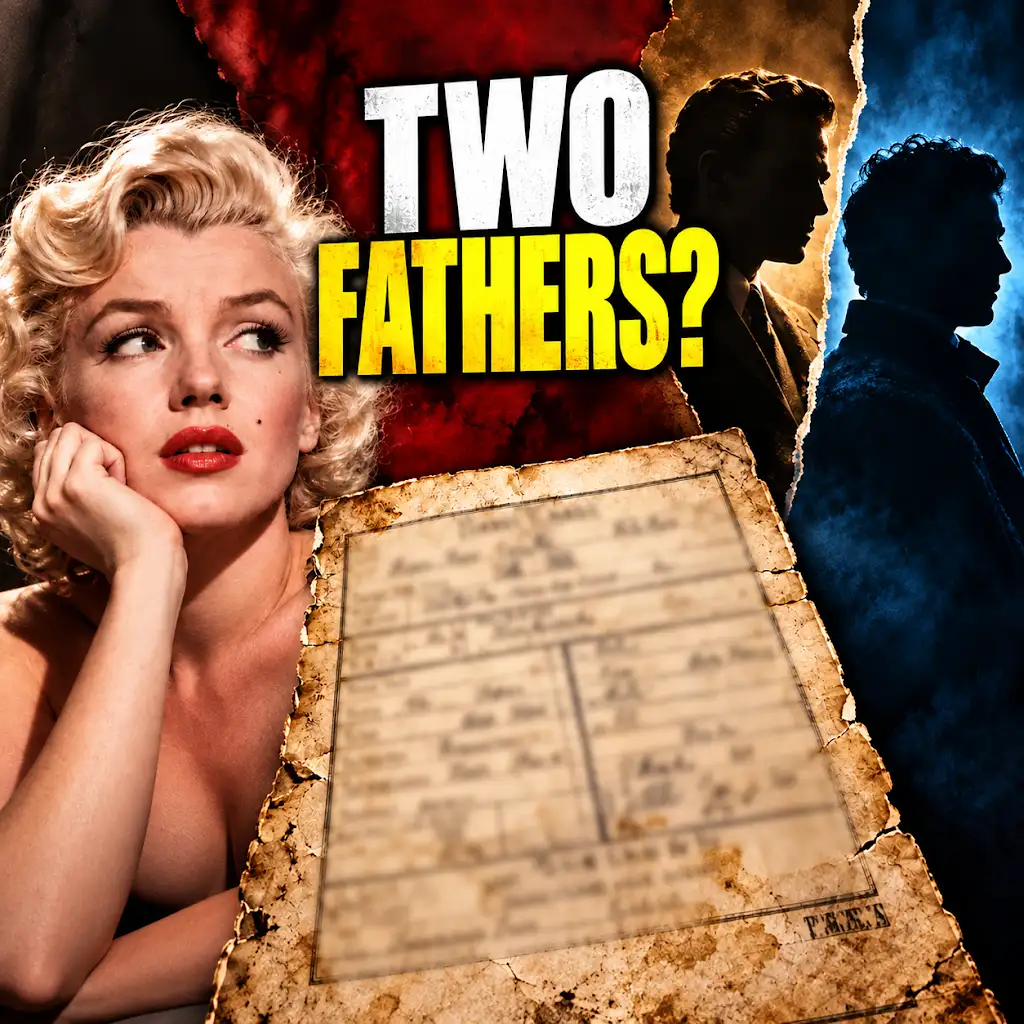
Marilyn Monroe’s Birth Certificate Named One Man. DNA Pointed to Another
FAQs
1. What is the purpose of the Marilyn Monroe family tree DNA project?
The Marilyn Monroe family tree DNA project aims to trace the genetic lineage of Marilyn Monroe and her relatives to gain insights into her ancestry and family history.
2. How does DNA testing help in constructing Marilyn Monroe’s family tree?
DNA testing can provide valuable information about genetic connections between individuals, helping to confirm relationships and identify common ancestors in Marilyn Monroe’s family tree.
3. Who can participate in the Marilyn Monroe family tree DNA project?
Family members of Marilyn Monroe, both close and distant relatives, can participate in the DNA project to contribute their genetic information for the construction of her family tree.
4. What are the potential benefits of exploring Marilyn Monroe’s family tree through DNA analysis?
By exploring Marilyn Monroe’s family tree through DNA analysis, researchers and genealogists can uncover hidden connections, solve mysteries, and potentially discover new relatives or branches of her family tree.
5. How can the results of the Marilyn Monroe family tree DNA project be used?
The results of the Marilyn Monroe family tree DNA project can be used to create a detailed genetic genealogy of Marilyn Monroe’s family, shed light on her heritage, and provide a deeper understanding of her roots and ancestry.