The story of Marilyn Monroe’s paternity is a complex tapestry woven with legal declarations, enduring speculation, and a persistent search for biological truth. Throughout her life and even after her death, the question of her father’s identity remained a shadow, influencing her personal narrative and fueling public fascination. While legal documents pointed to one man, the whispers and possibilities surrounding another cast a long and intriguing light on the iconic actress. Understanding this duality requires delving into the legal framework of the time, the social circumstances of her birth, and the lasting impact of these ambiguities on Marilyn herself.
The Shadow of Legal Paternity
Marilyn Monroe, born Norma Jeane Mortenson on June 1, 1926, in Los Angeles, was officially recognized as the daughter of Martin Edward Mortensen. This legal designation, however, was far from straightforward and became a source of confusion and contention throughout her life. Her mother, Gladys Pearl Baker (née Monroe), was married to Mortensen for a brief period before Norma Jeane’s birth, but their relationship was already strained and they were largely estranged. The circumstances surrounding her conception and birth were clouded by ambiguity, leading to inconsistencies in official records and personal accounts.
The Unstable Marriage of Gladys and Martin
Gladys Mortensen, Marilyn’s mother, was a woman who struggled with mental health issues and a series of unstable relationships. Her marriage to Martin Mortensen, a man described as a drifter with a history of alcohol abuse and a penchant for leaving, was short-lived and marked by frequent separations. They were married on June 27, 1924, and were living apart by the time Norma Jeane was conceived. This marital instability immediately cast a doubt on Martin Mortensen’s definitive paternity, although legally, he remained the father due to the existing marriage.
The Legal Declaration and its Limitations
Martin Mortensen was named as the father on Norma Jeane’s birth certificate. This was a standard procedure for children born within a marriage, even if the couple was separated. However, it is widely believed that Mortensen was not the biological father. Gladys herself offered conflicting accounts of her daughter’s parentage over the years, adding to the confusion. The legal declaration of paternity, while official, did not necessarily reflect biological reality, a distinction that would have profound implications for Norma Jeane, who would later adopt the name Marilyn Monroe.
The Absence of a Definitive Biological Father in Legal Records
Crucially, Martin Mortensen was largely absent from Norma Jeane’s life. He reportedly left the family shortly after her birth, or even before, and had minimal to no contact with her. This lack of paternal involvement meant that the legal designation of fatherhood was largely a formality, devoid of any actual paternal role or influence. The legal framework of the era, while designed to provide a stable family structure, often struggled to account for the complexities of fractured relationships and uncertain parentage.
The ongoing debate surrounding Marilyn Monroe’s legal father versus her biological father has captivated many, shedding light on the complexities of identity and heritage in the realm of celebrity culture. For those interested in exploring how historical narratives can shape our understanding of personal legacies, a related article titled “Uncovering Ancient Water Management Systems” offers intriguing insights into how past systems of governance and societal structures influence contemporary discussions. You can read more about it here: Uncovering Ancient Water Management Systems.
The Persistent Question of Biological Fatherhood
Beyond the legal pronouncements, the question of Marilyn Monroe’s biological father has been a subject of persistent speculation and investigation. The most prominent contender, and the one most often cited by biographers and historians, is Stanley Gifford. Gifford was a coworker of Gladys Monroe at the film processing company Consolidated Film Industries. The timing of Norma Jeane’s conception aligns with a period when Gladys and Gifford were reportedly involved.
Stanley Gifford: The Leading Contender
Stanley Gifford was a handsome, married man who worked with Gladys at Consolidated Film Industries. Accounts from individuals who knew Gladys at the time suggest a romantic involvement between them. Marilyn herself reportedly received a photograph of a man she was told was her father, and many believe this photograph depicted Gifford. The physical resemblance between Marilyn and Gifford, as observed in photographs, has also fueled this speculation. Gifford’s alleged paternity is supported by the fact that Gladys was already separated from Martin Mortensen at the time of Norma Jeane’s conception, and it’s plausible that she had an affair with Gifford.
Gladys’s Ambiguous Statements
Gladys Baker was notoriously inconsistent in her accounts of Norma Jeane’s father. In some instances, she alluded to a man named “Stan” or “Stanley,” reinforcing the possibility of Gifford’s paternity. At other times, she would offer vaguer recollections or avoid the topic altogether, possibly due to the societal stigma associated with extramarital affairs or her own emotional instability. These ambiguous statements, while not definitive proof, contributed to the enduring mystery and the growing belief that Martin Mortensen was not the biological father.
The Role of Circumstance and Social Norms
The era in which Marilyn was born was one where illegitimacy carried significant social stigma. For a woman like Gladys, who was already facing personal challenges, admitting to an extramarital affair that resulted in a child could have had severe repercussions. This social pressure may have influenced her reluctance to be entirely forthcoming about the biological father, and her decision to legally name Martin Mortensen as the father, even if he was not biologically so, was likely a pragmatic choice to provide a semblance of legitimacy.
The Lack of Definitive Biological Proof
Despite the strong circumstantial evidence, definitive biological proof of Stanley Gifford’s paternity was never established. DNA testing was not available in the way it is today, and without a willing participant or surviving relatives for testing, the biological link remained in the realm of strong conjecture. While many believe Gifford was the father, the absence of concrete scientific evidence means that absolute certainty is unattainable. This unresolved aspect of her parentage continued to shape Marilyn’s sense of identity.
The Impact on Marilyn’s Early Life and Identity
The ambiguity surrounding her father’s identity had a profound and lasting impact on Marilyn Monroe’s formative years and her sense of self. Growing up without a clear paternal figure and with conflicting information about her origins left her with a deep-seated sense of insecurity and a longing for belonging. This emotional landscape undoubtedly shaped her career choices and her personal relationships.
A Childhood of Instability and Foster Homes
Due to Gladys’s ongoing mental health struggles and inability to care for her daughter, Norma Jeane spent much of her childhood in foster homes and orphanages. This constant state of flux and lack of a stable family environment exacerbated her feelings of abandonment and rootlessness. The absence of a consistent paternal presence, regardless of biological certainty, contributed to this feeling of being adrift.
The Search for Belonging and Love
Marilyn’s lifelong quest for love, security, and a stable family can be seen as a direct consequence of her early experiences. She repeatedly sought validation and a sense of belonging, often through her relationships with men. Her marriages to James Dougherty, Joe DiMaggio, and Arthur Miller, while diverse in their dynamics, all carried a subtext of her search for a father figure or a stable male presence in her life.
The Psychological Scars of Paternity Uncertainty
The psychological impact of not knowing her biological father, coupled with the legal fiction of a largely absent father, likely contributed to Marilyn’s insecurities and her struggles with self-esteem. This uncertainty may have fueled her deep desire for affirmation and her constant need to prove her worth, both in her professional and personal life. The lack of a defined paternal lineage could have fostered a sense of being an outsider, an orphan in a more profound sense.
The Name Change and Reinvention
The adoption of the name Marilyn Monroe was not just a professional rebranding; it was a deliberate act of self-creation. By shedding the name Norma Jeane Mortenson, she was attempting to distance herself from a past shadowed by instability and uncertainty. The choice of “Monroe,” her mother’s maiden name, was a connection to her maternal lineage, but the absence of a paternal surname left a void that she would continue to grapple with.
The Enduring Legacy of the Paternity Mystery
The mystery surrounding Marilyn Monroe’s paternity continues to fascinate and intrigue, extending far beyond mere biographical trivia. It speaks to broader themes of identity, belonging, and the lasting impact of family secrets. The unresolved nature of her parentage has become an integral part of her mythology, adding another layer to the complex and captivating figure she remains.
A Symbol of Unresolved Questions
Marilyn Monroe’s paternity story serves as a potent symbol of the unresolved questions that can haunt individuals and families across generations. The ambiguity surrounding her father highlights the limitations of legal declarations when they fail to align with biological realities and the emotional toll that such discrepancies can take. Her life story encourages reflection on the importance of truth and the consequences of deception, even when born out of necessity or societal pressure.
Fueling Biographies and Documentaries
The enigma of Marilyn’s father has been a recurring theme in countless biographies, documentaries, and scholarly articles about her life. Researchers and enthusiasts have dedicated significant effort to piecing together the fragments of evidence, interviewing those who knew her and her mother, and analyzing historical records. This ongoing investigation underscores the enduring public interest in uncovering every facet of her life, including this deeply personal and poignant aspect.
The Human Element of the Icon
Ultimately, the discussion of Marilyn Monroe’s legal father versus her potential biological father humanizes the iconic actress. It reminds us that behind the glamour and the legend was a woman with complex origins and emotional vulnerabilities. Her struggle with paternity uncertainty is a relatable human experience, even for someone as extraordinary as Marilyn Monroe, and it adds a layer of depth and pathos to her tragic story.
The Irreducible Mystery
Despite the extensive research and speculation, the definitive answer to the question of Marilyn Monroe’s biological father may remain forever elusive. The passage of time, the loss of key individuals, and the inherent difficulties in confirming such matters retrospectively mean that the mystery will likely endure. This irreducible mystery, in a way, becomes an inseparable part of Marilyn’s legacy, a constant reminder of the questions that lie beneath the surface of even the most public lives.
The intriguing debate surrounding Marilyn Monroe’s legal father versus her biological father has captivated many, shedding light on the complexities of identity and heritage. This topic is explored in depth in a related article, which delves into the broader implications of familial connections and the impact they have on personal narratives. For those interested in understanding how such themes resonate across different contexts, you can read more about it in this insightful piece on the archaeology of food rationing.
The Legal vs. Biological Dichotomy in Public Perception
| Aspect | Legal Father | Biological Father |
|---|---|---|
| Name | Charles Stanley Gifford (alleged legal father) | Possibly Charles Stanley Gifford or other (disputed) |
| Relationship to Marilyn Monroe | Listed as legal father on birth certificate | Uncertain; biological paternity disputed |
| Marilyn Monroe’s Birth Name | Norma Jeane Mortenson (later Baker) | Same |
| Evidence Supporting Paternity | Birth certificate listing | Speculation, no definitive DNA evidence |
| Legal Recognition | Recognized as father on official documents | No legal recognition |
| Impact on Marilyn Monroe’s Life | Minimal direct impact known | Uncertain; possible influence on identity questions |
The public perception of Marilyn Monroe’s paternity has largely gravitated towards the more compelling narrative of a biological father other than the legally declared one. While the legal framework provided a structure, the emotional and speculative interest has always leaned towards the biological truth, or at least the perceived biological truth. This dichotomy highlights how human interest often prioritizes emotional resonance and the search for a more “authentic” lineage over purely legal pronouncements.
The Emotional Resonance of a Biological Father
For many, the idea of a biological father, even a flawed one, carries more emotional weight than a legal designation tied to a man who was absent from the child’s life. The possibility of Stanley Gifford being the biological father introduces a narrative of potential love and connection, however fleeting or complicated. This aligns with the human desire to understand roots and the biological bonds that shape us. The legal father, Martin Mortensen, represents a procedural formality, while the biological father represents a potential biological connection and a more compelling “story.”
The Role of Media and Speculation
The media has played a significant role in shaping public perception. Sensationalist headlines and speculative articles have often favored the Stanley Gifford narrative, presenting it as the more likely or even confirmed truth. This ongoing media attention, driven by public curiosity, has solidified this interpretation in the popular consciousness, often overshadowing the legal realities of the situation. The narrative of a secret lover and a hidden paternity is inherently more dramatic than the mundane reality of a strained marriage and a legal declaration.
The Impact of Marilyn’s Own Perceived Search
Marilyn’s own alleged inquiries and interest in her paternity, as reported by various sources, further fueled public speculation. If Marilyn herself was seeking answers, it amplified the public’s desire to find them. Her longing for a father figure and her reported belief that she might have had a different biological father naturally led her fans and biographers to investigate these possibilities with great fervor. Her own personal quest became a proxy for the public’s fascination.
The Enduring Narrative of the “Real” Father
The “real” father narrative, the biological father, has become the dominant narrative surrounding Marilyn Monroe’s paternity. While acknowledging Martin Mortensen’s legal status is necessary for historical accuracy, the public imagination has largely settled on Stanley Gifford as the more resonant and emotionally satisfying answer. This enduring narrative, even without definitive proof, speaks to our collective fascination with the hidden truths behind the public personas of our icons. The complexity of her situation—a legal father absent and a rumored biological father—offers a compelling, albeit unresolved, chapter in the life of one of Hollywood’s most enduring legends.
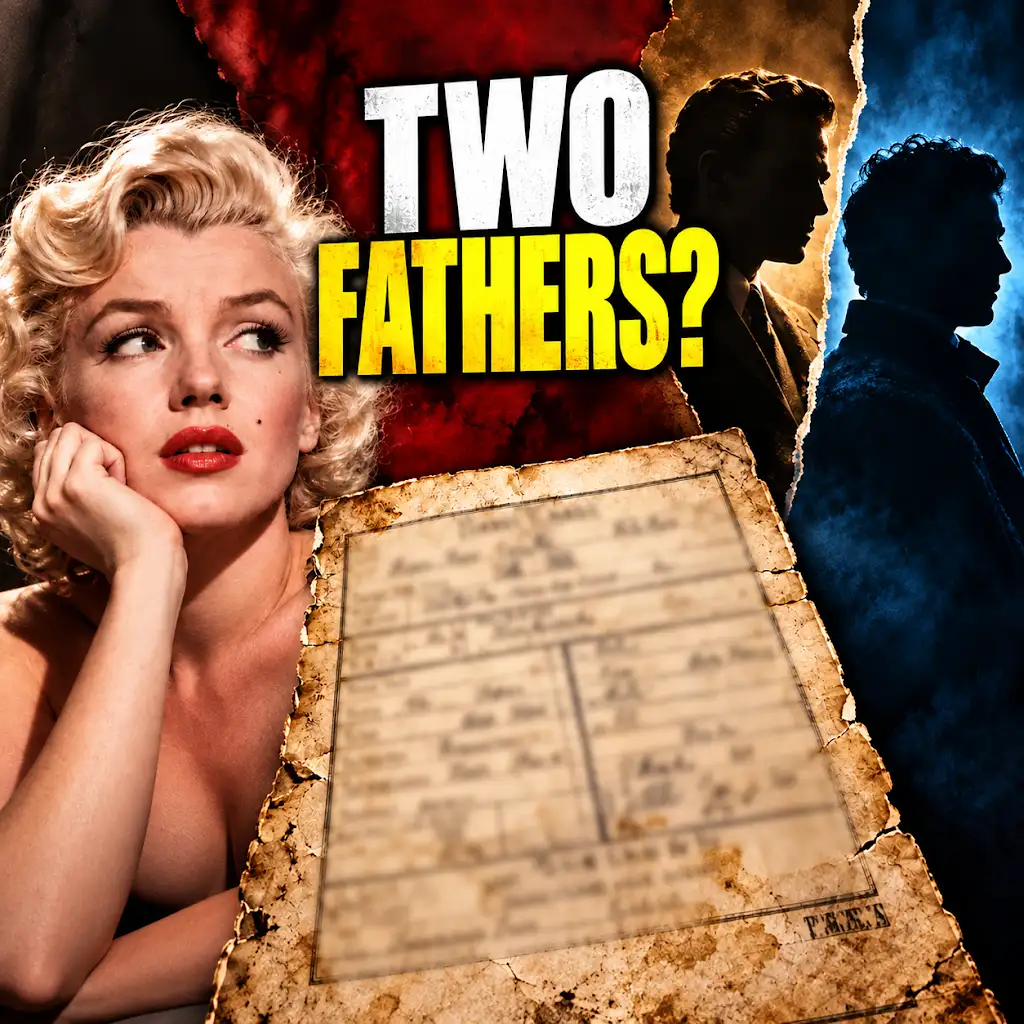
Marilyn Monroe’s Birth Certificate Named One Man. DNA Pointed to Another
FAQs
Who was Marilyn Monroe’s legal father?
Marilyn Monroe’s legal father was Martin Edward Mortensen, who was listed on her birth certificate. He was a man with whom her mother, Gladys Pearl Baker, was briefly married.
Who was Marilyn Monroe’s biological father?
There has been speculation and controversy surrounding Marilyn Monroe’s biological father. While her legal father was Martin Edward Mortensen, some believe that her biological father was actually Charles Stanley Gifford, a co-worker of Gladys Pearl Baker.
Was Marilyn Monroe aware of the uncertainty surrounding her paternity?
Yes, Marilyn Monroe was aware of the uncertainty surrounding her paternity. She reportedly expressed doubts about who her biological father was and felt a sense of abandonment due to not knowing the truth.
Did Marilyn Monroe have a relationship with her legal father, Martin Edward Mortensen?
Marilyn Monroe did not have a close relationship with her legal father, Martin Edward Mortensen. He was largely absent from her life, and she was raised by various foster families and in orphanages due to her mother’s struggles with mental health.
How has the mystery surrounding Marilyn Monroe’s paternity impacted her legacy?
The mystery surrounding Marilyn Monroe’s paternity has added to the intrigue and mystique surrounding her life and legacy. It has been a topic of fascination for fans and scholars alike, contributing to the ongoing interest in her personal history and background.