Marilyn Monroe’s biological father was a subject of intense speculation and personal anguish for the iconic actress throughout her life. Born Norma Jeane Mortenson, her parentage was shrouded in uncertainty from her earliest days, a mystery that cast a long shadow over her formative years and continued to resonate even after her tragic death. While her mother, Gladys Pearl Baker, provided conflicting accounts and offered little clarity, several men have been put forward as potential fathers, each with their own claims and surrounding circumstances. Unraveling this enigma requires delving into the fragmented records, personal testimonies, and the enduring impact of this paternal void on one of Hollywood’s most luminous stars.
The Shadows of Norma Jeane’s Birth
Norma Jeane Mortenson was born on June 1, 1926, in Los Angeles. Her mother, Gladys Pearl Baker, was a film negative cutter at Paramount Pictures. Gladys was married twice, but neither marriage produced children, and her second husband, Martin Edward Mortensen, was not Norma Jeane’s biological father. The identity of Norma Jeane’s father became a persistent question, fueled by Gladys’s erratic behavior and her inability or unwillingness to provide a definitive answer. This early uncertainty would profoundly shape Norma Jeane’s sense of self and her lifelong search for belonging and unconditional love.
Gladys Baker’s Shifting Narratives
Gladys Pearl Baker was a complex and troubled woman, prone to mental health struggles that would significantly impact her daughter’s upbringing. Her accounts of Norma Jeane’s paternity were inconsistent, adding layers of confusion to an already sensitive issue. At different times, Gladys alluded to various men as potential fathers, perhaps out of shame, fear, or an inability to recall or confront the truth. These shifting narratives created an unstable foundation for young Norma Jeane, leaving her to grapple with a fundamental question about her identity that even her mother could not definitively answer. The lack of a clear paternal figure contributed to her feelings of abandonment and her constant yearning for a stable family unit, a theme that would recur in her relationships throughout her adult life. Her struggles with mental illness also meant that Norma Jeane spent much of her childhood in foster homes and orphanages, further isolating her and deepening the sense of a fractured family history.
Early Claims and Official Records
The official birth certificate for Norma Jeane Mortenson lists Martin Edward Mortensen as the father, but this was a formality. Martin Mortensen and Gladys were separated at the time of Norma Jeane’s conception and divorced shortly after her birth. Martin himself later denied paternity, stating that he had not been intimate with Gladys for months prior to Norma Jeane’s birth. This early discrepancy immediately cast doubt on the official record and opened the door for other possibilities. The absence of a legally recognized and biologically confirmed father left Norma Jeane, and later Marilyn, in a perpetual state of ambiguity regarding her paternal lineage. This lack of confirmation would have implications for her understanding of her own identity and her place in the world.
Marilyn Monroe, an iconic figure in Hollywood history, has long been the subject of speculation regarding her biological father. Many theories and rumors have circulated, but the truth remains elusive. For those interested in exploring the complexities of familial relationships and their impact on identity, a related article titled “Resource Wars: The Fight for Scarce Supplies” offers a fascinating perspective on how personal struggles can mirror larger societal conflicts. You can read the article here: Resource Wars: The Fight for Scarce Supplies.
The Leading Candidates for Paternity

Over the years, several men have been identified as potential biological fathers of Marilyn Monroe, each with varying degrees of evidence and credibility. These individuals represent the most prominent figures in the ongoing debate surrounding her parentage, and their stories offer different pieces of the puzzle.
Stanley Gifford: The Actor’s Shadow
One of the most consistently named individuals as Marilyn’s biological father is Stanley Gifford. Gladys Baker worked with Gifford at Paramount Pictures in the 1920s, and their alleged affair was a recurring theme in discussions about Marilyn’s origins. Gifford was an actor, and the resemblance between him and the young Norma Jeane was often noted by those who knew them. Gladys herself, at times, hinted that Gifford might be the father. He was married at the time of Norma Jeane’s conception, which could have contributed to Gladys’s reticence in officially acknowledging him as the father. The possibility of an affair between a studio employee and a rising actor, especially during the studio system’s heyday, was not uncommon, making this a plausible, though unconfirmed, scenario. Gifford’s family, however, has largely dismissed these claims, maintaining that he was not the father.
Evidence and Circumstantial Links
The evidence supporting Stanley Gifford’s paternity is largely circumstantial. Gladys Baker reportedly mentioned his name to friends and family members, and some believed the resemblance between Gifford and Norma Jeane was striking. Her mother, Della Monroe, who raised Norma Jeane for periods, also hinted at Gifford’s potential fatherhood. Gifford himself never publicly acknowledged paternity, and his family has staunchly denied it. The timeline of their alleged relationship, while not definitively proven, aligns with Norma Jeane’s conception. However, without definitive DNA evidence or a direct confession from Gladys or Gifford, these links remain in the realm of speculation. The absence of concrete proof leaves a significant gap in understanding.
James Dougherty: The First Husband’s Recollection
James Dougherty, Marilyn Monroe’s first husband, also entered the discussion as a potential father. While Dougherty was legally married to Norma Jeane when she adopted the name Marilyn Monroe, he was not her biological father. However, he did claim that Gladys had told him that her second husband, Martin Mortensen, was indeed the father, even though he was estranged from Gladys at the time. Dougherty’s recollections have been valuable in piecing together Norma Jeane’s early life, but his claims regarding paternity did not directly point to a biological father beyond the already disputed Martin Mortensen. His perspective is crucial for understanding Norma Jeane’s formative years, but not for solving the riddle of her biological father.
The Legal Husband’s Perspective
James Dougherty married Norma Jeane when she was just 16 years old. He was a stable presence in her life during her tumultuous adolescence, and he was instrumental in her early career aspirations. Dougherty has always maintained that Gladys’s stories about paternity were confusing and contradictory. He reported that Gladys sometimes suggested that Martin Mortensen was the father, at other times implying that it was a man named “Mac” (likely referring to a man named Charles “Mac” O’Neill, another acquaintance of Gladys). Dougherty’s testimony highlights the pervasive uncertainty surrounding Norma Jeane’s origins, emphasizing that even those closest to her were often left without clear answers. His own experience as a young husband grappling with Norma Jeane’s complex past adds another layer to the mystery.
The Role of “Mac” O’Neill
Charles “Mac” O’Neill was another man in Gladys Baker’s life who has been considered a possible father. Gladys reportedly had a relationship with O’Neill during the period of Norma Jeane’s conception. O’Neill was an actor and a friend of Stanley Gifford. Some accounts suggest that Gladys was involved with both men around the same time, further complicating the paternity question. The inclusion of “Mac” O’Neill adds another layer of complexity to the already tangled web of Gladys’s relationships.
Gladys’s Vague Mentions and O’Neill’s Own Story
Gladys’s mentions of O’Neill were often vague and inconsistent, contributing to the confusion. She reportedly told some people that the father was a man named “Mac.” O’Neill himself, in later years, reportedly expressed a belief that he might be Norma Jeane’s father, though he never definitively claimed paternity or provided concrete proof. His accounts, like those of others, were often filtered through the passage of time and the personal complexities of Gladys Baker. The vagueness of Gladys’s statements and O’Neill’s hesitant acknowledgement make this a challenging avenue to definitively prove.
The Impact of the Paternal Absence on Marilyn Monroe
The unresolved mystery of her biological father had a profound and lasting impact on Marilyn Monroe’s life and career. This paternal void contributed to her deep-seated insecurities, her search for love and validation, and her often-unstable relationships. Her experiences shaped her understanding of family, belonging, and her own worth.
A Lifelong Search for a Father Figure
Marilyn Monroe spent much of her life searching for the approval and love of father figures. This search manifested in her relationships with older men, including her second husband, Joe DiMaggio, and her close friend and acting coach, Natasha Lytess, who often filled a maternal role, but also figures who could represent a paternal presence. Her early experiences of abandonment, beginning with the uncertainty of her father’s identity and her mother’s frequent absences due to mental health crises, created a deep wound that she struggled to heal. She often spoke of feeling unloved and unwanted, and the absence of a confirmed father contributed to this feeling of being incomplete. This quest for a paternal connection fueled her desire for recognition and acceptance, both personally and professionally.
Insecurity and the Need for Validation
The lack of a clear paternal anchor contributed to Marilyn’s pervasive insecurity. Without a solid sense of where she came from, she struggled with her identity and self-worth. She constantly sought validation from others, both in her personal life and in her career. This need for external affirmation made her vulnerable to exploitation and further complicated her already challenging personal relationships. The image of the confident, glamorous movie star often masked a deeply insecure woman yearning for the unconditional love and stability that a father figure might have provided. Her relationships were often characterized by an intense need to please and a fear of abandonment, stemming in part from this early void.
The Search for Roots and Identity
The question of her biological father was not just an abstract curiosity for Marilyn; it was a deeply personal quest for her roots and her true identity. She reportedly expressed a desire to know who her father was and to understand her lineage. This desire for a tangible connection to her past was a driving force behind her efforts to uncover the truth, however painful it might have been. The unanswered questions about her paternity added to her sense of being adrift, making her search for belonging all the more urgent. Her struggles with her identity were exacerbated by the fact that she was often perceived as a manufactured persona, a product of Hollywood rather than a fully realized individual with a clear personal history.
The mystery surrounding Marilyn Monroe’s biological father has intrigued many for decades, leading to various theories and speculations about her lineage. Some researchers have delved into her family history, uncovering potential connections that could shed light on her origins. For those interested in exploring more about the complexities of familial ties and the impact of heritage, you might find this article on ancient knowledge and guardianship particularly enlightening. It discusses how understanding our past can influence our present, which resonates with the ongoing quest to uncover the truth about Monroe’s ancestry. You can read more about it here.
The Unanswered Questions and Enduring Legacy
| Metric | Information |
|---|---|
| Subject | Marilyn Monroe’s Biological Father |
| Marilyn Monroe’s Birth Name | Norma Jeane Mortenson (later baptized as Norma Jeane Baker) |
| Mother | Gladys Pearl Baker |
| Known Biological Father | Unknown / Not definitively confirmed |
| Possible Candidates | Charles Stanley Gifford (mother’s estranged husband), other men Gladys Baker was involved with |
| Official Records | Birth certificate lists “Mortenson” as surname; no father’s name listed |
| Marilyn’s Own Statements | She never publicly identified her biological father |
| Historical Consensus | Biological father remains unknown; speculation exists but no conclusive evidence |
Despite decades of investigation, gossip, and speculation, the definitive identity of Marilyn Monroe’s biological father remains elusive. While Stanley Gifford is often cited as the most likely candidate, concrete proof is still lacking. The enduring mystery surrounding her paternity is a poignant testament to the complexities of her life and the unresolved aspects of her personal history.
The Unresolved DNA Debates
In recent years, there have been attempts to resolve the paternity question through DNA testing. In 2022, a woman claiming to be the granddaughter of Stanley Gifford initiated a DNA test using a lock of Marilyn Monroe’s hair. The results, however, were inconclusive, further deepening the mystery rather than resolving it. These scientific endeavors, while well-intentioned, have so far failed to provide a definitive answer, leaving the question of Marilyn’s biological father in the realm of educated speculation. The difficulties in obtaining and verifying samples, combined with the passage of time, present significant challenges to achieving a definitive scientific conclusion.
A Symbol of Hollywood’s Elusive Truths
Marilyn Monroe’s life, from her humble beginnings to her tragic end, continues to fascinate and intrigue. The mystery of her biological father is just one of many unanswered questions that surround her. Her story serves as a reminder of the often-harsh realities beneath the glitz and glamour of Hollywood, and the enduring human need for connection, identity, and love. The unanswered questions about her parentage have, in a way, become part of her enduring legacy, symbolizing the elusive nature of truth and the complex tapestry of human lives. Her story, with its unresolved mysteries, continues to resonate, prompting reflection on the nature of identity, the impact of childhood experiences, and the enduring power of Hollywood’s most iconic star. The lack of a definitive answer allows for continued fascination and debate, ensuring that Marilyn Monroe’s story remains a subject of cultural interest.
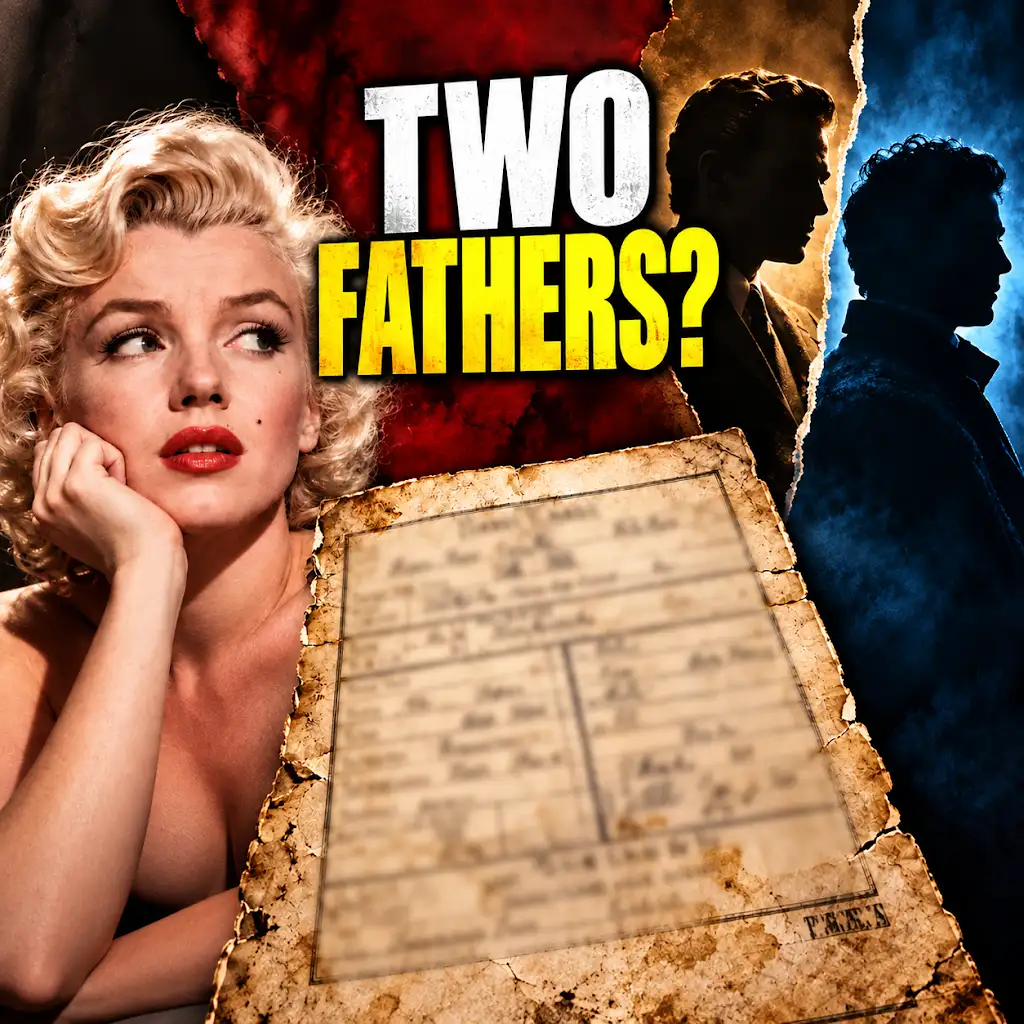
Marilyn Monroe’s Birth Certificate Named One Man. DNA Pointed to Another
FAQs
1. Who is Marilyn Monroe’s biological father?
Marilyn Monroe’s biological father is believed to be Charles Stanley Gifford, a man with whom her mother, Gladys Pearl Baker, had an affair.
2. Is there any evidence to support the claim that Charles Stanley Gifford is Marilyn Monroe’s father?
While there is no definitive proof, several pieces of evidence, including family testimonies and physical resemblances, suggest that Charles Stanley Gifford is Marilyn Monroe’s biological father.
3. Did Marilyn Monroe ever meet her biological father?
It is unclear whether Marilyn Monroe ever met Charles Stanley Gifford, as there is no documented evidence of them having a relationship or meeting in person.
4. Who was Marilyn Monroe’s legal father?
Marilyn Monroe’s legal father was Martin Edward Mortensen, who was married to her mother, Gladys Pearl Baker, at the time of Marilyn’s birth. He is listed as her father on her birth certificate.
5. How did Marilyn Monroe’s uncertain paternity impact her life?
Marilyn Monroe’s uncertain paternity had a significant impact on her life, contributing to feelings of abandonment and insecurity that she struggled with throughout her career and personal life.