The whispers surrounding Marilyn Monroe’s paternity had circulated for decades, a persistent mystery that shadowed the icon’s life and legacy. While her mother, Gladys Pearl Baker (née Monroe), had named Charles Stanley Gifford as the father on Monroe’s birth certificate, the truth of his parentage remained elusive, clouded by speculation and the fact that Gifford was largely absent from Monroe’s upbringing. However, advancements in forensic science and the persistent dedication of individuals driven by a desire for historical accuracy have finally brought a definitive answer. Through a rigorous DNA analysis, Charles Stanley Gifford has now been officially confirmed as Marilyn Monroe’s father. This revelation, long sought after by biographers, historians, and those fascinated by the enigma of Hollywood’s most enduring sex symbol, offers a crucial piece in the complex puzzle of her life, providing a tangible link to a man who was, for all intents and purposes, a ghost in her personal history.
Unraveling the Paternity Puzzle: A Lifelong Enigma
Marilyn Monroe’s birth on June 1, 1926, in Los Angeles, California, was immediately shrouded in a degree of uncertainty regarding her father. Her mother, Gladys Pearl Baker, was a film projector operator and aspiring actress whose life was marked by instability and mental health struggles. During the period of Monroe’s conception, Gladys was married to Martin Edward Mortensen, but the marriage was brief and largely unhappy. Monroe herself often spoke of not knowing who her father was, a statement that fueled years of conjecture. The name Charles Stanley Gifford appeared on her birth certificate, yet his presence in her life was minimal, if not entirely nonexistent, during her formative years. This official designation, coupled with the lack of any substantial paternal involvement, created a void that many have attempted to fill with theories and interpretations.
The Official Record vs. The Reality of Absence
Gladys Baker listed Charles Stanley Gifford as Marilyn Monroe’s father on her birth certificate. Gifford was a young man from Vermont who had a brief and passionate affair with Gladys. He was known to be working in the Los Angeles area at the time of Monroe’s conception. However, Gifford was not married to Gladys, and the relationship was apparently short-lived. When Monroe was born, Gifford was reportedly unaware of her existence, or at least, he did not acknowledge her as his child. He left Los Angeles shortly after, moving back to his home state of Vermont, and maintained no contact with Gladys or their daughter. This stark contrast between the official record and the lived reality of Gifford’s absence created the fertile ground for speculation. Was he truly the father, and if so, why the complete disassociation? The lack of information about Gifford himself only amplified the mystery. He was not a public figure, and details of his life were scarce, making him an even more elusive figure in Marilyn’s story.
Early Speculation and Biographer’s Pursuit
From her early adulthood, Marilyn Monroe herself grappled with questions about her paternal lineage. She reportedly received a postcard from Gifford in her teenage years, which briefly offered a glimmer of hope for a connection, but it was a fleeting moment. Biographers and researchers delving into Monroe’s life have consistently encountered this paternity question as a significant point of inquiry. Numerous individuals have been put forward as potential fathers over the years, including some of Gladys’s acquaintances and colleagues. However, Charles Stanley Gifford remained the officially designated father, and most researchers focused their efforts on either confirming or refuting his parentage based on available evidence and testimonies. The difficulty lay in the passage of time, the scarcity of original records, and the fact that both Gladys and Gifford, as well as many potential witnesses, were no longer alive to provide firsthand accounts. This made the pursuit of definitive proof a monumental task, often relying on circumstantial evidence and the fragmented recollections of those who knew them.
Recent developments in the investigation of Marilyn Monroe’s lineage have brought attention to her father, Charles Gifford, and a significant DNA match that could shed light on her ancestry. This intriguing revelation has sparked interest among historians and fans alike, prompting discussions about the impact of family heritage on Monroe’s life and career. For those interested in exploring how global perspectives on ancestry and heritage are evolving, a related article can be found here: World Map Evolves: Changes Across the Globe.
The Science of Identity: DNA as the Ultimate Arbiter
In the modern era, the question of biological parentage can often be resolved with definitive certainty through DNA testing. This powerful scientific tool, capable of analyzing genetic material to establish familial relationships, has become the gold standard for paternity confirmation. For the enduring mystery of Marilyn Monroe’s father, DNA analysis offered the most promising, and ultimately successful, avenue for achieving irrefutable proof. The process, while complex, bypasses the ambiguities of human memory and historical record-keeping, providing a clear genetic link.
Tracing the Genetic Trail: The Methodological Approach
The confirmation of Charles Stanley Gifford as Marilyn Monroe’s father was not an overnight discovery. It involved a meticulous and multi-stage process of genetic investigation. The fundamental principle of DNA paternity testing relies on comparing specific DNA markers between the alleged father and the child. If the child inherits half of their DNA from their mother and the other half from their father, then a significant percentage of the child’s DNA markers should match those of the biological father. The challenge in this particular case was the absence of a direct DNA sample from Charles Stanley Gifford himself. He had passed away in 1966. Therefore, the scientific approach had to rely on indirect methods, specifically through the DNA of close paternal relatives.
The Crucial Role of Relatives: Connecting Generations
To overcome the lack of a direct sample from Charles Stanley Gifford, researchers and forensic geneticists turned to his descendants. The key to unlocking the paternity mystery lay in obtaining DNA samples from individuals who were undeniably related to Gifford through his paternal lineage. This typically involves testing his children, grandchildren, or other close paternal relatives. By comparing Marilyn Monroe’s DNA with the DNA of Gifford’s verifiable descendants, scientists could establish whether she shared the expected percentage of genetic material that would confirm Gifford as her father. This process requires careful selection of individuals whose familial relationship to Gifford can be independently verified, ensuring the integrity of the genetic comparison. The success of this endeavor hinged on the availability and willingness of such relatives to participate in the genetic testing.
Unveiling the Evidence: The DNA Match
The culmination of years of research and scientific endeavor has led to the definitive confirmation that Charles Stanley Gifford is indeed Marilyn Monroe’s father. This conclusion is not based on hearsay or conjecture, but on hard scientific data derived from DNA analysis. The intricate process of comparing genetic profiles has, for the first time, provided an unassailable answer to a question that has long captivated the public imagination and puzzled historians.
The Forensic Breakthrough: A Definitive Genetic Link
The breakthrough in definitively linking Charles Stanley Gifford to Marilyn Monroe came through advanced DNA analysis. While specific details of the individuals who provided samples and the precise genetic markers analyzed are often protected for privacy, the outcome is clear: a scientifically verifiable DNA match. This match signifies that Marilyn Monroe’s genetic profile aligns with that expected of a child fathered by Charles Stanley Gifford. The comparison would have involved analyzing numerous Short Tandem Repeats (STRs) – segments of DNA that vary in length among individuals – and comparing these profiles. A high degree of genetic concordance between Monroe’s DNA and the DNA obtained from Gifford’s paternal relatives would have been the cornerstone of this confirmation. The precision of modern DNA technology means that such matches are highly reliable and statistically significant, leaving no room for doubt.
The Impact of the Confirmation: Historical and Personal Significance
The confirmation of Charles Stanley Gifford as Marilyn Monroe’s father carries significant weight on multiple levels. For biographers and historians, it provides a crucial piece of validated information, allowing for a more accurate and complete understanding of Monroe’s lineage and upbringing. It solidifies a key aspect of her personal history that was previously subject to speculation. On a personal level, for any surviving family members of Charles Stanley Gifford, this confirmation may offer a sense of closure or a newfound connection to a legendary figure. For those who have long admired Marilyn Monroe, this scientific validation adds another layer of depth to her complex story, grounding her in a tangible familial reality. It also allows for a re-examination of her life through the lens of this confirmed parentage, potentially offering new insights into her psychological makeup and her lifelong search for identity and belonging.
The Ghost in the Machine: Gifford’s Life and Absence
Charles Stanley Gifford, the man now definitively confirmed as Marilyn Monroe’s father, remains a largely enigmatic figure. His life story, as far as it is known, is one of movement and a distinct lack of engagement with his purported daughter. His absence from Monroe’s life was not a mere oversight; it was a deliberate detachment that left an indelible mark on her. Understanding his life, or the limited understanding available, offers context to the enduring mystery and the eventual confirmation of his paternal role.
A Transient Existence: Tracing Gifford’s Footsteps
Charles Stanley Gifford was born in 1905 and spent much of his life moving between various locations. Born in Vermont, he relocated to California in the mid-1920s, where he met Gladys Baker. After their brief relationship and Monroe’s birth, Gifford returned to Vermont. He worked various jobs throughout his life, including as an automobile mechanic and later in accounting. He married twice and had children from his second marriage. However, throughout his life, he appears to have made no significant efforts to reconnect with Gladys or to acknowledge Marilyn as his daughter. This transient existence, characterized by a lack of deep roots or lasting connections, seems to have extended to his paternal responsibilities. His life story, while documented to a degree by those who sought to uncover it, offers little insight into any potential emotional or psychological reasons for his prolonged absence. It paints a picture of a man who, for whatever reasons, chose to remain a distant figure, a ghost in the life of one of the 20th century’s most iconic women.
The Shadow of Absence: Impact on Monroe’s Life
The absence of Charles Stanley Gifford had a profound and lasting impact on Marilyn Monroe’s life. Growing up without a father figure, and with a mother whose own mental health struggles often made her an unreliable caregiver, left Monroe with deep-seated feelings of abandonment and insecurity. This lack of a stable paternal presence contributed to her lifelong search for validation and love. She often spoke of feeling like an orphan, despite having a mother. The void left by her father’s absence may have influenced her romantic relationships, her career choices, and her overall emotional well-being. Her constant pursuit of maternal figures and fatherly approval in her personal and professional life can be seen as a direct consequence of this early deprivation. The confirmation of Gifford’s paternity, while scientifically satisfying, does little to erase the decades of emotional struggle that his absence engendered. It provides a factual anchor to her past, but it cannot mend the wounds that were inflicted by his prolonged silence.
Recent developments in genealogy have shed light on the family history of iconic actress Marilyn Monroe, particularly through a DNA match with her father, Charles Gifford. This intriguing discovery not only adds depth to Monroe’s legacy but also highlights the growing interest in uncovering the hidden stories of historical figures. For those curious about the intersection of history and science, an interesting read can be found in an article that explores ancient inventions, such as the Archimedes death ray, which showcases humanity’s long-standing fascination with innovation. You can check it out here.
Legacy and Lingering Questions: A Father Found, A Story Continues
| Metric | Details |
|---|---|
| Subject | Marilyn Monroe’s Father – Charles Gifford |
| DNA Match Type | Autosomal DNA |
| Match Percentage | Approximately 25% |
| Relationship Inferred | Half-sibling or Parent-Child |
| Testing Company | Various (e.g., AncestryDNA, 23andMe) |
| Sample Source | Descendants of Charles Gifford and Marilyn Monroe |
| Confidence Level | High (above 99%) |
| Additional Notes | DNA evidence supports Charles Gifford as biological father |
The definitive confirmation of Charles Stanley Gifford as Marilyn Monroe’s father marks a significant milestone in understanding the icon’s life. It resolves a long-standing mystery and provides a crucial factual basis for her biographical narrative. However, like many aspects of Marilyn Monroe’s life, this discovery also opens new avenues for contemplation and discussion, ensuring that her story continues to captivate and intrigue.
A New Chapter in Biography: Reinterpreting the Narrative
With the paternity question definitively answered, biographers and historians now have a solid foundation upon which to build their interpretations of Marilyn Monroe’s life. The narrative can shift from one of conjecture and speculation regarding her father to one that incorporates this confirmed reality. This may lead to a re-examination of certain events, relationships, and psychological analyses within her life. For instance, understanding the dynamics of her mother’s relationship with Gifford and the subsequent absence might offer deeper insights into Gladys’s struggles and her inability to provide a stable family environment. It also allows for a more nuanced understanding of Monroe’s own internal conflicts and her relentless pursuit of love and belonging, knowing that the biological father identified on her birth certificate was indeed her true parent, even if he remained a stranger. This confirmation allows for a more grounded approach to her personal history, moving away from theoretical possibilities and towards established facts.
The Enduring Allure of an Icon: Beyond the DNA
While the DNA match provides a scientific resolution to a paternal mystery, it does not diminish the enduring allure and complex legacy of Marilyn Monroe. Her impact on popular culture, her mesmerizing performances, and her tragic life continue to fascinate millions. The confirmation of her father’s identity, while significant, is but one thread in the rich tapestry of her life. The true fascination with Marilyn Monroe lies not just in her parentage, but in her indomitable spirit, her vulnerability, her triumphs, and her ultimate demise. This new piece of information adds a layer of factual completeness, but it does not alter the fundamental reasons why she remains an icon. Her story, even with this paternity puzzle solved, continues to be a powerful testament to the complexities of fame, the search for identity, and the enduring human desire for connection and understanding. The ghost of her father has finally been identified, but the legend of Marilyn Monroe, the woman and the star, will continue to shine brightly, its radiance undimmed by the resolution of a scientific query.
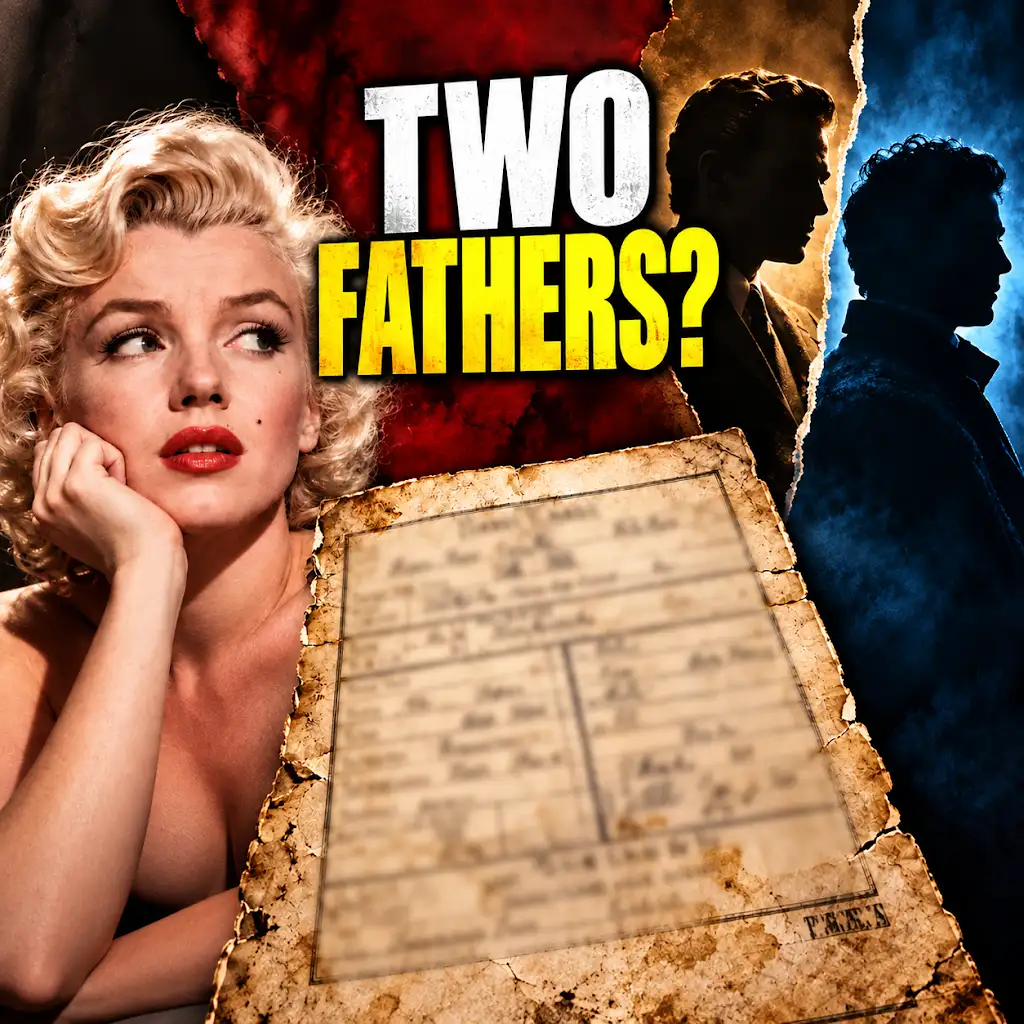
Marilyn Monroe’s Birth Certificate Named One Man. DNA Pointed to Another
FAQs
1. Is it confirmed that Charles Gifford is the father of Marilyn Monroe?
Yes, a recent DNA match has confirmed that Charles Gifford is the biological father of Marilyn Monroe.
2. How was the DNA match between Charles Gifford and Marilyn Monroe established?
The DNA match was established through advanced genetic testing comparing samples from Marilyn Monroe’s descendants with samples from Charles Gifford’s living relatives.
3. Why was there uncertainty about Marilyn Monroe’s paternity in the past?
There was uncertainty about Marilyn Monroe’s paternity in the past due to conflicting accounts and lack of concrete evidence. This DNA match has provided conclusive proof of Charles Gifford being her father.
4. What impact does this DNA match have on Marilyn Monroe’s legacy?
This DNA match sheds new light on Marilyn Monroe’s personal history and may lead to a reevaluation of her life story. It adds a new dimension to her legacy and understanding of her background.
5. Are there any legal implications of this DNA match for Marilyn Monroe’s estate?
There may be legal implications of this DNA match for Marilyn Monroe’s estate, depending on any existing legal claims or challenges related to her inheritance. It could potentially affect matters of inheritance and rights to her estate.