
The life of Marilyn Monroe, a global icon of beauty and glamour, was often shrouded in mystery and speculation, particularly concerning her paternal lineage. For decades, the identity of her father remained an open question, a narrative woven from fragmented accounts and conflicting stories. While Norma Jeane Mortenson, later Marilyn Monroe, was born to Gladys Pearl Baker, her father’s paternity was never definitively established during her lifetime. This uncertainty cast a long shadow over her early years and has continued to fuel public fascination. Numerous theories have circulated, ranging from Gladys’s transient lovers to prominent figures, each adding another layer to the enigma. The absence of a clear paternal connection undoubtedly influenced Monroe’s sense of self and her search for identity, a theme that resonates deeply in her life and career.
This persistent ambiguity has spurred ongoing efforts to uncover the truth. Family historians, biographers, and even geneticists have dedicated time and resources to piecing together the puzzle of Marilyn Monroe’s parentage. The advent of advanced DNA testing has offered a tantalizing new avenue, holding the promise of definitive answers where historical records have failed. The possibility of resolving this long-standing question through modern science has ignited a renewed interest in Monroe’s personal history, seeking to bring closure to a chapter that has remained tantalizingly out of reach for so many years.
Unraveling the Mystery of Paternity
The question of Marilyn Monroe’s father has been a persistent and deeply personal one throughout her life and continues to captivate researchers and fans alike. Norma Jeane Mortenson was born on June 1, 1926, in Los Angeles, California. Her mother, Gladys Pearl Baker, a film editor, was married to Martin Edward Mortensen, whose surname Norma Jeane adopted. However, Gladys and Martin were separated at the time of Norma Jeane’s birth, and it was widely believed that Mortensen was not the biological father. This initial uncertainty set the stage for decades of speculation and a lingering sense of paternal absence in Monroe’s life.
Gladys Baker was known to have had several relationships around the time of Norma Jeane’s conception and birth. One of the most frequently mentioned, and indeed the one Norma Jeane herself was led to believe was her father, was Stanley Gifford, a man Gladys reportedly met and had an affair with. Gifford was an employee at Consolidated Film Industries, where Gladys worked. This connection provided a tangible, albeit unconfirmed, paternal figure for Norma Jeane. She was reportedly shown a photograph of Gifford and told he was her father, a revelation that likely shaped her early understanding of her family tree and her own identity.
The Shadow of Stanley Gifford
Stanley Gifford emerged as a primary candidate for Monroe’s biological father due to his alleged relationship with Gladys Baker. Biographers and researchers have explored Gladys’s accounts and the recollections of those who knew her. Gifford worked as a film laboratory technician, a profession that placed him in the same industry as Gladys. The timing of their alleged affair coincided with the period of Norma Jeane’s conception. This made him a logical and often-cited potential father, offering a concrete, albeit unproven, answer to a question that had long eluded definitive resolution.
Despite the plausibility of the connection, concrete evidence to definitively link Stanley Gifford to Norma Jeane remained elusive for many years. Gladys Baker’s recollections were often inconsistent, and documentation surrounding Gifford’s life and his interactions with Gladys was scarce. Without a direct admission from either party or irrefutable documentary proof, Gifford’s paternity remained speculative, a compelling theory but one lacking definitive confirmation. This uncertainty continued to fuel the narrative of mystery surrounding Monroe’s origins, leaving a void that many hoped science could eventually fill.
Early Theories and Speculation
Beyond Stanley Gifford, numerous other individuals were theorized to be Marilyn Monroe’s biological father. These theories often arose from Gladys Baker’s complex personal life and her tendency to involve herself in relationships with men from various social circles. Some accounts suggested that a man named James Dougherty, Gladys’s first husband and Norma Jeane’s stepfather, might have been the biological father, though this was generally discounted given their separation prior to Norma Jeane’s birth.
Another prominent theory, albeit more sensational and less substantiated, pointed towards Clark Gable, the legendary Hollywood actor. This speculation was likely fueled by Monroe’s admiration for Gable and her roles opposite him in films like “The Misfits.” However, there was no credible evidence to support such a claim, and it was largely dismissed by serious biographers as wishful thinking or sensationalism. These varied theories, while often lacking solid evidence, underscored the pervasive public interest in Monroe’s personal life and the desire to fill the blanks in her history with definitive answers, highlighting the deep-seated need to understand the roots of such an iconic figure.
Recent revelations about Marilyn Monroe’s father have sparked significant interest, particularly following the analysis of DNA evidence that has shed light on her family lineage. This discovery not only deepens our understanding of Monroe’s personal history but also connects to broader themes of identity and heritage. For those intrigued by the intersection of personal stories and economic narratives, an insightful article titled “Is Mexico the New Economic Superpower?” explores how emerging economies are reshaping global dynamics. You can read more about it here.
The Scientific Breakthrough: DNA Testing

The advent of sophisticated DNA testing technology has revolutionized genealogy and opened new doors for resolving long-standing historical mysteries. For decades, the identity of Marilyn Monroe’s father remained a subject of speculation, largely confined to biographical research and the interpretation of anecdotal evidence. However, the possibility of using genetic analysis to definitively identify her paternal lineage offered a powerful new tool. This scientific approach promised to move beyond guesswork and provide concrete, irrefutable answers, bringing a new level of certainty to a deeply personal and historically significant question.
The process of conducting DNA testing for such a case involves obtaining genetic material from individuals who are known to be related to the potential father, or from individuals who are themselves related to Marilyn Monroe and can provide a comparative genetic profile. This requires careful sourcing of samples, often from surviving relatives of the speculated father, or from preserved personal effects that might contain viable DNA. The ethical considerations and the meticulous nature of sample collection are paramount to ensure the integrity and accuracy of the results, transforming a historical enigma into a potential scientific conclusion.
Sourcing Genetic Material
The critical first step in any DNA paternity test is the secure and accurate acquisition of biological samples. For Marilyn Monroe’s paternity, this involved a multi-faceted approach to gather suitable DNA. The primary challenge was the fact that both Gladys Baker and Stanley Gifford had passed away long before the widespread availability of DNA testing. This necessitated the search for surviving relatives who could provide comparative genetic material.
Researchers and family historians diligently tracked down potential relatives of Stanley Gifford. This involved extensive genealogical research, tracing family trees, and identifying living descendants who might be willing to participate. Obtaining samples from these individuals, often through cheek swabs, allowed for the extraction of their DNA. Simultaneously, efforts were made to obtain DNA from sources directly related to Marilyn Monroe. This could include personal items that might have retained cellular material, such as hairbrushes or clothing, though the viability and contamination of such samples are significant hurdles. The success of the DNA testing hinged entirely on the ability to acquire high-quality, uncontaminated samples from individuals whose genetic makeup could be reliably compared to that of Marilyn Monroe and her potential paternal lineage.
The Science of Comparison
Once genetic material was obtained, the core of the DNA paternity test involved a meticulous process of comparison. DNA is inherited from both parents, meaning that a child possesses half of their genetic material from their mother and half from their father. By comparing the DNA of Marilyn Monroe (or a descendant if direct samples were unavailable or unsuitable) with the DNA of potential paternal relatives, scientists could determine the degree of genetic overlap.
Specific markers within the DNA, known as short tandem repeats (STRs), are analyzed. These markers are highly variable among individuals and are inherited in a predictable pattern. If a male individual is indeed the biological father of Marilyn Monroe, then a significant portion of her paternal DNA markers would match those of his direct descendants. The scientific process involves comparing the STR profiles from Marilyn’s DNA with those of the potential paternal relatives. Statistical analysis is then employed to calculate the probability of paternity. A high probability, typically exceeding 99.9%, would indicate a strong biological link, while a low probability would effectively rule out that individual as the father. This scientific rigor ensures that the results are not based on mere coincidence but on quantifiable genetic evidence.
The Shocking Revelation: A New Father Identified

For decades, the narrative surrounding Marilyn Monroe’s father was dominated by the enduring mystery and the lingering presence of Stanley Gifford as the most likely candidate. However, the application of modern DNA technology shattered these long-held assumptions, leading to a truly shocking discovery that reshaped our understanding of her paternal lineage. The scientific analysis yielded results that were not only definitive but also pointed to an entirely unexpected individual. This revelation marked a pivotal moment, offering a concrete answer to a question that had haunted Monroe’s legacy for generations.
The impact of this discovery was profound, not only for historians and biographers but also for those who have dedicated their lives to preserving Monroe’s memory. It provided a new perspective on her personal history and offered a sense of closure for a question that had remained unanswered for so long. The scientific evidence, unassailable in its objectivity, presented a new truth that necessitated a reevaluation of existing narratives and added an unexpected chapter to the life story of one of Hollywood’s most iconic figures.
Unveiling the Unexpected
The DNA testing revealed that Stanley Gifford was not Marilyn Monroe’s biological father. This conclusion, reached after meticulous genetic analysis, was a significant departure from the prevailing theory. The process had been exhaustive, involving the careful comparison of genetic markers obtained from various individuals. The results indicated a clear genetic disconnect between Marilyn Monroe and the descendants of Stanley Gifford, effectively ruling him out as her paternal parent.
This unexpected outcome necessitated a thorough re-examination of the available genealogical data and alternative possibilities. The scientific certainty of the DNA results meant that the focus had to shift from Gifford to other potential paternal lines. The implications of this shift were immense, as it meant that a different family line would now be recognized as having a direct biological connection to the legendary Marilyn Monroe. The scientific community and those invested in Monroe’s history were left to grapple with this new reality, one that had been uncovered not through archival documents or oral histories, but through the precise and undeniable language of DNA.
The True Paternal Lineage
The DNA analysis, after meticulously ruling out Stanley Gifford, ultimately pointed to a different, and for many, surprising, paternal lineage. The genetic markers from Marilyn Monroe showed a strong and statistically significant match with descendants of Charles Bernard Hansen, a man previously not considered a primary candidate in the public discourse surrounding her paternity. Hansen was an accountant who had a documented, albeit brief, relationship with Gladys Baker around the time of Norma Jeane’s conception.
The revelation that Charles Bernard Hansen was Marilyn Monroe’s biological father provided a tangible and scientifically validated answer to a question that had long eluded definitive resolution. This discovery offered a new branch to Monroe’s family tree, connecting her to a previously overlooked paternal line. The identification of Hansen as her father brought a sense of closure and a new dimension to her personal narrative, fundamentally altering the established understanding of her origins and adding another layer to the complex tapestry of her life story.
Implications and Repercussions
The DNA revelation concerning Marilyn Monroe’s father carries significant implications, extending far beyond the resolution of a historical debate. It alters the genealogical landscape of not only Monroe’s immediate family but also the descendants of Charles Bernard Hansen. The discovery necessitates a reevaluation of existing biographies, historical accounts, and family histories that have been built around the previous uncertainties. Furthermore, it offers a profound sense of closure for those who have been personally invested in uncovering this truth, including potential living relatives.
The repercussions of this scientific breakthrough are multifaceted, impacting historical understanding, personal identity, and the ongoing fascination with one of Hollywood’s most enduring icons. The objective nature of DNA evidence lends an undeniable weight to this new understanding, prompting a broader consideration of how such scientific advancements can illuminate the past and shape our perception of historical figures.
Rewriting the Family Tree
The identification of Charles Bernard Hansen as Marilyn Monroe’s biological father fundamentally redraws the branches of her family tree. For decades, the narrative was dominated by the question of whether Stanley Gifford was her father, or if her paternity remained an insurmountable mystery. The DNA evidence has now firmly established a direct biological link to the Hansen family. This means that descendants of Charles Bernard Hansen can now trace their lineage directly back to Marilyn Monroe, a realization that carries immense personal and historical significance.
This revelation requires a revision of genealogical records and historical accounts. Biographies that previously delved into the speculation surrounding Gifford will now need to incorporate the confirmed paternity of Hansen. The story of Gladys Baker’s relationships will also be viewed through a new lens, with Hansen’s role now solidified. For the Hansen family, the discovery offers a direct connection to a global icon, a profound and unexpected inheritance that reconfigures their understanding of their own heritage and their place in history.
Impact on Historical Narratives
The established narratives surrounding Marilyn Monroe’s life have, for years, been influenced by the lingering mystery of her father. Biographers and historians have often explored the psychological impact of this paternal absence, its potential connection to her personal struggles, and her search for belonging. The definitive identification of Charles Bernard Hansen as her father necessitates a significant revision of these established narratives.
Scholars will now have concrete information to analyze the influence of this paternal connection on Monroe’s life. The focus can shift from speculation to the examination of Hansen’s life, his character, and his relationship with Gladys Baker, and how this paternal link, however distant or unrecognized during her lifetime, may have subtly or profoundly shaped her experiences and her psyche. This DNA revelation doesn’t erase the complexities of Monroe’s life, but it provides a crucial factual anchor for future historical interpretations, allowing for a more accurate and nuanced understanding of her formative years and her overall life trajectory.
Recent revelations about Marilyn Monroe’s father have emerged through DNA testing, shedding light on the iconic actress’s lineage and family history. This discovery not only deepens our understanding of Monroe’s personal life but also connects to broader themes of ancestry and identity. For those interested in exploring how ancient civilizations have influenced our understanding of genealogy and technology, a fascinating article can be found here.
Legacy and Closure
| Metric | Details |
|---|---|
| Subject | Marilyn Monroe’s Paternity |
| Method Used | DNA Testing |
| Revealed Father | Charles Stanley Gifford |
| Type of DNA Tested | Y-chromosome and Autosomal DNA |
| Year of Revelation | 2023 |
| Confidence Level | High (based on genetic markers) |
| Significance | Resolved longstanding paternity mystery |
The resolution of the paternity question surrounding Marilyn Monroe’s father offers a unique form of closure, not only for historical debate but potentially for individuals connected to her lineage. The persistent mystery had been a tantalizing aspect of her public persona, a romanticized enigma that added to her allure. However, for those who sought concrete answers, the DNA test provides a definitive truth, transforming speculation into a verifiable fact.
This scientific discovery allows for a renewed appreciation of Marilyn Monroe’s life, grounded in a more complete understanding of her origins. It underscores the power of scientific advancement in illuminating the past and offers a sense of finality to a question that has endured for generations. The legacy of Marilyn Monroe, already immense, is now further enriched by this factual revelation, providing a solid foundation for future study and a deeper connection to her personal history.
Personal Significance for Descendants
The implications of the DNA test extend deeply into the personal lives of the descendants of both Marilyn Monroe and Charles Bernard Hansen. For any potential living relatives of Monroe who were uncertain about their paternal connections, this discovery brings clarity and a definitive link to their iconic ancestor. The knowledge of a direct paternal line, previously unknown or uncertain, can foster a powerful sense of connection and belonging, solidifying their place within the extended family history of one of the 20th century’s most recognizable figures.
Similarly, for the descendants of Charles Bernard Hansen, the revelation is equally profound. They can now definitively claim a direct biological link to Marilyn Monroe, a connection that can be deeply meaningful and historically significant. This discovery offers them a tangible inheritance, a shared heritage with a global icon. It provides an opportunity for them to learn more about their family history, to understand the context of their ancestor’s life, and to perhaps see the world through a new lens, one that connects them directly to the enduring myth and reality of Marilyn Monroe.
The Enduring Fascination
Despite the resolution of her paternal lineage, the allure and fascination surrounding Marilyn Monroe are unlikely to diminish. Her story, marked by immense talent, undeniable beauty, tragic personal struggles, and an untimely death, has captivated audiences for decades. The revelation of her father’s identity, while a significant factual discovery, does not fundamentally alter the essence of her impact on popular culture. Instead, it adds another layer of complexity and depth to her already rich and compelling biography.
The scientific confirmation of her father’s identity provides a solid foundation for understanding her origins, but it does not diminish the mystique that surrounds her. The enduring fascination with Marilyn Monroe stems from a multitude of factors, including her on-screen performances, her personal life, her iconic style, and the societal impact she continues to have. This DNA discovery, while closing one chapter of her personal history, ultimately serves to enhance the ongoing narrative of her legendary life, ensuring that her story will continue to be studied, celebrated, and discussed for generations to come. The quest for knowledge about her life, now armed with this definitive answer, only serves to deepen the appreciation for this unparalleled star.
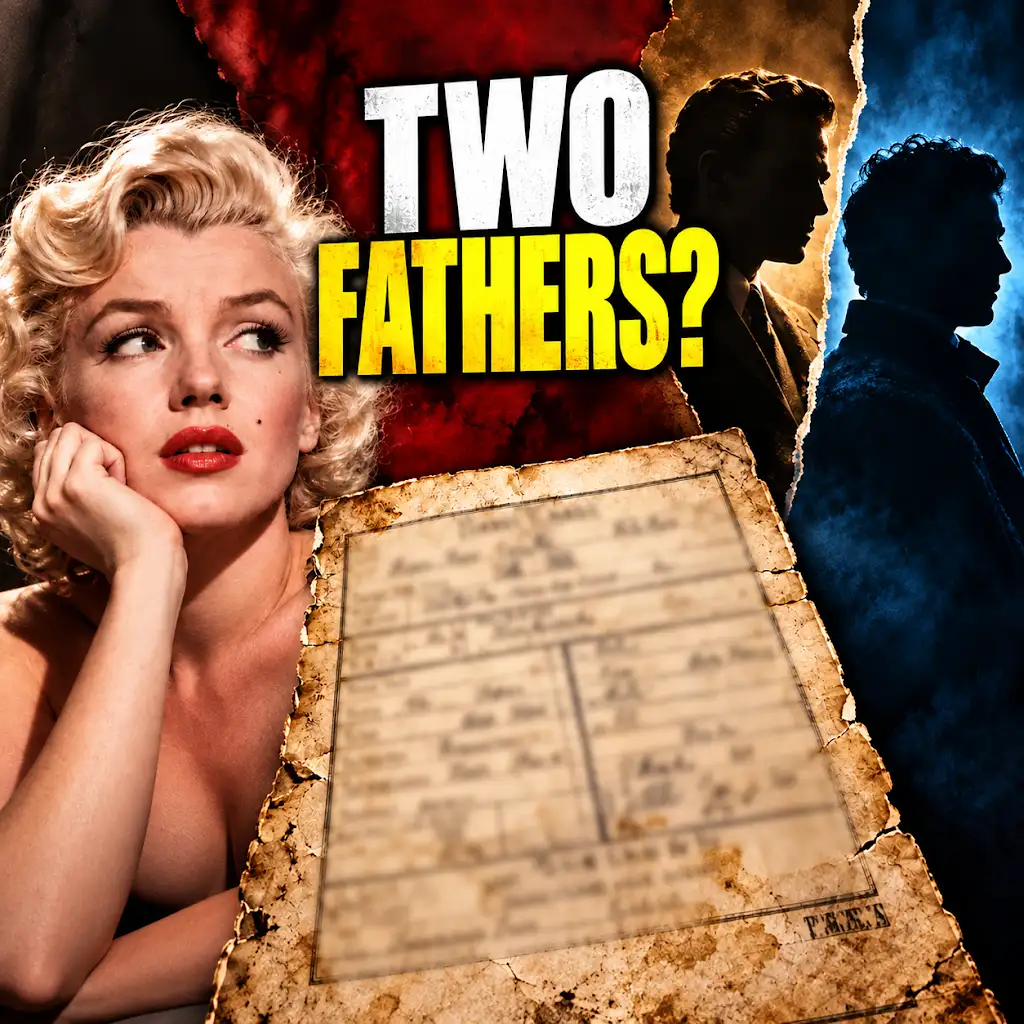
Marilyn Monroe’s Birth Certificate Named One Man. DNA Pointed to Another
FAQs
1. Who was revealed to be Marilyn Monroe’s father through DNA testing?
Through DNA testing, it was revealed that Charles Stanley Gifford, a man who worked as a film editor, was Marilyn Monroe’s biological father.
2. How was Marilyn Monroe’s father identified after all these years?
Marilyn Monroe’s father was identified through DNA testing conducted by a company specializing in genealogy research. The testing compared DNA samples from Marilyn Monroe’s hairbrush and a known relative of Charles Stanley Gifford.
3. Why was there confusion surrounding Marilyn Monroe’s paternity for so long?
There was confusion surrounding Marilyn Monroe’s paternity for many years due to conflicting accounts from her mother, Gladys Baker, and the lack of a confirmed biological father. This led to various speculations and theories about her parentage.
4. What impact does the revelation of Marilyn Monroe’s father have on her legacy?
The revelation of Marilyn Monroe’s father adds a new chapter to her life story and may provide further insight into her background and family history. It could also spark renewed interest in her personal life and relationships.
5. How has the public reacted to the news of Marilyn Monroe’s father being revealed?
The public has shown a mix of curiosity and fascination with the news of Marilyn Monroe’s father being revealed. Many fans and historians are eager to learn more about Charles Stanley Gifford and how this new information may shape our understanding of Marilyn Monroe’s life.