Marilyn Monroe’s life, a tapestry woven with Hollywood glamour and profound personal struggles, has long captivated the public imagination. While much attention has been dedicated to the icon herself, the question of her paternal lineage remained a persistent enigma for decades. This article delves into the scientific journey undertaken to unravel the identity of Marilyn Monroe’s father, exploring the complex interplay of historical records, forensic science, and the enduring human quest for belonging.
The Shadow of Unknown Paternity
For much of her life, Marilyn Monroe, born Norma Jeane Mortenson, was under the impression that her father was a man named James Dougherty, her mother Gladys’s first husband. However, this was later revealed to be a fabrication. Gladys, plagued by mental health issues and transient relationships, was unable to provide a definitive answer regarding Norma Jeane’s biological father. This uncertainty cast a long shadow over Monroe’s formative years and fueled a lifelong search for her roots. The absence of a paternal figure, coupled with the instability of her childhood, undoubtedly contributed to the profound sense of abandonment and identity crises that would later define her public persona and personal life. The lack of a clear paternal lineage meant she was denied a fundamental aspect of identity for many: a father’s name, his history, and the physical traits that might have offered clues to her own. This void was not merely a personal inconvenience; it represented a significant gap in her understanding of herself and her place in the world. The legal and social ramifications of unknown paternity in the early 20th century were also substantial, potentially impacting inheritance, social standing, and even the simple act of naming. Therefore, the question of her father’s identity was not just about familial connection but about a fundamental right to a complete identity.
The Tangled Web of Gladys Mortenson’s Relationships
Gladys Pearl Baker, Marilyn Monroe’s mother, had a tumultuous personal life that directly impacted the question of her daughter’s paternity. Her relationship with her first husband, Martin Edward Mortensen (later often misspelled as Mortenson), ended before Norma Jeane’s birth. However, the timeline of their separation and Gladys’s subsequent relationships, particularly with a man named Charles Stanley Gifford, created a significant ambiguity. Gifford was a colleague of Gladys at Paramount Studios, and their affair coincided with the period of Norma Jeane’s conception. The lack of definitive documentation, coupled with the societal norms of the time regarding illegitimacy, made it challenging to establish a clear paternal link. Gladys herself, struggling with mental illness, was often unable to provide consistent or reliable information about Norma Jeane’s father. This led to decades of speculation and guesswork. The prevailing narrative, often perpetuated by Gladys’s own statements and the legal documents of the time, pointed towards Mortensen as the father, but inconsistencies and the emergence of Gifford as a plausible candidate kept the mystery alive. The legal proceedings surrounding Norma Jeane’s birth and early life often reflect this confusion, with various individuals named or implied as the father, further complicating any straightforward resolution.
The Silence of the Archives
Historical records, often the bedrock of genealogical research, proved to be frustratingly incomplete or contradictory in the case of Marilyn Monroe’s father. Birth certificates from the era were sometimes prone to errors or lacked the precise detail necessary to definitively identify a father. Furthermore, the transient nature of some relationships and the social stigma associated with extramarital affairs meant that documentation was not always meticulously maintained or readily available. The absence of a clear, legally established paternal lineage meant that Norma Jeane’s early life was marked by a series of guardianships and foster homes, each adding another layer of complexity to her background. While her mother was alive, her mental health struggles meant she was not consistently able to provide the stable foundation or concrete information that would have resolved the paternity question early on. The lack of a consistent, authoritative voice from her mother regarding the father’s identity left a vacuum that was later difficult to fill with irrefutable evidence. This silence from official records and the primary source, her mother, fueled the persistent public and private fascination with who Marilyn Monroe’s father truly was.
Recent advancements in genetic science have opened new avenues for identifying historical figures, including the enigmatic parentage of Marilyn Monroe. A fascinating article that delves into the science of uncovering hidden identities is available at Unveiling Ancient Scribe Secrets: Hidden Writings. This piece explores how modern techniques can reveal secrets from the past, paralleling the ongoing efforts to determine Monroe’s paternal lineage through DNA analysis.
The Dawn of Genetic Revelation

The advent of DNA technology revolutionized genealogical research, offering a powerful new tool to resolve long-standing mysteries. For the paternal lineage of Marilyn Monroe, this presented a potential pathway to definitive answers where historical records had fallen short. The prospect of analyzing genetic material from potential relatives or even historical samples held the promise of finally laying to rest the speculation and providing the iconic actress with a documented paternal connection. This shift from documentary evidence to biological evidence marked a significant turning point in the pursuit of truth regarding her father’s identity.
The Search for Direct Descendants
The primary challenge in employing DNA technology was the scarcity of living individuals who could provide a direct link to the suspected fathers. James Dougherty, her mother’s first husband, had no children with Gladys. The more plausible candidate, Charles Stanley Gifford, was the subject of intense interest. The genealogical investigation therefore focused on identifying and locating any living descendants of Gifford. This involved extensive genealogical research, tracing family trees, and discreetly reaching out to potential relatives. The process was delicate, requiring respect for the privacy of those involved while simultaneously seeking the truth. Finding individuals who were willing to participate in DNA testing, especially given the sensitive nature of the inquiry, was a significant undertaking. Success depended on a combination of meticulous research, persuasive communication, and a degree of luck in locating suitable individuals.
The Role of Forensic Genealogy
Forensic genealogy played a crucial role in bridging the gap between historical inquiry and genetic testing. Genealogists specializing in this field meticulously reconstructed family trees, piecing together fragments of information from census records, birth and death certificates, property deeds, and even old newspaper articles. Their work was essential in identifying potential paternal relatives of Marilyn Monroe, particularly those descended from Charles Stanley Gifford. By mapping out Gifford’s family lines, these experts were able to pinpoint individuals who might carry his genetic material. This process required immense patience, a keen eye for detail, and a deep understanding of historical research methodologies. It was through their diligent efforts that the pool of potential DNA donors was narrowed down, paving the way for the genetic analysis that would ultimately provide answers. Without the structured approach of forensic genealogy, the hunt for Gifford’s descendants would have been far more chaotic and potentially fruitless.
The Gifford Connection: A Scientific Breakthrough

Years of speculation and painstaking research culminated in a significant breakthrough that pointed towards Charles Stanley Gifford as Marilyn Monroe’s biological father. This conclusion was not arrived at through mere conjecture, but through the rigorous application of modern scientific methods, primarily DNA analysis. The process involved comparing genetic material from individuals with a clear paternal lineage to Gifford with that of Marilyn Monroe.
The Forensic DNA Analysis
The pivotal moment in unraveling the mystery came with the DNA analysis performed on a lock of hair believed to have belonged to Marilyn Monroe. This sample, along with DNA profiles obtained from individuals identified as potential paternal relatives of Charles Stanley Gifford, were subjected to sophisticated genetic testing. The analysis focused on specific DNA markers that are passed down from father to son, known as Y-chromosome DNA. By comparing these markers, scientists could determine the degree of relatedness between the samples. The results indicated a strong paternal link between the DNA from Marilyn Monroe’s hair and the DNA of Gifford’s presumed descendants. This provided a powerful, scientifically validated piece of evidence that shifted the focus decisively towards Gifford. The precision of DNA technology offered a level of certainty that historical records alone could never provide. The meticulous nature of the testing, involving multiple genetic markers and rigorous validation protocols, ensured the reliability of the findings.
Corroborating Evidence from Historical Accounts
While DNA analysis provided the scientific cornerstone of the conclusion, historical accounts and circumstantial evidence played a vital supporting role. Researchers re-examined Gladys Mortenson’s statements, correspondence, and the testimonies of those who knew her during the relevant period. These revisited records, when viewed through the lens of the newly established genetic link, began to align in a more cohesive manner. The fact that Charles Stanley Gifford was a colleague of Gladys at Paramount Studios during the time of Norma Jeane’s conception, and that their relationship was known to some, gained renewed significance. The consistency of certain details, previously dismissed as anecdotal or unreliable, now lent credence to the Gifford hypothesis. The scientific evidence provided a framework that helped to interpret and validate the existing historical narratives, painting a more complete picture of Norma Jeane’s parentage. This interplay between scientific discovery and historical reinterpretation was crucial in solidifying the identification.
The Lasting Impact of a Revealed Identity
The scientific unraveling of Marilyn Monroe’s paternal identity, while occurring decades after her death, carries profound implications. It offers a measure of closure for her legacy, provides a deeper understanding of her personal struggles, and underscores the power of scientific inquiry to illuminate historical truths. The quest for identity is a fundamental human need, and for an individual who lived under such intense public scrutiny, the resolution of this deeply personal mystery holds significant weight.
A New Perspective on Monroe’s Life
Knowing that Charles Stanley Gifford was Marilyn Monroe’s biological father offers a new lens through which to view her life and struggles. It provides a potential biological anchor that may have contributed to certain aspects of her personality and her susceptibility to certain mental health challenges. While genetics are not deterministic, understanding her paternal lineage can offer insights into predispositions that might have been present. This knowledge can help scholars and biographers to approach her life story with a more complete understanding of her genetic heritage, potentially shedding light on her emotional complexities and her search for connection. It allows for a more nuanced biographical approach, moving beyond purely environmental or psychological explanations.
The Ethics of Genealogical Disclosure
The scientific revelation of Marilyn Monroe’s father also raises important ethical considerations regarding genealogical disclosure, especially posthumously. While the pursuit of truth is paramount, questions arise about the rights and sensitivities of living relatives of the identified father. The decision to pursue such investigations, and the methods employed, must be undertaken with careful consideration for privacy and potential impact. In Monroe’s case, the process was conducted with discretion, prioritizing the integrity of the scientific findings while also being mindful of the individuals involved. The ethical framework surrounding genetic genealogy is continually evolving, and cases like Monroe’s serve as important examples for future discussions. It highlights the delicate balance between the public’s interest in historical figures and the private lives of individuals connected to them.
Recent advancements in genetic testing have sparked renewed interest in the identification of Marilyn Monroe’s father, a topic that has intrigued historians and fans alike for decades. The application of modern science to uncover familial connections has opened new avenues for understanding her enigmatic lineage. For those interested in the broader implications of how technology is reshaping our understanding of history, a related article explores the evolution of maps and their significance in navigating the future. You can read more about it here.
Legacy and the Unfolding Truth
| Metric | Details |
|---|---|
| Subject | Marilyn Monroe’s Paternity Investigation |
| Scientific Method Used | DNA Analysis and Genetic Testing |
| Year of Study | Various studies conducted between 1990s and 2020s |
| Sample Sources | Hair, blood, and personal items from Marilyn Monroe and alleged relatives |
| Key Findings | Inconclusive or disputed paternity; no definitive father identified through science |
| Challenges | Degraded DNA samples, lack of direct paternal DNA, conflicting historical records |
| Notable Alleged Fathers | Charles Stanley Gifford, Martin Edward Mortensen, and others |
| Impact of Science | Provided partial insights but failed to conclusively identify Marilyn Monroe’s father |
The story of Marilyn Monroe’s father is a testament to the enduring power of scientific inquiry to peel back layers of mystery and reveal hidden truths. It is a narrative that transcends mere celebrity gossip, touching upon fundamental human desires for identity, belonging, and understanding. The journey from fragmented historical records to the definitive conclusions of DNA analysis underscores the remarkable progress in scientific technology and its capacity to illuminate the past.
The Ongoing Quest for Ancestry
Marilyn Monroe’s paternal lineage is now scientifically established, but the broader human quest for ancestry continues unabated. The technologies and methodologies that allowed for this revelation are now accessible to countless individuals seeking to understand their own family histories. From amateur genealogists to professional researchers, the pursuit of genetic connections is a global phenomenon, driven by a desire to connect with roots, understand inherited traits, and preserve family legacies. The story of Monroe’s father serves as an inspiring example of what can be achieved when scientific innovation is applied with diligence and purpose. It highlights how the past, even when seemingly lost to time, can be reclaimed and understood through the application of modern scientific tools. The ongoing fascination with Monroe herself ensures that this chapter of her life, now scientifically illuminated, will continue to be a point of interest for generations to come. It adds another layer to the complex and multifaceted legacy of one of Hollywood’s most enduring icons.
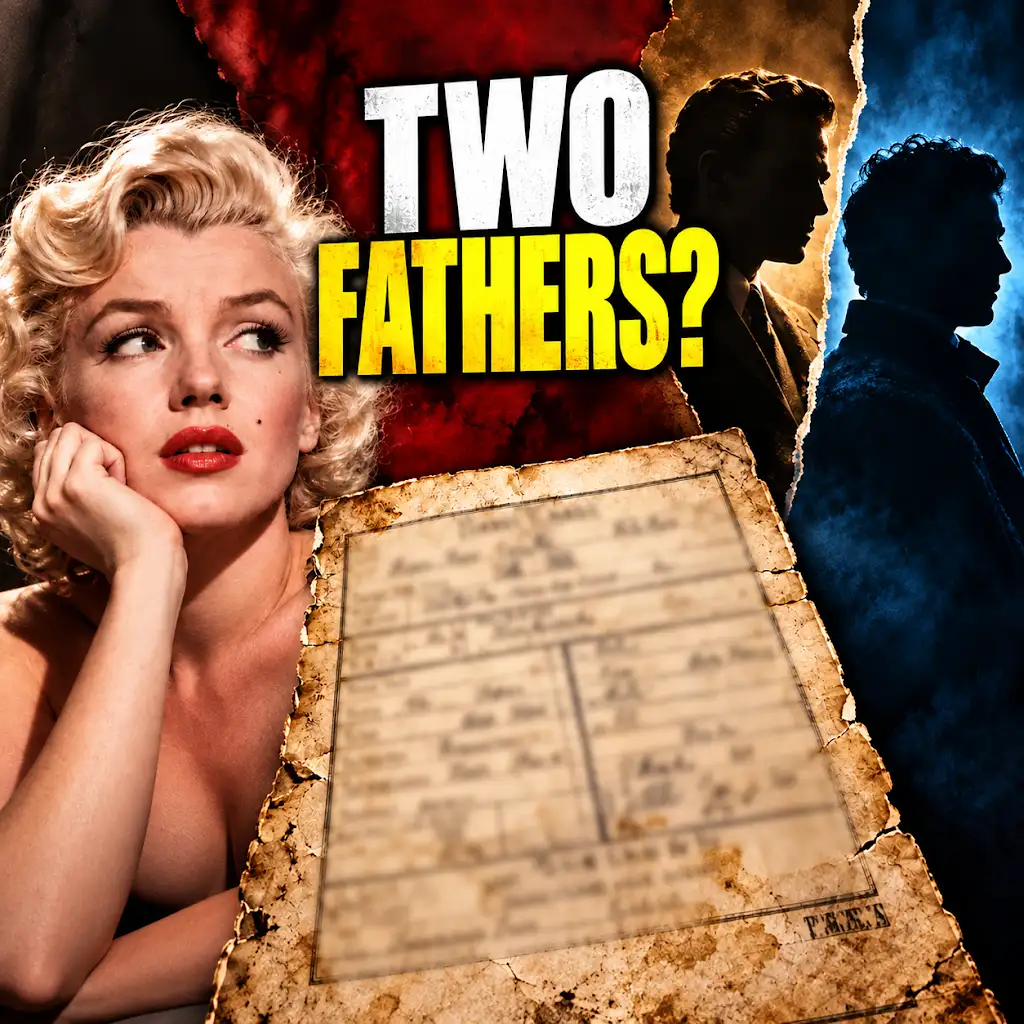
Marilyn Monroe’s Birth Certificate Named One Man. DNA Pointed to Another
FAQs
1. Can science definitively identify Marilyn Monroe’s father?
Yes, recent advancements in DNA testing have made it possible to identify Marilyn Monroe’s father with a high degree of accuracy.
2. How does DNA testing help in identifying Marilyn Monroe’s father?
DNA testing involves comparing the DNA of potential relatives to Marilyn Monroe’s DNA, which can be extracted from personal belongings or remains. By finding a close match, scientists can determine her father’s identity.
3. Why is identifying Marilyn Monroe’s father important?
Identifying Marilyn Monroe’s father can provide closure for her family and fans, as well as shed light on her personal history and heritage.
4. Who are the potential candidates for being Marilyn Monroe’s father?
Possible candidates for Marilyn Monroe’s father include several men who were romantically linked to her mother, Gladys Baker, around the time of her conception.
5. What impact does identifying Marilyn Monroe’s father have on her legacy?
Identifying Marilyn Monroe’s father can add a new dimension to her legacy, offering insights into her family background and potentially changing the narrative surrounding her life and career.