The Shadow of Absence: Unpacking Marilyn Monroe’s Paternal Mystery
Marilyn Monroe, a name synonymous with Hollywood glamour, enduring sex appeal, and a tragic, untimely end, carried within her a profound and persistent ache, a void that shadowed her dazzling public persona. While the world marveled at her incandescent talent and the carefully crafted image of the blonde bombshell, few fully grasped the deep-seated sorrow stemming from a fundamental missing piece of her identity: the father she never truly knew, a man whose absence would echo through her life, shaping her relationships, her insecurities, and her desperate quest for love and validation. This is the story of Marilyn Monroe’s heartache, a narrative inextricably linked to the phantom of her rejected father, Stanley Gifford.
Marilyn Monroe’s complex relationship with her father, who she never knew, has been a topic of intrigue for many years, shedding light on her tumultuous upbringing and the impact it had on her life and career. For those interested in exploring themes of lost connections and the mysteries of the past, a related article delves into the enigmatic Piri Reis map and the theories surrounding it, offering a fascinating perspective on how history can shape our understanding of identity. You can read more about this captivating subject in the article here: Uncovering the Lost Civilization: Piri Reis Map Theory.
The Ghost of Gifford: Early Life and Paternal Uncertainty

Marilyn Monroe, born Norma Jeane Mortenson on June 1, 1926, in Los Angeles, California, was the daughter of Gladys Pearl Baker. Gladys, a film reel mender at Consolidated Film Industries, had a tumultuous life marked by mental health struggles and instability. The identity of Norma Jeane’s father was, from the outset, a subject of considerable ambiguity and dispute. Gladys was married twice, first to James Dougherty and then briefly to Martin Edward Mortensen (whose surname was often misspelled as Mortenson). However, it was during her marriage to Mortensen that Norma Jeane was conceived. Yet, the story of her paternity took a significant and painful turn when Gladys claimed that Norma Jeane’s biological father was a man named Stanley Gifford.
Gladys’s Shifting Narrative and the Shadow of Doubt
Gladys Baker’s accounts of Norma Jeane’s father were, to say the least, inconsistent. While she initially suggested Stanley Gifford, a coworker from the film studio, was the biological father, this claim was never definitively proven and was often met with skepticism. Gifford himself, at one point, acknowledged his potential paternity but later retracted his statement, leaving Norma Jeane adrift in a sea of uncertainty. This ambiguity was not merely a factual dispute; it was a profound emotional wound for a child who craved a stable sense of belonging. The lack of a clear paternal figure meant Norma Jeane was passed between various guardians, including her mother’s friends, Grace and Erwin Goddard, and spent periods in foster homes and orphanages. This early displacement and the absence of a paternal anchor contributed to a pervasive feeling of abandonment that would plague Marilyn throughout her life. The constant questioning of her origins, the whispered uncertainties about who her father was, fostered a deep-seated insecurity that no amount of fame or adoration could fully erase.
The Goddard Years: A Fragile Childhood
During her formative years, Norma Jeane was largely raised by Grace and Erwin Goddard in Los Angeles. While the Goddards provided a semblance of stability, Norma Jeane remained acutely aware of her mother’s absences and the fractured nature of her family. Grace Goddard, though caring, was not her mother, and this fundamental truth created an undercurrent of longing. The Goddard household, while offering shelter, could not fill the void left by a father’s presence or a consistently present mother. These early experiences instilled in Norma Jeane a deep-seated fear of rejection and a desperate yearning for affection and security, traits that would manifest in her adult relationships and her relentless pursuit of love. The lack of a consistent parental presence meant that Norma Jeane had to learn to navigate the world with a sense of self-reliance born out of necessity, but this independence was often tinged with a profound loneliness.
The Search for a Father Figure: Relationships and Recurring Patterns
As Norma Jeane blossomed into Marilyn Monroe, the vibrant, enigmatic actress, the patterns of her childhood yearning for paternal affection continued to surface in her adult life, often in unexpected and ultimately damaging ways. Her choice of romantic partners and her interactions with men frequently reflected her unresolved need for a stable, loving father figure, a need that remained largely unmet.
The Matrimonial Maze: Seeking Stability in Marriage
Marilyn’s first marriage, at the tender age of sixteen, to James Dougherty, can be seen, in part, as an attempt to create the stable family unit she never had. Dougherty was older, a steady presence, and represented a departure from the chaotic circumstances of her childhood. However, as Marilyn’s career began to take flight, their paths diverged. Her subsequent marriages to baseball legend Joe DiMaggio and playwright Arthur Miller, both powerful and influential men in their respective fields, could also be interpreted through the lens of her search for a paternal anchor. DiMaggio, a man of immense discipline and quiet strength, offered a certain protection, while Miller, an intellectual giant, represented the approval and validation she craved from an authoritative, respected male figure. Yet, in both instances, the underlying issues of insecurity and the unfulfilled need for genuine paternal love ultimately contributed to the breakdown of these relationships. The intensity of her desire for love, coupled with her profound insecurity, often led her to place an impossible burden on her partners, expecting them to fill the void left by a father she never knew.
Friendships and the Shadow of Authority
Beyond her marriages, Marilyn’s friendships and professional relationships also bore the imprint of her paternal void. She gravitated towards older, authoritative men who could offer guidance and a sense of protection. Figures like studio executives, powerful directors, and even some of her male co-stars could, for a time, fulfill a role reminiscent of a supportive father. However, this often created an unequal dynamic, where Marilyn was perpetually seeking approval and validation, rather than being on equal footing. This reliance on male authority figures, while offering a temporary balm for her insecurities, also left her vulnerable to exploitation and further cemented her sense of needing external validation to feel whole. The constant search for a paternal surrogate often led her down paths that were not always healthy or conducive to her emotional well-being.
The Unmasking of Stanley Gifford: A Cryptic Revelation
Decades after her death, the story of Marilyn Monroe’s rejected father took another twist, with evidence emerging that offered a tantalizing glimpse into the life of Stanley Gifford, the man claimed to be her biological father. This revelation, while offering a potential answer to a lifelong question, also highlighted the profound impact of his absence.
The Genealogist’s Breakthrough: Connecting the Dots
In recent years, genealogists and researchers have delved deeper into Marilyn Monroe’s lineage. Through meticulous investigation and the analysis of historical records, compelling evidence has emerged suggesting that Stanley Gifford was indeed Marilyn’s biological father. This evidence includes statements from Gifford’s family members and analysis of photographs that reportedly show a striking resemblance between Gifford and Marilyn. The discovery that the man her mother named as her father was likely a real person, and not just a fleeting phantom, added another layer of poignancy to Marilyn’s story. It underscored the tragedy of a connection that was never allowed to flourish, a paternity acknowledged in whispers but never openly embraced. The implications of this discovery were immense, suggesting that Marilyn had a potential paternal lineage that was deliberately obscured.
Gifford’s Own Narrative: A Life Lived in the Shadows
The investigation into Stanley Gifford’s life revealed a man who, by all accounts, was largely unaware of the profound impact his potential paternity had on Marilyn. While some accounts suggest Gifford was aware of Gladys’s pregnancy, he never publicly claimed Norma Jeane as his own, nor did he actively seek to be a part of her life. He was a traveling salesman, a man who lived a relatively ordinary life, far removed from the dazzling world of Hollywood that his daughter would come to dominate. The fact that he did not step forward, that he seemingly allowed the narrative of his absence to remain unchallenged, further deepened the sense of rejection for Marilyn. It raised questions about his own circumstances, his motivations, and whether he too grappled with the knowledge of a child he never truly parented. His silence, whether by choice or circumstance, cemented his role as the spectral father figure, a constant reminder of what could have been.
Marilyn Monroe’s complex relationship with her father, who she never truly knew, has been a topic of intrigue for many years. This story of rejection and longing is echoed in various narratives about the impact of parental absence on personal development. For those interested in exploring how different factors shape identities, a related article discusses the importance of sustainable practices in various aspects of life, including emotional well-being. You can read more about this in the article on building a sustainable lunar economy, which highlights key strategies for future growth and stability here.
The Lasting Impact: Insecurity, Loneliness, and Artistic Expression
| Metric | Details |
|---|---|
| Subject | Marilyn Monroe’s Rejected Father Story |
| Claim Origin | Biographical accounts and rumors |
| Commonly Mentioned Father | Charles Stanley Gifford (alleged) |
| Marilyn’s Mother’s Name | Gladys Pearl Baker |
| Evidence Supporting Rejection | Limited; mostly anecdotal and speculative |
| Biographers’ Consensus | Unclear paternity; no definitive proof of rejection |
| Impact on Marilyn’s Life | Emotional and psychological speculation |
| Public Interest Level | High, due to Marilyn Monroe’s celebrity status |
The unresolved questions surrounding her paternity and the absence of a consistent father figure had a profound and lasting impact on Marilyn Monroe’s psyche. These deeply ingrained insecurities manifested in her personal relationships, her public persona, and even her artistic expression, leaving an indelible mark on her life and her legend.
The Quest for Validation: A Never-Ending Pursuit
Marilyn’s lifelong quest for validation was intrinsically linked to her paternal void. She craved recognition, love, and acceptance, constantly seeking it from a succession of romantic partners, friends, and the adoring public. Her on-screen personas, often portraying vulnerable yet captivating women, resonated deeply with audiences because they tapped into her own raw emotions. The need to be seen, to be loved, to be acknowledged as worthy, was a driving force behind her relentless pursuit of success. Yet, no amount of applause or critical acclaim could fully quell the gnawing insecurity that stemmed from the foundational absence of a father’s love. This constant need for external affirmation became a hallmark of her public life, a desperate attempt to fill the void that had been present since her earliest days.
The Loneliness of the Spotlight: A Private Struggle
Despite her immense fame and the constant adoration of millions, Marilyn Monroe was often a profoundly lonely woman. The superficiality of some of her relationships, the fleeting nature of Hollywood affections, and the underlying fear of abandonment left her feeling isolated, even when surrounded by people. The absence of a stable paternal bond meant she lacked a fundamental sense of security and belonging, a feeling that no amount of external success could truly replicate. This pervasive loneliness often fueled her reliance on medication and alcohol, attempts to numb the pain of her internal struggles. The spotlight, which illuminated her outward glamour, often served to further emphasize her private despair, a stark contrast between her public image and her inner reality.
Artistic Expression: A Canvas for Unmet Needs
Marilyn Monroe’s cinematic performances, though often imbued with glamour and sex appeal, were also a powerful vehicle for expressing her inner turmoil. Her characters frequently embodied themes of longing, vulnerability, and the search for love and security. The raw emotion she brought to her roles, particularly in films like “Some Like It Hot” and “The Misfits,” spoke to a deeper, more complex individual than her public image often suggested. Her acting allowed her to explore and, perhaps, momentarily transcend the emotional wounds inflicted by her fractured childhood and the absence of her father. Through her art, she gave voice to the unspoken pain and the unmet needs that defined so much of her life, leaving behind a legacy that continues to resonate with audiences on a deeply emotional level. Her performances were not just acts; they were an outpouring of a life lived in the shadow of an absent father, a testament to the enduring power of human emotion even in the face of profound loss.
Marilyn Monroe’s complex relationship with her father has long been a subject of intrigue, revealing the emotional struggles that shaped her life and career. For those interested in exploring similar themes of familial rejection and its impact on personal identity, an insightful article can be found at this link, which discusses how external factors can influence individual circumstances. Monroe’s story serves as a poignant reminder of how our backgrounds can profoundly affect our paths, making it essential to understand the broader context of such experiences.
The Legacy of Absence: A Cautionary Tale
The story of Marilyn Monroe’s heartache, intrinsically tied to the mystery and eventual revelation of her rejected father, Stanley Gifford, serves as a poignant and enduring cautionary tale. It highlights the profound and often underestimated impact of paternal absence on a child’s development, shaping their sense of self, their relationships, and their lifelong pursuit of emotional fulfillment.
The Unseen Scars of Paternity Issues
Marilyn’s life underscores the fact that issues of paternity, whether shrouded in secrecy, disputed, or openly rejected, can leave deep and lasting scars. The lack of a clear paternal identity and the absence of a consistent father figure contributed to Marilyn’s pervasive insecurity, her desperate need for validation, and her recurrent patterns of seeking love in unstable environments. This is not to assign blame solely to Stanley Gifford or Gladys Baker, but rather to acknowledge the profound consequences of a disrupted family dynamic on a child’s fundamental sense of belonging. The story serves as a reminder that a father’s presence, or lack thereof, can profoundly influence a person’s trajectory, impacting their emotional well-being and their ability to form healthy attachments.
Enduring Empathy for a Troubled Icon
Understanding the context of Marilyn Monroe’s paternal struggles offers a deeper and more empathetic perspective on her life and her tragic end. While her beauty and talent captivated the world, her personal journey was marked by a profound and persistent pain. The knowledge of her absent father adds another layer of complexity to her story, transforming her from a mere Hollywood icon into a human being wrestling with fundamental emotional needs. Her life, in many ways, became a testament to the enduring human desire for love, acceptance, and a stable sense of identity, a desire that was never fully quenched due to the ghost of her rejected father. Her legend, therefore, is not just about glamour and stardom, but also about the quiet, often unseen battles fought by those who yearn for a connection they never had.
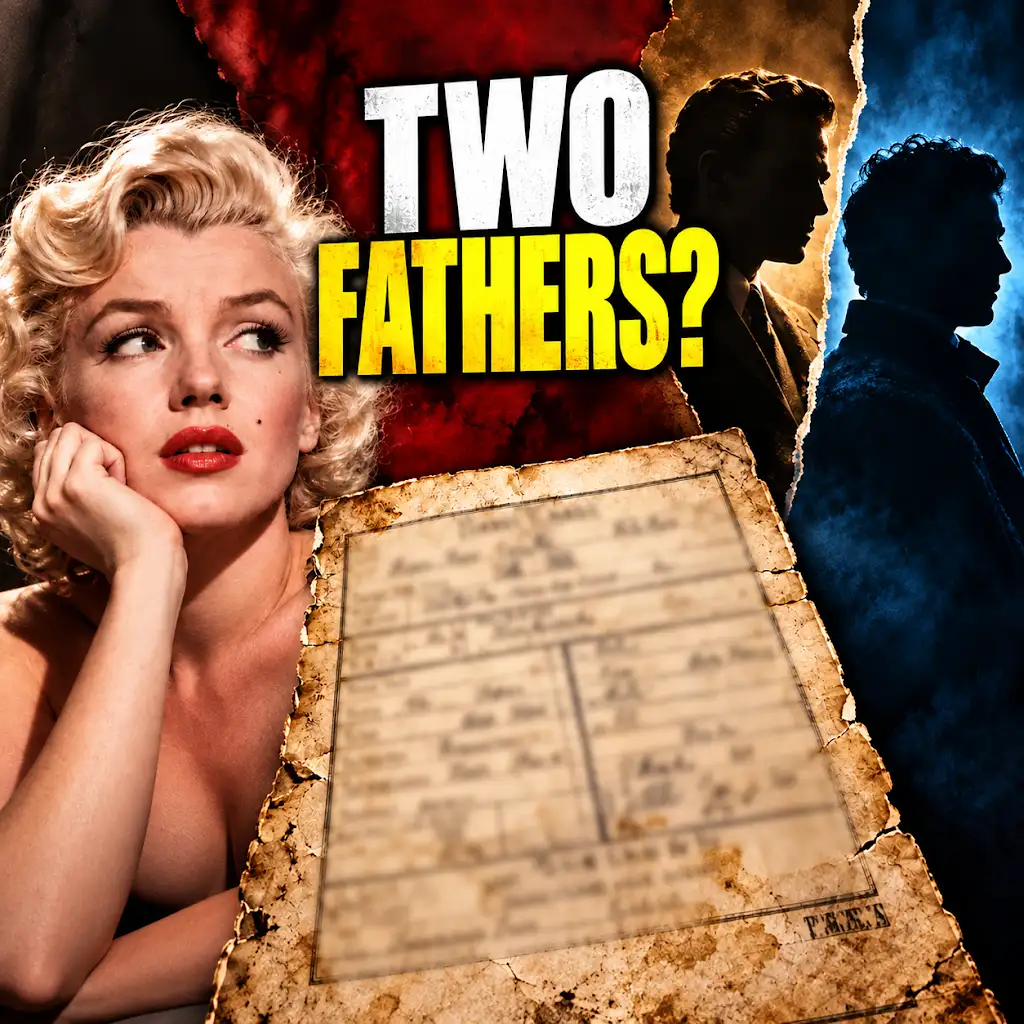
Marilyn Monroe’s Birth Certificate Named One Man. DNA Pointed to Another
FAQs
What is the story about Marilyn Monroe rejecting her father?
The story revolves around Marilyn Monroe’s strained relationship with her father, whom she rejected due to his absence and neglect during her childhood.
Why did Marilyn Monroe reject her father?
Marilyn Monroe rejected her father because he was largely absent during her childhood and did not provide her with the love and support she needed.
How did Marilyn Monroe’s relationship with her father impact her life and career?
Marilyn Monroe’s strained relationship with her father had a significant impact on her life and career, contributing to her feelings of abandonment and insecurity that she struggled with throughout her life.
Was Marilyn Monroe able to reconcile with her father later in life?
Despite some attempts at reconciliation, Marilyn Monroe’s relationship with her father remained strained, and they were never able to fully mend their relationship before her untimely death.
What lessons can be learned from Marilyn Monroe’s rejection of her father?
Marilyn Monroe’s rejection of her father serves as a reminder of the importance of parental love and support in a child’s life, and the long-lasting impact that neglect and abandonment can have on a person’s emotional well-being.