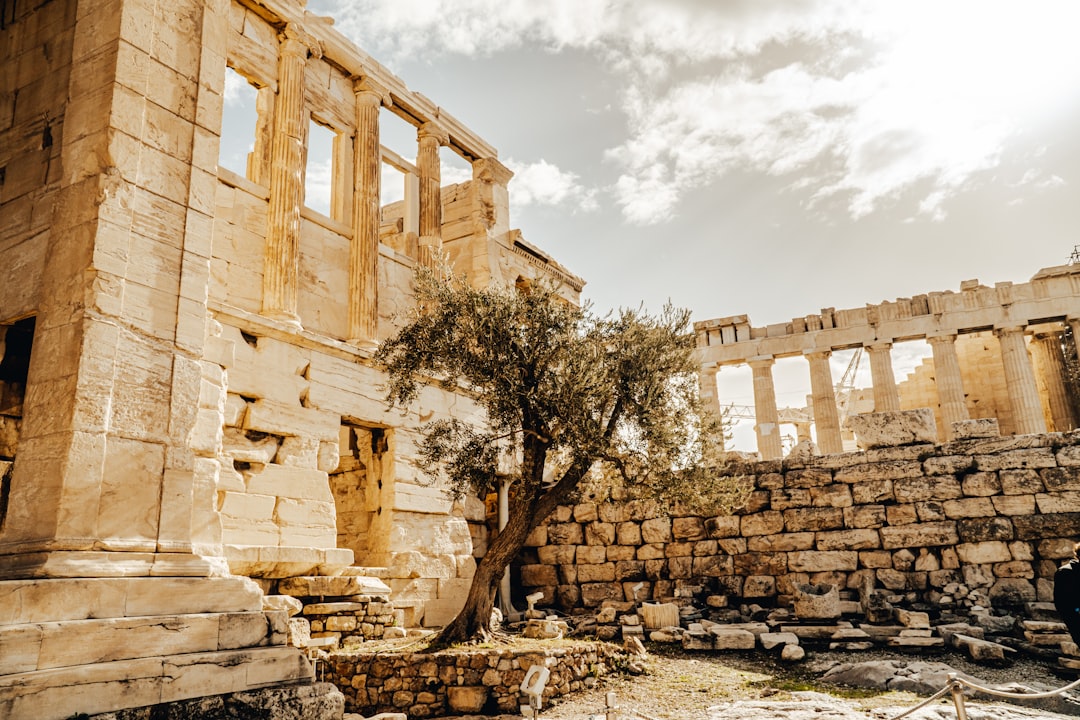
The colossal pyramids of Egypt, the soaring aqueducts of Rome, the intricate temples of the Maya – these monumental achievements of the ancient world stand as silent testaments to human ingenuity. What is perhaps most astonishing is that these marvels were constructed without the benefit of modern machinery. No cranes, no power tools, just the raw power of human muscle, clever design, and an intimate understanding of natural forces. Mastering ancient engineering without machines was not simply a matter of brute force; it was a sophisticated interplay of knowledge, planning, and resourcefulness.
Ancient engineers possessed an unparalleled attunement to their environment. They didn’t just see a river; they understood its flow, its potential for power, and its ability to transport. They didn’t just observe a stone; they recognized its weight, its malleability, and its potential structural integrity. This deep, observational knowledge formed the bedrock of their engineering prowess.
Harnessing the Force of Gravity
Gravity, the invisible hand that pulls everything earthward, was the ancient engineer’s most powerful ally. Instead of fighting it, they learned to work with it, directing its force to their advantage.
Inclined Planes and Ramps
The most iconic example of this is the use of ramps and inclined planes. To lift massive stones to impossible heights, ancient builders constructed enormous earthen or wooden ramps. These ramps, often of considerable width and length, reduced the angle of ascent, transforming the immense effort of lifting stones vertically into the more manageable task of pulling them uphill. The sheer scale of some of these ramps, like those theorized for the Great Pyramid of Giza, hints at a monumental undertaking in itself, yet it was a far more practical solution than attempting to hoist blocks directly. The planning involved in designing these ramps, considering the gradient, stability, and the number of workers required at different stages, demonstrates a remarkable understanding of applied physics.
Counterweights and Levers
Beyond simple inclines, the principles of leverage were masterfully applied. Simple machines like levers, operated by human power, could multiply force exponentially. A well-placed fulcrum and a sturdy beam could lift weights that would otherwise be impossible. Imagine a team of workers at one end of a long lever, their combined effort amplified to raise an enormous stone block just enough to position it. This was likely a common technique for fine-tuning the placement of stones or for making minor adjustments during construction. Counterweights, too, played a crucial role, though their application might be less obvious. In some lifting mechanisms, a heavy counterweight could be used to offset the weight of the object being lifted, requiring less effort to initiate and control the movement.
The Science of Water Management
Water, in its many forms, was both a challenge and an invaluable resource for ancient engineers. Their ability to control, channel, and even utilize its power was a testament to their deep understanding of hydraulics.
Aqueduct Construction
The Roman aqueducts are perhaps the most celebrated examples of ancient hydraulic engineering. These feats of civil engineering, spanning vast distances and complex terrains, delivered fresh water to burgeoning cities. The genius lay in their ability to maintain a constant, gentle gradient over miles, ensuring a steady flow without excessive velocity that could erode the channels or damage the structure. This required meticulous surveying, utilizing tools like the chorobates (a type of spirit level) and the groma (a surveying instrument for right angles). The construction involved precisely cut stone and concrete, expertly fitted to create watertight channels. The inverted siphon, a less common but equally ingenious technique, allowed them to cross valleys by forcing water uphill under pressure before allowing it to descend again.
Irrigation and Drainage Systems
Beyond bringing water to settlements, ancient peoples were adept at managing water within their agricultural lands and cities. Elaborate irrigation systems, employing canals, ditches, and reservoirs, allowed them to cultivate arid regions and ensure consistent crop yields. Similarly, sophisticated drainage networks prevented waterlogging and disease in urban environments. The Maya, for instance, developed complex systems to manage water in their tropical environment, including reservoirs and channel systems that collected rainwater. The Egyptians, reliant on the annual flooding of the Nile, engineered canals and basins to maximize the fertile silt deposited each year.
Ancient engineering is a fascinating subject that highlights the ingenuity of early civilizations in constructing monumental structures without the aid of modern machines. For an insightful exploration of how ancient techniques shaped the world we live in today, you can read more in the article titled “Charting the Future of US-Mexico Trade Relations,” which discusses the impact of historical trade routes and engineering marvels on contemporary society. To learn more, visit this article.
The Art of Material Selection and Utilization
The choice of materials, their preparation, and their intelligent application were fundamental to the durability and longevity of ancient structures. Without concrete as we know it, or steel reinforcements, builders relied on the intrinsic properties of stone, wood, and earth.
Quarrying and Stone Dressing
Extracting and shaping massive stone blocks was a monumental undertaking. This typically involved identifying suitable geological formations and then using a combination of tools and techniques to break free the desired blocks.
Primitive Tools and Techniques
Wedges, made of wood or metal, were driven into natural fissures in the rock or into carefully chiseled slots. When soaked with water, wooden wedges would expand, exerting immense pressure and splitting the stone. Metal tools, such as hammers and chisels, were used to more precisely shape the blocks, a laborious process that demanded immense skill and patience. The quality of the stone dressing was crucial; finely dressed stones fit together with incredible precision, minimizing the need for mortar and creating seamless, strong structures. The Egyptians are renowned for their extraordinary precision in dressing the granite blocks of the pyramids, some weighing many tons, with edges so tight that a knife blade can barely be inserted between them.
Transportation of Heavy Stones
Once quarried and dressed, the transportation of these colossal stones was a feat in itself. While the exact methods are still debated, evidence suggests a combination of rolling logs, sledges pulled by teams of men, and the use of waterways. The Nile River, for example, served as a vital artery for transporting stones from distant quarries to construction sites like Giza. Building temporary causeways and jetties to facilitate this movement was an integral part of the logistical planning. The sheer coordination required to move stones weighing tens or even hundreds of tons across land or water is staggering.
Wood and Earth as Structural Components
While stone often dominates the popular imagination of ancient engineering, wood and earth were equally vital and often more versatile materials.
Timber Framing and Scaffolding
For shelters, temples, and even large-scale construction projects, timber framing provided the skeletal structure. The principles of load-bearing walls, arches, and domes were often executed with wooden frameworks before being covered with other materials. Scaffolding, essential for reaching higher elevations, was typically constructed from sturdy timber. The ability to fell, shape, and join timber with precision was a highly valued skill. The Egyptians, in particular, used wooden yokes and levers extensively in their construction.
Adobe and Rammed Earth Construction
In many arid regions, adobe (sun-dried bricks made from clay and straw) and rammed earth techniques were the primary building methods. These provided excellent thermal mass, keeping interiors cool in hot climates. Rammed earth construction involves compacting moist earth within formwork, creating incredibly dense and durable walls. The Great Wall of China, for instance, incorporated significant sections built using rammed earth, demonstrating its effectiveness for large-scale defensive structures. The stability of these earthen structures, when properly constructed, has allowed them to endure for millennia.
The Importance of Geometry and Surveying

Without sophisticated surveying equipment, ancient builders relied on a profound understanding of geometry and meticulous measurement to ensure their structures were aligned, level, and true.
Ancient engineering is a fascinating subject that reveals the ingenuity of early civilizations in constructing monumental structures without the aid of modern machines. For instance, the article on ancient elites and their control over power and knowledge discusses how these societies utilized advanced techniques and human labor to achieve remarkable feats of architecture. You can explore this intriguing connection further in the article found here. This examination highlights the resourcefulness of ancient peoples and their ability to manipulate their environment in ways that still captivate us today.
The Precision of Celestial Alignment
The alignment of major ancient structures with astronomical phenomena is a recurring theme. Whether for religious or practical reasons, this alignment speaks to a keen observation of the stars and the sun.
Astronomical Observations and Calendars
Ancient civilizations developed sophisticated calendars based on celestial cycles, allowing them to predict seasons and crucial astronomical events. This knowledge was directly applied to architecture. Temples were often oriented to capture the first rays of the sun on specific solstices or equinoxes. The precise alignment of the Great Pyramid with the cardinal directions, for example, is remarkably accurate and suggests a deep understanding of celestial tracking. This was not guesswork; it required systematic observation and recording over extended periods.
Surveying Techniques and Tools
While lacking modern instruments, ancient surveyors were masters of their craft. They used simple yet effective tools to establish lines, levels, and angles. The groma, as mentioned, was used to lay out right angles, crucial for ensuring square foundations and building layouts. The chorobates provided a means of establishing a horizontal level over considerable distances. They understood the principles of triangulation and used sighting poles and ropes to maintain straight lines and consistent gradients. The construction of straight, level aqueducts or the precise orientation of megalithic structures would have been impossible without these fundamental surveying skills.
Sacred Geometry and Proportion
Beyond practical alignment, many ancient cultures incorporated principles of sacred geometry, believing that certain proportions and shapes held intrinsic cosmic significance.
The Golden Ratio and Other Proportions
Evidence suggests the use of a divine proportion, often referred to as the Golden Ratio, in the design of temples and other significant structures across various cultures. This mathematical relationship, approximately 1.618, is found in nature and is aesthetically pleasing to the human eye. Its deliberate incorporation into architecture suggests a belief in a universal order that could be mirrored in built forms. Whether consciously applied in a mathematical sense or intuitively arrived at through generations of aesthetic refinement, these harmonious proportions contributed to the enduring beauty and perceived perfection of ancient designs.
The Concept of Divine Measure
The idea that measurements themselves held spiritual or divine significance was prevalent. The cubit, a unit of measurement derived from the length of a forearm, was standardized and often imbued with symbolic meaning. The meticulous application of these considered measures, rather than arbitrary ones, imbued the construction process with a sense of purpose and reverence. This sacred approach to proportion and measurement transcended mere practicality, elevating the act of building to a form of spiritual expression.
The Power of Human Ingenuity and Organization

Ultimately, the mastery of ancient engineering without machines was a testament to the extraordinary capacity of humans to collaborate, innovate, and organize themselves towards a common goal.
Workforce Mobilization and Management
The construction of monumental projects required the mobilization and orchestration of vast numbers of people. This was not simply a matter of gathering laborers; it involved a sophisticated understanding of project management.
Hierarchical Structures and Specialized Roles
Ancient societies often possessed hierarchical structures that facilitated large-scale organization. Rulers and priestly classes would commission projects, while overseers and foremen would manage specific tasks. Within these workforces, specialized roles emerged – quarrymen, stone dressers, carpenters, rope makers, surveyors, and countless others, each contributing their unique expertise. The efficiency of these teams, working in synchronized fashion, allowed for the completion of tasks that would overwhelm unorganized groups.
Incentive and Motivation
While coercion might have played a role in some instances, it is also likely that various forms of incentive and motivation were employed. Religious devotion, civic pride, the promise of sustenance, or even the prestige associated with contributing to a grand endeavor could have spurred collective effort. The sheer shared purpose of building something enduring and magnificent would have been a powerful unifying force.
Problem-Solving and Adaptability
The absence of machines did not mean an absence of problem-solving. Ancient engineers were constantly faced with unexpected challenges – difficult terrain, material shortages, unforeseen structural issues. Their success lay in their ability to adapt and innovate.
Unforeseen Challenges and Innovative Solutions
When a standard method proved insufficient, they had to devise new approaches. This could involve developing a different type of lever, modifying a ramp design, or finding alternative materials. The very limitations of their technology spurred a greater reliance on pure intellect and creative problem-solving, forcing them to think outside the box. The development of techniques like the corbel arch, a precursor to the true arch, is an example of an innovative solution to spanning openings without the need for complex formwork.
The Legacy of Trial and Error
While often depicted as possessing perfect knowledge, it is reasonable to assume that ancient engineering also involved a process of trial and error. Successful techniques were refined and passed down through generations, while less effective ones were abandoned. This continuous learning and refinement process, driven by the tangible results of their endeavors, allowed for the gradual evolution of engineering practices. The remarkable survival of so many ancient structures is a testament to the efficacy of their learned and perfected methods.
In conclusion, mastering ancient engineering without machines was not a magical feat but a profound demonstration of human intelligence, meticulous planning, and an intimate understanding of the natural world. It was a triumph of observation, ingenuity, and the power of collective effort, proving that with the right knowledge and the unwavering determination to build, humanity can achieve the seemingly impossible. The lessons from these ancient masters continue to inspire and inform, reminding us that true innovation often lies not in the tools we possess, but in the minds that wield them.

The Machine That Kept Angkor Alive
FAQs
What is ancient engineering without machines?
Ancient engineering without machines refers to the construction and architectural feats achieved by ancient civilizations without the use of modern machinery or technology. This includes structures such as the pyramids of Egypt, the Great Wall of China, and the aqueducts of Rome.
How did ancient civilizations accomplish engineering feats without machines?
Ancient civilizations accomplished engineering feats without machines through the use of simple tools, such as levers, ramps, and pulleys, as well as the employment of skilled labor and innovative construction techniques. They also utilized natural resources and materials available in their environment.
What are some examples of ancient engineering without machines?
Some examples of ancient engineering without machines include the construction of the pyramids in Egypt, the Inca stone walls in Peru, the aqueducts in Rome, the Parthenon in Greece, and the Great Wall of China. These structures showcase the ingenuity and skill of ancient engineers and builders.
What were the challenges faced by ancient engineers without machines?
Ancient engineers faced challenges such as the transportation and manipulation of heavy materials, the precision and accuracy required for construction, and the logistical planning of large-scale projects. They also had to contend with limitations in terms of available resources and technology.
What can we learn from ancient engineering without machines?
Studying ancient engineering without machines can provide valuable insights into the resourcefulness, creativity, and problem-solving abilities of ancient civilizations. It also highlights the importance of sustainable and efficient construction techniques that can be applied to modern engineering practices.