Maternal DNA Links Jamestown Ancestry
The story of Jamestown, America’s first permanent English settlement, is etched deeply into the nation’s foundational narrative. For centuries, historical records, archaeological findings, and family lore have been the primary avenues for understanding the lives of its early inhabitants. However, a remarkable recent development, driven by the power of genetic science, has begun to forge even more intimate connections to this pivotal chapter in history. The tracing of maternal DNA, specifically through the mitochondrial DNA (mtDNA) passed down from mother to child, has opened new windows into the lineages of those who endured the hardships and forged the beginnings of English presence in the New World. This exploration delves into how maternal DNA has revolutionized our understanding of Jamestown ancestry, revealing previously unknown connections and deepening our appreciation for the diverse strands that weave together the fabric of this foundational colony.
The human genome is a vast and intricate blueprint, carrying the genetic legacy of our ancestors. While much of our DNA is inherited from both parents, certain components offer unique insights into specific ancestral pathways. Mitochondrial DNA, or mtDNA, is one such component. Unlike nuclear DNA, which is found in the cell’s nucleus and inherited equally from both parents, mtDNA resides within the mitochondria, the energy-producing organelles of the cell. A crucial aspect of mtDNA is its maternal inheritance. A fertilized egg receives its mitochondria – and therefore its mtDNA – exclusively from the egg cell, which originates from the mother. This means that mtDNA is passed down, virtually unchanged, from mother to daughter, and from mother to son, across generations. While sons will inherit their mother’s mtDNA, they do not pass it on to their own children. Only daughters can transmit their mtDNA to the next generation. This unbroken chain of maternal inheritance makes mtDNA an exceptionally powerful tool for tracing direct maternal ancestry.
Unraveling Ancestral Threads
The predictable, unimpeded inheritance of mtDNA creates a direct line of descent from mother to child, stretching back through time. For genealogists and geneticists alike, this offers a unique advantage. While nuclear DNA can become a complex mosaic of parental contributions with each generation, mtDNA provides a singular, traceable lineage. This is akin to following a single thread through a complex tapestry, where each knot represents a generation and the thread itself represents the unbroken maternal line. The absence of recombination, the process where DNA is shuffled during sexual reproduction, further enhances the stability of mtDNA. While rare mutations do occur, they happen at a relatively predictable rate, allowing researchers to estimate timeframes for divergence between different maternal lineages.
Distinguishing mtDNA from Nuclear DNA in Genealogy
It is vital to distinguish the role of mtDNA from that of nuclear DNA in genealogical research. Nuclear DNA, comprising the vast majority of our genetic material, is inherited from both parents and undergoes recombination. This means that each individual has a unique combination of genetic material from all their ancestors. While nuclear DNA can connect individuals to cousins, aunts, uncles, and more distant relatives, tracing a direct maternal line requires focusing on specific markers within this complex inheritance. mtDNA, on the other hand, is exclusively maternal and does not recombine. Therefore, comparing mtDNA allows for the identification of individuals who share the same direct maternal ancestor, no matter how many generations separate them. This makes it a perfect tool for investigating deep ancestral connections, particularly when traditional genealogical records are scarce or incomplete.
The Science of Mitochondrial DNA Analysis
The analysis of mtDNA is a sophisticated scientific process. It involves extracting DNA from biological samples such as hair follicles, saliva, or bone. The regions of the mtDNA that are most useful for genealogical purposes are the hypervariable regions, also known as control regions. These regions are subject to a higher mutation rate, making them more variable among individuals and thus more effective for distinguishing lineages. Through polymerase chain reaction (PCR) techniques, these regions are amplified, and then their sequences are determined. Sophisticated bioinformatic tools are then employed to compare these sequences against extensive databases of known mtDNA haplogroups – distinct genetic groups that share a common maternal ancestor. By identifying specific mutations and patterns within the mtDNA sequence, researchers can assign an individual to a particular haplogroup, which can then be traced back to specific geographical regions and ancestral populations.
Recent studies have explored the fascinating connections between maternal DNA and the early settlers of Jamestown, shedding light on the genetic heritage of this pivotal moment in American history. For those interested in the broader implications of historical genetics, an insightful article discusses the legacy of lost maps and the Library of Alexandria, which can provide a deeper understanding of how historical narratives are shaped by the preservation and loss of knowledge. You can read more about it in this article: Uncovering Lost Maps: Library of Alexandria’s Legacy.
The Jamestown Colony: A Foundation of Struggle and Resilience
The establishment of Jamestown in 1607 marked a pivotal moment in American history. Founded by the Virginia Company of London, the settlement was driven by a complex mix of economic aspirations, political ambitions, and the desire to expand England’s global influence. The early years of Jamestown were characterized by immense hardship. The colonists faced disease, starvation, conflict with the indigenous Powhatan Confederacy, and internal strife. The infamous “starving time” of 1609-1610 saw the population dwindle dramatically, with accounts of cannibalism emerging from the archaeological record. Yet, despite these dire circumstances, the colony persevered, laying the groundwork for subsequent English settlements and ultimately contributing to the birth of the United States.
Early Settlers and Their Motivations
The individuals who embarked on the journey to Jamestown were a diverse group, each with their own motivations. While many were adventurers seeking fortune and land, others were laborers, artisans, and even servants. The Virginia Company had a vested interest in finding economic opportunities, particularly in the form of valuable resources like gold and timber. The social hierarchy of England also played a role, with some individuals seeking to improve their social standing or escape the confines of their familiar lives. Understanding these motivations is crucial for appreciating the challenges they faced and the resilience they demonstrated. The genetic legacy of these early settlers, therefore, is intertwined with their personal ambitions and the broader historical forces at play.
Recent studies exploring the maternal DNA connection to the early settlers of Jamestown have shed light on the complex histories of migration and community formation. These findings are particularly relevant in the context of understanding how environmental factors influence migration patterns. For a deeper insight into this topic, you can read more about the impact of environmental migration on communities in this related article here. The interplay between genetics and environmental conditions offers a fascinating perspective on the lives of those who shaped early American history.
The Role of Women and Children in the Colony
The narrative of early Jamestown has often been dominated by the experiences of men. However, the presence and roles of women and children were crucial for the long-term survival and development of the colony. Women arrived in Jamestown in subsequent waves, playing vital roles as wives, mothers, caregivers, and laborers. They were instrumental in establishing households, managing domestic affairs
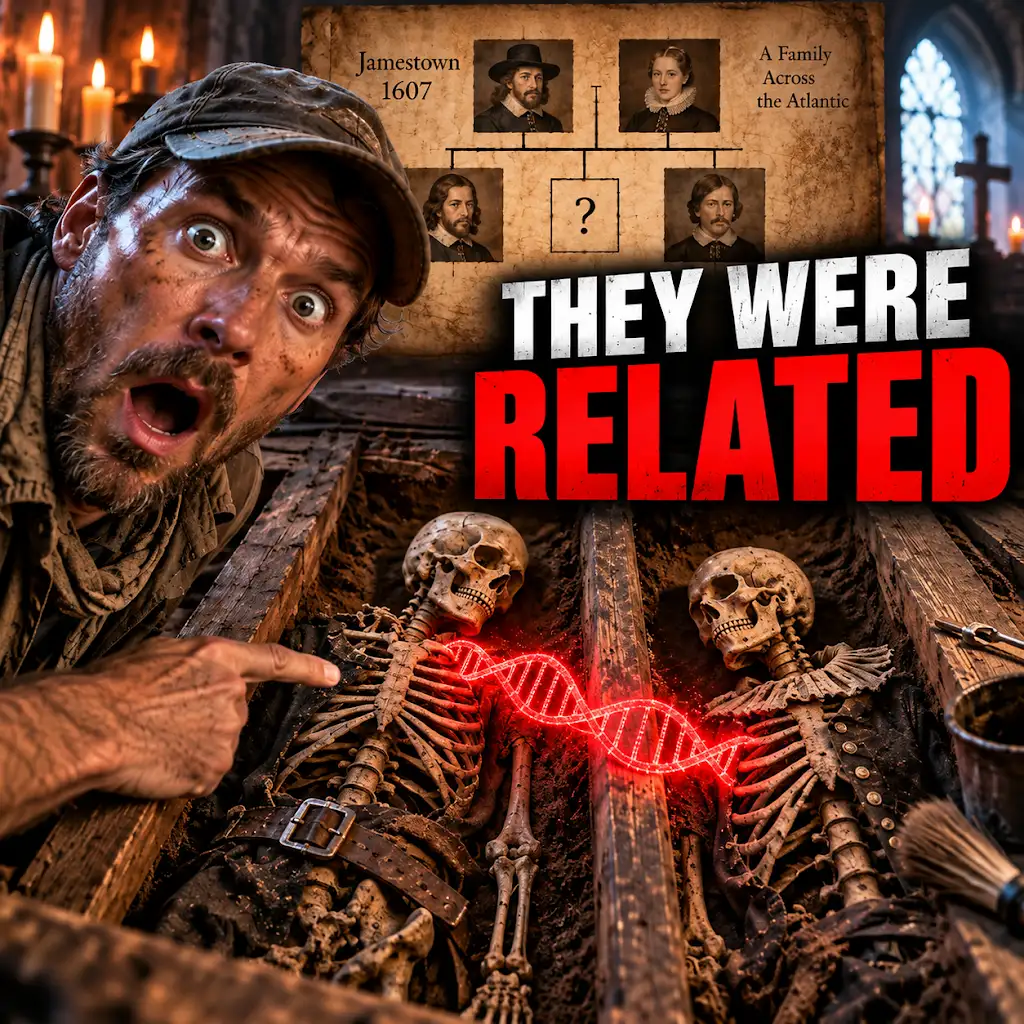
Jamestown DNA Revealed a Family Secret Hidden for 400 Years
FAQs

What is the maternal DNA connection to Jamestown?
The maternal DNA connection to Jamestown refers to the analysis of mitochondrial DNA (mtDNA) from remains found at the Jamestown settlement in Virginia. This analysis helps researchers trace maternal lineages and understand the genetic relationships among individuals buried at Jamestown.
Why is studying maternal DNA important in Jamestown research?
Studying maternal DNA in Jamestown research is important because mtDNA is passed down from mothers to their children unchanged, allowing scientists to track maternal lineages over generations. This information can provide insights into familial relationships, migration patterns, and population dynamics in the early Jamestown settlement.
What have researchers discovered through maternal DNA analysis at Jamestown?
Researchers have discovered familial connections, genetic diversity, and ancestral origins among individuals buried at Jamestown through maternal DNA analysis. This research has shed light on the diverse backgrounds of the settlers, including European, African, and Native American ancestries.
How does maternal DNA analysis contribute to our understanding of Jamestown history?
Maternal DNA analysis contributes to our understanding of Jamestown history by providing a more comprehensive picture of the individuals who lived and died at the settlement. By uncovering genetic relationships and ancestral origins, researchers can piece together the complex social and cultural dynamics of early Jamestown.
What are the implications of maternal DNA research for the broader study of colonial America?
Maternal DNA research in Jamestown has broader implications for the study of colonial America by highlighting the diverse origins and interactions of individuals in the early settlements. This research can challenge traditional narratives of colonial history and offer new perspectives on the complex relationships that shaped the development of America.