
Sands of Time: Unraveling Ancient Journeys Across Arabia
The Arabian Peninsula, a vast expanse of deserts, mountains, and coastlines, has long held a romantic mystique, often perceived as an immutable landscape shaped by millennia of harsh climate. Yet, beneath this seemingly static facade lies a dynamic history of human movement, adaptation, and interaction. Prehistoric Arabia was not a land of isolated tribes confined to their immediate surroundings. Instead, it was a vibrant stage for complex mobility patterns that shaped its cultures, economies, and even its very environment. Understanding these ancient journeys is crucial for piecing together the broader narrative of human dispersal and development in the Near East and beyond.
Archaeological evidence, coupled with palaeoenvironmental data and emerging insights from genetic studies, is slowly but surely illuminating the intricate tapestry of prehistoric Arabian mobility. This article delves into the multifaceted aspects of these ancient movements, exploring the motivations, routes, and consequences of human migration across the peninsula, from the earliest hominin presence to the dawn of the Bronze Age. It seeks to move beyond simplistic notions of nomadic wandering and reveal a more nuanced picture of planned expeditions, established trade networks, and the constant ebb and flow of populations responding to environmental shifts and social dynamics.
Recent studies on mobility patterns in prehistoric Arabia have shed light on the complex social and economic interactions of ancient communities in the region. These findings suggest that early inhabitants were not only nomadic but also engaged in trade and cultural exchanges that spanned vast distances. For a deeper understanding of these ancient societies and their advanced civilizations, you can explore the article titled “Uncovering Evidence of Ancient Advanced Civilizations” at this link: Uncovering Evidence of Ancient Advanced Civilizations.
Tracing the Earliest Footprints: Pleistocene Migrations and Resource Scarcity

The story of mobility in prehistoric Arabia begins long before the development of complex societies. The earliest human presence on the peninsula dates back to the Pleistocene epoch, a period characterized by significant climatic fluctuations. These early hominins, likely Homo erectus and later Homo sapiens, were not static inhabitants. Their movements were intrinsically linked to the availability of crucial resources, primarily water and game.
Echoes of the Ice Ages: Adapting to Shifting Climates
During glacial periods, when much of the peninsula was arid, human groups would have been drawn to the more hospitable fringes, particularly the coasts and the levantine corridors that offered access to fresh water sources and more predictable game populations. Conversely, interglacial periods, often characterized by increased rainfall and the presence of “green Arabia” phenomena – periods of increased vegetation and freshwater lakes – would have facilitated greater dispersal inland. These wetter phases, though transient, would have opened up new territories and allowed for more extensive ranging. Archaeological sites from this period, often associated with lithic industries, provide tangible evidence of these movements. The distribution of specific tool types, such as Acheulean handaxes or later Mousterian points, across vast distances suggests the presence of groups capable of traversing significant landscapes, following migratory herds or seeking out newly formed oases.
Following the Herds: Subsistence-Driven Wandering
The primary driver for much of this early mobility was subsistence. Prehistoric hunter-gatherer societies were intimately tied to the natural rhythms of their environment. The migratory patterns of large herbivores, such as gazelles, wild asses, and perhaps even early forms of cattle, would have dictated the movements of human groups. These animals, in turn, were dependent on the seasonal availability of vegetation, which was heavily influenced by rainfall. Therefore, the “herd following” strategy was not merely a matter of chasing prey but a complex adaptation to a dynamic ecological system. Evidence from faunal remains at archaeological sites, when analyzed in conjunction with palaeoclimatic reconstructions, allows researchers to infer the diet of these early peoples and, by extension, their potential migratory routes.
The Neolithic Revolution and the Dawn of Sedentary Lifestyles: New Forms of Movement

The Neolithic Revolution, marked by the development of agriculture and the domestication of animals, profoundly altered human mobility patterns across Arabia. While often associated with settled life, the transition to agriculture did not eliminate movement; rather, it transformed its nature and purpose.
From Hunter to Herder: Pastoral Nomadism and Seasonal Migration
The domestication of animals, particularly goats, sheep, and cattle, introduced a new dimension to mobility. Pastoralism, which became a significant subsistence strategy in many parts of Arabia during the Neolithic, inherently involved movement. Herders would follow their livestock to pasture, often engaging in seasonal migrations between higher and lower elevations or between wetter and drier regions. This form of movement was not haphazard but often followed established routes and territories, passed down through generations. Archaeological evidence, such as Neolithic settlements with evidence of animal husbandry and specialized tools for animal management, points to this shift. The increasing prevalence of sites in previously less inhabited areas, perhaps accessible due to the movement of domesticated animals, further supports this interpretation.
Early Farming Communities and the Seeds of Trade
The development of settled farming communities, primarily in more fertile areas like the Levant and parts of Yemen, also contributed to mobility, albeit in different forms. While farmers were tied to their land, they were not isolated. The need for resources not available locally, such as obsidian for tools or specific types of stone for grinding implements, would have spurred the development of early trade networks. These exchanges, while perhaps not as extensive as later periods, would have involved individuals or small groups traveling between settlements. Evidence for this can be found in the presence of non-local materials at archaeological sites, indicating the reach of these nascent exchange systems. The establishment of permanent or semi-permanent settlements also created focal points for social interaction, potentially leading to movements for marriage alliances, religious gatherings, or the sharing of knowledge.
Navigating the Ancient Arteries: Routes of Travel and Exchange
The vast landscapes of prehistoric Arabia were traversed through a complex network of routes, dictated by geography, resource availability, and the evolving needs of its inhabitants. These routes were not always clearly defined paths but often represented understood patterns of movement and communication.
Coastal Pathways and Maritime Ventures
The extensive Arabian coastline played a crucial role in prehistoric mobility. The Red Sea and the Arabian Gulf provided access to diverse marine resources and served as natural highways for interregional exchange. Archaeological evidence from coastal settlements, including shell middens and the presence of marine-derived resources in inland sites, suggests that maritime travel was practiced from early periods. The development of more sophisticated watercraft, even if rudimentary, would have facilitated longer journeys, connecting communities along the coast and potentially with regions across the sea. The discovery of artifacts of foreign origin in coastal Arabian sites hints at the reach of these early maritime networks.
Inland Corridors and Oasis Chains
Inland Arabia, dominated by formidable desert expanses, presented significant challenges to movement. However, these challenges were overcome through the strategic utilization of natural corridors and the establishment of oasis chains. Mountain ranges, such as the Hijaz and the Asir, could channel movement, while wadis (dry riverbeds) would have served as natural pathways, especially during wetter periods. The discovery of wells and cisterns at archaeological sites, some dating back to prehistoric times, indicates a deep understanding of water management, crucial for surviving desert crossings. These oases, acting as vital stopping points, formed natural chains that facilitated long-distance travel, connecting different regions of the peninsula. The distribution of specific lithic technologies or pottery styles across these inland routes provides a tangible marker of ancient movements and interactions.
The Formation of Early Trade Networks
As societies grew more complex, so too did their exchange networks. By the late Neolithic and Chalcolithic periods, evidence points towards the emergence of more organized trade in goods such as precious stones, aromatic resins, and possibly early metals. The movement of these commodities would have required dedicated routes and intermediaries. The discovery of materials like carnelian or turquoise in inland sites, far from their geological sources, is a testament to the reach and organization of these prehistoric trade systems. These networks were not merely economic; they also facilitated the diffusion of ideas, technologies, and cultural practices, further shaping the social landscape of prehistoric Arabia.
Recent studies on mobility patterns in prehistoric Arabia have shed light on the movement and settlement strategies of early human populations in the region. These findings are crucial for understanding how environmental factors influenced migration and resource utilization. For a deeper exploration of international cooperation in addressing contemporary challenges, you might find this article on preventing the space arms race insightful, as it draws parallels between historical patterns of human behavior and modern geopolitical dynamics. You can read more about it here.
The Social Fabric of Movement: Kinship, Conflict, and Cultural Exchange
| Time Period | Region | Mobility Pattern | Evidence Type | Key Findings |
|---|---|---|---|---|
| Late Pleistocene (50,000 – 12,000 BP) | Western Arabia | Seasonal nomadism | Stone tools, faunal remains | Groups moved seasonally following water sources and game availability |
| Early Holocene (12,000 – 8,000 BP) | Central Arabia | Transhumance | Archaeobotanical data, lithic scatters | Movement between highland and lowland areas for resource exploitation |
| Mid Holocene (8,000 – 4,000 BP) | Southern Arabia | Extended range mobility | Rock art, settlement remains | Increased mobility linked to climatic changes and resource distribution |
| Late Holocene (4,000 – 2,000 BP) | Northern Arabia | Nomadic pastoralism | Animal bones, pottery | Domestication of animals influenced mobility and settlement patterns |
Mobility in prehistoric Arabia was not solely driven by environmental pressures or economic imperatives. Social factors played an equally, if not more, significant role in shaping how people moved, whom they interacted with, and how their societies were structured.
Bonds of Kinship and Marriage Alliances
Kinship ties were fundamental to the organization of prehistoric societies, and movement was often intertwined with maintaining and expanding these relationships. Marriage alliances, a common strategy for strengthening social bonds and ensuring the continuity of groups, would have involved individuals traveling to establish new connections. The movement of women in particular, often a key element in forming alliances between different clans or tribes, would have played a significant role in the diffusion of cultural practices and genetic diversity. While direct archaeological evidence for such movements is scarce, anthropological parallels from later historical periods and contemporary indigenous societies suggest the pervasive influence of kinship in dictating travel patterns.
Conflict and Displacement: The Shadow of Movement
While cooperation and exchange were vital, conflict was also an inherent part of human history, and it too could drive mobility. Raids, territorial disputes, or the search for refuge in times of unrest would have led to displacement and the movement of populations. Archaeological evidence, such as fortified settlements or signs of destruction at certain sites, can sometimes indicate periods of conflict that may have necessitated migration or forced movement. The deliberate abandonment of settlements, followed by their reoccupation by different groups, can also be interpreted as a consequence of such dynamics. Understanding the patterns of conflict and displacement adds another layer to the complex narrative of prehistoric Arabian mobility, revealing the less pacific, but equally impactful, drivers of human movement.
The Diffusion of Ideas and Technologies: Cultural Crossroads
Prehistoric Arabia was not an isolated entity. Through the various forms of mobility discussed, ideas, technologies, and cultural practices flowed across its landscapes and beyond its borders. The adoption of new farming techniques, the spread of pottery styles, or the dissemination of religious beliefs were all facilitated by human movement. For instance, the adoption of certain lithic technologies from neighboring regions or the influence of Levantine agricultural practices on Arabian settlements speak to the impact of these cultural exchanges. The very definition of “Arabian culture” in prehistory is, in many ways, a composite of these interconnected movements and influences, making it a dynamic and ever-evolving entity.
Interpreting the Past: Methodologies and Future Directions
Unraveling the intricate patterns of prehistoric Arabian mobility requires a multidisciplinary approach, drawing on a wide range of methodologies. The interpretation of archaeological evidence, coupled with advancements in scientific techniques, is continually refining our understanding of these ancient journeys.
The Silent Testimony of Artifacts: Lithics, Ceramics, and Architecture
Archaeological fieldwork remains the cornerstone of our understanding. The careful excavation and analysis of lithic artifacts – stone tools – can reveal information about their raw material sources, indicating travel to acquire these materials. Similarly, the study of ceramic typologies can help trace the diffusion of cultural practices and exchange networks. The presence of distinctive pottery styles in new regions suggests the movement of people who brought their traditions with them. Furthermore, the architecture of prehistoric settlements, from simple ephemeral structures to more elaborate stone constructions, can provide insights into settlement patterns, population density, and the extent of territorial occupation.
Environmental Proxies: Climate Change and Landscape Transformation
Understanding the palaeoenvironment is crucial for interpreting mobility patterns. Scientists analyze sediment cores from lakes and oceans, study fossil pollen, and examine geological formations to reconstruct past climates and landscapes. These reconstructions reveal periods of aridity and humidity, the presence of ancient river systems and lakes, and shifts in vegetation. This environmental context helps archaeologists understand the constraints and opportunities faced by prehistoric populations, guiding their movements in search of water, food, and suitable living conditions. For example, the identification of ancient lake systems in previously arid areas could explain the presence of human settlements and their associated artifacts.
Genetic Threads: Unraveling Ancestral Connections
Emerging genetic studies are revolutionizing our understanding of human migration. By analyzing ancient DNA extracted from skeletal remains, researchers can trace ancestral lineages, identify population movements, and even estimate the timing and direction of these migrations. While ancient DNA studies in Arabia are still in their nascent stages, they hold immense potential for confirming or challenging existing hypotheses about population dispersal, intergroup interactions, and the genetic legacy of prehistoric migrations on modern Arabian populations. The insights gained from genetics can provide a powerful, molecular-level confirmation of the macroscopic patterns observed in archaeological and environmental data.
The Road Ahead: Integrating Data and Asking New Questions
The future of research into prehistoric Arabian mobility lies in the integration of these diverse methodologies. Combining archaeological findings with palaeoenvironmental data and genetic evidence will provide a more comprehensive and nuanced picture. Continued fieldwork, coupled with advancements in analytical techniques, will undoubtedly unearth new sites and uncover further clues. As our understanding deepens, new questions will emerge, pushing the boundaries of our knowledge and revealing the profound interconnectedness of human experience across the vast and ancient landscapes of Arabia. The sands of time, though seemingly unchanging, are in fact a testament to the enduring power of human movement and adaptation.
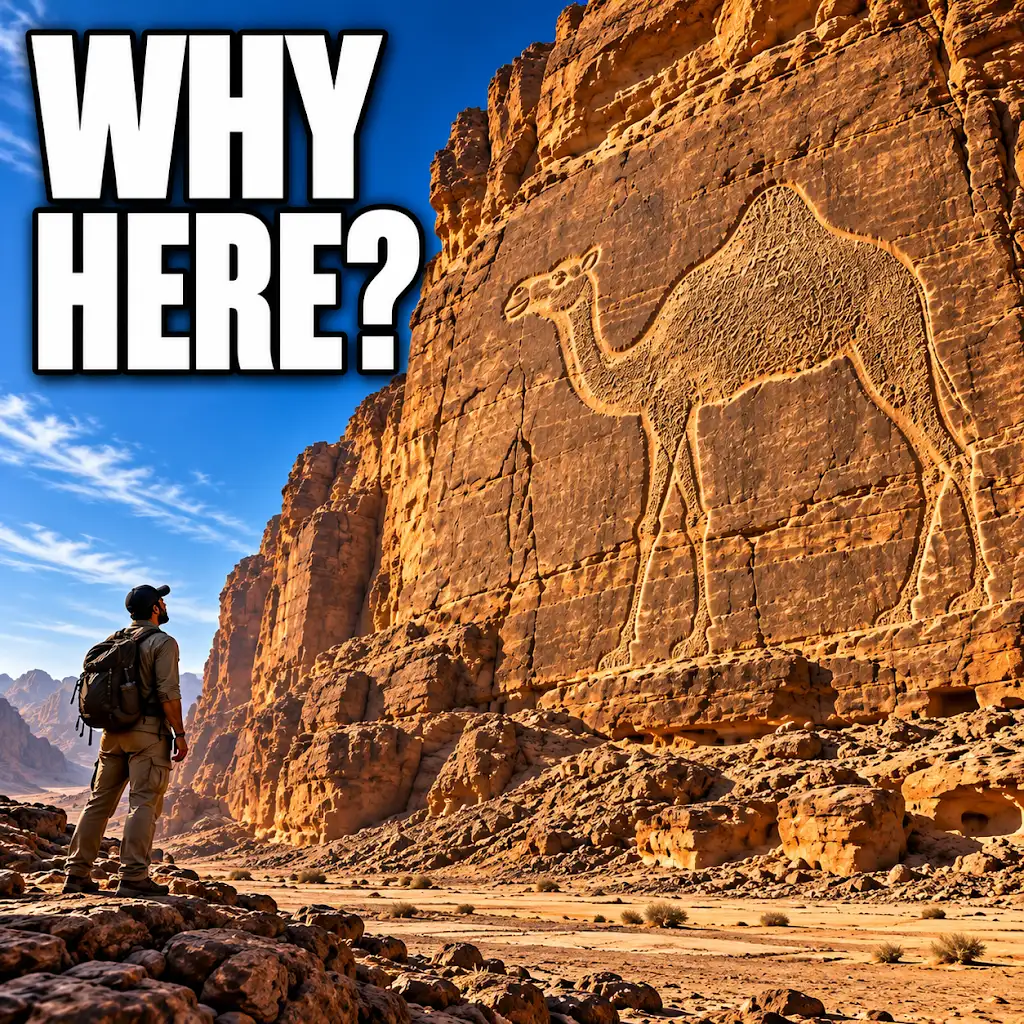
Why Were Giant Camels Carved Above the Desert?
FAQs
What were the main factors influencing mobility patterns in prehistoric Arabia?
The main factors influencing mobility patterns in prehistoric Arabia were environmental conditions, resource availability, climate change, and interactions with neighboring groups.
How did prehistoric communities in Arabia adapt to changing environmental conditions?
Prehistoric communities in Arabia adapted to changing environmental conditions by moving to different areas in search of water, food, and shelter. They also developed strategies for storing and conserving resources during times of scarcity.
What evidence supports the idea of long-distance trade networks in prehistoric Arabia?
Evidence of long-distance trade networks in prehistoric Arabia includes the presence of exotic goods such as pottery, jewelry, and tools that were not locally produced. Archaeological findings of these items in different regions suggest the existence of trade routes connecting distant communities.
How did mobility patterns in prehistoric Arabia contribute to cultural exchange and interaction?
Mobility patterns in prehistoric Arabia facilitated cultural exchange and interaction by allowing different groups to come into contact with one another. This contact led to the exchange of ideas, technologies, and traditions, shaping the cultural landscape of the region.
What role did domestication of animals play in shaping mobility patterns in prehistoric Arabia?
The domestication of animals played a significant role in shaping mobility patterns in prehistoric Arabia by providing communities with a sustainable source of food, transportation, and labor. This allowed them to move more freely across the landscape in search of resources.