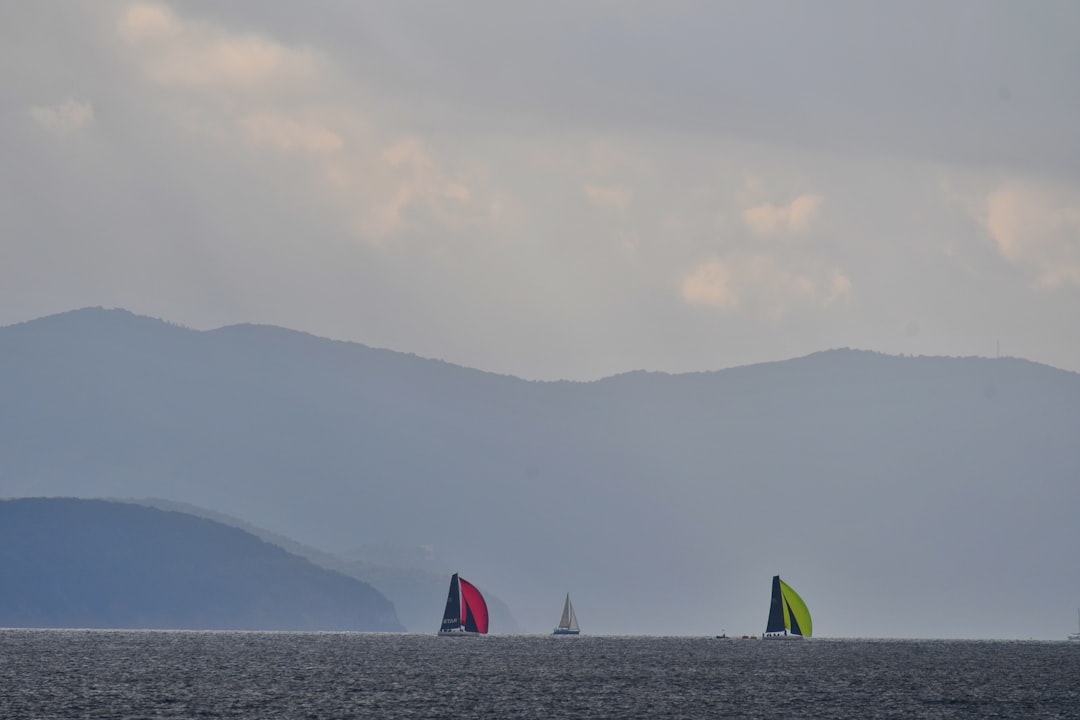
The Indian Ocean, a formidable expanse of water that connects three continents, presents a unique and captivating paradox to maritime history. Unlike other major oceans with their more consistent wind patterns, this vast basin is dominated by the rhythmic, predictable, and powerful forces of the monsoon. These seasonal wind reversals, a meteorological phenomenon of immense scale, have not merely influenced seafaring in the region but have fundamentally shaped its very essence, dictating trade routes, fostering cultural exchange, and defining the rise and fall of maritime powers for millennia. To understand Indian Ocean sailing is to understand the monsoon itself; the two are inextricably linked, like the warp and weft of a historical tapestry. This article delves into the rich history of monsoon sailing, exploring its origins, its evolution, and its enduring legacy on the Indian Ocean’s coastal societies.
The Dynamics of the Monsoon: Nature’s Master Schedule
The monsoon, in its simplest definition, is a seasonal prevailing wind that brings heavy rains to South Asia and other regions. However, its impact on the Indian Ocean is far more profound than mere precipitation. It is the engine that drives ocean currents, dictates marine life, and, crucially, governs the feasibility and direction of sailing.
The Northeast Monsoon
From approximately October to April, the landmass of Siberia cools significantly, creating a high-pressure system. This pushes cold, dry air southwestward across the Bay of Bengal and the Arabian Sea. This flow comprises the Northeast Monsoon, characterized by steady winds that typically blow from the northeast. For sailors, this period facilitated journeys from India’s west coast towards East Africa and the Arabian Peninsula, and from Southeast Asia towards India. It was a period of favorable winds for westward travel, a natural conveyor belt for commerce and cultural diffusion.
The Southwest Monsoon
Conversely, from approximately April to September, the vast landmass of the Indian subcontinent heats up, creating a low-pressure system. This draws warm, moist air from the Indian Ocean northeastward, bringing with it the torrential rains famously associated with the monsoon. This reversal of wind direction constitutes the Southwest Monsoon, bringing fierce winds from the southwest. During this season, sailing journeys were primarily directed eastward, from East Africa and the Arabian Peninsula towards India and further to Southeast Asia. This cyclical predictability, a gift of nature, allowed for systematic planning of voyages, a calendar etched in the wind’s breath.
Inter-Monsoon Periods and Challenges
Between these dominant monsoon seasons lie “inter-monsoon” periods, characterized by lighter, more variable winds and occasional squalls. While offering a brief respite from the strongest winds, these periods also presented a different set of challenges. Sailors had to navigate unpredictable conditions, often waiting for the established monsoon patterns to resume before embarking on long-distance voyages. The transition zones between the two major monsoons were also notoriously dangerous, with sudden shifts in wind and weather requiring exceptional seamanship.
Early Maritime Prowess: Harnessing the Wind’s Power
The earliest evidence of human adaptation to the monsoon’s rhythm stretches back millennia, predating written records. Archaeological findings and genetic studies suggest a long history of maritime activity, proving that even ancient seafarers possessed a sophisticated understanding of oceanic currents and wind patterns.
Early Traders and Their Vessels
The earliest monsoonal mariners likely utilized simple rafts and dugout canoes, gradually evolving into more sophisticated plank-built vessels. Evidence from the Indus Valley Civilization (c. 2500–1900 BCE) suggests a burgeoning maritime trade network, likely facilitated by the predictable monsoon winds. These early vessels, though rudimentary by modern standards, were marvels of engineering for their time, designed to navigate the often-challenging waters of the Indian Ocean. Their ability to utilize the monsoon allowed them to traverse vast distances, connecting disparate cultures.
Proto-Historic Migrations
Beyond trade, the monsoon also played a crucial role in early human migrations. The settlement of Madagascar, for instance, a large island off the southeastern coast of Africa, is a testament to extraordinary feats of navigation, undertaken by Austronesian peoples from Maritime Southeast Asia as early as the first millennium CE. These voyages, spanning thousands of kilometers of open ocean, would have been impossible without a profound understanding of the prevailing winds and currents, essentially riding the monsoon’s flow like an invisible highway.
The Rise of Coastal Settlements
The security and profitability of monsoon-driven trade spurred the development of numerous coastal settlements and port cities across the Indian Ocean rim. These hubs, from the ancient port of Lothal in Gujarat to the early settlements along the East African coast, became vital nodes in a vast network of exchange. They served as points of transshipment, centers for shipbuilding, and melting pots of diverse cultures, all thriving under the monsoon’s benevolent yet demanding gaze.
The Golden Age of Monsoon Trade: A Network of Riches
The medieval period witnessed the zenith of monsoon-driven trade, transforming the Indian Ocean into a vibrant economic and cultural thoroughfare. This era saw the establishment of well-defined trade routes and the emergence of powerful maritime empires.
The Spice Routes and Their Significance
Perhaps the most famous of these networks were the “Spice Routes,” a misnomer as they transported far more than just spices. silks, precious stones, textiles, aromatics, and various other commodities flowed across the ocean, connecting the spice islands of Southeast Asia with China, India, Persia, and the Arabian Peninsula, and ultimately reaching the Mediterranean world. The monsoon acted as the breath of this sprawling organism, carrying goods and ideas across its vast embrace.
The Role of Arab and Indian Merchants
Arab and Indian merchants, renowned for their navigational skills and commercial acumen, were at the forefront of this burgeoning trade. Arab dhows, with their distinctive lateen sails, became ubiquitous across the western Indian Ocean, while Indian shipbuilders produced sturdy vessels capable of long-distance voyages. These communities developed sophisticated systems of credit and exchange, demonstrating a level of economic integration that was remarkably advanced for its time. Their success was intertwined with their deep understanding of the monsoon’s intricacies.
Cultural Exchange and Diffusion
Beyond economic prosperity, the monsoon also fostered an unparalleled exchange of cultures, religions, philosophies, and technologies. Islam spread along the trade routes, influencing architecture, art, and societal structures from East Africa to Indonesia. Hinduism and Buddhism also travelled, leaving their imprints on Southeast Asian societies. New agricultural practices, culinary traditions, and linguistic elements were absorbed and adapted, creating a rich tapestry of interwoven cultures across the Indian Ocean littoral. The monsoon, therefore, was not just a conduit for goods, but a powerful agent of cultural diffusion.
Navigational Techniques and Innovations: Mastering the Unseen
Monsoon sailing demanded a high degree of navigational expertise and continuous innovation. Sailors developed sophisticated methods to chart their course, predict weather, and ensure the safety of their voyages.
Stellar Navigation
The clear skies of the Indian Ocean, particularly during the Northeast Monsoon, facilitated stellar navigation. Mariners learned to identify key stars and constellations, using them to determine their latitude and direction. Tools like the kamal, a simple yet effective device for measuring the angle of the North Star or other celestial bodies above the horizon, were crucial for maintaining a steady course. This reliance on the celestial sphere highlights the profound connection between human ingenuity and the natural world.
Understanding Ocean Currents and Winds
Beyond the stars, a deep intuitive and empirical understanding of ocean currents and subtle wind shifts was paramount. Sailors developed intricate mental maps of the ocean, incorporating knowledge passed down through generations. They learned to interpret the color of the water, the flight of birds, and the presence of certain marine life as indicators of proximity to land or changes in oceanographic conditions. This embodied knowledge, often unwritten, was a priceless commodity in itself.
Shipbuilding Adaptations
Shipbuilding practices evolved in response to the demands of monsoon sailing. Vessels were designed to be robust and seaworthy, capable of enduring the strong winds and rough seas of the monsoon seasons. The use of coir (coconut fiber) for rigging and stitching planks, known as “sewn boats,” provided flexibility and resilience, allowing the hull to “breathe” with the movements of the sea. These innovations were a testament to the practical wisdom of the shipwrights, ensuring the survivability of their vessels.
The Decline of Dominance and Enduring Legacy: A Shifting Tide
The arrival of European maritime powers in the 15th and 16th centuries marked a significant turning point in the history of Indian Ocean sailing. While the monsoon continued to dictate environmental conditions, the dynamics of trade and power began to shift dramatically.
European Arrival and New Technologies
The Portuguese, followed by the Dutch, English, and French, brought with them larger, heavily armed sailing ships, primarily caracks and galleons. These vessels, while not initially superior to local designs in terms of adapting to monsoon conditions, possessed advanced navigation instruments like the astrolabe and quadrant, and more significantly, gunpowder weaponry. This technological advantage allowed them to bypass existing trade networks and establish fortified trading posts, eventually challenging the existing order.
The Impact of Colonialism
The establishment of colonial empires fundamentally altered the economic landscape of the Indian Ocean. Traditional monsoon-driven trade routes were disrupted as European powers sought to monopolize specific commodities and re-route trade to their own benefit. The vibrant, multi-ethnic port cities that had flourished under the monsoon’s rhythm began to decline, their autonomy eroded by the new geopolitical realities. The monsoon still blew, but the sails that caught its wind were increasingly those of foreign powers.
Modern Legacies and Cultural Resonance
Despite these historical shifts, the legacy of monsoon sailing continues to resonate. The dhow, in its various forms, remains a common sight in many parts of the Indian Ocean, a living testament to centuries of maritime tradition. The words and concepts associated with monsoon sailing are embedded in coastal languages and cultures, reflecting the deep impact of these cycles on local identities. Furthermore, the understanding of monsoon meteorology remains crucial for contemporary shipping, fishing, and disaster preparedness in the region. The monsoon, therefore, is not merely a historical force but a continuing environmental reality that shapes human endeavors across the Indian Ocean. Its currents flow through the veins of histories and continue to inform the present.
WATCH NOW ▶️ WARNING: The Giza Muon Scans Just Changed Everything
FAQs
What are monsoon sailing cycles in the Indian Ocean?
Monsoon sailing cycles refer to the seasonal wind patterns in the Indian Ocean that facilitated maritime navigation and trade. These winds change direction between summer and winter, allowing ships to sail efficiently across the ocean by timing their voyages according to the monsoon seasons.
How did monsoon winds influence historical trade in the Indian Ocean?
Monsoon winds enabled predictable and regular sea routes, which allowed traders from regions such as East Africa, the Arabian Peninsula, India, and Southeast Asia to exchange goods like spices, textiles, and precious metals. This seasonal wind system was crucial for the development of extensive trade networks in the Indian Ocean basin.
When do the monsoon winds typically change direction?
The monsoon winds in the Indian Ocean generally blow from the southwest during the summer months (approximately June to September) and from the northeast during the winter months (approximately December to February). These shifts allowed sailors to plan their voyages to take advantage of favorable winds.
What historical evidence exists about monsoon sailing in the Indian Ocean?
Historical evidence includes ancient texts, such as the Periplus of the Erythraean Sea, archaeological findings of shipwrecks, and records from various trading civilizations. These sources document the use of monsoon winds for navigation and the extensive maritime trade networks established over centuries.
Why were monsoon sailing cycles important for cultural exchange?
Monsoon sailing cycles facilitated not only trade but also the exchange of ideas, religions, languages, and technologies among diverse cultures bordering the Indian Ocean. This interaction contributed to the rich cultural and economic history of the region, influencing societies from East Africa to Southeast Asia.