The Moroccan landscape, a tapestry woven with the threads of Berber, Arab, Roman, and Phoenician civilizations, has long guarded its secrets beneath the ochre sands and rugged mountain ranges. While well-trodden historical sites like Volubilis and the Kasbah of Ait Benhaddou draw considerable attention, the nation’s archaeological potential remains vast, with countless discoveries waiting to be unearthed. Recently, a significant breakthrough has emerged from a previously overlooked region, promising to rewrite chapters of North African history and offer an unprecedented glimpse into a lost civilization. This remarkable find, tentatively christened the “Oasis of Whispers” by the excavating team, is not merely another collection of ruins; it is a remarkably preserved settlement, providing a unique window into the daily lives, religious practices, and technological advancements of its inhabitants.
The Discovery of the Oasis of Whispers
The initial discovery was almost serendipitous. A team of Moroccan archaeologists, conducting routine geological surveys in a remote, arid plateau bordering the Atlas Mountains, stumbled upon an anomaly. Beneath a thick layer of compacted earth and sand, ground-penetrating radar revealed the distinct geometric patterns of man-made structures. Initial test digs confirmed the presence of substantial, well-preserved walls and foundations, hinting at a settlement of considerable size and complexity. The arid environment, while challenging for modern exploration, proved to be a boon for preservation, shielding the site from the erosive forces of weather and human activity for millennia. The remoteness of the location also contributed to its intact state, largely untouched by looters or casual passersby. This fortunate combination of factors has allowed archaeologists to approach the site with a rare degree of pristine investigation, a luxury seldom afforded to historical discoveries. The sheer scale of the initial findings immediately indicated that this was no mere outpost or seasonal encampment, but a thriving center of some significance.
The Unearthing Process and Initial Findings
The unearthing process, led by Dr. Amina El Fassi, a renowned expert in North African antiquity, has been meticulous and painstakingly slow. Layers of sediment have been carefully removed, revealing not just buildings, but a rich stratum of artifacts. Among the most compelling early discoveries are intricately carved stone tools, suggesting a sophisticated understanding of craftsmanship. Pottery shards, displaying unique decorative motifs unlike any previously cataloged in the region, hint at a distinct artistic tradition. The presence of what appear to be granaries, along with evidence of advanced irrigation channels, points to a well-organized agricultural system that allowed the community to thrive in a challenging environment. Even more intriguing are the early signs of what might be a complex societal structure, with evidence of differing dwelling sizes and the potential for communal gathering spaces. The sheer volume and variety of artifacts have necessitated the establishment of a dedicated on-site laboratory for initial processing and preservation, a testament to the magnitude of the find. The team’s initial excitement has been tempered by the immense task ahead, but the promise of unlocking the secrets of this forgotten people fuels their dedication.
Recent discoveries in Morocco have unveiled a hidden archaeological site that sheds light on ancient civilizations in the region. This site, rich in artifacts and structures, offers a glimpse into the historical significance of North Africa. For those interested in understanding how climate has influenced human history, a related article discusses Greenland’s climate history through ice cores, which can be found here: Uncovering Greenland’s Climate History Through Ice Cores. This connection highlights the broader implications of environmental changes on archaeological findings across different regions.
Echoes of a Lost Culture

The artifacts recovered from the Oasis of Whispers speak of a culture that was both self-sufficient and deeply connected to its environment. The prevailing theory among the researchers is that this settlement predates many of the well-known historical periods of North Africa, potentially offering a vital missing link in our understanding of early human migration and societal development in the region. The absence of direct ties to known Phoenician, Roman, or even earlier Berber settlements suggests a degree of isolation, allowing for the development of a unique cultural identity. The careful study of their tools, their pottery, their building techniques, and the layout of their settlement is beginning to paint a picture of a people who were not merely surviving, but thriving, in this challenging terrain. Their ingenuity in harnessing water resources and their mastery of local materials are particularly noteworthy. The implications of such a discovery are profound, potentially pushing back the timeline of complex human settlements in North Africa and offering a new perspective on the indigenous populations of the continent.
Unique Artisanal Traditions and Technological Innovations
The artistry evident in the recovered artifacts is striking. The pottery, in particular, features geometric patterns and stylized animal motifs that are distinct from other North African ceramic traditions. Some vessels are adorned with intricate incised lines and dot patterns, suggesting a deliberate and skilled hand. The tools, crafted from local stone and bone, are not only functional but also demonstrate a keen understanding of ergonomics and material properties. Microscopic analysis of the tool edges reveals evidence of repeated use and expert sharpening techniques. The irrigation system, composed of channels and possibly reservoirs, showcases an impressive understanding of hydraulics and water management. These findings challenge previous assumptions about the technological capabilities of early inhabitants of this region, suggesting a higher level of sophistication than often attributed. The team is also exploring evidence of early metalworking, though this remains a more tentative hypothesis awaiting further corroboration. The sheer variety of projectile points, grinding stones, and other utilitarian objects speaks to a complex division of labor and a highly specialized society.
Religious and Spiritual Beliefs
Perhaps the most enigmatic aspect of the Oasis of Whispers lies in the potential evidence of its inhabitants’ spiritual beliefs. At the heart of the settlement, researchers have unearthed a circular structure, open to the sky, with a central altar-like formation. Surrounding this central area are smaller stone formations, some bearing what appear to be carved symbols. While interpretation is ongoing, these findings strongly suggest a place of communal worship or ritual. The presence of small, carved figurines, depicting stylized human and animal forms, further supports the notion of a rich spiritual life. The placement of these figurines within dwelling spaces and in proximity to the ceremonial center suggests a deeply ingrained belief system that permeated daily life. The absence of overtly anthropomorphic depictions and the prevalence of abstract or symbolic representations raise fascinating questions about their worldview and their relationship with the natural world. The careful excavation of burial sites, where available, will be crucial in providing further insights into their funerary practices and beliefs about the afterlife.
Unraveling the Social Fabric
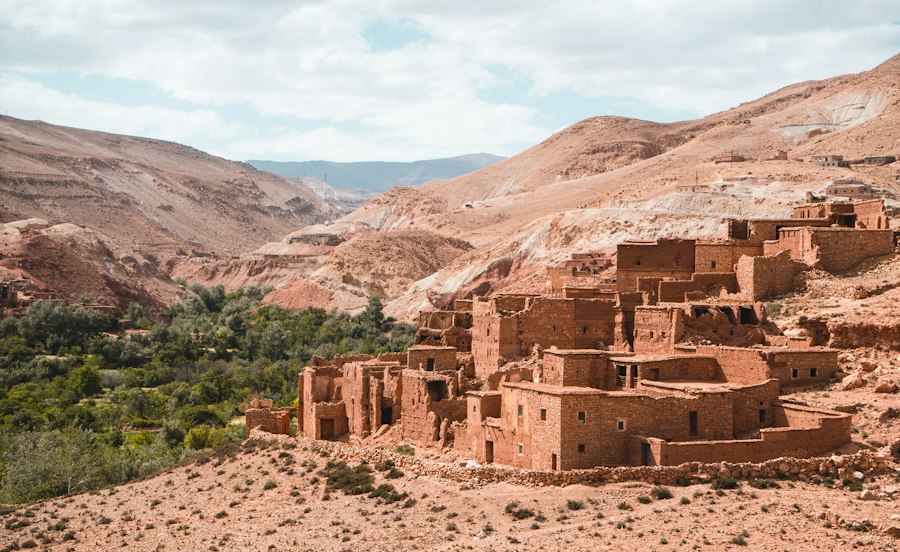
Beyond the material culture, the Oasis of Whispers offers a rare opportunity to reconstruct the social structure and daily routines of its inhabitants. The layout of the settlement itself provides clues. There appear to be distinct residential areas, with some dwellings exhibiting a greater degree of ornamentation or size than others, hinting at social stratification. The presence of communal spaces, such as the aforementioned ceremonial center and what might be shared workshops or gathering areas, suggests a society that valued community interaction. The careful analysis of skeletal remains, when found, will offer invaluable information about diet, health, and potentially even kinship structures. The meticulous mapping of every artifact’s provenance is crucial in understanding the distribution of resources and the organization of labor. The excavators are particularly keen to understand how this society sustained itself, its trading networks (if any), and its relationship with neighboring communities, if such connections existed.
Community Organization and Dwelling Structures
The settlement appears to be organized in a somewhat concentric fashion around the central ceremonial area. Dwellings vary in size and complexity, with some constructed from sturdy, well-mortared stone and others from more basic materials. Evidence of hearths within many of the structures suggests individual family units, while the existence of larger, communal buildings points towards shared responsibilities and activities. The presence of what appear to be dedicated spaces for specific crafts, such as pottery production or toolmaking, suggests a division of labor and specialized skills within the community. The careful examination of doorframes and passageways will offer insights into their architectural preferences and movement patterns within the settlement. The team is also investigating the possibility of defensive structures, though current evidence does not strongly suggest a society engaged in frequent conflict. The sheer density of the housing in certain areas indicates a thriving population that likely relied on efficient land use.
Diet and Subsistence Strategies
The arid environment of the Atlas foothills presents significant challenges for agriculture. The discovery of elaborate irrigation channels is therefore a paramount finding, indicating a sophisticated understanding of water management. Analysis of botanical remains found within the granaries and cooking areas will reveal the specific crops they cultivated, likely hardy grains and legumes suited to the climate. Evidence of domesticated animals, such as sheep and goats, will shed light on their protein sources and agricultural practices. The presence of grinding stones and cooking hearths, along with carbonized food remains, allows for a detailed reconstruction of their diet. The team is also examining evidence of hunting and gathering activities, as it is likely that their subsistence strategies involved a combination of agriculture, animal husbandry, and foraging. The discovery of discarded tools associated with fishing, if found in proximity to any water sources, would further broaden our understanding of their varied food procurement methods.
The Enigma of the Inhabitants
The most pressing question surrounding the Oasis of Whispers is the identity of its inhabitants. While the artifacts point to a distinct culture, their precise origins and eventual fate remain shrouded in mystery. The lack of linguistic evidence, such as inscriptions or written records, makes direct identification challenging. However, the unique characteristics of their material culture suggest they were not simply an offshoot of known groups, but a people with their own distinct trajectory. Ongoing comparative studies of the recovered artifacts with those from neighboring regions, both contemporary and preceding, are crucial in identifying potential links or divergences. The possibility of a previously undocumented indigenous population that played a significant role in the region’s ancient history is a tantalizing prospect. The preservation of organic materials, if successful, could even offer opportunities for DNA analysis, potentially providing definitive answers about their genetic lineage.
Chronological Placement and Potential Affiliations
Determining the precise chronological placement of the Oasis of Whispers is a critical undertaking. Radiocarbon dating of organic materials, along with thermoluminescence dating of pottery and other fired artifacts, will be essential in establishing a reliable timeline. The current working hypothesis places the settlement within a period predating significant Phoenician and Roman influence in North Africa, potentially spanning several centuries. The comparison of architectural styles and artifact typologies with established chronologies from other regional sites will help to refine this estimate. While direct affiliations are unclear, researchers are exploring potential indirect influences or shared cultural developments with other early Saharan and Maghrebi cultures. The possibility of the site representing an earlier phase of Berber culture, before its more widely documented expressions, is also a significant line of inquiry.
The Fate of the Settlement
The reasons for the eventual abandonment of the Oasis of Whispers are as enigmatic as its origins. There is currently no clear evidence of widespread destruction or violent conquest. The settlement appears to have been gradually vacated, with artifacts left in situ in many instances. Several theories are being considered, including environmental changes, such as prolonged drought or shifts in water availability, which could have rendered the location unsustainable. Resource depletion or the emergence of more advantageous settlements elsewhere could also have played a role. The possibility of disease or internal societal collapse, while difficult to prove without more direct evidence, cannot be entirely dismissed. The systematic investigation of any later occupational layers or evidence of post-abandonment scavenging will be crucial in understanding the final chapter of this ancient community. The answer to their disappearance may lie not in a cataclysmic event, but in a slow, deliberate transition.
Recently, researchers uncovered a hidden archaeological site in Morocco that has sparked significant interest among historians and archaeologists alike. This discovery sheds light on the region’s ancient civilizations and their remarkable engineering feats. Interestingly, it draws parallels to other historical water management systems, such as the ancient Persian qanat system, which is detailed in a related article. For those curious about these innovative techniques, you can read more about it here.
Future Prospects and Preservation Efforts
| Metric | Details |
|---|---|
| Site Name | Djebel Irhoud |
| Location | Near Marrakesh, Morocco |
| Discovery Year | 1961 |
| Type of Site | Prehistoric archaeological site |
| Significance | Oldest Homo sapiens fossils found, dating back approximately 300,000 years |
| Artifacts Found | Stone tools, human fossils, animal bones |
| Excavation Status | Ongoing with periodic discoveries |
| Area Covered | Several square kilometers |
| Research Institutions Involved | National Institute of Archaeology and Heritage (Morocco), Max Planck Institute (Germany) |
The Oasis of Whispers represents a monumental addition to Morocco’s rich archaeological heritage. Its discovery underscores the vast unexplored potential of the nation’s diverse landscapes. The ongoing excavation and research promise to yield significant insights into early human civilization in North Africa, challenging existing narratives and enriching our understanding of human ingenuity and adaptation. The long-term preservation of the site is paramount, ensuring that future generations can benefit from its unparalleled historical and scientific value. The Moroccan Ministry of Culture and Communications, in collaboration with international archaeological institutions, is developing comprehensive plans for site protection and ongoing research. The delicate balance between meticulous excavation and responsible stewardship is at the forefront of their efforts. The ultimate goal is to transform this extraordinary discovery into a valuable educational and research resource, shedding light on a forgotten chapter of human history.
Ongoing Research and International Collaboration
The current excavation is just the beginning. The Oasis of Whispers has become a focal point for international archaeological collaboration, with researchers from various disciplines contributing their expertise. Geologists are studying the paleoclimate and the environmental factors that may have influenced the settlement’s development and abandonment. Paleoanthropologists are analyzing the skeletal remains for insights into health, diet, and population dynamics. Linguists and epigraphers, while facing the challenge of a lack of written records, are studying symbolic representations for potential clues to their communication and belief systems. The analysis of environmental DNA, if preserved, could offer unprecedented insights into their genetic makeup and origins. This multidisciplinary approach is essential for unlocking the multifaceted secrets of this remarkable site. The establishment of a dedicated research center adjacent to the site is being considered to facilitate these ongoing efforts.
Conservation and Public Engagement
The long-term preservation of the Oasis of Whispers is a significant undertaking. The site’s remote location, while beneficial for its initial discovery, also presents challenges for its protection and accessibility. Plans are underway to implement robust conservation strategies, including the stabilization of exposed structures, the careful management of visitor access (should it eventually be opened to the public), and the ongoing monitoring of environmental conditions. The potential for ecotourism and educational outreach is immense, but must be approached with extreme caution to avoid damaging the delicate archaeological context. The Moroccan authorities are committed to balancing the need for scientific research with the desire to share this incredible heritage with the world responsibly. Public engagement will focus on educational programs and online resources, allowing a wider audience to learn about this extraordinary discovery and the ongoing efforts to unravel its mysteries. The hope is that the Oasis of Whispers will not only illuminate the past but also inspire future generations of archaeologists and historians.

They Found a 4,000-Year-Old Defense Line in Morocco
FAQs
What is the hidden archaeological site in Morocco?
The hidden archaeological site in Morocco is a recently discovered ancient city that dates back to the Roman Empire.
How was the hidden archaeological site in Morocco discovered?
The hidden archaeological site in Morocco was discovered by a team of archaeologists using advanced technology such as ground-penetrating radar and drones.
What is the significance of the hidden archaeological site in Morocco?
The hidden archaeological site in Morocco is significant because it provides valuable insights into the history and culture of the region during the Roman Empire.
What artifacts have been found at the hidden archaeological site in Morocco?
Artifacts such as pottery, coins, and architectural remains have been found at the hidden archaeological site in Morocco, shedding light on the daily life of the ancient inhabitants.
Is the hidden archaeological site in Morocco open to the public?
Currently, the hidden archaeological site in Morocco is not open to the public as further excavation and preservation work is still ongoing to protect the site’s integrity.