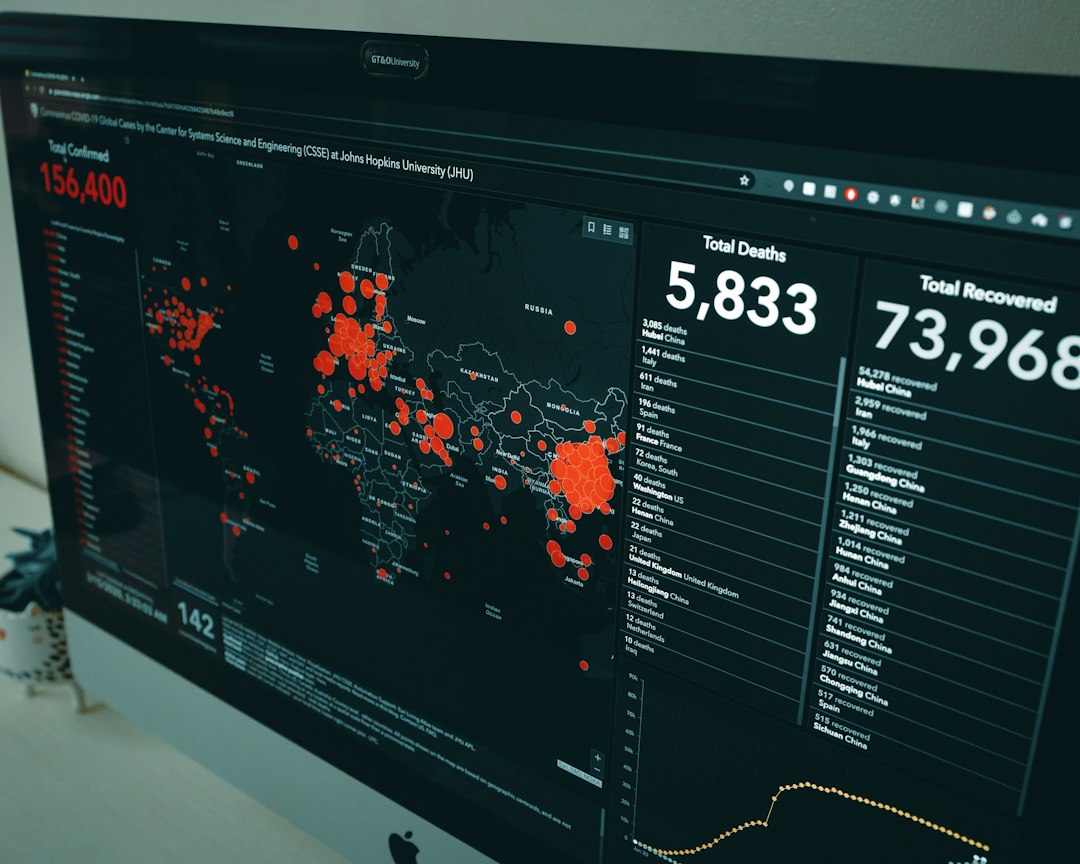
Network science, a discipline that emerged from the fields of graph theory, statistical mechanics, and sociology, is revolutionizing how we understand historical data. By framing historical events, individuals, and ideas as nodes and their interactions as edges, researchers can uncover hidden patterns, causal relationships, and emergent properties that traditional analytical methods might overlook. This approach allows for a more dynamic and interconnected view of the past, moving beyond linear narratives to embrace the complex web of influence and causality that shaped human history. The power of network science lies in its ability to quantify relationships, visualize complex structures, and identify key players or pivotal moments within historical datasets.
Unpacking the Architecture of Historical Connections
The core of network science’s application to history lies in its ability to represent and analyze the relational structure of historical phenomena. Instead of treating historical actors or events as isolated entities, network science views them as components within a larger, interconnected system. This shift in perspective allows for the identification of communities, the measurement of influence, and the understanding of how information, ideas, or diseases spread through historical populations. The methodologies borrowed from physics and computer science provide a robust framework for dissecting these complex systems.
Building the Historical Graph
The process of applying network science to historical data begins with the meticulous construction of a historical graph. This involves defining what constitutes a “node” and what constitutes an “edge” within the specific historical context being studied. Nodes can represent a wide array of historical entities, such as individuals, organizations, cities, treaties, books, or even abstract concepts like ideologies. The edges, in turn, represent the relationships or interactions between these nodes. These relationships can be of various types: co-authorship of a scientific paper, participation in a political alliance, correspondence between individuals, trade routes between cities, or citations of a particular philosophical text. The richness and accuracy of the historical graph are paramount to the validity of the subsequent analysis.
Data Collection and Representation Challenges
Gathering and structuring historical data for network analysis is often a significant undertaking. Historical records are rarely digitized or standardized in a way that directly lends itself to graph construction. Researchers must engage in extensive archival work, employing techniques from digital humanities and computational social science to extract relevant information. This might involve natural language processing to identify named entities and their relationships within texts, or geographical information systems to map historical trade networks. The choice of data representation – whether as a simple adjacency matrix or a more complex list of edges with attributes – significantly impacts the analytical possibilities. Furthermore, dealing with missing data, ambiguous relationships, and the inherent subjectivity of historical interpretation presents ongoing challenges.
Identifying Centrality and Influence in Historical Networks
Once a historical network is constructed, network science offers a suite of metrics to understand the structure and dynamics of the relationships within it. Centrality measures, in particular, are crucial for identifying the most important or influential nodes within the network. Different types of centrality capture different aspects of influence.
Degree Centrality: The Power of Connections
Degree centrality, the simplest measure, counts the number of direct connections a node has. In a historical context, a node with high degree centrality might represent an individual who was highly connected, a city that was a major hub of trade, or a concept that was widely discussed. For example, in a network of 19th-century European diplomats, a diplomat with a high degree centrality would be someone who interacted with many other diplomats from various nations, suggesting a significant role in international relations. Similarly, in a network of scientific collaborations, a highly connected researcher might be a central figure in a particular field.
Betweenness Centrality: The Gatekeepers of Information Flow
Betweenness centrality quantifies how often a node lies on the shortest path between other nodes in the network. Nodes with high betweenness centrality act as bridges or brokers, controlling the flow of information or resources between different parts of the network. In historical analysis, these individuals or entities can be crucial for understanding how ideas spread, how alliances were formed, or how dissent was organized. For instance, a historian studying the spread of revolutionary ideas might identify individuals with high betweenness centrality as key disseminators who connected disparate groups of revolutionaries.
Eigenvector Centrality: Influence Through Influence
Eigenvector centrality measures a node’s influence based on the influence of its neighbors. A node is considered influential if it is connected to other influential nodes. This measure is particularly useful for understanding how power or prestige propagates through a network. In historical studies, it can help identify individuals or institutions that were influential not just through their direct actions, but by being associated with other powerful actors. For example, in a network of aristocratic families, a family with high eigenvector centrality might be one that consistently married into other prominent and powerful families, thereby consolidating its own influence.
Network science offers a powerful framework for analyzing historic data, allowing researchers to uncover patterns and relationships that might otherwise go unnoticed. By applying network analysis techniques, scholars can explore how various entities, such as countries or financial institutions, interact over time, revealing insights into economic shifts and trends. For instance, a related article discusses the implications of wealth shifting and the movement away from the US dollar, highlighting how these changes can be understood through a network science lens. To read more about this topic, visit the article here: Shifting Wealth: Moving Out of the US Dollar.
Revealing Emergent Patterns in Historical Trajectories
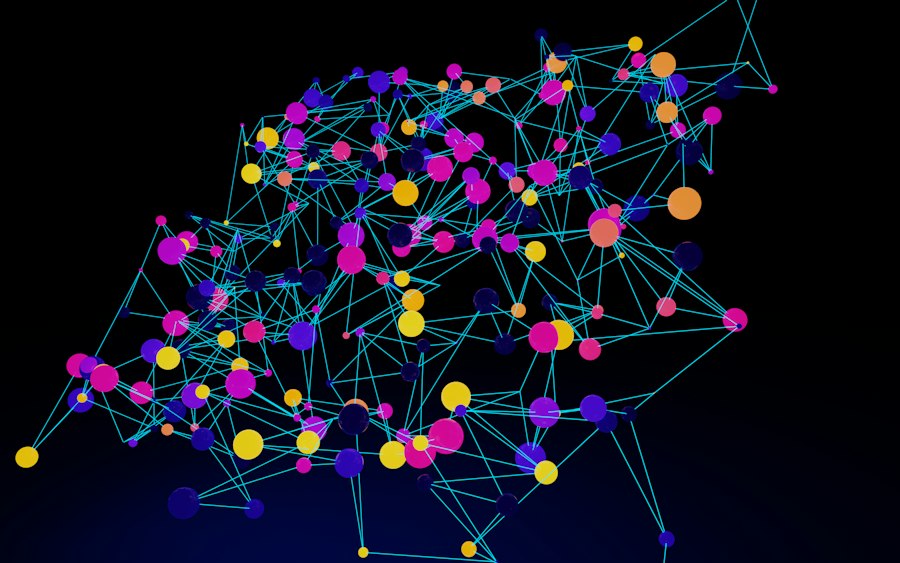
Beyond identifying key actors, network science excels at uncovering emergent patterns that arise from the collective interactions within historical systems. These patterns are often not readily apparent when examining individual events or actors in isolation. The interconnectedness of the system itself gives rise to larger-scale phenomena that shape historical trajectories.
Community Detection: Uncovering Sub-Societies and Alliances
Community detection algorithms aim to identify groups of nodes within a network that are more densely connected to each other than to nodes in other groups. In historical analysis, these communities can represent social groups, political factions, intellectual circles, or geographical clusters. Identifying these communities can shed light on the formation of identities, the dynamics of conflict and cooperation, and the diffusion of cultural practices.
Social Networks and Group Formation
By analyzing historical social networks, researchers can map the formation and dissolution of social groups. For example, in the study of ancient societies, network analysis can reveal patterns of kinship, patronage, and friendship that underpinned social structures. In more recent history, it can illuminate the formation of political parties, activist movements, or even informal social cliques within institutions. Understanding the membership and boundaries of these communities is essential for comprehending social change.
Intellectual Networks and the Dissemination of Ideas
The study of intellectual history can be dramatically enhanced by network science. By mapping citation networks or co-authorship networks among scholars, researchers can identify intellectual lineages, the emergence of new schools of thought, and the flow of ideas across disciplines and geographical boundaries. For instance, tracing the network of scholars who cited or were cited by Copernicus could reveal the intellectual ecosystem that fostered the heliocentric revolution. Similarly, analyzing networks of correspondence between Enlightenment thinkers can illuminate how their ideas were debated and refined.
Temporal Network Analysis: Dynamics of Change Over Time
Historical data is inherently temporal. Network science has developed sophisticated techniques for analyzing how networks evolve over time. This temporal dimension is crucial for understanding causality and the dynamics of historical change. By examining how connections form, strengthen, weaken, or break, researchers can gain insights into the processes that drive historical shifts.
The Evolution of Political Alliances
The formation and dissolution of political alliances are prime examples of phenomena best studied using temporal network analysis. By mapping alliances between states or political factions over decades or centuries, historians can identify patterns of shifting power, the rise and fall of empires, and the impact of key events on international relations. For instance, analyzing the evolving network of European alliances leading up to World War I could reveal the complex web of commitments that contributed to the outbreak of the conflict.
Diffusion Processes and Historical Contagions
Network science provides powerful tools for modeling and understanding diffusion processes, such as the spread of information, innovations, diseases, or ideologies. By representing historical populations as networks and tracing the propagation of a particular phenomenon through these networks over time, researchers can identify key transmission pathways, bottlenecks, and the factors that accelerate or impede diffusion. This has applications in understanding the spread of the Black Death, the adoption of new agricultural techniques, or the dissemination of religious or political doctrines.
Case Studies: Network Science in Action Across Historical Disciplines
The theoretical frameworks of network science have been applied to a diverse range of historical fields, yielding significant insights and novel interpretations. These case studies demonstrate the practical utility and transformative potential of this analytical approach.
Network science offers a fascinating lens through which to analyze historic data, revealing intricate patterns and connections that might otherwise remain hidden. By examining the relationships between various entities, researchers can uncover insights into social dynamics, political movements, and cultural shifts over time. For instance, an article discussing Kurdistan’s quest for independence highlights how network analysis can illuminate the complex interactions among different groups and their historical contexts. To explore this further, you can read the article here.
Economic History: Trade, Finance, and Industrial Networks
In economic history, network science has been instrumental in understanding the intricate web of global trade, financial flows, and industrial interdependencies. By mapping trade routes and commodity flows, researchers can identify key trading partners, understand the vulnerability of economies to disruptions in specific nodes, and analyze the impact of trade policies. Financial networks, too, reveal the complex interconnectedness of banks, markets, and investors, offering insights into the causes and propagation of financial crises. Analyzing networks of industrial firms can illuminate the structure of supply chains, the diffusion of technological innovations, and the concentration of economic power.
Mapping Global Trade Routes
By digitizing historical customs records and shipping manifests, researchers can reconstruct historical trade networks. Visualizing these networks reveals the ebb and flow of goods between different regions and the emergence of dominant trading powers. For example, analyzing the trade network of the Hanseatic League can illustrate its dominance in Baltic and North Sea trade, while mapping the transatlantic trade network of the 17th and 18th centuries highlights the flow of raw materials, manufactured goods, and enslaved people. These analyses move beyond simple descriptions of trade volumes to understanding the structural properties of these economic systems.
The Interconnectedness of Financial Markets
The study of financial history benefits greatly from network analysis. By mapping interbank lending, stock ownership, and credit relationships, researchers can gain a clearer picture of systemic risk and the propagation of financial shocks. For instance, in the lead-up to the 2008 financial crisis, network analysis could have highlighted the interconnectedness of financial institutions and the potential for contagion if one institution failed. Similarly, understanding the network of historical investors and their holdings can reveal patterns of speculation and the concentration of wealth.
Political History: Diplomacy, Conflict, and Social Movements
Political history, with its inherent focus on relationships between states, factions, and individuals, is a natural fit for network science. Analyzing diplomatic networks can reveal patterns of alliance formation, rivalry, and the influence of key diplomats or states. The study of conflict can be enhanced by mapping the networks of belligerents, their resources, and their strategic relationships. Furthermore, network science can illuminate the structure and dynamics of social movements, identifying key organizers, communication channels, and the spread of protest activities.
The Tangled Web of Diplomacy
Historical diplomatic records, such as correspondence, treaties, and meeting minutes, can be transformed into intricate networks of state interactions. By mapping these networks, historians can visualize the shifting balance of power, the emergence of rival blocs, and the role of specific embassies or diplomats in shaping international relations. For instance, analyzing the network of European diplomacy in the lead-up to World War I could highlight the increasing isolation of certain powers and the formation of rigid alliance systems.
Networks of Revolution and Dissent
Understanding how revolutions and widespread dissent emerge requires examining the networks through which ideas, grievances, and organizational structures are disseminated. Network analysis can identify key figures who acted as bridges between different groups, the communication channels that facilitated coordination, and the geographic spread of unrest. For example, studying the networks of correspondence among revolutionaries during the French Revolution can reveal how different factions communicated and collaborated, or sometimes, how they were isolated and suppressed.
Intellectual and Cultural History: The Flow of Ideas and Artistic Movements
The realm of intellectual and cultural history is equally fertile ground for network science. The transmission and evolution of ideas, artistic styles, and scientific theories can be understood as network phenomena. By analyzing citation networks, co-authorship patterns, artistic collaborations, and even the thematic connections within literary works, researchers can map the intellectual landscape, identify influential figures and movements, and trace the diffusion of cultural innovations.
Mapping Citation Networks and Intellectual Lineages
The scientific community, in particular, has a well-documented history of publication and citation. By constructing citation networks, researchers can trace the intellectual lineage of ideas, identify seminal works, and map the connections between different fields of study. Analyzing these networks can reveal how scientific progress is often a collaborative and iterative process, built upon the work of predecessors. For example, mapping the citation network around Darwin’s “On the Origin of Species” would show its profound impact and the subsequent research it inspired.
The Interconnectedness of Artistic and Literary Circles
Artistic and literary movements are often characterized by close-knit communities of creators who influence each other’s work. Network analysis can be used to map these circles by examining co-authorship, shared exhibitions, critical reviews, and thematic similarities in artistic output. This can reveal the emergence of distinct schools of thought, the influence of mentors on students, and the social dynamics that shaped artistic innovation. For instance, analyzing the network of Impressionist painters and their critics can shed light on the formation of their movement and its reception.
Future Frontiers and Methodological Advancements
As network science continues to evolve, its application to historical data will undoubtedly deepen, fueled by both technological advancements and methodological innovations. The increasing availability of digitized historical sources, coupled with more sophisticated computational tools, promises to unlock even more intricate patterns and nuanced understandings of the past.
Leveraging Big Data and Digital Archives
The ongoing digitization of vast historical archives, from government documents and personal letters to digitized books and newspapers, provides an unprecedented wealth of data for network analysis. The “big data” revolution allows researchers to move beyond studying small, curated datasets to analyzing entire historical corpora. This enables the identification of subtle trends, the mapping of vast social and intellectual landscapes, and the discovery of previously hidden connections. The challenge lies in developing efficient and scalable algorithms to process and analyze these immense datasets.
Integration with Other Digital Humanities Methods
Network science is not an isolated discipline. Its power is amplified when integrated with other digital humanities methods, such as corpus linguistics, geographical information systems (GIS), and agent-based modeling. For instance, combining network analysis of historical texts with sentiment analysis can reveal how certain ideas or sentiments spread through social networks. Integrating network analysis with GIS can map the geographical diffusion of cultural phenomena or the spatial structure of economic networks. This interdisciplinary approach offers a more holistic and comprehensive understanding of historical processes.
The Role of Machine Learning and Artificial Intelligence
The advent of machine learning and artificial intelligence offers new avenues for network analysis in historical contexts. Machine learning algorithms can automate the process of node and edge extraction from unstructured text, identify complex patterns that might escape human observation, and even predict potential historical outcomes based on network dynamics. For example, AI-powered tools can help identify subtle linguistic shifts within historical correspondence that indicate changing social relationships or the emergence of new ideas. The ethical considerations and potential biases inherent in AI algorithms must be carefully addressed when applying these tools to historical research.
Visualizing Complexity: The Art of Historical Network Representation
While the underlying mathematical models of network science are complex, effective visualization techniques are crucial for making these complex structures accessible to historians and the broader public. The development of interactive and dynamic network visualizations allows researchers to explore historical networks, identify key clusters, and understand the flow of information or influence. These visualizations can transform abstract data into compelling narratives, bringing historical relationships to life and fostering deeper engagement with the past. The challenge lies in striking a balance between accuracy and comprehensibility, ensuring that visualizations effectively communicate the insights derived from network analysis without oversimplifying or misrepresenting the historical reality.
In conclusion, network science is proving to be an invaluable tool for historical analysis, moving beyond linear narratives to uncover the intricate web of connections that shaped human history. By representing historical actors and events as nodes in a network, researchers can identify key players, map the diffusion of ideas, and understand the emergent properties of complex historical systems. As computational power grows and new methodologies emerge, the application of network science to historical data will continue to deepen, offering unprecedented insights into the interconnected past and enriching our understanding of the present.
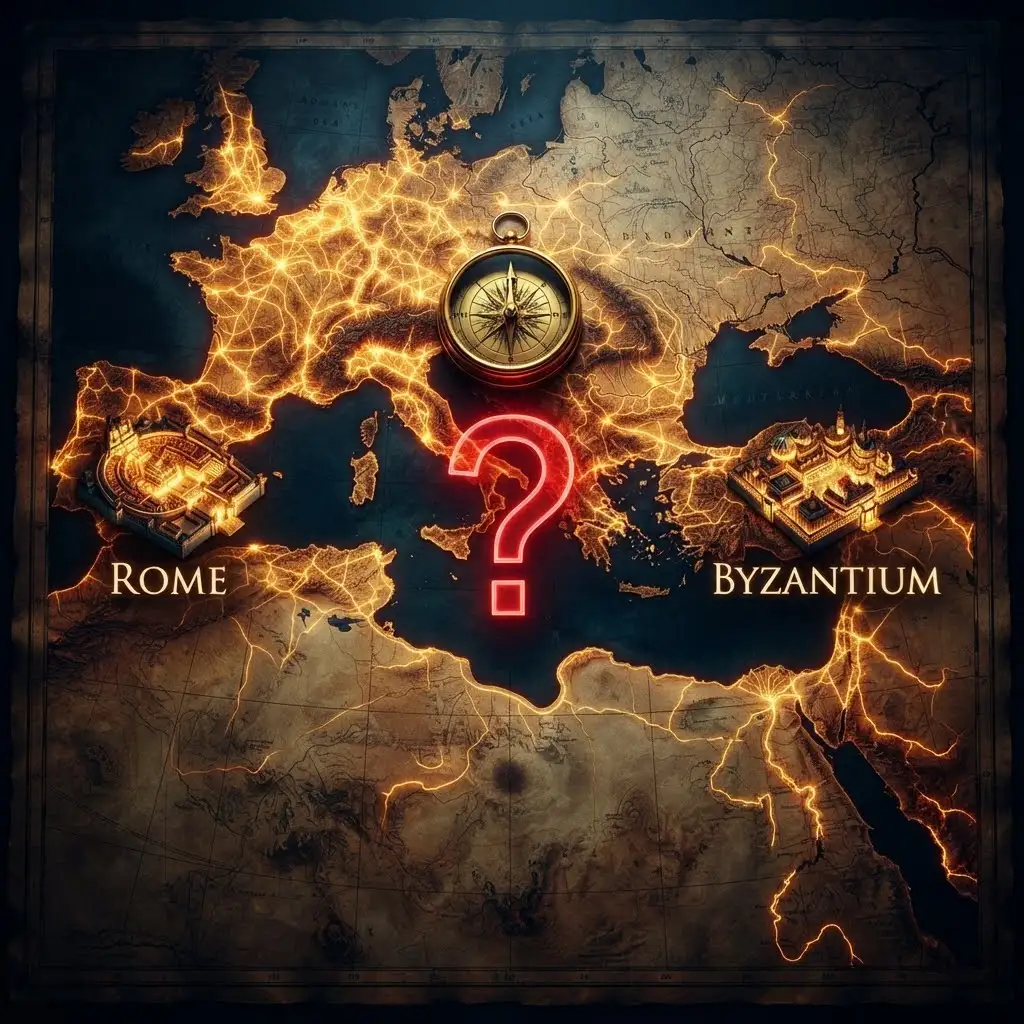
The 2.7% Statistic That Terrifies Roman Historians
FAQs
What is network science?
Network science is a field that studies complex systems by representing their components as nodes and their interactions as edges in a network.
How does network science analyze historic data?
Network science analyzes historic data by constructing networks where nodes represent entities (such as people, organizations, or events) and edges represent relationships or interactions between these entities. By analyzing the structure and dynamics of these networks, researchers can gain insights into historical events and patterns.
What are some common applications of network science in analyzing historic data?
Some common applications of network science in analyzing historic data include studying social networks, analyzing communication patterns, tracing the spread of diseases or information, and understanding the evolution of cultural trends.
What are the benefits of using network science to analyze historic data?
Using network science to analyze historic data allows researchers to uncover hidden patterns, identify key players or events, visualize complex relationships, and gain a deeper understanding of historical processes and phenomena.
What are some challenges of applying network science to historic data analysis?
Some challenges of applying network science to historic data analysis include data quality issues, the need for specialized tools and expertise, the complexity of interpreting network structures, and the potential biases introduced by incomplete or biased historical records.