The Shadow of an Unknown Father
The name Norma Jeane Mortenson is inextricably linked to one of the most iconic figures of the 20th century: Marilyn Monroe. Yet, the woman behind the legend, Norma Jeane, carried with her a profound mystery that haunted much of her adult life – the identity of her father. While her mother, Gladys Pearl Baker, provided glimpses, the truth remained elusive, a shadow cast over Norma Jeane’s formative years and her subsequent journey to superstardom. This article delves into the enduring enigma of Norma Jeane Mortenson’s paternal lineage, exploring the various individuals who were speculated to be her father, the limited evidence available, and the impact of this unknown on her life and legacy. The quest for a definitive answer to the question of her father’s DNA is not merely a genealogical pursuit; it is a window into the emotional landscape of a woman who, despite commanding global adoration, often felt adrift, searching for a sense of belonging and a solid anchor in her personal history. The absence of a paternal figure, particularly in the deeply patriarchal society of the time, left an indelible mark, influencing her relationships, her perception of self, and the very narrative of her life.
Recent discussions surrounding the ancestry of Norma Jeane Mortenson, famously known as Marilyn Monroe, have sparked interest in the implications of genetic research and familial connections. An intriguing article that delves into the significance of DNA in uncovering historical narratives can be found at Uncovering Ancient Famine: Archaeological Insights. This piece highlights how DNA analysis can provide valuable insights into the lives of our ancestors, paralleling the ongoing exploration of Monroe’s lineage and the mysteries surrounding her father.
Speculations and Suspects: The Men in Gladys Baker’s Life

Gladys Pearl Baker, Norma Jeane’s mother, lived a life marked by instability and emotional turmoil. Her relationships, like many aspects of her life, were often transient and complex, making the task of pinpointing a single father for Norma Jeane exceedingly difficult. Over the years, several men have been put forward as potential candidates, each with varying degrees of circumstantial evidence supporting their claim. Understanding these individuals is crucial to appreciating the scope of the mystery surrounding Norma Jeane’s paternity. The lack of a clear, documented father figure meant that Norma Jeane, and later Marilyn, was often left to navigate the whispers and speculations that swirled around her origins. This uncertainty contributed to a sense of rootlessness that permeated her existence, a constant yearning for a definitive connection to her past that a paternal identity could have provided.
Charles Stanley Gifford: The Primary Contender
The most frequently cited potential father of Norma Jeane Mortenson is Charles Stanley Gifford. Gladys Baker worked with Gifford at a film processing company in Hollywood. Their relationship, though not clearly defined in terms of its duration or seriousness, is widely believed to have been the source of Norma Jeane’s conception. Gifford was married at the time of Norma Jeane’s birth, and his wife, Lillian, reportedly knew about Gladys’s pregnancy. While Gifford never publicly acknowledged Norma Jeane as his daughter, there are accounts suggesting he was aware of her existence and, at times, provided some level of financial support to Gladys, though this support was sporadic and often insufficient. The family of Charles Gifford has largely remained silent on the matter, contributing to the ambiguity. However, the existence of photographs allegedly showing a resemblance between Gifford and Norma Jeane, coupled with Gladys’s own statements and the timeline of their association, makes him the most plausible candidate. The absence of any definitive DNA evidence has allowed this speculation to persist, fueled by anecdotal accounts and the inherent desire for a concrete answer.
Martin Edward Mortensen: The Name Game
Norma Jeane’s surname, Mortenson, itself hints at another potential paternal link, although it is largely considered a misattribution or a placeholder. Gladys Baker initially gave Norma Jeane the surname “Baker,” after her maiden name, but later registered her as Norma Jeane Mortenson. This name is believed to have been derived from a former husband of Gladys’s, Martin Edward Mortensen, a Norwegian immigrant. However, Gladys and Mortensen were married for a very short period and reportedly separated before Norma Jeane’s conception. There is no substantial evidence to suggest that Mortensen was the biological father. The use of his surname may have been a way for Gladys to provide a semblance of legitimacy or simply a convenient label in the absence of a confirmed father. The surname “Mortensen” itself is often cited as a point of confusion, with variations in spelling adding to the genealogical labyrinth.
Other Possible, Less Likely Candidates
Beyond Gifford and Mortensen, other men have been casually mentioned as potential fathers, though with even less supporting evidence. These include various acquaintances or fleeting romantic interests of Gladys Baker during the period of Norma Jeane’s conception. However, these individuals are generally dismissed by biographers and researchers due to a severe lack of corroborating information. The focus of inquiry has consistently returned to Charles Stanley Gifford, given the more concrete, albeit still circumstantial, connections to Gladys Baker around the crucial time. The exploration of these less probable candidates underscores the depth of the uncertainty and the limited pool of reliable information available to piece together Norma Jeane’s paternal history. Each potential name, however speculative, represents a thread in the complex tapestry of Gladys Baker’s life and the persistent mystery surrounding her daughter’s origins.
The Impact of Paternity Uncertainty on Norma Jeane’s Life

The absence of a known father figure cast a long shadow over Norma Jeane’s early life and continued to influence her throughout her development and her journey to fame. This uncertainty contributed to a profound sense of insecurity and a yearning for stability and belonging that she struggled to fulfill. The societal norms of the era placed significant importance on a father’s role in a child’s upbringing, and Norma Jeane was deprived of this foundational element. The constant shifting between foster homes and the emotional instability of her mother’s life were exacerbated by this missing paternal anchor.
Childhood Insecurities and the Search for Identity
Growing up, Norma Jeane was acutely aware of her lack of a father. This awareness manifested in deep-seated insecurities and a constant search for identity. She often felt like an outsider, a child without a clear lineage. The absence of a paternal presence meant she had no male role model to guide her or to offer a sense of protection and validation. This void likely contributed to her later difficulties in forming stable romantic relationships and her susceptibility to external validation. The search for a father figure became, in some ways, a subconscious quest for a sense of self-worth and belonging. She craved the security and affirmation that a father’s love and recognition could provide, and this yearning permeated her emotional landscape.
The “Daddy Issues” Narrative and Hollywood Stardom
As Norma Jeane transformed into Marilyn Monroe, the narrative of her absent father became a recurring theme, often sensationalized by the press and internalized by her. The concept of “daddy issues” became a simplistic, yet persistent, label attached to her romantic entanglements and emotional vulnerabilities. Hollywood, with its penchant for creating compelling backstories, often leaned into this narrative, adding a layer of tragic allure to her persona. While her personal struggles were genuine, the simplification of her complex emotional life to a single “issue” overlooked the profound impact of her formative experiences. The public fascination with her past, including the mystery of her father, played into the creation of her larger-than-life image, even as it denied her the privacy and normalcy she may have craved.
The Unanswered Questions of Legacy
Even after her death, the question of Norma Jeane’s father’s identity continued to resurface. For those who sought to understand her fully, the unresolved paternity remained a significant piece of the puzzle. The lack of definitive DNA evidence means that while Charles Stanley Gifford is the most probable candidate, absolute certainty eludes us. This unresolved aspect of her personal history leaves a lingering sense of incompletion, a testament to the enduring power of unanswered questions. The mystery of her father’s DNA is not just about a biological connection; it is about the human need for answers, for roots, and for the closure that understanding one’s lineage can bring.
The Pursuit of DNA Evidence: A Modern Investigation
In the decades following Marilyn Monroe’s death, the enduring mystery of her father’s identity has spurred various attempts to uncover definitive proof, primarily through DNA analysis. These efforts, while motivated by a desire for historical accuracy and closure, have encountered significant hurdles, primarily due to the limited availability of viable genetic material from the potential candidates and the passage of time. The scientific advancements in DNA testing have opened new avenues for investigation, but the practicalities of obtaining the necessary samples remain a formidable challenge.
Challenges in Obtaining Genetic Material
The primary obstacle in confirming the paternity of Norma Jeane Mortenson through DNA testing lies in the difficulty of obtaining samples from the presumed father, Charles Stanley Gifford. Gifford passed away in 1995, and while his descendants have been approached, there has been considerable resistance and, in some cases, outright refusal to provide DNA samples for comparison. The privacy concerns of living relatives, the emotional weight of the controversy, and the potential implications of such a confirmation have all contributed to this reluctance. Without a direct DNA sample from Gifford himself, the only viable alternative is to compare Norma Jeane’s genetic material with that of his direct descendants. This introduces further complexities, as the genetic markers need to be carefully analyzed to account for inherited traits.
The Legacy of Marilyn Monroe’s DNA
The concept of “Marilyn Monroe’s DNA” itself is somewhat abstract. While preserved medical samples might exist, their integrity and suitability for modern DNA analysis would need to be rigorously assessed. Furthermore, any comparison would require a known genetic sample from the paternal side. The scientific pursuit of this truth is a delicate dance between scientific capability and the human element of familial relations and historical preservation. The desire to definitively link Marilyn Monroe to a paternal figure is a testament to her enduring cultural significance and the human need to connect the dots of personal history, even for those who have achieved legendary status. The potential for a scientific breakthrough remains, but the path is fraught with logistical and ethical considerations.
The Unresolved Nature of the Scientific Quest
Despite the advancements in forensic genetics, the quest to definitively prove Norma Jeane Mortenson’s paternal DNA has, to date, remained inconclusive. While circumstantial evidence strongly points to Charles Stanley Gifford, the absence of irrefutable genetic proof leaves a degree of uncertainty. This unresolved scientific aspect of the mystery continues to fuel speculation and debate among historians, biographers, and enthusiasts of Marilyn Monroe’s life. The possibility of future discoveries, perhaps through family archives or advancements in tracing distant relatives, cannot be entirely ruled out, but for now, the mystery persists, a scientific puzzle with significant historical and emotional weight.
The quest to uncover the identity of Norma Jeane Mortenson’s father has intrigued many, leading to various theories and discussions surrounding her lineage. A fascinating article explores the implications of DNA testing in revealing familial connections and the potential impact on personal histories. For those interested in the broader context of how such revelations can affect lives, you can read more about it in this insightful piece on economic scenarios that may arise from unexpected discoveries. Check it out here.
The Enduring Mystery and Its Significance
| Metric | Details |
|---|---|
| Full Name | Norma Jeane Mortenson (Marilyn Monroe) |
| Known Father | Unknown (No confirmed DNA match) |
| Mother | Gladys Pearl Baker |
| DNA Testing Status | No publicly confirmed DNA test identifying biological father |
| Possible Father Candidates | Charles Stanley Gifford (alleged, unconfirmed) |
| DNA Evidence Availability | None publicly available or verified |
| Research Notes | Biological father remains unconfirmed due to lack of DNA evidence |
The enigma surrounding Norma Jeane Mortenson’s father’s DNA is more than just a biographical footnote; it represents a powerful symbol of unanswered questions, the complexities of familial relationships, and the enduring human quest for identity and belonging. The shadow of an unknown father, whether real or perceived, played a significant role in shaping Norma Jeane’s life, contributing to her vulnerabilities and her relentless pursuit of love and validation. The persistence of this mystery, even with modern investigative tools, underscores the profound impact of origin stories and the emotional weight they carry.
The Human Need for Roots and Recognition
At its core, the mystery of Norma Jeane’s father speaks to a fundamental human need to understand one’s origins, to have a sense of roots, and to receive recognition from one’s lineage. For Norma Jeane, this need was amplified by a childhood marked by instability and a lack of consistent parental presence. The absence of a declared father figure left a void that she, and later Marilyn, struggled to fill throughout her life. This yearning for a paternal connection, for a definitive paternal identity, is a relatable human experience that resonates deeply, even across the chasm of celebrity. It highlights how deeply ingrained the importance of familial ties is in the human psyche.
The Symbolism of the Unidentified Paternity
The unidentified paternity of Norma Jeane Mortenson has become a potent symbol within her biography. It represents the hidden aspects of a public persona, the personal struggles that lie beneath the glitz and glamour. It speaks to the fragility of identity, particularly for those who are thrust into the spotlight at a young age without a solid foundation. The mystery also serves as a reminder that even the most iconic figures are often shaped by deeply personal and unresolved issues. It humanizes Marilyn Monroe, revealing her not just as a Hollywood icon, but as a woman who, like many, grappled with fundamental questions about her identity and her place in the world.
The Legacy of the Unanswered Question
Ultimately, the mystery of Norma Jeane Mortenson’s father’s DNA remains an integral part of her enduring legacy. It is a testament to the complexities of life, the lingering questions that defy easy answers, and the human desire to understand the narratives of those who have left an indelible mark on history. While scientific advancements may continue to probe, the emotional and symbolic weight of this unanswered question will likely endure, a poignant reminder of the woman behind the legend and the profound impact of a paternal legacy, or lack thereof, on a human life. The search for the truth about her father, though perhaps never definitively concluded, continues to illuminate the multifaceted life of Norma Jeane, reminding us that even legends are built on intricate personal histories.
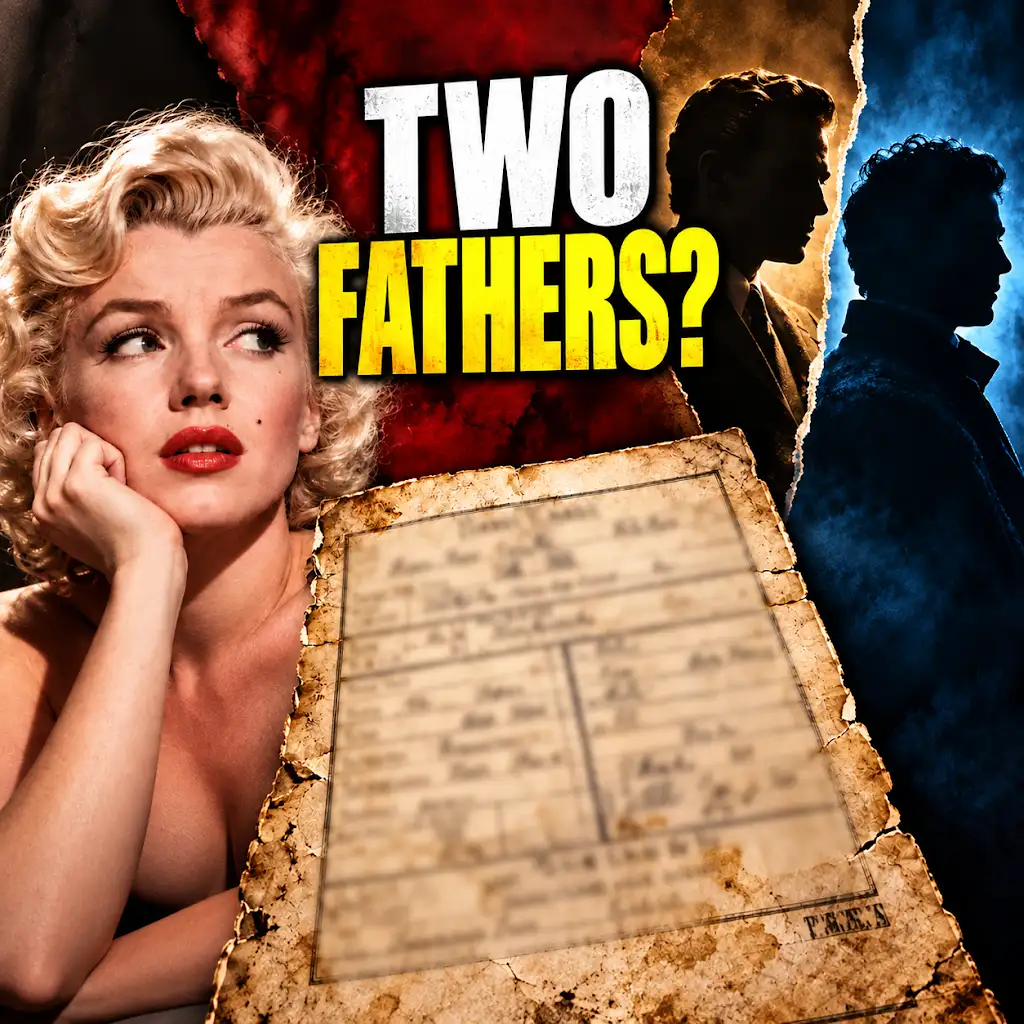
Marilyn Monroe’s Birth Certificate Named One Man. DNA Pointed to Another
FAQs
1. Who is Norma Jeane Mortenson’s father?
Norma Jeane Mortenson, who later became known as Marilyn Monroe, was reportedly born to a mother named Gladys Pearl Baker and her father was identified as Martin Edward Mortenson.
2. Is there any controversy surrounding Norma Jeane Mortenson’s paternity?
Yes, there has been speculation and controversy surrounding Norma Jeane Mortenson’s paternity. Some sources claim that her father was actually a man named Charles Stanley Gifford, while others maintain that it was Martin Edward Mortenson.
3. Has DNA testing been conducted to determine Norma Jeane Mortenson’s true father?
Yes, DNA testing has been conducted in an attempt to determine Norma Jeane Mortenson’s true father. The results of these tests have been inconclusive and have not definitively proven the identity of her biological father.
4. What is the significance of determining Norma Jeane Mortenson’s father through DNA testing?
Determining Norma Jeane Mortenson’s father through DNA testing could provide closure and clarity regarding her family history and lineage. It could also potentially confirm or dispel long-standing rumors and theories about her paternity.
5. Are there any ongoing efforts to conclusively identify Norma Jeane Mortenson’s biological father?
Yes, there are ongoing efforts by researchers and historians to conclusively identify Norma Jeane Mortenson’s biological father through advanced DNA testing and genealogical research. These efforts aim to solve the mystery surrounding her paternity once and for all.