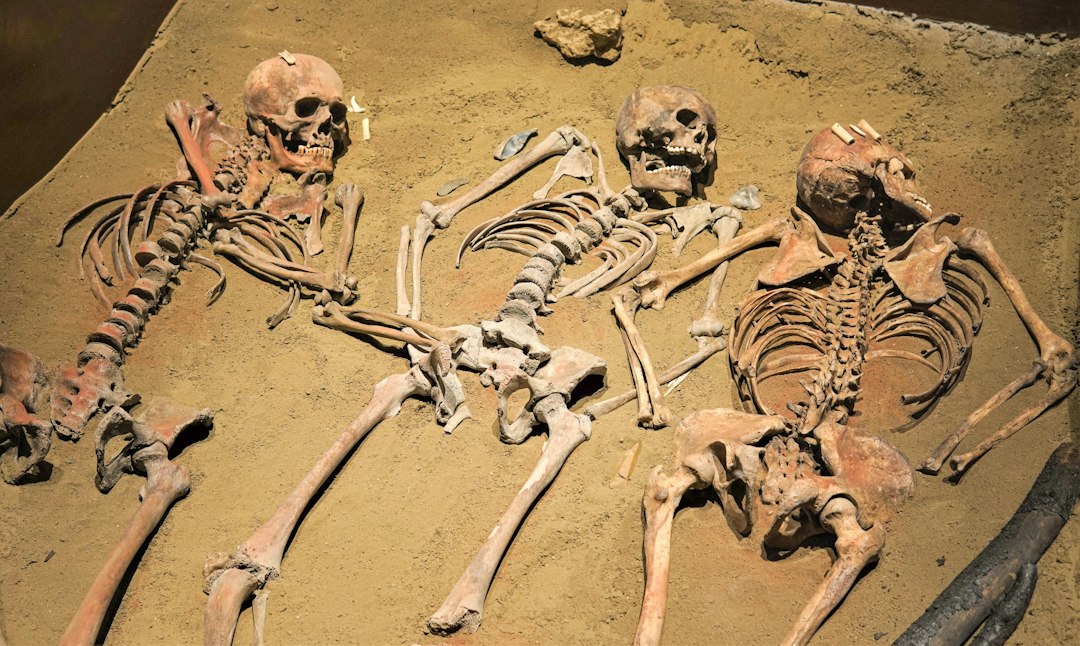
The quest to understand humanity’s origins is as old as human consciousness itself. For millennia, before the advent of scientific inquiry, it was through the intricate tapestry of ancient texts that humanity grappled with its beginnings. These foundational narratives, woven from myth, religion, and early philosophical contemplation, offer a unique lens through which to view our ancestors’ understanding of their place in the cosmos. They reveal not just purported creation events, but also the deep-seated human desires for order, purpose, and connection to the divine or the primal forces of existence. From the sun-baked plains of Mesopotamia to the fertile banks of the Nile, and across the vast landscapes of ancient India and China, diverse cultures developed elaborate cosmogonies and anthropogonies that, while differing in specifics, often shared common themes of emergence, divine intervention, and the establishment of social order. These texts, preserved through arduous scribal traditions and oral transmission, represent the earliest attempts by humankind to answer the most profound questions: Where did we come from? Why are we here? And what is our relationship to the universe?
Whispers from the Cradle of Civilization: Mesopotamian Genesis
The fertile crescent, a cradle of early human civilization, birthed some of the oldest recorded accounts of creation. The Mesopotamians, a collection of city-states including Sumerians, Akkadians, Babylonians, and Assyrians, developed rich mythologies that explored the origins of both the cosmos and humanity. These narratives, etched onto clay tablets and passed down through generations, provide invaluable insights into their worldview, their understanding of the gods, and their perception of human purpose.
The Primordial Waters and the Birth of Gods
At the heart of Mesopotamian cosmology lies the concept of a primordial, watery abyss. The Sumerian Enuma Elish, or the Babylonian Epic of Creation, stands as a monumental testament to this. It describes a time before heaven and earth existed, when only the salty freshwater god Apsu and the freshwater goddess Tiamat mingled in chaotic union. From this primal chaos, the younger gods emerged, eventually becoming noisy and disruptive to the older generation. This disturbance leads to a cosmic struggle. Apsu is killed by his son Ea, but Tiamat, in her grief and fury, plots revenge. The epic then details the rise of Marduk, the patron god of Babylon, who ultimately defeats Tiamat, splitting her corpse to form the heavens and the earth. This violent act of creation, though brutal, establishes order from chaos and lays the foundation for the cosmos as the Mesopotamians understood it.
The Divine Mandate: Humanity’s Creation and Purpose
Following the cosmic battles, the question of who would serve the gods arises. The Enuma Elish posits that humanity was created from the blood of Kingu, Tiamat’s general, who was slain by Marduk. This act of creation is not born of benevolence but rather of practical necessity. Humanity is fashioned to bear the yoke of the gods, to perform the arduous tasks of tilling the land, building temples, and offering sacrifices, thereby freeing the divine beings from labor. This concept of humanity as servants to the gods is a recurring motif, shaping their understanding of ritual and societal obligations. The creation myth emphasizes a hierarchical structure of existence, with humans firmly at the bottom, tasked with maintaining the divine order through their labor and devotion. The gods, though powerful and capricious, ultimately hold the reins of existence, and human life is intrinsically linked to their will and needs.
Echoes in Other Mesopotamian Traditions
While the Enuma Elish is the most comprehensive account, similar themes appear in other Mesopotamian texts. The Sumerian myth of creation, for instance, also speaks of a primordial ocean and the separation of heaven and earth. The Atra-Hasis epic, another significant Babylonian text, recounts a creation narrative that emphasizes the suffering of the gods and their subsequent decision to create humans to ease their burden. It also details a great flood, sent by the gods to curb the overpopulation and noisy demands of humanity, further reinforcing the notion of divine control and the precariousness of human existence in the face of divine displeasure. These variations highlight the dynamic and evolving nature of Mesopotamian mythology, yet they consistently return to the themes of primordial waters, divine conflict, and the utilitarian creation of humanity.
In exploring the origins of humans, ancient texts offer a wealth of insights and narratives that have shaped our understanding of human history. A related article that delves into the complexities of ancient knowledge and its implications is available at Unlocking the Mysteries of Lost Tech. This piece examines how ancient civilizations may have possessed advanced technologies and wisdom that could shed light on our evolutionary journey and the development of human society.
The Divine Architect and the Breath of Life: Egyptian Creation Narratives
The ancient Egyptians, with their profound reverence for the Nile and their complex pantheon of gods, also developed sophisticated creation myths that offer a distinct perspective on human origins. Their narratives, often rich in symbolism and metaphor, reflect a worldview deeply intertwined with cycles of birth, death, and rebirth, and a strong emphasis on cosmic balance and order, known as Ma’at.
The Primordial Nun and the Emergence of Atum
Egyptian creation stories typically begin with the Nun, a vast, dark, and chaotic abyss of primordial waters. From this watery void, the self-created god Atum (or Ra in some traditions) emerged, often upon a primeval mound, the first land to appear. Atum, embodying the totality of existence before creation, then brought forth other gods. The specific manner of this divine procreation varies across different traditions. In Heliopolitan theology, Atum masturbates, spitting forth Shu (god of air) and Tefnut (goddess of moisture), who then pair to create Geb (earth) and Nut (sky). In Memphite theology, the god Ptah, through thought and word, brings creation into being, demonstrating a more intellectual and intentional act of creation. These accounts highlight the concept of a single, supreme creator god who initiates the cosmic order, with subsequent divine beings emerging from this primary source.
Humanity’s Humble Beginning: Fashioned from Clay and Tears
The creation of humanity in Egyptian mythology is often depicted as a more humble, yet divinely inspired, act. The god Khnum, a ram-headed deity, is frequently credited with fashioning humans on his potter’s wheel from clay. This imagery suggests a deliberate and skillful act of craftsmanship, imbuing the created beings with form and substance. Another prominent narrative attributes humanity’s origin to the tears of Ra. When Ra felt lonely and desired companions, his tears fell to earth, and from them, humans sprang forth. This origin story imbues humanity with a certain divine essence, a tangible connection to the sun god himself. Regardless of the specific deity or method, the creation of humanity is presented as a purposeful act by the divine, intended to populate the world and interact with the gods.
The Role of Ma’at and Human Responsibility
A central concept in Egyptian cosmology is Ma’at, the principle of truth, justice, order, and cosmic balance. Humanity’s creation is intimately linked to the establishment and maintenance of Ma’at. Humans are not merely servants in the Egyptian narrative, but rather beings tasked with upholding this divine order in their daily lives, through ethical conduct, adherence to laws, and participation in rituals. The pharaoh, as the divine intermediary on earth, plays a crucial role in maintaining Ma’at, ensuring the prosperity and stability of Egypt and, by extension, the cosmos. This imbues human existence with a profound sense of responsibility and purpose, extending beyond mere existence to active participation in the divine plan for cosmic harmony. The cyclical nature of Egyptian life, exemplified by the annual flooding of the Nile, also influenced their understanding of creation and humanity’s place within these cycles, suggesting a continuous process of renewal and re-creation.
The Primal Egg and Cosmic Dance: Eastern Origins of Humanity

The ancient traditions of India and China, while geographically distant, offer profound and intricate cosmogonies that explore humanity’s origins through unique lenses of cosmic evolution, cyclical time, and inherent interconnectedness. These narratives often move beyond simple creation events to explore the fundamental nature of existence and humanity’s place within vast, recurring cosmic cycles.
The Vedic Vision: Brahman, Purusha, and the Sacrifice
In the Vedic tradition of ancient India, the ultimate reality is Brahman, the all-pervading, undifferentiated consciousness. The Rigveda, one of the oldest sacred texts, offers a powerful hymn, the Purusha Sukta, which describes the cosmic sacrifice of Purusha, a primordial, cosmic being. Purusha is depicted as having a thousand heads and a thousand feet, encompassing all of existence. When the gods sacrifice this cosmic being, the universe and all its components, including humanity, are said to have emerged from his body. His mouth became the Brahmin, his arms the Kshatriya, his thighs the Vaishya, and his feet the Shudra, thus establishing the early caste system. This myth signifies that all of humanity, and indeed all of existence, is interconnected, derived from a single divine source. It suggests a profound unity underlying apparent diversity, with each individual carrying a spark of the cosmic being within them. The act of sacrifice, central to Vedic ritual, is thus seen as a reenactment of this primal act of creation, reinforcing the cosmic order and humanity’s role within it.
The Cyclic Nature of the Puranas and the Manu Era
Later Indian texts, particularly the Puranas, elaborate on creation as a cyclical process. The universe undergoes cycles of creation, preservation, and dissolution, each governed by powerful deities like Brahma (the creator), Vishnu (the preserver), and Shiva (the destroyer). In each cycle, a Manu, a progenitor of humankind, is reborn to guide humanity. The first Manu, often referred to as Svayambhuva Manu, is instrumental in re-establishing human society after cosmic destructions. This cyclical view of time and creation emphasizes impermanence and renewal, suggesting that creation is not a singular event but an ongoing, reoccurring process. Humanity’s existence is thus embedded within these grand cosmic rhythms, with each cycle offering an opportunity for spiritual growth and evolution. The concept of karma and reincarnation further underscores this cyclical understanding, positing that individual souls are reborn into various forms across countless lifetimes, continuing their journey within the grand cosmic dance.
Chinese Proto-Cosmology: Pangu and the Yin-Yang Balance
Ancient Chinese thought, while less focused on singular creation deities in the Western sense, offers foundational myths that explain the genesis of the cosmos and humanity. The myth of Pangu is a prominent example. It describes Pangu emerging from a cosmic egg, a state of primordial chaos. He grows for eighteen thousand years, and when he dies, his body parts transform into the elements of the universe: his breath became wind, his voice thunder, his eyes the sun and moon, his blood the rivers, and his flesh the earth. His fleas are said to have become humankind. This myth emphasizes the interconnectedness of all things, with the cosmos and humanity arising from a single, primal entity. Another crucial aspect of Chinese cosmology is the concept of Yin and Yang, the complementary forces of darkness and light, female and male, passive and active, which permeate and govern the universe. The interaction and balance of these forces are seen as essential for cosmic harmony and the continuation of life. While not a direct creation narrative of humanity in the same vein as Pangu, the principles of Yin and Yang underlie the unfolding of existence, including the emergence and sustenance of humankind. The emphasis here is on dynamic equilibrium and the interplay of opposing forces, shaping the world and all its inhabitants.
The Unfolding Word and the Primordial Pair: Abrahamic Genesis
The Abrahamic religions – Judaism, Christianity, and Islam – share a common lineage and a foundational creation narrative that has profoundly influenced Western civilization and beyond. These traditions, rooted in the Hebrew Bible (Old Testament), the New Testament, and the Quran, present a monotheistic perspective on creation, where a single, all-powerful God brings the universe and humanity into existence through divine decree and deliberate action.
Genesis: Creation by Divine Fiat
The Book of Genesis in the Hebrew Bible provides one of the earliest and most influential accounts of creation. It describes God creating the heavens and the earth in six days, bringing forth light, land, seas, celestial bodies, plants, animals, and finally, humanity. The creation of humanity is presented as a deliberate and significant act, with God declaring, “Let us make humankind in our image, after our likeness.” This statement imbues humanity with a unique status, a reflection of the divine nature, and suggests an inherent dignity and purpose. The narrative distinguishes between the creation of man, Adam, from the “dust of the ground,” and woman, Eve, from Adam’s rib, highlighting a foundational pairing and a profound interconnectedness within the human species. This narrative emphasizes God’s sovereignty and the intentionality of creation, where everything brought into existence serves a purpose within God’s grand design.
The Imago Dei and Human Purpose
The concept of humanity being created “in the image of God” (Imago Dei) is a cornerstone of Abrahamic theology. It suggests that humans possess certain attributes that reflect the divine, such as reason, creativity, moral capacity, and the ability to relate to others and to God. This imbues human life with immense value and a unique responsibility. Humanity is tasked with dominion over the earth, not in a spirit of exploitation, but as stewards, responsible for caring for creation and ensuring its flourishing. This perspective offers a teleological understanding of human existence, suggesting that life has a divine purpose and a direction. The narrative of the Fall, where Adam and Eve disobey God, introduces the concepts of sin, imperfection, and the brokenness of the relationship between humanity and God, but also sets the stage for themes of redemption and reconciliation that are central to these faiths.
Islamic Perspectives on Creation
The Quran, the holy book of Islam, also presents a creation narrative that aligns with the monotheistic framework of Abrahamic faiths. It describes Allah as the sole creator, bringing the universe and all living beings into existence through his command, “Be!” (Kun!). The Quranic accounts of human creation emphasize Allah’s omnipotence and wisdom. Adam is created from clay, and Eve (Hawwa) from Adam. Like the Bible, the Quran speaks of Adam and Eve being placed in Paradise, their disobedience, and their subsequent expulsion. The concept of khalifah (vicegerent) in the Quran highlights humanity’s role as God’s representative on Earth, entrusted with the responsibility of upholding justice, maintaining order, and worshipping Allah. The emphasis is on submission to Allah’s will and living in accordance with divine guidance. While sharing core tenets, Islamic traditions also introduce nuances and specific details that enrich the understanding of creation and humanity’s place within it.
In exploring the ancient texts that discuss the origin of humans, one might find it intriguing to consider how historical interpretations can shape our understanding of human history. A fascinating article that delves into the complexities of ancient maps and their implications for our knowledge of the past is available at this link. You can read more about it in the context of ancient navigation and its mysteries by visiting this article, which examines the Piri Reis map and its significance in the broader narrative of human exploration.
The Enduring Legacy: From Myth to Science and Back Again
| Ancient Text | Culture/Origin | Approximate Date | Key Concept on Human Origin | Notable Excerpt |
|---|---|---|---|---|
| Enuma Elish | Babylonian | c. 18th century BCE | Humans created from the blood of a slain god to serve the gods | “Let them be charged with the service of the gods that they might be at peace.” |
| Genesis (Bible) | Hebrew | c. 6th–5th century BCE | Humans created by God in His own image | “So God created man in his own image, in the image of God created he him.” |
| Rigveda | Vedic (Ancient India) | c. 1500–1200 BCE | Humans emerged from the cosmic being Purusha | “The Purusha has a thousand heads, a thousand eyes, a thousand feet.” |
| Popol Vuh | Mayan | c. 16th century CE (oral tradition older) | Humans created from maize by the gods | “They made man from maize dough, the flesh of the gods.” |
| Greek Mythology (Hesiod’s Theogony) | Ancient Greek | c. 8th century BCE | Humans created by the gods, with successive ages of man | “From the earth sprang the first men, born of the gods’ will.” |
The ancient texts that speak of humanity’s origins are far more than mere historical curiosities. They are vibrant repositories of our ancestors’ deepest questions, their aspirations, and their attempts to make sense of a universe that often seemed both wondrous and terrifying. These narratives, born of human imagination, faith, and observation, laid the groundwork for our ongoing quest for understanding. While modern science, through fields like evolutionary biology, genetics, and archaeology, has provided us with a new and powerful framework for understanding our biological and historical origins, the fundamental questions that drove these ancient cosmogonies remain.
The Power of Narrative in Shaping Identity
The stories of creation have, for millennia, served as foundational myths that shape human identity, culture, and societal structures. They provide a sense of belonging, a shared history, and a framework for moral and ethical understanding. Whether humanity was formed from clay, breathed into existence by a god, or emerged from a cosmic egg, these narratives have profoundly influenced how people perceive themselves and their place in the world. They have inspired art, literature, philosophy, and religious practice, demonstrating the enduring power of narrative to imbue existence with meaning and purpose. Even in a secular age, echoes of these ancient stories can be found in our language, our rituals, and our underlying assumptions about life.
Bridging the Gap: Ancient Wisdom and Modern Inquiry
While scientific explanations for human origins are now firmly established, the insights gleaned from ancient texts remain relevant. They offer a valuable perspective on the evolution of human thought and the enduring human need to understand our origins. The questions posed by these ancient texts are not rendered obsolete by scientific discovery; rather, they are reframed and deepened. Science can tell us how we came to be, but the ancient narratives often explore why we might be here, offering a sense of meaning and purpose that science alone may not fully provide. By studying these texts, we gain a richer appreciation for the historical trajectory of human inquiry and the diverse ways in which humanity has sought to connect with the ultimate mysteries of existence. The ongoing dialogue between scientific understanding and the wisdom embedded in ancient narratives can offer a more holistic and nuanced understanding of what it means to be human. They remind us that our search for origins is not just a scientific endeavor but a deeply philosophical and spiritual one, a continuous exploration of our place in the vast tapestry of the cosmos.
The Anunnaki Origin Story Changes When You Read the Tablets
FAQs
What are ancient texts about the origin of humans?
Ancient texts about the origin of humans are writings from various cultures and civilizations that provide explanations or myths about how humans came into existence.
Which ancient texts discuss the origin of humans?
Some examples of ancient texts that discuss the origin of humans include the Enuma Elish from Mesopotamia, the Popol Vuh from the Mayans, the Book of Genesis from the Bible, and the Rigveda from ancient India.
What do ancient texts say about the creation of humans?
Ancient texts often depict humans being created by gods or divine beings, sometimes from clay, earth, or other materials. These creation stories vary widely across different cultures and religions.
How do ancient texts about the origin of humans differ from scientific theories?
Ancient texts about the origin of humans are often based on myths, legends, and religious beliefs, while scientific theories are based on empirical evidence, research, and the scientific method. As a result, they offer different perspectives on the origins of humanity.
Why are ancient texts about the origin of humans still studied today?
Ancient texts about the origin of humans provide valuable insights into the beliefs, values, and cultures of ancient civilizations. They also offer a glimpse into how early humans sought to understand their place in the world and the mysteries of existence.