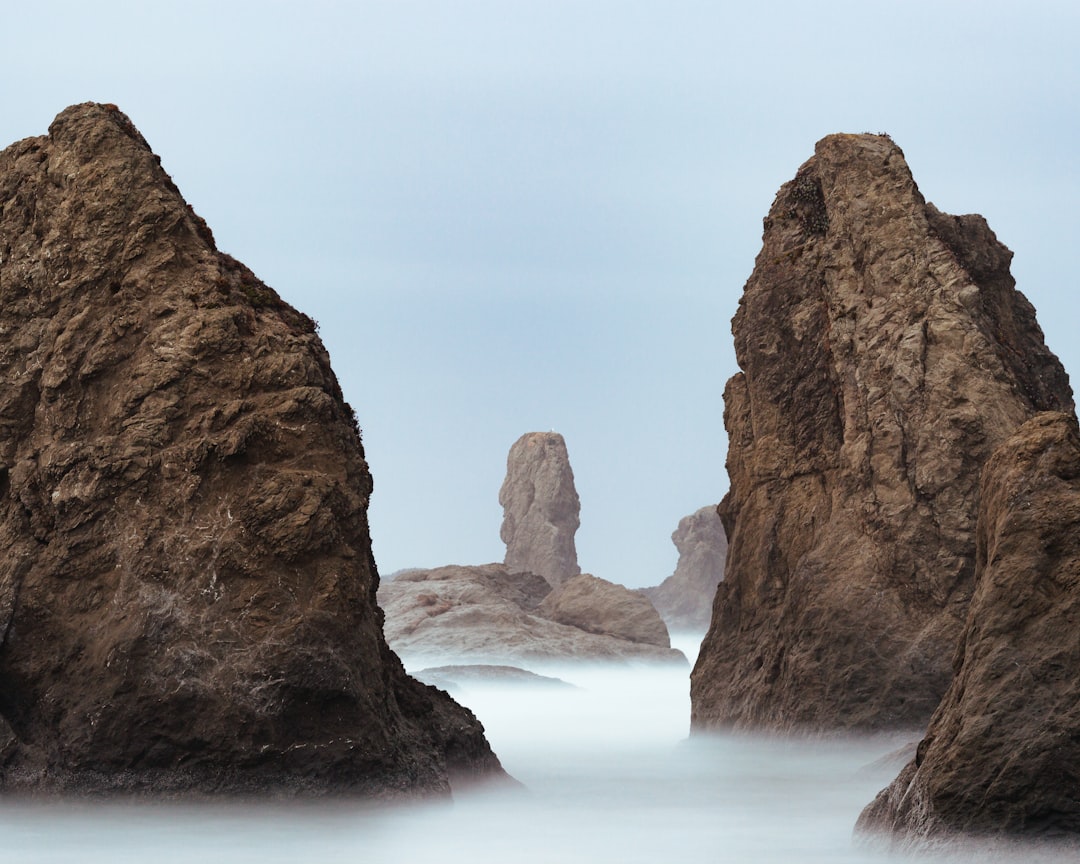
Here is an article exploring the phenomenon of unusual rocks in unlikely locations, written in the third person and formatted as requested:
Nature, in its grand and often enigmatic design, frequently presents geological puzzles that challenge our understanding. Among these are the “out-of-place rocks” – solitary boulders, stone formations, or mineral deposits found in locations that defy conventional geological explanation. These lithic anomalies, scattered across landscapes from windswept deserts to verdant valleys and tranquil lakes, whisper tales of powerful forces, ancient migrations, and processes that have shaped the Earth in ways both subtle and spectacular. The study of these unusual rocks in unlikely locations is not merely an academic pursuit; it is an invitation to explore the dynamic history of our planet and to marvel at its capacity for surprise.
The term “out-of-place rock” is broadly applied and encompasses a variety of geological phenomena. Some are erratics, massive glacial deposits left behind as ice sheets retreated. Others might be volcanic bombs flung from ancient eruptions, carried by wind or water far from their source. Still others could be remnants of ancient sea beds exposed by tectonic uplift, or even meteorites that have fallen from the cosmos. Regardless of their origin, these stones captivate the imagination, igniting curiosity about the forces that transported them, the time scales involved, and the unique stories they hold within their mineral matrices. Their presence prompts questions about a landscape’s past, revealing chapters of its history that might otherwise remain buried. From the colossal to the microscopic, these displaced stones serve as tangible reminders that the Earth is a constantly evolving entity, its surface a canvas painted by millennia of geological artistry.
Glacial Giants: The Legacy of Ice Ages
Perhaps the most common category of out-of-place rocks are glacial erratics. These are boulders or other fragments of rock that have been transported by glaciers and are now incongruously positioned on top of, or embedded within, different types of bedrock. Their presence is a direct testament to the immense power of ice sheets that once covered vast swathes of the Earth’s surface. As glaciers advanced, they acted as colossal bulldozers, picking up rocks, soil, and debris, carrying them for hundreds or even thousands of miles. When the ice eventually melted, these erratics were deposited, often in isolation, far from their original geological context.
The Mechanics of Glacial Transport
The sheer scale of glacial erratics can be astonishing. Some are no larger than a pebble, while others are colossal monoliths that dwarf human structures. The ice acted as a natural conveyor belt, with rocks embedded within its frozen mass or riding atop its surface. The erosive power of glaciers is immense; they grind down bedrock, creating fine sediment known as glacial flour, and carve out valleys and fjords. Boulders caught in the ice can be kilometers from their source, a journey undertaken over tens of thousands, or even hundreds of thousands, of years. The varying speeds of glacial movement and the complex flow dynamics within the ice could lead to some rocks traveling further or being deposited in more unusual positions than others.
Identifying the Source: A Detective’s Work
Geologists often employ detailed mapping and mineralogical analysis to trace the origin of glacial erratics. By comparing the rock type of an erratic with the bedrock in the surrounding region and in areas further afield, scientists can pinpoint its likely source. This process is akin to a forensic investigation, where the rock itself provides clues about its past journey. The striations and polish often found on erratics are further evidence of their prolonged contact with moving ice. The chemical composition of the minerals within the erratic can be compared to known geological formations, allowing for a definitive match or strong indication of origin.
Famous Examples of Glacial Erratics
Globally, countless examples of glacial erratics dot the landscape. In North America, areas previously covered by the Laurentide Ice Sheet are replete with these transported stones. The Giant’s Causeway in Northern Ireland, while primarily volcanic in origin, exhibits features sometimes attributed to glacial sculpting and deposition in its broader context. The numerous boulders found in the Great Lakes region of the United States and Canada are often prominent glacial erratics. Their incongruous placement on softer soils or different bedrock types immediately distinguishes them from the local geology, signaling their distant origin. The sheer number and distribution of these erratics speak volumes about the extent and duration of past glacial periods.
In the study of geology, the concept of “rocks that don’t belong” often refers to the presence of exotic or displaced rock formations in a particular area, which can provide insights into the geological history and tectonic activities of a region. For a deeper understanding of how external factors can influence local environments, you might find the article on the ongoing conflict in Sudan particularly enlightening. It discusses the complexities of regional dynamics and how they can affect the stability of both human and natural landscapes. You can read more about it here: Sudan Conflict: A Continuing Struggle for Peace.
Volcanic Voyages: Ejected and Enigmatic
Volcanic activity, with its explosive power, can also be responsible for placing rocks in unexpected locations. Volcanic bombs are ejected from a volcano during an eruption and can travel significant distances, landing in areas far removed from the immediate volcanic edifice. Their flight path and trajectory are influenced by the force of the eruption, wind patterns, and their physical characteristics. Some volcanic bombs are molten when ejected, solidifying in various shapes during their flight through the air, while others may be pre-existing rocks that are caught up in the eruption.
The Fury of Eruptions
Volcanic eruptions vary greatly in their intensity. Plinian eruptions, for instance, are characterized by violent explosions that send ash and pyroclastic material high into the atmosphere. This material, which includes volcanic bombs, can be carried by wind currents for hundreds or even thousands of kilometers. The shape of a volcanic bomb is often indicative of its flight – rounded or spindle-shaped bombs are common, formed by rotation during their aerial journey. Less common are bread-crust bombs, which develop a cracked exterior as they cool.
Distinguishing Volcanic Bombs from Local Geology
The mineral composition and texture of volcanic bombs often differ significantly from the surrounding bedrock, making them identifiable as out-of-place. A smooth, vesicular basalt bomb found in a sedimentary plain, for example, would stand out starkly. Geologists can examine the crystalline structure, the presence of specific minerals, and the overall fabric of the rock to confirm its volcanic origin. The porous nature of some bombs, caused by trapped gases escaping during cooling, is also a distinctive characteristic.
Unexpected Landings: Bombs Far from the Source
A particularly fascinating aspect of volcanic voyages is the discovery of volcanic bombs in locations that seem impossibly distant from any known or ancient volcanic centers. These finds suggest either far more extensive past volcanic activity than currently recognized or incredibly powerful eruptions capable of lofting material to extreme distances. Rivers and ocean currents can also play a role in further transporting bombs that initially landed closer to the eruption site, adding another layer to their journey and potentially disguising their true origin.
Tectonic Triumphs and Marine Mysteries
Earth’s dynamic tectonic processes can also lead to rocks appearing in unexpected places. Uplift and erosion can expose ancient seafloor sediments or marine fossils on land, creating “fossil parks” or areas where marine rocks are found far inland. Similarly, tectonic activity can juxtapose different geological units, bringing rocks from one environment to sit directly atop rocks from another, creating what geologists call an unconformity.
The Slow Dance of Continents
Plate tectonics is a slow, relentless process that drives the movement of Earth’s crust. Over millions of years, continents collide, separate, and subduct. These movements can lift vast quantities of rock, including ancient marine deposits, high above sea level. Areas that were once submerged beneath oceans can be transformed into mountain ranges, their former seabed now exposed for all to see. The presence of marine fossils, such as shells and coral, within these uplifted rocks provides irrefutable evidence of their oceanic past.
Interpreting Marine Remnants on Land
The discovery of marine rocks on land is a powerful indicator of significant geological events over vast timescales. For example, the Himalayas, a towering mountain range, are largely composed of sedimentary rocks that were once at the bottom of the Tethys Sea. The sheer scale of the uplift involved is staggering. Geologists study the stratigraphy, fossil content, and sedimentary structures of these rocks to reconstruct the ancient environments and the tectonic forces that reshaped the landscape.
Submarine Landslides and Coastal Erosion
Beyond tectonic uplift, submarine landslides can also displace significant volumes of rock, carrying them over considerable distances on the seafloor. While not strictly “out-of-place” in the terrestrial sense, their new location can be geologically anomalous. Furthermore, coastal erosion can expose rock formations that were previously submerged, making them appear in newly accessible areas. These processes, while less dramatic than tectonic uplift, contribute to the ever-changing geological tapestry of our planet.
The Celestial Visitors: Meteorites in Uncommon Settings
Perhaps the most extraordinary out-of-place rocks are meteorites – fragments of asteroids or comets that have traveled through space and impacted Earth. While meteorites can land anywhere, finding one in an environment that has undergone little geological change since its impact, or in a location that preserves it from erosion and weathering, can make it an unusually significant find. These celestial visitors offer direct insights into the composition of the early solar system.
Navigating the Cosmos to Earth
Meteoroids are small bodies in space. When one enters Earth’s atmosphere, it becomes a meteor, often appearing as a “shooting star.” If it survives its fiery passage through the atmosphere and impacts the ground, it is classified as a meteorite. The composition of meteorites varies widely, ranging from stony meteorites (chondrites being the most common) to iron meteorites and stony-iron meteorites. Their study reveals the building blocks of our solar system, offering clues about its formation and evolution.
The Hunt for Fallen Stars
Finding meteorites requires a combination of luck, an observant eye, and sometimes specialized detection equipment. Certain environments are more conducive to meteorite preservation and discovery. Deserts, with their arid conditions and lack of vegetation, can preserve meteorites for millennia. Ice sheets and glaciers can also act as excellent preservers, and when the ice melts, the meteorites can be revealed. The stark blackness of many meteorites contrasts with pale desert or icy landscapes, making them easier to spot.
Insights from Extraterrestrial Visitors
Each meteorite is a time capsule from a different part of the solar system, or from a time before Earth had formed. Their analysis provides invaluable data on the age of the solar system, the chemical composition of celestial bodies, and the processes that occurred during planetary formation. Some meteorites contain organic compounds, fueling ongoing scientific debate about the origin of life on Earth and the possibility of life elsewhere in the universe. The sheer fact of their arrival on our planet makes them inherently out-of-place, a tangible connection to the vastness of space.
In the fascinating world of geology, there are often rocks that don’t belong in certain locations, raising questions about their origins and how they ended up where they are found. This phenomenon can be linked to various natural processes, including glacial movement and volcanic activity. For a deeper exploration into the unexpected connections between ancient technology and natural elements, you might find the article on Archimedes’ death ray intriguing. It delves into how ancient civilizations harnessed natural resources in innovative ways, much like how misplaced rocks can tell a story of their journey. You can read more about it here.
Man-Made Movements: Human Ingenuity and Accidental Displacement
While many out-of-place rocks have natural origins, human activity has also played a significant role in their displacement. Construction projects, transportation, and even deliberate artistic endeavors can result in rocks appearing in unusual locales. From ancient structures to modern infrastructure, human hands have moved and placed stones in ways that can sometimes be mistaken for natural geological processes.
The Grandeur of Ancient Architecture
Throughout history, humans have moved massive stones for construction purposes. The pyramids of Egypt, Stonehenge, and the Moai statues of Easter Island are prime examples of human effort in quarrying, transporting, and erecting colossal stones, often far from their original source. These monumental achievements demonstrate an incredible understanding of engineering and a drive to create lasting testaments to culture and belief. The sheer scale of some of these projects can lead to rocks being situated in landscapes that initially seem geologically improbable.
Engineering Marvels and Accidental Journeys
Modern infrastructure projects, such as the construction of canals, railways, and highways, also involve the extensive movement of earth and rock. Quarried materials are transported over long distances, and it is not uncommon for remnants of these operations, or errant materials, to end up in unexpected locations. Furthermore, accidental displacement can occur through events like shipwrecks, where ballast stones from ships might be deposited on foreign shores, or through the accidental inclusion of rocks in shipments of other goods.
Artistic Interpretations and Land Art
In the realm of art, contemporary land artists have deliberately placed rocks and other natural materials in striking and often unconventional settings. These installations, known as land art or earth art, are designed to engage with the landscape and its geological features. While these are deliberate artistic choices, the presence of rocks in curated, unusual arrangements can, at first glance, appear as natural anomalies. The intentionality behind these placements, however, distinguishes them from purely geological phenomena.
The study of out-of-place rocks, regardless of their origin – glacial, volcanic, tectonic, celestial, or human-induced – is a compelling journey into geological history and the dynamic nature of our planet. These wanderers of stone, found in unlikely locations, serve as constant reminders of the profound forces that have shaped, and continue to shape, Earth’s surface. They invite us to look closer, to question, and to appreciate the intricate, often surprising, stories etched into the very fabric of our world.

The Boulder That Shouldn’t Exist
FAQs

What are “rocks that don’t belong”?
“Rocks that don’t belong” refer to rocks that are found in a location where they are not typically found, such as a different geological formation or environment.
How do rocks that don’t belong end up in unexpected places?
Rocks that don’t belong can end up in unexpected places through geological processes such as erosion, glaciation, or tectonic movement. These processes can transport rocks from their original location to a new and unexpected one.
What are some examples of rocks that don’t belong?
Examples of rocks that don’t belong include finding a granite boulder in a limestone region, or a volcanic rock in an area where volcanic activity is not known to have occurred.
Why are rocks that don’t belong significant to geologists?
Rocks that don’t belong are significant to geologists because they can provide valuable information about past geological events, such as ancient tectonic movements, glacial activity, or volcanic eruptions.
How do geologists study rocks that don’t belong?
Geologists study rocks that don’t belong by examining their composition, mineralogy, and texture to determine their origin and the processes that may have transported them to their current location. They also consider the surrounding geological features and formations to piece together the rock’s history.