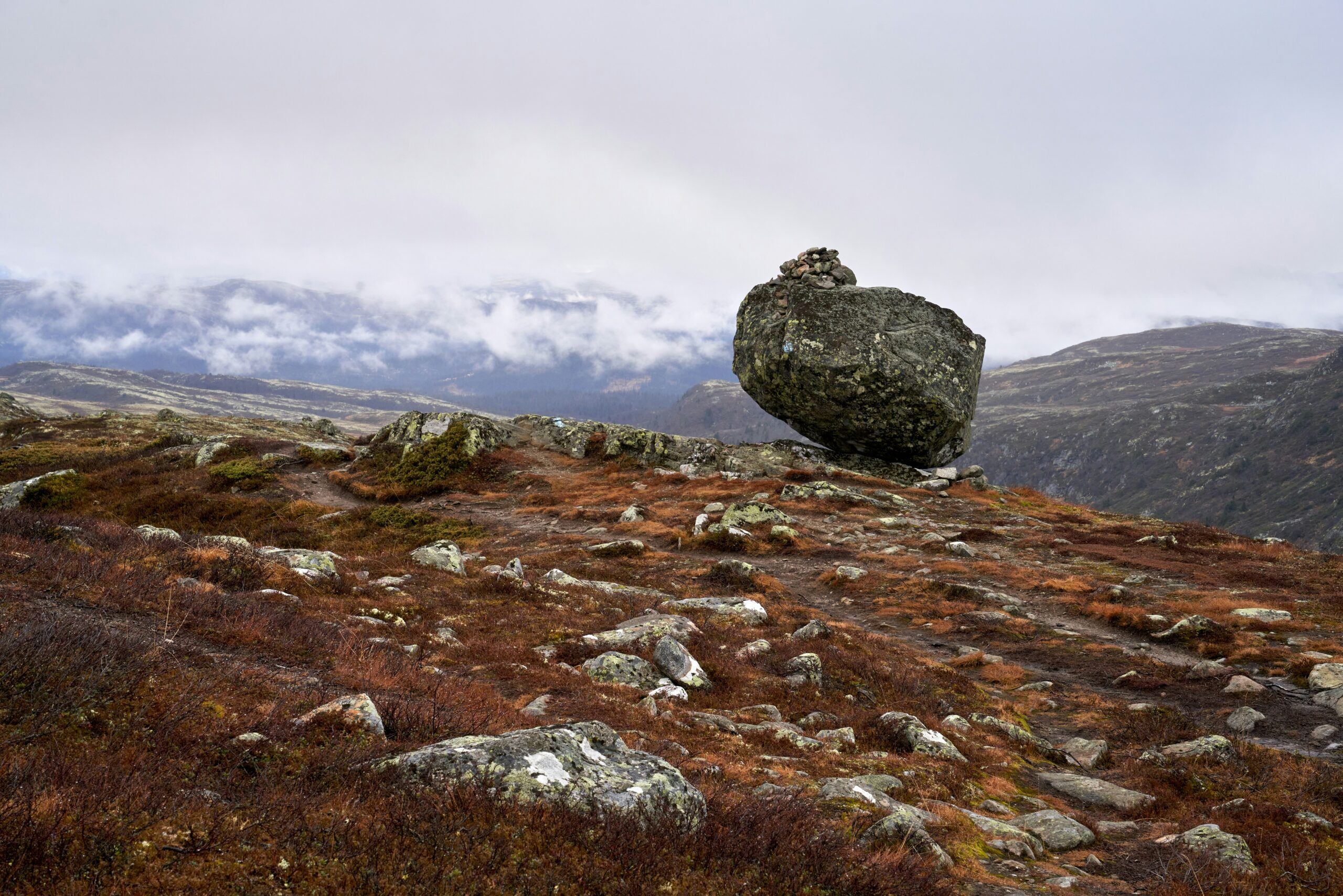
In the heart of the French Alps, nestled amidst the majestic peaks and verdant valleys, lies a geological enigma that has puzzled and fascinated scientists for generations. This is the story of Pierre à Bot, a colossal glacial erratic that stands as a silent testament to the raw power of ancient ice. Its immense size, unusual composition, and improbable placement have sparked debate, inspired legends, and ultimately, contributed to our understanding of Earth’s dynamic past.
Pierre à Bot, a name that translates to “Stone of the Bot” in French, is not merely a large rock. It is a monolithic entity, a behemoth of stone that rises dramatically from its surroundings, defying the logic of its location. Its sheer scale is the first element that captures the observer’s attention. This is not a pebble, nor a small boulder; it is a true giant, a geological anomaly that demands investigation.
A Monumental Presence
The physical dimensions of Pierre à Bot are staggering. It is estimated to be approximately 15 meters long, 10 meters wide, and 8 meters high, with a weight that is conservatively estimated to be in the tens of thousands of tons. This immense mass is not uniformly distributed; its shape is irregular, sculpted by the forces that brought it to rest. The surface is weathered, etched with the passage of centuries, yet its imposing silhouette remains unmistakable against the backdrop of the alpine landscape. Standing at its base, one can only feel humbled by its sheer immensity, a profound sense of insignificance in the face of such geological grandeur.
A Material Out of Place
Beyond its size, the composition of Pierre à Bot adds another layer to its mystery. Geologists have identified the rock as a type of granite, a common igneous rock. However, this specific granite is not indigenous to the immediate vicinity where Pierre à Bot rests. Its geological makeup points to a distant origin, a location many kilometers away, buried deep within the intricate geological tapestry of the Alps. This discrepancy between the rock’s composition and its present location is the crux of the enigma, hinting at a journey of immense scale and power.
The Pierre à Bot glacial erratic is a fascinating geological feature that has intrigued researchers and enthusiasts alike due to its unique origins and the insights it provides into past climatic conditions. For those interested in exploring related topics, an intriguing article titled “Uncovering Evidence of Lost Advanced Civilization” delves into the ways ancient civilizations interacted with their environments, which can offer context to the study of geological formations like the Pierre à Bot. You can read more about this captivating subject by following this link: Uncovering Evidence of Lost Advanced Civilization.
The Glacial Origin Theory: Ice as the Architect
The most widely accepted explanation for Pierre à Bot’s presence is rooted in the transformative power of glaciers. During the Pleistocene epoch, a period characterized by extensive ice ages, vast ice sheets covered significant portions of the Earth’s surface, including the Alps. These colossal rivers of ice, kilometers thick, were not merely passive blankets of snow; they were dynamic forces capable of reshaping continents.
The Power of Ice Sheets
The immense weight of these glaciers exerted incredible pressure on the underlying bedrock. As the ice flowed, it acted like a giant bulldozer, scraping, grinding, and carving the landscape. Loose rocks, fragments of mountains, and entire boulders were entrained within the ice, becoming part of the glacial mass. These embedded rocks were then transported, sometimes over vast distances, as the glaciers advanced and retreated.
The Role of Glacial Erratics
Rocks transported and deposited by glaciers in this manner are known as glacial erratics. They are fundamental pieces of evidence for past glaciation. Their significance lies in their ability to tell a story of the ice’s movement. By analyzing the type of rock and comparing it to the bedrock of the surrounding region, geologists can infer the direction from which the glacier flowed and the areas it traversed. Pierre à Bot, with its foreign granite composition, perfectly fits the definition of a glacial erratic.
The Mechanics of Transport
The transport of a boulder as large as Pierre à Bot would have required an immense ice flow. Imagine a colossal river of ice, a thousand meters or more in thickness, grinding its way down a valley. Rocks of all sizes would be plucked from the bedrock or picked up from the surface and incorporated into the ice flow. Larger boulders, like Pierre à Bot, would have been moved by the sheer abrasive force of the ice, carried along in its inexorable movement. At times, they might have been lodged within the ice for extended periods, only to be released as the glacier melted or calved into icebergs.
Tracing the Glacier’s Path: A Geological Detective Story

The scientific investigation of Pierre à Bot is akin to a geological detective story, where every clue, from the rock’s composition to its precise location, is meticulously examined to piece together the past. The journey of Pierre à Bot from its origin to its current resting place is a narrative of immense geological forces and a testament to the scientific process.
Petrographic Analysis: Fingerprinting the Boulder
The first crucial step in understanding Pierre à Bot’s origin is through petrographic analysis. This involves the detailed examination of the rock’s mineral composition and texture. Geologists collect samples of Pierre à Bot and analyze them under a microscope, identifying the types of minerals present, their proportions, and how they are intergrown. This detailed “fingerprint” of the granite allows them to compare it with known geological formations in the surrounding Alps.
Identifying the Source Rock
Through extensive field research and existing geological maps, scientists were able to pinpoint potential source regions for the granite of Pierre à Bot. This involved painstaking comparisons between the petrographic analysis of Pierre à Bot and the known granite formations in the broader Alpine region. It is a process of elimination and correlation, seeking a geological match that is both precise and geographically plausible within the context of glacial dynamics.
Reconstructing the Glacial Trajectory
Once a likely source rock was identified, geologists could begin to reconstruct the path the glacier must have taken. This involves understanding the topography of the Alps and how ancient ice sheets would have flowed through them. The direction of glacial striations (scratches left by rocks embedded in the ice) on other nearby bedrock formations, as well as the orientation of other glacial landforms, help to confirm or refine the proposed trajectory. Pierre à Bot’s placement offers a vital point of reference in this reconstruction.
The Final Resting Place: A Deposit of Immense Power

The ultimate deposition of Pierre à Bot is as significant as its journey. The precise moment and mechanism of its release from the glacial ice are subjects of continued study, but the result is a dramatic and imposing spectacle. The boulder’s final resting place provides further clues about the nature of the ancient glacier.
Terminal Moraines and Subglacial Deposits
Glaciers deposit rock and debris in several ways. Terminal moraines are ridges of unsorted rock and sediment accumulated at the furthest extent of a glacier. Other deposits can occur as basal or subglacial till, where rocks are released from the base of the ice as it melts. Pierre à Bot’s location, often situated in areas that show evidence of glacial action, points to its deposition as the ice receded.
The Ice Melt Event
The release of a boulder of this magnitude would have been a colossal event. As the glacier melted or calved into a proglacial lake, the immense weight of the ice would have been released, potentially causing significant local disruption. Pierre à Bot would have been dropped, possibly with considerable force, into the accumulating glacial debris or directly onto the underlying bedrock. This sudden release could have shaped the immediate terrain around its final placement.
The Evidence of the Landscape
The surrounding landscape often bears witness to the immense power that placed Pierre à Bot. Features such as U-shaped valleys, polished rock surfaces, and smaller scattered erratics all contribute to the narrative of glacial activity. Pierre à Bot, as the most prominent element, serves as the apex of this glacial story, a singular monument to the incredible forces that shaped the region.
The Pierre à Bot glacial erratic is a fascinating geological feature that has intrigued researchers and nature enthusiasts alike. This massive boulder, transported by glacial activity, offers insights into the Earth’s climatic history and the movements of ancient glaciers. For those interested in exploring more about ancient artifacts and their significance, a related article discusses the Piri Reis map, which reveals the advanced navigational knowledge of early civilizations. You can read more about this intriguing topic here.
Pierre à Bot in Modern Times: A Symbol and a Subject of Study
| Attribute | Value |
|---|---|
| Name | Pierre à Bot glacial erratic |
| Type | Glacial Erratic |
| Location | Canada |
| Composition | Granite |
| Size | Approximately 9 meters high |
Today, Pierre à Bot remains a compelling landmark, drawing both curious locals and visiting geologists. It has transcended its purely scientific function to become a symbol of the Alps’ wild and untamed past, inspiring awe and a sense of connection to deep geological time. Its ongoing study continues to enrich our understanding of glacial processes.
A Tourist Attraction and Local Legend
Pierre à Bot is more than just a scientific curiosity; it is a point of local pride and a notable tourist attraction. Its sheer size and the mystery surrounding its origin make it a natural draw for visitors. Local legends and folklore may have sprung up around the boulder, attributing its placement to supernatural forces or ancient giants, further embedding it in the cultural narrative of the region.
Ongoing Geological Research
While the majority of scientists agree on the glacial origin of Pierre à Bot, research continues. Scientists may be refining the exact source rock, investigating the finer details of the glacial flow patterns, or studying the weathering processes that have shaped the boulder over millennia. Advanced techniques, such as geochronology, might be employed to more precisely date the bedrock from which Pierre à Bot originated.
A Window to Past Climates
The study of glacial erratics like Pierre à Bot is invaluable for understanding past climate change. By precisely dating glacial deposits and analyzing the origins of erratics, geologists can reconstruct the extent and behavior of past ice sheets. This data is crucial for building models of future climate change and understanding the Earth’s long-term climatic cycles. Pierre à Bot, in its silent grandeur, offers a tangible link to a world vastly different from our own, a world dominated by ice. Its presence continues to draw us to explore, to question, and to marvel at the enduring power of our planet.

The Boulder That Shouldn’t Exist
FAQs
What is a Pierre à Bot glacial erratic?
A Pierre à Bot glacial erratic is a large boulder that has been transported and deposited by a glacier. It is typically made of a different type of rock than the surrounding landscape and can be found in areas that were once covered by glaciers.
How are Pierre à Bot glacial erratics formed?
Pierre à Bot glacial erratics are formed when a glacier picks up large boulders from the bedrock and carries them along as it moves. When the glacier eventually melts, the boulders are left behind in the landscape, often in areas far from their original location.
Where can Pierre à Bot glacial erratics be found?
Pierre à Bot glacial erratics can be found in regions that were once covered by glaciers, such as parts of North America, Europe, and Asia. They are often located in areas with distinctive landscapes, such as moraines or glacial valleys.
What is the significance of Pierre à Bot glacial erratics?
Pierre à Bot glacial erratics provide valuable information about the movement of glaciers and the geological history of an area. They can also serve as important landmarks and tourist attractions, drawing attention to the impact of past glaciation on the landscape.
Are Pierre à Bot glacial erratics protected?
In some cases, Pierre à Bot glacial erratics may be protected as part of natural or cultural heritage sites. It is important to respect any regulations or guidelines in place for visiting and preserving these unique geological features.