The Shadow of Giants: Early Humans and the Mammoth Hunt
The vast, windswept plains of the Pleistocene epoch stretched out under a sky that felt both ancient and eternally present. Here, a landscape sculpted by ice and wind, roamed magnificent creatures that have long since vanished from the Earth. Among the most iconic of these were the woolly mammoths, colossal herbivores whose shaggy coats, formidable tusks, and sheer scale made them the undisputed titans of their domain. For the early human populations who shared this challenging world, these immense beasts represented not only a vital source of sustenance and materials but also a profound test of skill, courage, and communal cooperation. The pursuit of the woolly mammoth was more than a hunt; it was a complex, dangerous, and ultimately defining aspect of prehistoric existence, a testament to humanity’s nascent ability to strategize, innovate, and overcome the formidable forces of nature.
Recent studies on Pleistocene hunters have shed light on the fascinating techniques used to track ancient woolly mammoths across the vast landscapes of their time. These early humans developed sophisticated methods to understand the migratory patterns of these colossal creatures, which were crucial for their survival. For a deeper understanding of how climate changes influenced human behavior and societal structures in different eras, you can explore the article on the Bronze Age collapse and its climatic implications at this link.
The Mammoth’s Realm: A Pleistocene Ecosystem
The world in which these early hunters thrived was dramatically different from our own. The Pleistocene epoch, often referred to as the “Ice Age,” was characterized by cycles of glacial advance and retreat, shaping vast landscapes and influencing the distribution of flora and fauna. Woolly mammoths, scientifically known as Mammuthus primigenius, were perfectly adapted to this harsh environment. Their thick, woolly fur provided insulation against the frigid temperatures, while their broad, flat molars were designed for grinding the tough grasses, sedges, and shrubs that dominated the treeless steppe environments. These mammoths were not solitary creatures; they likely moved in herds, their movements dictated by the availability of food and water, and the need for safety. Understanding the mammoth’s ecological niche, its behavior patterns, and its vulnerabilities was paramount for the success of any hunting expedition.
Adapting to the Cold: Mammoths and their Environment
The sheer resilience of the woolly mammoth was a product of evolutionary pressures unique to the Pleistocene. Their stocky build, short legs, and small ears minimized heat loss, crucial in a world where temperatures could plummet far below freezing for extended periods. Their diet, while seemingly monotonous, was a testament to their ability to extract nutrients from resilient plant life. These herbivores would have spent much of their day foraging, their massive bodies a constant presence in the landscape. Seasonal migrations, though likely not as extensive as those of modern elephants, would have been influenced by the availability of vegetation, drawing them towards fertile valleys or away from areas of deep snow accumulation. The patterns of their grazing, their preferred watering holes, and their territorial ranges were all pieces of a puzzle that early human hunters meticulously studied.
The Steppe and Tundra: A Landscape of Opportunity and Peril
The dominant biome of the Pleistocene, particularly in the northern latitudes where mammoths were prevalent, was the mammoth steppe. This vast, treeless grassland was characterized by cold, dry conditions and a rich diversity of herbaceous plants, providing an ideal food source for large herbivores like mammoths. This open terrain, while offering long sightlines for hunters, also presented its own set of dangers. Harsh weather, including blizzards and sudden temperature drops, could be as deadly to humans as to their prey. The presence of other formidable predators, such as cave lions, saber-toothed cats, and dire wolves, also added to the inherent risks of life in this environment. For the hunters, navigating this landscape required intimate knowledge of its features – the sheltering overhangs of rock formations, the potential hazards of frozen rivers, and the subtle signs that indicated the presence of prey.
The Hunter’s Arsenal: Tools and Tactics of the Pleistocene
The successful pursuit and procurement of a woolly mammoth required more than just brute strength; it demanded ingenuity, advanced tool-making capabilities, and sophisticated hunting strategies. Early humans, despite their seemingly rudimentary technology compared to modern standards, were remarkably adept at crafting tools from stone, bone, and wood that enabled them to confront and overcome creatures vastly larger and more powerful than themselves. These tools were not merely weapons; they were extensions of the hunter’s senses and abilities, honed through generations of observation and experimentation.
Stone, Bone, and Bone: Crafting the Instruments of the Hunt
The Paleolithic toolkit was surprisingly diverse, reflecting a deep understanding of material properties and functional design. Lithic technology, the shaping of stone, was central. Flint, chert, and obsidian were expertly knapped to produce sharp-edged handaxes, scrapers, points for spears, and potentially even the blades for more complex projectile weapons. These stone tools were vital for butchering the mammoth, skinning it, and processing its meat and bones. Bone and antler were also crucial resources. They were fashioned into awls, needles (indicating the use of tailored clothing), harpoons, and even components for spear-throwers, which significantly increased the range and force of thrown projectiles. The careful selection of materials, the precision of their shaping, and the understanding of how to haft these components onto wooden shafts all speak to a high level of technological achievement.
The Art of the Ambush: Strategies for Taking Down Giants
Hunting a woolly mammoth was rarely a head-on confrontation. The immense power and defensive capabilities of these animals necessitated strategic planning and coordinated group effort. Evidence suggests a variety of tactics employed by early humans. Pitfalls, for example, could have been dug in strategic locations, designed to trap a charging mammoth. Driving herds towards natural traps, such as steep ravines or bogs, would have been another effective method. The use of projectile weapons, launched from a safe distance by multiple hunters, could have been employed to weaken or injure the animal before closing in for the kill. The social structure of early human groups played a crucial role; successful hunts would have required effective communication, division of labor, and a shared understanding of the plan.
The Cooperative Endeavor: Social Structures and Teamwork
The sheer scale of a woolly mammoth made it an impossible target for a lone hunter. The successful procurement of such a prize was inherently a communal undertaking, requiring the coordinated efforts of multiple individuals. This reliance on cooperation fostered the development of complex social structures and communication networks within early human groups. The planning, execution, and subsequent processing of a mammoth kill all served to strengthen social bonds and reinforce the importance of collective action.
From Lone Hunter to Clan: The Necessity of Group Effort
The dangers associated with mammoths – their immense strength, their powerful tusks, and the potential for stampedes – meant that individual prowess, while valued, was insufficient. A coordinated group of hunters could employ a far wider array of tactics, from driving the animal into prepared traps to raining down projectiles from multiple angles. The risks were distributed, and the rewards, in the form of vast amounts of meat, fat, hides, and bone, were shared. This shared success would have contributed to the cohesion of the group, solidifying alliances and reinforcing the benefits of working together.
The Language of the Hunt: Communication and Coordination
Effective communication was paramount for the success of a mammoth hunt. Subtle gestures, vocalizations, and perhaps even rudimentary forms of symbolic communication would have been employed to coordinate movements, signal danger, and direct the attack. The division of roles within the hunting party – scouts, flankers, those responsible for launching projectiles, and those who would make the final kill – all depended on clear and timely communication. The shared experience of a successful hunt, the collective effort, and the subsequent feasting would have further strengthened the communicative bonds within the group, laying the groundwork for more complex social interactions and the transmission of knowledge.
Pleistocene hunters displayed remarkable skills as they tracked ancient woolly mammoths across the vast landscapes of their time, showcasing their deep understanding of animal behavior and environmental conditions. This fascinating aspect of prehistoric life is explored in more detail in a related article that delves into the mysteries of ancient maps and navigation techniques, which can provide insights into how early humans might have navigated their world. To learn more about these intriguing connections, you can read the article here.
The Mammoth’s Bounty: Sustenance and Survival
| Metric | Value | Description |
|---|---|---|
| Time Period | Approx. 2.6 million to 11,700 years ago | Duration of the Pleistocene epoch when mammoths roamed |
| Average Woolly Mammoth Height | 2.7 to 3.4 meters | Estimated shoulder height of adult woolly mammoths |
| Average Woolly Mammoth Weight | 4,000 to 6,000 kg | Estimated weight range of adult woolly mammoths |
| Hunting Tools | Stone-tipped spears, bone tools | Common weapons used by Pleistocene hunters |
| Group Hunting Size | 5 to 20 individuals | Estimated size of hunter groups tracking mammoths |
| Tracking Techniques | Footprint analysis, environmental cues | Methods used to follow mammoth herds |
| Hunting Success Rate | Estimated 10-20% | Approximate success rate of mammoth hunts |
| Primary Regions | Siberia, North America, Europe | Areas where woolly mammoths and hunters coexisted |
The woolly mammoth was far more than just a challenging quarry; it was a cornerstone of survival for many Pleistocene human populations. Its immense size provided a substantial source of food, its thick hide offered protection and materials for clothing and shelter, and its bones and tusks were invaluable for crafting tools and other essential items. The successful hunting of a mammoth could sustain a group for a considerable period, providing a crucial buffer against the ever-present uncertainties of prehistoric life.
A Feast of Fat and Protein: Nourishing the Pleistocene Palate
The primary motivation for hunting a mammoth was, unequivocally, sustenance. A single mammoth could yield hundreds of kilograms of meat, a vital source of protein and fat essential for energy in the cold climate. The fat reserves of the mammoth were particularly important, providing calories and aiding in the absorption of fat-soluble vitamins. The meat would have been consumed fresh, or preserved through drying or smoking for later use. The sheer volume of meat from a single kill would have been a significant boon to a hunter-gatherer group, allowing them to subsist through periods of scarcity.
Beyond the Meat: The Multifaceted Utility of the Mammoth
The utility of a woolly mammoth extended far beyond its flesh. The thick, insulating hide was a prized resource, providing materials for warm clothing, shelters, and even rudimentary boats. The long, curved tusks, composed of dentin, were incredibly strong and could be fashioned into a variety of tools, weapons, and decorative objects. The massive bones could be used for construction, as fuel for fires, or shaped into tools and implements. In essence, a single mammoth kill represented a complete resource package, providing almost everything a prehistoric group needed to survive and thrive in their challenging environment.
The Echoes of the Hunt: Legacy and Understanding
While the woolly mammoths themselves are long gone, the evidence of their pursuit by early humans remains etched in the archaeological record. The discovery of mammoth kill sites, the analysis of stone tool assemblages found in proximity to mammoth remains, and the detailed study of ancient cave paintings all offer invaluable insights into the lives, skills, and social dynamics of our prehistoric ancestors. The study of these ancient hunts allows us to connect with a fundamental aspect of human history, a time when humanity’s relationship with the natural world was one of direct, often perilous, interdependence.
Unearthing the Past: Archaeological Evidence of the Mammoth Hunt
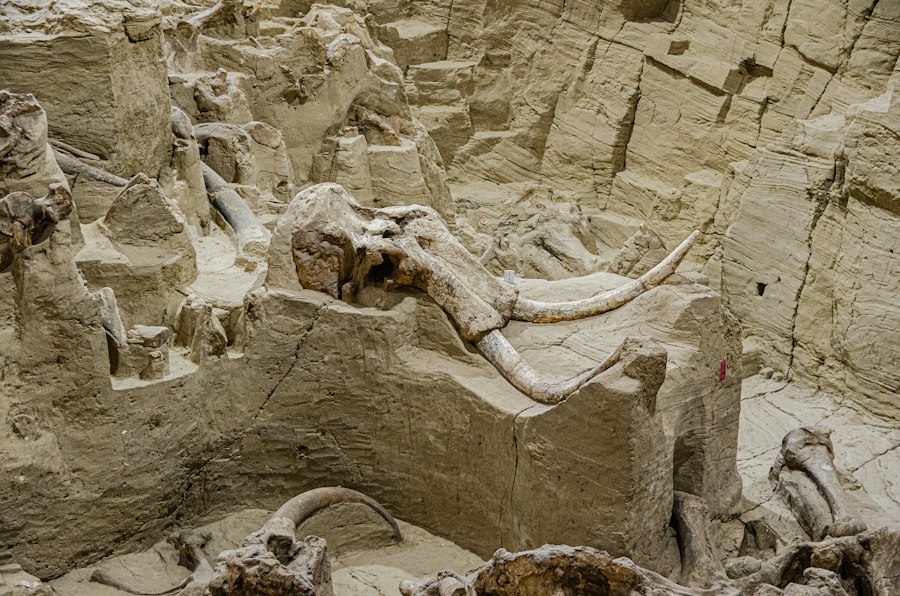
Archaeological excavations have yielded a wealth of information about Pleistocene mammoth hunting. Sites such as Dolní Věstonice in the Czech Republic and those in the Mammoth Steppe regions of Siberia have provided evidence of organized hunting strategies. The presence of concentrated mammoth bones, often showing signs of butchery, alongside sophisticated stone tools, suggests deliberate and successful hunts. The discovery of spear points embedded in mammoth bones, or evidence of mammoth bone structures used for shelter, provides direct confirmation of the close relationship between humans and these extinct giants.
Picturing the Past: Art as a Window into Prehistoric Life
The exquisite cave paintings of the Upper Paleolithic, such as those found in Lascaux and Chauvet, offer a captivating glimpse into the world of our ancestors and their relationship with megafauna. While not always depicting explicit hunting scenes, these artworks frequently feature mammoths, often rendered with remarkable detail and anatomical accuracy. The prominence of these animals in prehistoric art suggests their cultural significance and their central role in the lives and imaginations of early humans. These artistic expressions serve as a powerful testament to the enduring fascination and respect that these magnificent creatures inspired. The study of these ancient pursuits continues to inform our understanding of human evolution, technological development, and the complex interplay between early humans and the formidable fauna of the Pleistocene.

Beneath the Ice: Surviving the Ice Age 20,000 Years Ago
FAQs
What tools did Pleistocene hunters use to track ancient woolly mammoths?
Pleistocene hunters used tools such as spears, bows and arrows, and stone tools to track and hunt ancient woolly mammoths. They also relied on their knowledge of the mammoths’ behavior and migration patterns.
How did Pleistocene hunters communicate and coordinate their efforts when tracking woolly mammoths?
Pleistocene hunters likely communicated through verbal cues, hand signals, and possibly even primitive forms of language. They would have coordinated their efforts by working together to surround and corner the mammoths.
What role did fire play in the hunting strategies of Pleistocene hunters tracking woolly mammoths?
Fire was a crucial tool for Pleistocene hunters when tracking woolly mammoths. They used fire to scare and herd the mammoths into a specific area, making it easier to hunt them. Fire also provided warmth and protection at night.
How did Pleistocene hunters utilize the environment to their advantage when tracking woolly mammoths?
Pleistocene hunters took advantage of natural features such as cliffs, rivers, and dense vegetation to trap and ambush woolly mammoths. They also used the terrain to create barriers that would funnel the mammoths into a confined space for easier hunting.
What evidence suggests that Pleistocene hunters were successful in tracking and hunting woolly mammoths?
Archaeological findings such as mammoth bones with tool marks, ancient artwork depicting mammoth hunts, and the presence of stone tools near mammoth remains all suggest that Pleistocene hunters were successful in tracking and hunting woolly mammoths.