The PM-2A nuclear reactor, a testament to Cold War ingenuity and ambition, once hummed beneath the frozen expanses of Camp Century, Greenland. This mobile power plant, designed to fuel a clandestine military base, represents a fascinating, albeit ultimately temporary, chapter in the history of nuclear energy and military operations. Its story is one of innovation, logistical marvels, and the harsh realities of operating in one of Earth’s most unforgiving environments.
The Cold War Context and the Need for Forward Operating Bases
The latter half of the 20th century was defined by the ideological struggle between the United States and the Soviet Union, a period known as the Cold War. This global standoff necessitated the establishment of strategically important military outposts around the world, particularly in regions that offered proximity to potential adversaries or crucial surveillance capabilities. The Arctic, with its vast, largely unpopulated, and strategically vital territories, became a focal point for such considerations.
Camp Century: A Secret Beneath the Ice
In the late 1950s, the U.S. Army conceived of Project Iceworm, a highly classified initiative aimed at constructing a network of underground missile launch facilities in Greenland. The rationale was to position nuclear missiles close enough to Soviet targets to reduce flight times and increase their effectiveness, while simultaneously utilizing the thick ice sheet as a natural shield and concealment. Camp Century, established in 1959, was to be the logistical and operational hub for this ambitious, and ultimately abandoned, project.
The Challenge of Power: Fueling a Subsurface City
The establishment of Camp Century presented a unique and significant challenge: providing a reliable and substantial source of power to sustain a subsurface military base. Traditional diesel generators, while feasible, would have been noisy, emitted considerable exhaust, and required a constant and massive logistical pipeline of fuel across treacherous Arctic terrain. The sheer scale of the anticipated operations demanded a more efficient and powerful solution. This is where the concept of a mobile nuclear reactor, specifically the PM-2A, entered the picture.
The PM-2A nuclear reactor at Camp Century in Greenland represents a fascinating chapter in the history of military and energy innovation, showcasing how advanced technology was employed in extreme conditions. For those interested in exploring the implications of ancient technologies and their relevance in today’s world, a related article can be found at Unlocking Ancient Technology in Times of Scarcity. This piece delves into how historical advancements can inform modern solutions, paralleling the innovative spirit that led to the establishment of the Camp Century reactor.
The PM-2A: A Revolutionary Mobile Reactor Design
Origins of the PM-2A: A Tailored Solution for Arctic Deployment
The Portable Medium power Plant 2A (PM-2A) was developed by the U.S. Army Corps of Engineers as part of their broader effort to explore and deploy nuclear power for military applications. The need for a power source that could be transported and assembled in remote and challenging environments was paramount. Unlike larger, fixed-site nuclear power plants, the PM-2A was designed with mobility and rapid deployment in mind. Its components were to be manufactured, shipped, and then assembled on-site, significantly reducing the on-site construction time and complexity.
Engineering Marvels: Design and Transportability
The PM-2A was a remarkable feat of engineering for its time. It was a pressurized water reactor (PWR) designed for a thermal power output of approximately 40 megawatts, capable of generating around 10 megawatts of electrical power. This was more than enough to meet the significant energy demands of Camp Century, which included heating, lighting, ventilation, and the operation of various military equipment.
A key aspect of its design was its modularity and transportability. The reactor vessel, steam generators, turbine, and other essential components were designed to be disassembled into manageable sections that could be transported by sea, and then by specialized tracked vehicles, across the ice. This allowed for its construction within the relatively sheltered environment of a snow-excavated tunnel.
Safety Features and Operational Considerations
Operating a nuclear reactor in such an extreme and remote location presented unique safety challenges. The PM-2A incorporated numerous safety features, including robust containment structures, redundant cooling systems, and sophisticated control mechanisms. The location beneath the ice also offered a degree of natural shielding, although it also introduced complexities related to permafrost and potential ice melt.
The operational plan for the PM-2A at Camp Century involved a highly trained crew of military personnel who would manage its day-to-day functions. Strict protocols were in place to ensure its safe operation, including regular maintenance, fuel handling, and waste management. The enclosed nature of the base, carved into the ice, provided a controlled environment for the reactor’s operation, minimizing external environmental risks, at least initially.
Life Beneath the Ice: Powering a Subsurface City
Construction and Installation: A Monumental Undertaking
The construction of Camp Century itself was a monumental undertaking, involving the excavation of over a million cubic meters of ice and snow to create a network of tunnels and facilities. The PM-2A reactor was then installed within one of these purpose-built tunnels, deep beneath the surface. This process involved meticulous planning, specialized equipment, and a significant workforce braving the harsh Arctic conditions. The reactor was housed within a reinforced structure, designed to withstand the pressures of the ice and provide a safe operational environment.
Meeting the Energy Demands: Light, Heat, and Operations
Once operational, the PM-2A became the lifeblood of Camp Century. It provided the electricity necessary for everything from the basic comforts of lighting and heating for the over 200 personnel stationed there, to powering sophisticated scientific equipment and military communications systems. The constant hum of the reactor was a reassuring sound for those living and working in the isolated base, a symbol of their self-sufficiency in a hostile environment.
The energy generated also played a crucial role in the base’s scientific endeavors. Camp Century was not solely a military outpost; it was also a hub for glaciological research, and the power from the PM-2A facilitated the operation of scientific instruments used to study the Greenland ice sheet. This duality of purpose, military strategic value and scientific exploration, is an interesting facet of the Camp Century project.
The Psychological Impact of a Subsurface Existence
Living and working in a subsurface base, powered by a nuclear reactor, undoubtedly had a profound psychological impact on the personnel. The lack of natural sunlight, the confined spaces, and the constant awareness of the powerful technology operating nearby would have created a unique living experience. The PM-2A, while a symbol of technological advancement and self-sufficiency, also served as a constant reminder of the human endeavor to conquer and adapt to extreme environments.
The Inevitable Demise: Environmental Challenges and Shifting Priorities
The Gradual Thaw: Permafrost and Ice Dynamics
The very foundation of Camp Century, the Greenland ice sheet, proved to be a dynamic and ultimately unforgiving environment. Over time, the heat generated by the base itself, coupled with natural climatic shifts, began to impact the surrounding ice. The ice was not static; it flowed, melted, and refroze, presenting ongoing challenges to the structural integrity of the subsurface facilities. This subtle but persistent environmental change was a growing concern for the long-term viability of the camp.
Leaking Contaminants: A Growing Environmental Concern
As the ice shifted and melted, the risk of environmental contamination from the PM-2A reactor became a significant concern. Although the reactor was designed with robust containment, the prolonged operation and the dynamic nature of the ice presented the possibility of leaks. Reports and concerns emerged regarding potential contamination of the surrounding environment, particularly if the reactor and its associated waste were to be left behind.
Project Iceworm Abandoned: A Shift in Strategic Thinking
By the late 1960s, the strategic landscape had begun to shift, and the immense cost and logistical complexities of Project Iceworm, along with the growing environmental concerns surrounding Camp Century and its nuclear reactor, led to its eventual abandonment. The original vision of a network of underground missile silos was deemed no longer feasible or strategically relevant. The focus of military operations in the Arctic began to evolve.
The PM-2A nuclear reactor at Camp Century in Greenland has sparked considerable interest due to its unique role in Cold War military strategy and its implications for modern energy discussions. For those looking to explore the broader context of how military projects can influence economic scenarios, a related article discusses potential worst-case economic outcomes that could arise from various geopolitical tensions. You can read more about these scenarios in the article here.
Legacy of the PM-2A: Lessons Learned and Lingering Questions
| Metrics | Data |
|---|---|
| Location | Camp Century, Greenland |
| Type | PM-2A nuclear reactor |
| Capacity | 1.8 MW |
| Construction | 1959 |
| Decommissioned | 1963 |
Decommissioning and the Challenge of Site Remediation
The decommissioning of Camp Century and the PM-2A reactor presented a significant logistical and environmental challenge. The U.S. Army’s stated intention was to remove all equipment and materials, including the nuclear reactor, from the site. However, the harsh Arctic environment, the melting ice, and the sheer cost of such an undertaking made complete remediation a daunting task. While the main reactor components were reportedly removed, questions and concerns have persisted regarding the fate of all radioactive materials and the potential for long-term environmental impact.
A Symbol of Technological Ambition and Its Limitations
The PM-2A reactor at Camp Century stands as a powerful symbol of human technological ambition and the drive to push the boundaries of engineering in extreme environments. It demonstrated the feasibility of deploying nuclear power in remote and challenging locations, a concept that has continued to be explored in various forms. However, it also serves as a stark reminder of the limitations of our understanding and control over complex natural systems, particularly in the face of environmental change.
Ongoing Environmental Monitoring and Future Implications
The legacy of the PM-2A reactor and Camp Century continues to be a subject of concern and study. The melting ice sheet means that the site is becoming more accessible, and with it, the potential for undiscovered contamination. Ongoing environmental monitoring is crucial to assess the long-term impact and to ensure that any residual radioactive materials do not pose a threat to the fragile Arctic ecosystem. The story of the PM-2A offers valuable lessons for future endeavors in remote and environmentally sensitive regions, emphasizing the importance of thorough environmental impact assessments, responsible decommissioning, and a comprehensive understanding of long-term ecological consequences. The frozen north, once a canvas for bold strategic visions, now holds the quiet remnants of a powerful technological experiment, a silent testament to a bygone era of Cold War innovation.
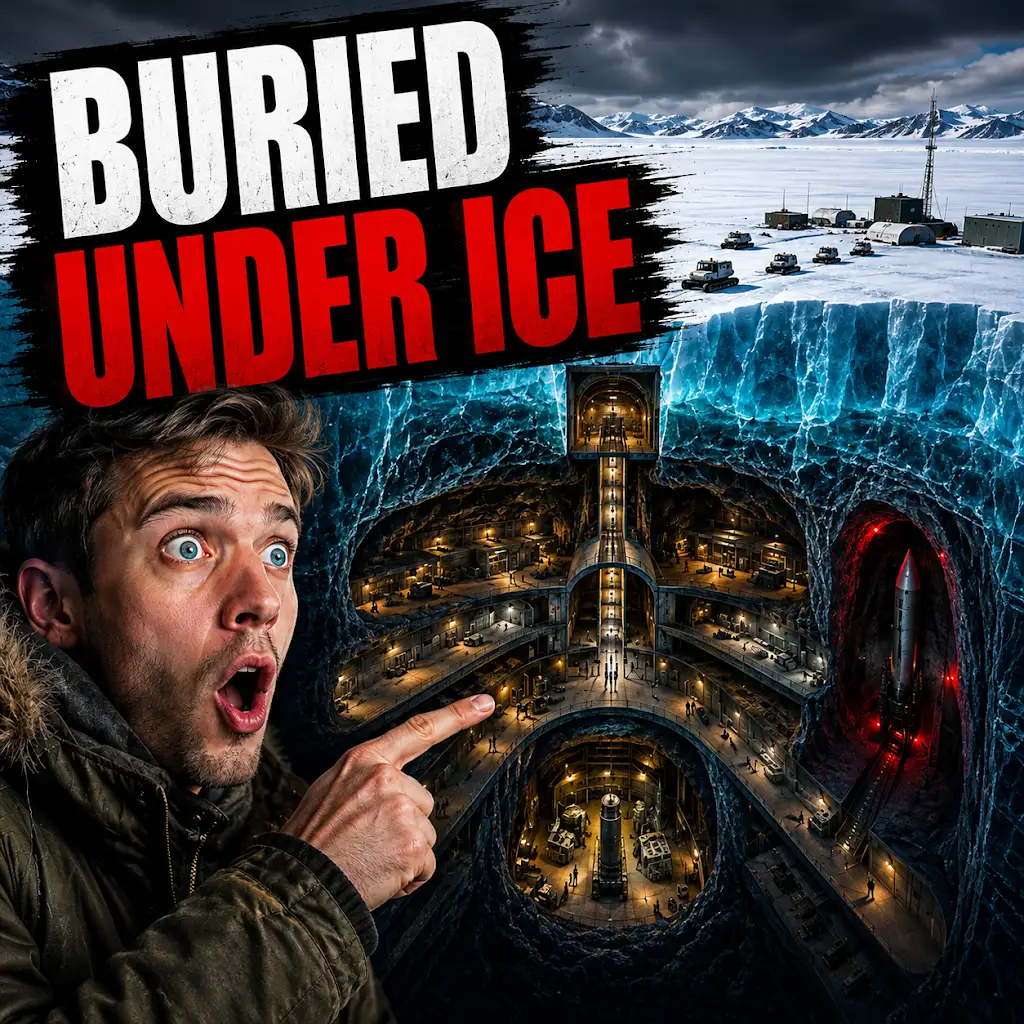
The U.S. Built a Nuclear City Under Greenland. The Ice Won.
FAQs
What is the PM-2A nuclear reactor?
The PM-2A nuclear reactor was a portable nuclear power plant developed by the United States during the Cold War. It was designed to provide electricity and heat for remote military bases and research stations.
Where was the PM-2A nuclear reactor located?
The PM-2A nuclear reactor was located at Camp Century, a United States military base in Greenland. Camp Century was established as part of Project Iceworm, a secret Cold War initiative to build a network of nuclear missile launch sites under the Greenland ice sheet.
What was the purpose of the PM-2A nuclear reactor at Camp Century?
The PM-2A nuclear reactor at Camp Century was intended to provide power and heat for the military base, as well as support the construction and operation of the underground missile launch sites being built as part of Project Iceworm.
What happened to the PM-2A nuclear reactor at Camp Century?
The PM-2A nuclear reactor at Camp Century was eventually decommissioned and removed from the site. The base itself was abandoned in 1967 due to concerns about the stability of the ice sheet and the environmental impact of the nuclear waste left behind.
What is the current status of the PM-2A nuclear reactor at Camp Century?
The current status of the PM-2A nuclear reactor at Camp Century is unknown. The site is now buried under layers of ice and snow, and the long-term environmental impact of the nuclear waste left behind is a subject of ongoing concern and study.