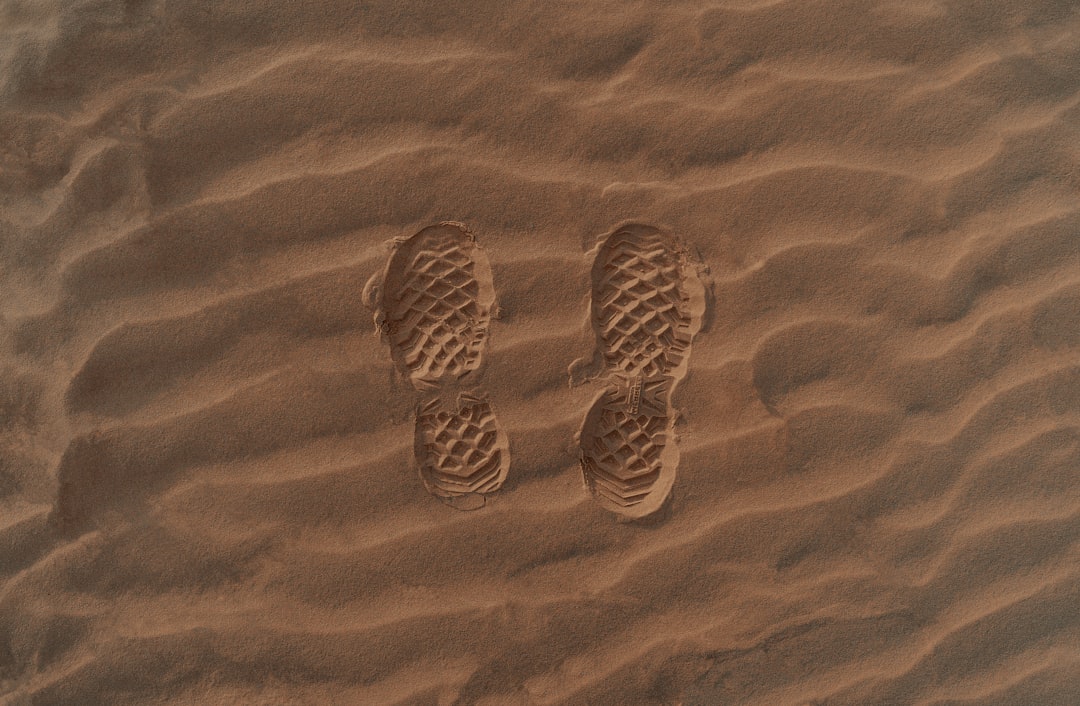
The landscape of North America’s human history has been dramatically reshaped by a remarkable discovery: the White Sands footprints, a series of ancient human footprints found in New Mexico. These imprints, dating back thousands of years before the widely accepted Clovis culture, have ignited a scientific revolution, pushing back the timeline of human presence on the continent and prompting a re-evaluation of migration theories.
The story of the White Sands footprints is one of serendipity, meticulous scientific investigation, and ultimately, a profound shift in our understanding of human antiquity in the Americas. Located within White Sands National Park, these fossilized footprints were not a deliberate archaeological excavation in the traditional sense. Instead, their discovery was a testament to both keen observation and the dynamic geological processes that can preserve such delicate evidence of the past.
A Shifting Landscape, A Glimpse into the Past
White Sands National Park is renowned for its vast expanses of gypsum sand dunes. These dunes are not static; they are constantly shaped by wind and weather, a process that reveals and conceals the underlying geological layers. It was this very dynamism that led to the initial observations that would eventually culminate in a groundbreaking discovery. For years, park rangers and visitors had occasionally spotted unusual impressions within the hardened layers of the gypsum. While some were dismissed as natural formations or animal tracks, a few individuals, possessed of a more discerning eye, recognized the distinctive patterns that suggested human activity.
Early Observations and Growing Intrigue
The initial reports of these unusual prints were met with a mix of curiosity and skepticism. The prevailing scientific consensus at the time, firmly rooted in the Clovis-first model, suggested that humans first arrived in North America around 13,000 years ago, with the distinctive Clovis projectile points serving as the primary evidence. Any suggestion of human presence predating this era was considered highly controversial. However, the persistent reports from White Sands, coupled with the growing body of evidence from other sites suggesting an earlier arrival, created an environment ripe for further investigation.
The Breakthrough: Identifying Human Origins
The true scientific breakthrough came with the dedicated work of a team of researchers, including paleontologists, geologists, and archaeologists. They meticulously documented the site, carefully analyzing the morphology of the prints. The distinct impressions of heels, toes, and even the arch of the foot were undeniable, ruling out natural formations or animal tracks. Furthermore, the presence of handprints alongside footprints in some areas provided even more compelling evidence of human activity, likely from individuals carrying young children. The sheer scale and number of these prints also suggested repeated human presence over a significant period.
Recent discoveries of pre-Clovis human footprints in North America have sparked significant interest among archaeologists and historians, shedding light on the early inhabitants of the continent. These findings suggest that humans may have arrived in North America much earlier than previously believed, challenging established theories about the peopling of the Americas. For a deeper understanding of the implications of such archaeological discoveries, you can read a related article that discusses the broader context of historical migration patterns and their impact on contemporary society. Check it out here: Understanding the USMCA Labor Value Content.
Dating the Imprints: A Scientific Detective Story
The age of the White Sands footprints is perhaps the most significant aspect of their discovery, as it directly challenges the long-held Clovis-first model. Determining this age was a complex and multifaceted process, relying on a variety of dating techniques and geological analysis.
Radiocarbon Dating: The First Clues
One of the primary methods used to date the footprints was radiocarbon dating. This technique analyzes the decay of carbon-14, a radioactive isotope present in organic materials. In this case, the organic material was found within the layers of sediment that encased the footprints. Specifically, researchers focused on seeds of Ruppia cirrhosa, an aquatic plant that was prevalent in the ancient playa lake environment where the footprints were preserved.
Seeds of Time: Ruppia cirrhosa as a Chronometer
The seeds of Ruppia cirrhosa were found in layers both above and below the footprints, providing crucial contextual information. By dating these seeds, scientists could establish a temporal range for the sediment layers. The seeds found below the footprints provided a minimum age, indicating that humans could not have been present before that time. Conversely, seeds found in layers above the footprints offered a maximum age, suggesting that the prints were formed prior to the deposition of those upper layers. The radiocarbon dates from these seeds consistently pointed to an age range of approximately 21,000 to 23,000 years before present.
Stratigraphy and Geochronology: Building a Timeline
Beyond radiocarbon dating, the geological context of the site, known as stratigraphy, played a vital role. Geologists meticulously examined the layering of the sedimentary deposits. The way the footprints were preserved within specific strata, and the types of sediment that buried them, provided further clues about the environment and the timeline of events. The gypsum sand, having hardened into rock over time, acted as a protective matrix, preserving the delicate impressions. The process of the playa lake drying out and the sand hardening was a critical factor in their preservation.
Luminescence Dating: Confirming the Age
To corroborate the radiocarbon dating results, researchers also employed luminescence dating techniques. Optically Stimulated Luminescence (OSL) dating, for instance, measures the amount of light energy absorbed by minerals in the sediment since they were last exposed to sunlight. This method is particularly useful for dating sediments that do not contain organic material, or where organic material is scarce. The OSL dating results from the White Sands site were in strong agreement with the radiocarbon dates, further bolstering the conclusion that the footprints are indeed of pre-Clovis age.
Rethinking Migration: A New Timeline for the Americas

The dating of the White Sands footprints to between 21,000 and 23,000 years ago has profound implications for our understanding of the peopling of the Americas. It pushes back the accepted timeline by several thousand years, forcing a significant re-evaluation of migration routes and the timing of human arrival.
Challenging the Clovis-First Paradigm
For decades, the Clovis-first model dominated the discourse on the initial human settlement of North America. This model posited that the first humans arrived via a land bridge that once connected Siberia and Alaska (Beringia) during the last glacial period, following the retreat of massive ice sheets that created an ice-free corridor. The distinctive fluted points found at Clovis sites, dating to around 13,000 years ago, were considered the hallmark of these earliest inhabitants. The White Sands footprints, however, directly contradict this established timeline, indicating that humans were present in North America well before the Clovis culture emerged.
The Southern Route Hypothesis Gains Traction
The existence of pre-Clovis footprints, particularly in the southern part of North America, has lent considerable weight to the “southern route” hypothesis. This theory suggests that early humans may have traveled along the Pacific coast of North America, possibly using watercraft, rather than waiting for the interior ice sheets to melt and open up a land corridor. The White Sands site, situated far from the Bering Strait land bridge, supports the idea that people were already present in the interior of the continent at a much earlier period, having likely arrived via a coastal or other less-understood migration pathway.
Implications for Genetic and Archaeological Evidence
The implications of these ancient footprints extend beyond the geological and dating evidence. They necessitate a re-examination of existing genetic and archaeological data. Researchers will need to explore how this new timeline fits with human genetic lineages found in Indigenous American populations and re-evaluate archaeological sites that may have been overlooked or misinterpreted due to the previous reliance on the Clovis-first model. The possibility of multiple migration waves into the Americas, occurring at different times and via different routes, is now a more central consideration.
The People Who Left Their Mark: Who Were They?

While the White Sands footprints provide irrefutable evidence of human presence, the identities of these ancient individuals remain a subject of ongoing inquiry. The footprints offer tantalizing clues about their lives, their environment, and their daily activities, but definitive answers about their specific origins and cultural affiliations are still being sought.
A Glimpse into Daily Life
The footprints themselves are a remarkable window into the lives of these early Americans. The sheer number and distribution of the prints suggest that this area was a frequented location. Some prints appear to be of adults walking, while others, notably smaller, are believed to be children. There are even impressions that suggest adults carrying children, perhaps indicating a family group or a community traversing the landscape. The presence of handprints alongside footprints in some instances further hints at the activities of these individuals, possibly while interacting with the environment or assisting others.
The Environment They Inhabited
The White Sands site was not always the arid desert it is today. At the time these footprints were made, the area was characterized by a series of playa lakes, shallow bodies of water that would have attracted a variety of flora and fauna. The Ruppia cirrhosa seeds found in the sediment are evidence of this ancient aquatic environment. The presence of human footprints suggests that these lakes provided a valuable resource for the inhabitants, likely a source of water, food, and a gathering place. The tracks of other animals, such as mammoths and dire wolves, have also been found in the vicinity, indicating that these early humans coexisted with a rich and diverse megafauna.
The Question of Origin and Culture
The most significant unanswered question is the precise origin and cultural affiliation of these early people. Were they part of a single, earlier migration wave that preceded the Clovis people? Or do they represent a distinct cultural group that inhabited North America for millennia before the Clovis technology became widespread? While the footprints themselves do not offer direct cultural artifacts like tools or weaponry, their existence prompts a deeper investigation into other pre-Clovis sites and the possibility that such evidence has been present but unrecognized.
Recent discoveries of pre-Clovis human footprints in North America have sparked significant interest among archaeologists and historians, as they challenge previous understandings of early human migration. These ancient footprints, found in various locations, suggest that humans may have arrived on the continent much earlier than previously thought. For those interested in exploring the implications of historical timelines and how they shape our understanding of human development, a related article discusses the future of space warfare and the potential for conflict beyond Earth, highlighting the importance of historical context in shaping our future. You can read more about it here.
The Future of Pre-Clovis Research: A New Era of Exploration
| Location | Date | Discovery |
|---|---|---|
| Mexico | 2017 | Footprints dating back to 21,000 years ago |
| White Sands, New Mexico | 2020 | Footprints dating back to 23,000 years ago |
| Oregon | 2021 | Footprints dating back to 15,000 years ago |
The discovery of the White Sands footprints has undoubtedly ushered in a new era of pre-Clovis research in North America. The questions it raises are vast, and the opportunities for future exploration are immense. Scientists are now more motivated than ever to uncover further evidence, refine dating techniques, and develop new hypotheses about the early peopling of the continent.
Continued Excavation and Exploration
The White Sands site itself will likely remain a focal point for ongoing research. Further systematic surveys and targeted excavations are anticipated, not only to discover more footprints but also to search for associated artifacts that could shed light on the culture and technology of these early inhabitants. Beyond White Sands, researchers will be re-examining existing archaeological sites with a fresh perspective, looking for evidence that may have been previously overlooked or dismissed. New sites are also likely to be discovered as the search for pre-Clovis evidence intensifies across the continent.
Advancements in Dating and Technology
The field of paleoarchaeology is constantly evolving with technological advancements. Future research will undoubtedly benefit from more sophisticated dating techniques, improved methods for analyzing ancient DNA, and enhanced geological mapping technologies. These tools will allow for more precise dating of archaeological contexts and a deeper understanding of the environmental conditions in which early humans lived. The integration of multidisciplinary approaches, combining archaeology, geology, genetics, and paleoecology, will be crucial for unraveling the complexities of early human migration.
Rewriting the Textbooks
Ultimately, the White Sands footprints are not just a scientific discovery; they are a testament to the persistent human drive to understand our origins. They remind us that the story of humanity is an ongoing narrative, constantly being revised and enriched by new evidence. The implications of these ancient imprints will undoubtedly ripple through academic disciplines, leading to revised textbooks, new research agendas, and a deeper appreciation for the long and complex journey of human history in the Americas. The footprints serve as a profound reminder that the past is not a static entity but a dynamic landscape waiting to be explored, with each discovery offering a new perspective on who we are and how we came to be.

These Footprints Could Rewrite the Story of the First Americans
FAQs
What are pre-Clovis human footprints in North America?
Pre-Clovis human footprints in North America are evidence of human presence in the continent before the Clovis culture, which is traditionally considered the earliest known culture in the Americas.
Where were the pre-Clovis human footprints found in North America?
Pre-Clovis human footprints have been found in various locations across North America, including sites in Oregon, Mexico, and other parts of the United States.
How old are the pre-Clovis human footprints in North America?
The age of pre-Clovis human footprints in North America varies, but some have been dated to be over 15,000 years old, challenging the traditional timeline of human migration into the Americas.
What do pre-Clovis human footprints tell us about early human migration in North America?
Pre-Clovis human footprints suggest that humans may have been present in North America earlier than previously thought, and they provide valuable insights into the timing and routes of early human migration into the continent.
Why are pre-Clovis human footprints important to our understanding of North American history?
Pre-Clovis human footprints are important because they challenge the traditional narrative of human migration into the Americas and force researchers to reconsider the timeline and pathways of early human settlement in North America.