
The frozen expanse of Greenland, a land of ice and stark beauty, played host to a secret and audacious plan during the height of the Cold War. Known as Project Iceworm, this ambitious undertaking by the United States was designed to conceal a formidable nuclear arsenal beneath the Greenland ice sheet, a strategic maneuver intended to outmaneuver and intimidate the Soviet Union. Far from being a simple military installation, Project Iceworm was a testament to the innovative, albeit chilling, engineering and strategic thinking that characterized the nuclear age, a bold gamble with the very fabric of nature to gain a decisive edge in the existential standoff between superpowers.
The Genesis of a Subterranean Threat
The origins of Project Iceworm lay in the desperate need for the United States to counter the growing Soviet intercontinental ballistic missile (ICBM) capabilities. By the late 1950s, the Soviets had demonstrated their ability to launch nuclear weapons capable of reaching the American mainland. This posed a significant threat, as existing American ICBMs were largely land-based and vulnerable to a first strike. The Strategic Air Command (SAC) was particularly concerned about the survivability of its retaliatory forces. The idea of hardening missile silos was explored, but the sheer number of potential targets made a truly secure system elusive.
The Quest for Invulnerability: Surviving a First Strike
The specter of a Soviet nuclear attack loomed large over American defense planners. The fear was not just of destruction but of an overwhelming first strike that could cripple the nation’s ability to retaliate. This would effectively neutralize America’s deterrent posture. The existing ICBM fields, while numerous, were considered static targets, easily identifiable by Soviet reconnaissance. The need for a mobile and undetectable launch platform was paramount. This desire for absolute invulnerability fueled the search for unconventional solutions.
Early Concepts: Mobile Launchers and Hidden Sites
Before the audacious concept of burying missiles in ice, various ideas for mobile ICBM launchers were considered. These included launching missiles from submarines and even from aircraft. However, each of these had its own limitations. Submarine-launched missiles, while mobile, were still detectable, and the technology for a truly stealthy submarine fleet was still nascent. Aircraft could be vulnerable to anti-aircraft defenses and could not offer the same continuous launch capability. The need for a permanent, yet undetectable, basing strategy remained.
Project Iceworm was an ambitious Cold War initiative aimed at establishing a network of nuclear missile bases beneath the Greenland ice sheet. The project sought to leverage the vast, stable ice as a cover for military operations, allowing for strategic positioning against potential threats. For a deeper understanding of how such covert operations were influenced by historical cartography and the secrets of the past, you can explore a related article that delves into these themes at Uncovering Ancient Cartography: Forbidden Knowledge. This article provides insights into the intersection of geography, military strategy, and the hidden knowledge that has shaped our understanding of the world.
The Ingenious, Yet Flawed, Ice-Based Strategy
The notion of utilizing the vast, seemingly immutable ice sheet of Greenland as a hiding place for nuclear missiles was both ingenious and, in hindsight, fraught with peril. The logic was compelling: a vast, frozen wasteland offered a natural camouflage, making it incredibly difficult for Soviet intelligence to pinpoint the location of missile launch sites. The immense thickness of the ice also provided a substantial shield against conventional attacks and even, it was theorized, against the blast effects of nuclear detonations.
Operation Iceworm: The Covert Undertaking
The project was officially designated “Operation Iceworm,” though the construction phase itself would later become known as “Camp Century.” The rationale was simple: to deploy a significant number of medium-range ballistic missiles (MRBMs) capable of reaching targets in the Soviet Union. The idea was to create a distributed network of launch sites, making a comprehensive Soviet strike virtually impossible. The inherent mobility of the missiles, once deployed, was also a key advantage, allowing for rapid repositioning within the ice.
The Scale of Ambition: A City Beneath the Ice
The scale of Project Iceworm was staggering. It envisioned the creation of a subterranean city carved into the ice sheet, complete with living quarters, power generation, and, crucially, a network of tunnels housing hundreds of nuclear missiles. The plan was to construct these facilities using prefabricated sections, which would be transported to Greenland and then assembled beneath the surface of the ice. This would create a protected, operational base that was virtually invisible from the outside.
Camp Century: A Glimpse into the Subterranean Future
The realization of Project Iceworm’s vision manifested in the construction of Camp Century, a remarkable feat of engineering that, for a time, operated as a functional military base. Located in northwestern Greenland, the camp was designed to be a self-sufficient community, housing over 200 personnel. The construction involved digging a vast network of tunnels into the ice, supported by prefabricated steel arches. These tunnels served multiple purposes, from housing barracks and research facilities to housing the missile launch silos.
The Technology of Ice Construction: Prefabrication and Tunneling
The construction of Camp Century relied heavily on prefabrication. Large sections of the base were manufactured in the United States and then shipped to Greenland. Once on-site, these sections were assembled and lowered into trenches dug into the ice. The tunnels were then covered and insulated, creating a stable, albeit icy, environment. This innovative approach allowed for relatively rapid construction despite the harsh Arctic conditions. The creation of a stable environment within the ice was a significant engineering challenge, requiring careful consideration of temperature regulation and structural integrity.
Life in the Ice: Challenges and Daily Routines
Life at Camp Century was unlike any other military posting. The personnel lived in a world of perpetual twilight, illuminated by artificial lights. The constant hum of generators and ventilation systems was a familiar soundtrack. Despite the isolation and the unique environment, a sense of community developed. Personnel engaged in various activities, from scientific research to maintaining the base’s operational readiness. The psychological impact of living beneath miles of ice, however, was undoubtedly a factor, contributing to a sense of isolation and detachment from the outside world.
The Missile Depots: The Heart of the Iceworm Operation
The most critical component of Camp Century, in the context of Project Iceworm, were the missile depots. These were the specially designed tunnels that would house the ICBMs. The intention was for these missiles to be ready for immediate launch. The subterranean nature of these depots was intended to provide a significant advantage in terms of survivability. The sheer mass of ice above would offer protection against conventional attacks and potentially even some effects of nuclear detonations.
The Unforeseen Consequences: The Ice is Not Static
While the initial concept of burying missiles in Greenland’s ice sheet appeared sound, the inherent dynamism of the ice itself proved to be the project’s undoing. The Greenland ice sheet is not a static mass but a constantly moving and shifting entity. The immense weight of the ice exerts pressure, causing it to flow slowly towards the sea. This natural process, overlooked or underestimated by the project planners, created insurmountable challenges for maintaining the integrity of the underground facilities.
Glacial Flow: The Slow But Relentless Movement
The slow, inexorable flow of glacial ice meant that the carefully constructed tunnels and missile silos were not as stable as initially believed. Over time, the ice would exert pressure on the structures, causing them to deform and buckle. This movement also meant that the missile launch platforms were gradually being shifted, making accurate targeting increasingly difficult. The very medium intended to provide security was actively working against the project’s objectives.
Ice Creep and Deformation: The Structural Nightmare
The phenomenon of “ice creep” – the slow deformation of ice under sustained pressure – posed a significant structural challenge. The prefabricated arches and tunnels, designed to withstand static loads, were not equipped to handle the dynamic stresses imposed by the moving ice. This led to a constant need for maintenance and repair, a logistical nightmare in such a remote and inhospitable environment. The cost and effort required to counteract the ice’s natural movement were proving unsustainable.
The Threat of Collapse: A Subterranean Avalanche
As the ice continued to shift and deform, the risk of structural collapse within Camp Century grew. The tunnels could buckle, the missile silos could become misaligned, and the entire base could be compromised. The prospect of a catastrophic collapse, burying the missiles and personnel under tons of ice, was a chilling reminder of the project’s inherent fragility. This posed not only a strategic risk but also a direct threat to human life.
Project Iceworm was an ambitious Cold War initiative aimed at establishing a network of nuclear missile sites beneath the Greenland ice sheet, allowing for strategic military advantages while remaining hidden from enemy detection. The project’s intricate design involved tunneling through ice and maintaining a stable environment for the equipment and personnel stationed there. For a deeper understanding of how technological advancements can shape military strategies and their broader implications, you might find it interesting to read about the rise of artificial intelligence and its potential impact on society in this article on societal collapse. You can explore it further here.
The Unraveling of Project Iceworm: A Strategic Retreat
By the mid-1960s, the insurmountable challenges posed by the dynamic nature of the ice sheet, coupled with the enormous and ever-increasing costs of maintenance, led to the eventual abandonment of Project Iceworm. The strategic advantage it was designed to provide was proving elusive, and the risks associated with its continued operation were becoming too great. The dream of a secure, subterranean missile base was melting away, much like the ice itself.
The Shifting Landscape: Recalibrating Strategic Needs
The strategic landscape of the Cold War was also evolving. The development of more advanced missile technology, including submarine-launched ballistic missiles (SLBMs) with greater range and stealth capabilities, began to offer alternative solutions for ensuring retaliatory capacity. The perceived need for a highly specialized and vulnerable ice-based system diminished as other, more proven, deterrence strategies emerged.
The Costs of Maintenance: An Economic Drain
The constant battle against the shifting ice proved to be an economic drain on the U.S. military. The ongoing need for repairs, reinforcement, and general upkeep of the Camp Century facilities was far exceeding initial projections. The resources being poured into Project Iceworm could have been better allocated to other defense initiatives. The economic unsustainability of the project became a significant factor in its eventual demise.
The Decommissioning and the Legacy of Iceworm
In 1966, Project Iceworm was officially terminated. The decision was made to abandon Camp Century, leaving behind a chilling legacy in the Greenland ice. The abandoned facility, with its buried infrastructure, continues to pose an environmental concern as the ice sheet melts, potentially releasing hazardous materials. The story of Project Iceworm serves as a stark reminder of the extreme measures considered during the Cold War and the unpredictable forces of nature that can undermine even the most ambitious human endeavors. It is a tale of technological hubris, strategic foresight, and the ultimate triumph of natural processes over man-made designs in the frozen heart of Greenland.
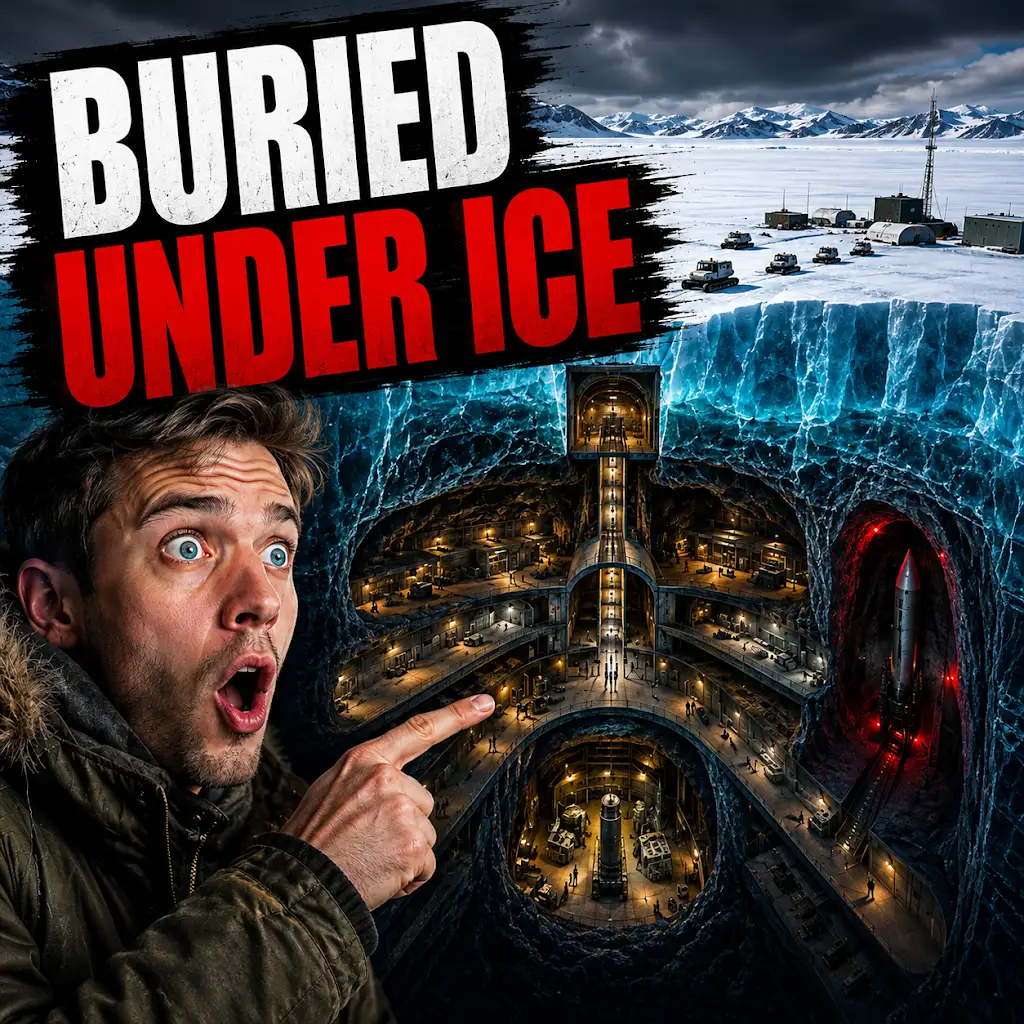
The U.S. Built a Nuclear City Under Greenland. The Ice Won.
FAQs
What was Project Iceworm?
Project Iceworm was a top-secret United States Army program during the Cold War to build a network of mobile nuclear missile launch sites under the Greenland ice sheet.
How was Project Iceworm supposed to work?
The plan was to use a series of tunnels and chambers to house and launch medium-range ballistic missiles, with the ice sheet providing natural cover and protection from Soviet detection.
Why was Project Iceworm abandoned?
The project was abandoned in 1967 due to technical difficulties and the unstable nature of the ice sheet, which was constantly shifting and causing structural issues with the tunnels and chambers.
What were the environmental concerns surrounding Project Iceworm?
The project raised concerns about the potential environmental impact of storing nuclear weapons and radioactive materials under the ice sheet, as well as the risk of contamination if the ice were to melt.
What is the legacy of Project Iceworm?
While the project itself was never completed, it left behind a legacy of environmental and geopolitical concerns, as well as a reminder of the ambitious and secretive nature of Cold War military initiatives.