
Project Iceworm stands as a stark reminder of the Cold War’s pervasive paranoia and the audacious lengths to which nations would go to gain a strategic advantage. This clandestine American operation, conceived in the late 1950s, aimed to harness the frozen depths of Greenland for a formidable military installation. Far from a mere base, it was envisioned as a subterranean city, capable of housing thousands of soldiers and a vast arsenal of nuclear missiles, all concealed beneath the immense ice sheet. The project’s ambition was as colossal as its chosen location, and its eventual failure, shrouded in secrecy, offers a chilling glimpse into the anxieties of a bipolar world.
The Cold War was characterized by a constant, escalating arms race and a deep-seated fear of nuclear annihilation. The United States, acutely aware of the Soviet Union’s growing missile capabilities, sought innovative ways to enhance its retaliatory strike capacity. Traditional airbases and land-based missile silos were considered vulnerable to a first strike. The idea of hiding nuclear missiles within the seemingly impregnable ice sheet of Greenland emerged as a potentially game-changing solution.
The Need for a Strategic Foothold
The Rationale Behind Concealment
The primary objective of Project Iceworm was to create a mobile, hidden launch platform for intercontinental ballistic missiles (ICBMs). The vastness and seemingly inhospitable nature of the Greenland ice sheet made it an ideal location for such a venture. The immense thickness of the ice would provide natural shielding against enemy detection and, more crucially, against the devastating effects of a nuclear blast. This would allow the United States to maintain a significant retaliatory force, capable of surviving a Soviet first strike and delivering a devastating counter-blow. The psychological impact of such a hidden arsenal was also a significant factor; the mere knowledge of its existence, even if its precise location remained unknown, could serve as a powerful deterrent.
Early Explorations and Technological Challenges
Before committing to such an audacious undertaking, preliminary geological and glaciological surveys of Greenland were essential. Scientists and engineers needed to assess the stability of the ice, its depth, and the underlying bedrock. This involved groundbreaking research into glacial mechanics and the development of specialized equipment capable of drilling and operating in extreme sub-zero temperatures. The sheer scale of the endeavor presented immense logistical hurdles, from transporting materials and personnel to maintaining vital infrastructure in a remote and unforgiving environment.
Project Iceworm, a covert operation during the Cold War, aimed to establish a network of nuclear missile bases beneath the Greenland ice sheet, highlighting the lengths to which nations would go in the name of national security. This secretive project is often discussed in the context of other historical conspiracies and technological advancements. For those interested in exploring the intersection of ancient technologies and modern secrets, a related article titled “Uncovering Lost Ancient Metallurgy Techniques” provides fascinating insights into how past innovations can inform contemporary scientific endeavors. You can read more about it here: Uncovering Lost Ancient Metallurgy Techniques.
Unveiling the “City Under the Ice”
The plan for Project Iceworm, codenamed “Absolute Zero” in its early stages, was to create a network of tunnels and chambers excavated deep within the ice. This would not be a temporary outpost but a self-sufficient, underground city, complete with living quarters, power generation, and, most importantly, launch facilities for up to 600 Minuteman ICBMs. The sheer audacity of constructing such a massive facility in such an extreme environment is a testament to the era’s technological ambitions and the pervasive sense of urgency.
The Architectural Vision
The envisioned facility was a marvel of engineering for its time. It proposed a vast network of interconnected tunnels, carved out of the solid ice. These tunnels would house barracks for thousands of soldiers, mess halls, recreational facilities, and extensive storage areas for supplies and equipment. The heart of the complex would be a series of hardened launch silos, from which the ICBMs could be rapidly deployed. The construction would rely heavily on prefabricated modules, designed to be assembled underground, minimizing the need for on-site construction in the harsh glacial environment. The sheer scale was staggering, envisioning an underground city capable of sustaining a permanent military presence for years.
The “Mobile” Missile Concept
A key innovation proposed for Project Iceworm was the concept of “mobile” missile launch sites. The idea was that the entire facility, or at least significant sections of it, could be slowly moved across the ice sheet. This movement, dictated by the slow creep of the glacier, was intended to further complicate Soviet targeting efforts. The base would essentially be a moving target, making it exceptionally difficult to pin down and attack. This concept, while technologically complex and potentially fraught with peril, represented a novel approach to nuclear deterrence, seeking to achieve an unprecedented level of survivability.
The Greenland Ice Sheet: A Strategic Canvas
Greenland, the world’s largest island, with its vast and largely uninhabited ice sheet, presented a unique strategic opportunity. Its remote location and immense glacial cover offered the promise of an ideal hiding place for a significant nuclear deterrent. However, the very nature of this frozen landscape also posed formidable challenges that would ultimately contribute to the project’s downfall.
Geological and Glaciological Considerations
The stability of the ice sheet was a primary concern. Scientists had to understand its movement, the potential for crevasses and glacial surges, and the impact of temperature fluctuations. The immense pressure exerted by the ice also posed a significant engineering challenge for the subterranean structures. The sub-surface ice was not a static medium; it was a dynamic, flowing entity, and predicting its long-term behavior was a complex undertaking. Early surveys revealed layers of ice of varying densities and compositions, each with its own unique properties and potential risks.
The Environmental Realities
The extreme cold, high winds, and limited daylight hours presented a harsh operational environment. Supplying and maintaining a large underground facility in such conditions would require an immense logistical effort. The potential environmental impact of such a large-scale excavation and operation also began to emerge as a nascent concern, though in the fervor of the Cold War, such considerations often took a backseat to perceived strategic imperatives. The melting of the ice, a slow but inevitable process, was also a factor that engineers had to consider for the long-term viability of the installation.
The Unforeseen Obstacles and Eventual Demise
Despite the ambitious planning and significant initial progress, Project Iceworm was ultimately doomed to failure. The inherent instability of the ice, coupled with a lack of full transparency regarding the project’s true nature, led to its eventual abandonment. The secrecy surrounding the operation meant that many of the severe geological challenges were underestimated or not fully disclosed to the public and even some involved parties.
The Shifting Ice: A Constant Threat
The most significant challenge was the unpredictable nature of the ice sheet. As the ice flowed and shifted, it exerted immense pressure on the underground structures. Tunnels began to buckle, and chambers distorted. The “mobile” concept, intended to be a strategic advantage, became a critical vulnerability. The ice’s movement was far more dynamic and less predictable than initially modeled, making it impossible to maintain the integrity of the buried facilities. The sheer forces of glacial flow were an adversary that concrete and steel, no matter how robust, could not indefinitely withstand.
The Political and Public Relations Fallout
The true nature of Project Iceworm was carefully concealed from the Danish government, which administered Greenland, and from the general public. The initial cover story was that the facility was purely for scientific research. However, as tunneling progressed, the sheer scale and the nature of the construction became increasingly apparent, leading to growing suspicion and ultimately demands for full disclosure. The eventual revelation of the project’s military intent, particularly its nuclear missile component, caused significant political fallout and a diplomatic crisis. The lack of transparency eroded trust and highlighted the ethical dilemmas associated with such clandestine military operations.
Project Iceworm, a covert operation during the Cold War, aimed to establish a network of nuclear missile bases beneath the Greenland ice sheet. This ambitious project was shrouded in secrecy and has since sparked numerous conspiracy theories regarding its true purpose and implications. For those interested in exploring the intersection of historical maps and conspiracy theories, a fascinating article discusses the Piri Reis map and its scientific analysis, shedding light on how such artifacts can influence our understanding of past events. You can read more about it in this related article.
Legacy of a Cold War Conspiracy
| Project Iceworm Metrics | Details |
|---|---|
| Project Name | Project Iceworm |
| Location | Greenland |
| Purpose | Establishing a network of mobile nuclear missile launch sites |
| Duration | 1959 – 1967 |
| Conspiracy | Secretly building a network of tunnels and missile launch sites under the Greenland ice sheet |
| Abandonment | Project was abandoned due to unstable ice and logistical challenges |
Project Iceworm, though never fully realized, left an indelible mark on the history of the Cold War. It stands as a potent symbol of the era’s paranoia, the technological hubris of the time, and the complex geopolitical landscape that shaped global affairs. The project’s story serves as a cautionary tale about the potential dangers of unchecked military ambition and the importance of transparency in international relations.
The Ghost of a Subterranean City
The remnants of Project Iceworm lie buried beneath the Greenland ice. While the tunnels and facilities have largely collapsed and been consumed by the ice, the story itself persists as a chilling reminder of what might have been. The abandoned infrastructure, a frozen monument to a bygone era of extreme tension, continues to intrigue and fascinate, drawing the attention of historians and conspiracy theorists alike. The physical remnants, though buried, serve as a tangible link to the abstract fears and ambitions of the Cold War.
Lessons for the Future
The failures of Project Iceworm offer valuable lessons about the limitations of technological solutions in the face of natural forces and the critical importance of ethical considerations in military planning. The project underscores the need for careful, realistic assessments of environmental conditions and the potential consequences of large-scale endeavors. Furthermore, the diplomatic repercussions highlight the necessity of open communication and respect for international sovereignty, even in times of perceived existential threat. The dream of a hidden, invulnerable nuclear arsenal buried beneath the ice ultimately proved to be a mirage, a testament to the unforgiving realities of both nature and international politics.
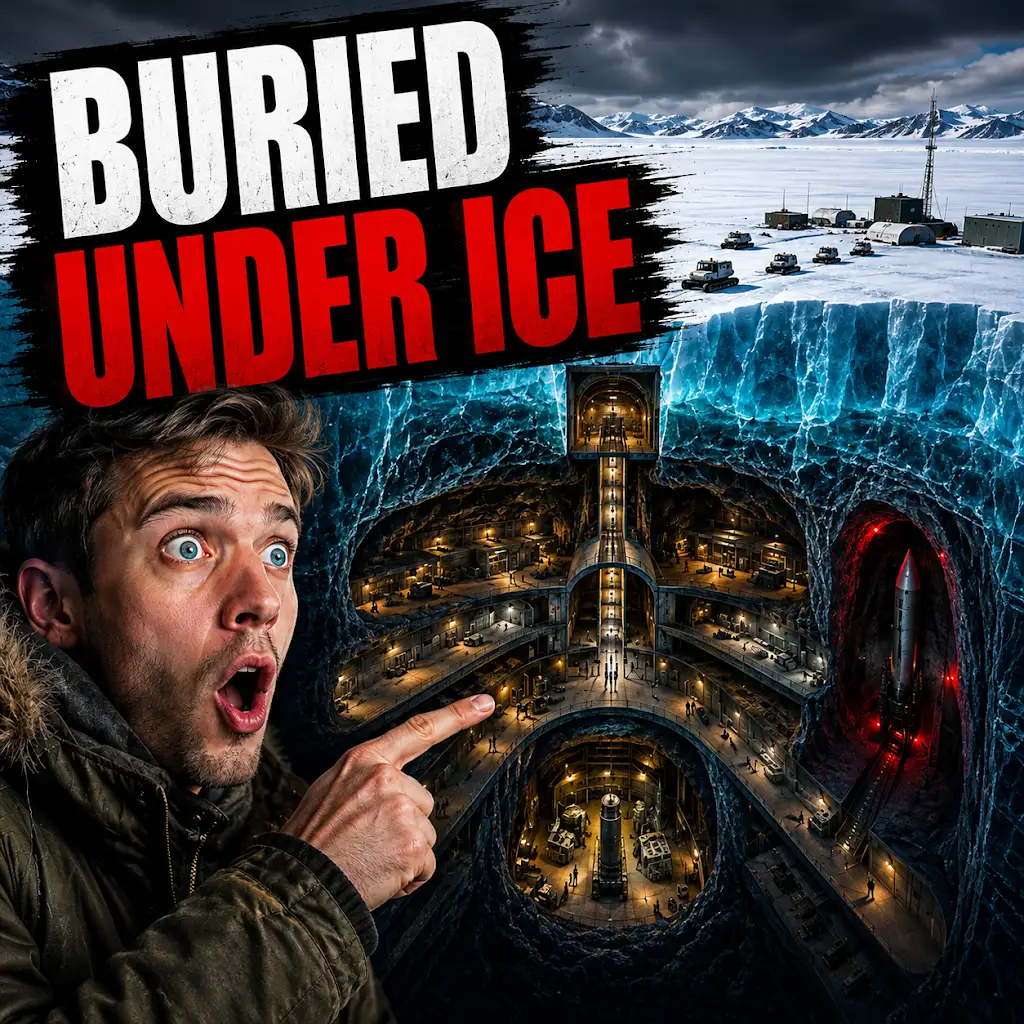
The U.S. Built a Nuclear City Under Greenland. The Ice Won.
FAQs
What was Project Iceworm?
Project Iceworm was a top-secret United States Army program during the Cold War to build a network of mobile nuclear missile launch sites under the Greenland ice sheet. The project was aimed at countering the Soviet Union’s growing nuclear capabilities.
When did Project Iceworm take place?
Project Iceworm was initiated in 1959 and continued until 1967. It was part of the larger military strategy of deterrence during the Cold War, with the goal of maintaining a strategic advantage over the Soviet Union.
Why was Project Iceworm kept secret?
Project Iceworm was kept secret due to the sensitive nature of its objectives. The United States did not want the Soviet Union to discover the existence of the missile launch sites, as it could have escalated tensions and potentially led to a nuclear conflict.
What happened to Project Iceworm?
Project Iceworm was ultimately abandoned in 1967 due to technical and logistical challenges. The constant movement of the ice sheet made it difficult to maintain the stability of the underground tunnels and missile launch sites. The project was declassified in the 1990s.
What is the legacy of Project Iceworm?
The legacy of Project Iceworm is a reminder of the intense competition and secrecy of the Cold War era. It also serves as a cautionary tale about the environmental and logistical challenges of attempting large-scale military operations in remote and harsh environments.