Project Iceworm: The Secret Cold War Mission in Greenland
The Whispers of a Hidden Base
In the heart of Greenland’s vast, ice-covered interior, a secret was buried deeper than any glacier. During the height of the Cold War, amidst the pervasive fear of nuclear annihilation and the relentless race for military supremacy, the United States embarked on a clandestine operation of audacious ambition: Project Iceworm. This was no mere scientific endeavor; it was a daring military proposal to construct a vast network of underground missile silos, capable of launching nuclear warheads deep within enemy territory, all under the guise of a scientific research station. The sheer scale and audacity of this project, hidden beneath miles of pristine ice, speaks volumes about the extreme measures considered and the paranoia that gripped the world during this tense geopolitical era. The story of Project Iceworm is a chilling testament to the lengths nations would go to achieve strategic advantage, a narrative of ingenuity, secrecy, and ultimately, a triumph of nature over human ambition.
The true story of Project Iceworm in Greenland reveals the intricate and often secretive nature of Cold War military operations, highlighting the lengths to which nations would go to secure strategic advantages. For those interested in exploring more about the geological and geomorphological aspects that may have influenced such projects, a related article can be found at Unraveling the Mysteries of Geomorphology, which delves into the fascinating interplay between the Earth’s physical features and human endeavors.
Genesis of a Strategic Nightmare
The genesis of Project Iceworm can be traced back to the late 1950s, a period marked by escalating tensions between the United States and the Soviet Union. The development of intercontinental ballistic missiles (ICBMs) was revolutionizing warfare, and both superpowers were locked in a desperate struggle to gain a strategic advantage. The United States, facing the challenge of Soviet ICBM capabilities, sought a way to deploy its own nuclear arsenal in a manner that would be both survivable and deliverable.
The Missile Gap and the Search for Security
The perceived “missile gap,” a fear that the Soviet Union possessed a superior number of long-range missiles, fueled a sense of urgency within the American military and political establishment. This anxiety, whether entirely justified or amplified by propaganda, drove the search for innovative and secure deployment methods. Traditional land-based missile silos were vulnerable to pre-emptive strikes, and submarine-launched missiles, while mobile, had their own limitations in terms of immediate readiness and targeting. The idea of a hidden, hardened, and mobile missile base within an seemingly impregnable natural fortress began to take shape.
The Appeal of Greenland’s Ice Sheet
Greenland, with its immense and seemingly unyielding ice sheet, presented an almost irresistible proposition. The sheer thickness of the ice offered natural protection against Soviet surveillance and potential attack. Furthermore, its geographical location, situated between the superpowers, made it an ideal launching point for missiles aimed at key Soviet targets. The concept was simple, yet profoundly complex: carve out a vast network of tunnels and chambers within the ice, house a significant number of ICBMs, and maintain the base as a constant, albeit hidden, threat. This vision of an “impenetrable” fortress offered the promise of strategic deterrence and a significant edge in the nuclear arms race.
Camp Century: The Trojan Horse
The realization of Project Iceworm’s ambitions materialized in the form of Camp Century, a highly secretive and ultimately deceptive military installation constructed on the Greenland ice sheet between 1959 and 1960. Ostensibly presented to the world as a scientific research station, its true purpose was far more sinister. Camp Century was designed to be a proving ground, a tangible demonstration of the feasibility of constructing and operating a permanent military base within the ice.
The Art of Deception: A Scientific Facade
The United States government, under President Eisenhower, actively promoted Camp Century as a center for scientific inquiry, focusing on Arctic research, glaciology, and the study of the ice sheet’s impact on climate. This carefully crafted narrative served to mask the true military intent of the project. International observers and the media were given limited access, and the information released was heavily curated to reinforce the scientific facade. This deception was crucial to avoiding international condemnation and potential Soviet retaliation, as the deployment of nuclear missiles so close to Soviet airspace would have been a significant provocation.
Engineering Under Pressure: Building in the Permafrost
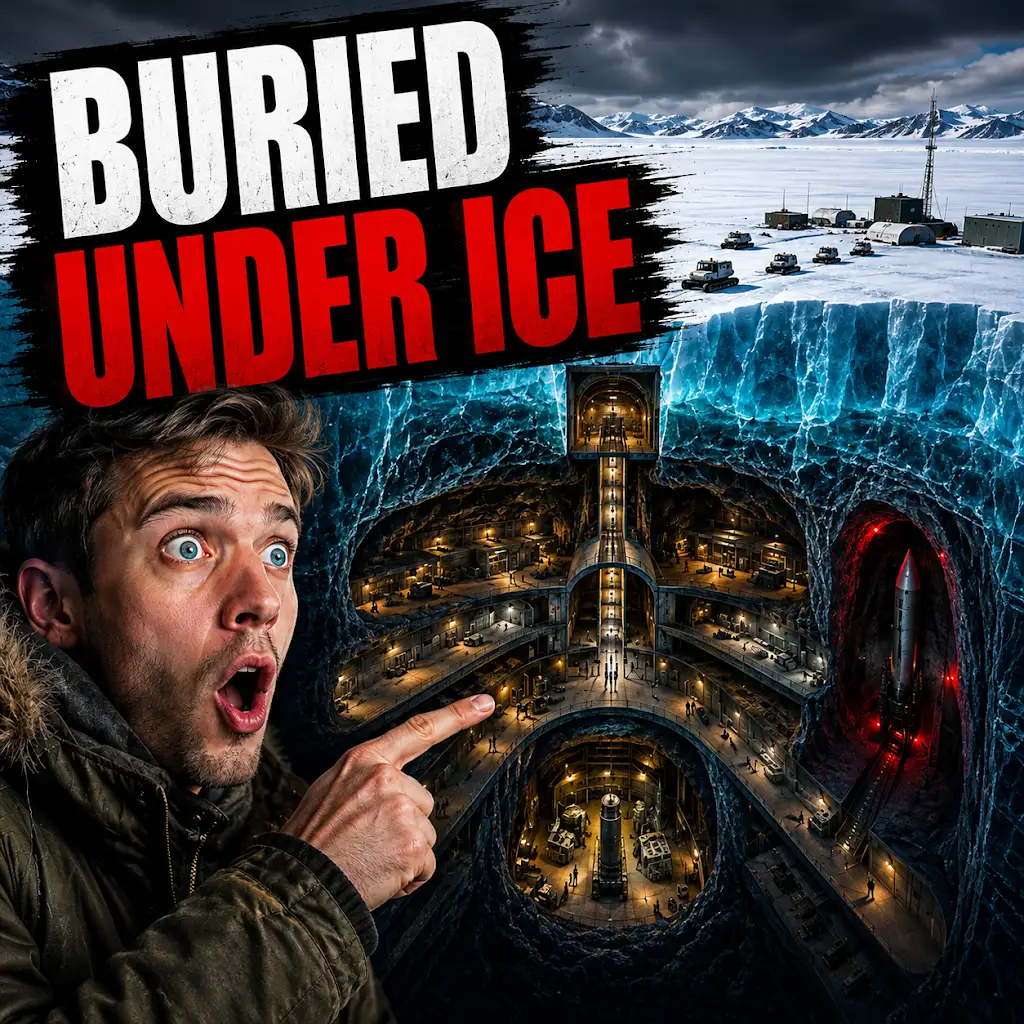
Constructing a habitable and functional base within a constantly moving and incredibly cold environment presented unprecedented engineering challenges. The camp was built by excavating trenches in the ice and then covering them with prefabricated modules, effectively creating an artificial “city” beneath the surface. The modules were interconnected by a network of tunnels, housing living quarters, laboratories, power generation facilities, and, crucially, the infrastructure for missile deployment. The constant threat of the ice shifting and encroaching required continuous maintenance and adaptation, a testament to the ingenuity of the engineers and construction crews involved. The sheer effort to carve and maintain this subterranean world speaks to the immense resources and determination poured into Project Iceworm.
The Nuclear Ambitions of Project Iceworm
Beneath the veneer of scientific research, the core purpose of Camp Century and Project Iceworm was the deployment and potential use of nuclear missiles. The strategic advantage sought was immense, aiming to fundamentally alter the balance of power during the Cold War.
The “Agreed” Missile Deployment Plan
The initial plan for Project Iceworm involved the construction of a network of approximately 600 miles of tunnels within the ice sheet. These tunnels were intended to house hundreds of intercontinental ballistic missiles, specifically the Jupiter and later the Minuteman missiles. The “Agreed” Missile Deployment Plan, as it was internally known, envisioned a mobile missile system within the ice tunnels. The idea was that the missiles would be transported on rail cars, making them difficult to locate and target. This mobile aspect was crucial to the survivability of the base.
Strategic Deterrence and First Strike Capabilities
The primary objective of Project Iceworm was to enhance American strategic deterrence. By having a large number of nuclear missiles hidden in an seemingly invulnerable location, the United States could project an image of overwhelming retaliatory capability. This, in theory, would dissuade the Soviet Union from launching a first strike. However, the potential for a first strike capability also existed. The proximity of Greenland to Soviet targets meant that missiles could be launched with a significantly reduced flight time, potentially catching the Soviets off guard. This dual aspect of deterrence and potential offensive capability highlights the complex and dangerous strategic calculus of the Cold War.
The Shadow of Uncertainty: Technical and Political Hurdles
Despite the ambitious plans, Project Iceworm faced significant technical and political hurdles. The sheer scale of the excavation required was immense, and the constant movement of the ice presented ongoing engineering challenges. Furthermore, the political implications of openly deploying nuclear missiles in Greenland were also a concern. While the scientific facade helped to mask the true intentions, the potential for international backlash and escalation remained a constant threat. The project was also subject to review and reassessment as missile technology and strategic doctrines evolved. The inherent difficulties and the ever-changing landscape of the Cold War eventually began to cast a shadow of uncertainty over the long-term viability of Project Iceworm.
The true story of Project Iceworm in Greenland reveals the complexities of Cold War-era military operations and the lengths to which the United States went to secure strategic advantages. This clandestine initiative aimed to establish a network of nuclear missile bases beneath the Greenland ice sheet, highlighting the intersection of environmental challenges and geopolitical ambitions. For a broader perspective on how international relations can influence infrastructure and investment, you might find the article on China’s investment in Mexican factories particularly insightful.
The Unseen Enemy: The Shifting Ice
The most formidable adversary of Project Iceworm was not the Soviet Union, but the very element that made the location so attractive: the Greenland ice sheet itself. The seemingly stable mass of ice was, in reality, a dynamic and constantly shifting entity, a relentless force that would ultimately prove to be the undoing of the ambitious military endeavor.
The Slow but Inexorable Advance of the Glacier
The Greenland ice sheet is not a static block of ice. It is a glacier, a slow-moving river of ice that constantly flows towards the sea. This glacial movement, measured in feet per year, meant that the tunnels and structures of Camp Century were perpetually under threat. The ice would exert immense pressure, crushing and distorting the prefabricated modules and the meticulously dug tunnels. The very foundation of the base was in constant flux, requiring continuous and labor-intensive efforts to maintain its integrity.
The Unforeseen Consequences: Melting and Contamination Risks
As the base was built and maintained, a new and unexpected threat emerged: the melting of the ice. The heat generated by the camp’s operations, including its power plant and the presence of large machinery, began to cause localized melting. This melting not only destabilized the ice structure but also created the risk of melting the waste and potentially hazardous materials stored within the base. The prospect of radioactive contamination seeping into the pristine Arctic environment became a growing concern. This unintended environmental consequence served as a stark reminder of the delicate balance of the Arctic ecosystem and the potential for human endeavors to have unforeseen and detrimental impacts.
The Downfall of the Icey Fortress
By the late 1960s, the dream of an impenetrable underground missile base in Greenland began to crumble. The relentless forces of nature, combined with growing technical challenges and shifting strategic priorities, rendered Project Iceworm untenable.
The Decision to Withdraw: Nature’s Victory
In 1966, the United States government officially abandoned Project Iceworm. The decision was a clear acknowledgment of the insurmountable challenges posed by the dynamic nature of the ice sheet. The cost of maintaining and repairing the constantly shifting structures became prohibitive, and the risks of environmental contamination grew increasingly alarming. Nature, in its slow and inexorable way, had proven to be a more formidable opponent than any human enemy. The project, once hailed as a symbol of American ingenuity and strategic foresight, became a testament to the limits of human ambition in the face of natural forces.
The Lingering Legacy: A Ghost in the Ice
Although Project Iceworm was decommissioned, its legacy continues to haunt the Greenland ice sheet. The abandoned camp, now buried under more ice and snow, remains a potentially hazardous relic of the Cold War. The structures, along with any remaining equipment and waste, lie frozen in time, a silent reminder of the secrecy and ambition that once characterized the site. Environmental scientists and researchers continue to monitor the area, concerned about the potential for future melting to release hazardous materials into the environment. The ghost of Project Iceworm serves as a cautionary tale, a reminder of the long-lasting consequences of Cold War military endeavors and the profound impact of human actions on fragile ecosystems. The frozen remnants of Camp Century stand as a stark reminder that even the most ambitious secrets can be ultimately surrendered to the patient power of the earth.
The U.S. Built a Nuclear City Under Greenland. The Ice Won.
FAQs
What was Project Iceworm in Greenland?
Project Iceworm was a secret United States Army program during the Cold War to build a network of mobile nuclear missile launch sites under the Greenland ice sheet. It was intended to provide a strategic nuclear deterrent against the Soviet Union.
When did Project Iceworm take place?
Project Iceworm was initiated in 1959 and continued until 1967. It was eventually abandoned due to technical difficulties and concerns about the stability of the ice sheet.
What were the environmental impacts of Project Iceworm?
The construction and operation of Project Iceworm resulted in the release of various pollutants into the environment, including diesel fuel, waste, and radioactive coolant. These pollutants have had long-lasting impacts on the local environment and wildlife.
What is the current status of Project Iceworm’s infrastructure?
The infrastructure built for Project Iceworm, including tunnels, buildings, and equipment, has been abandoned and left to decay. The Greenland ice sheet has also shifted and melted over time, further complicating the status of the remaining structures.
What are the geopolitical implications of Project Iceworm?
Project Iceworm has raised concerns about the potential for environmental contamination and the long-term impact of military activities in the Arctic region. It also serves as a reminder of the Cold War era and the strategic competition between the United States and the Soviet Union.