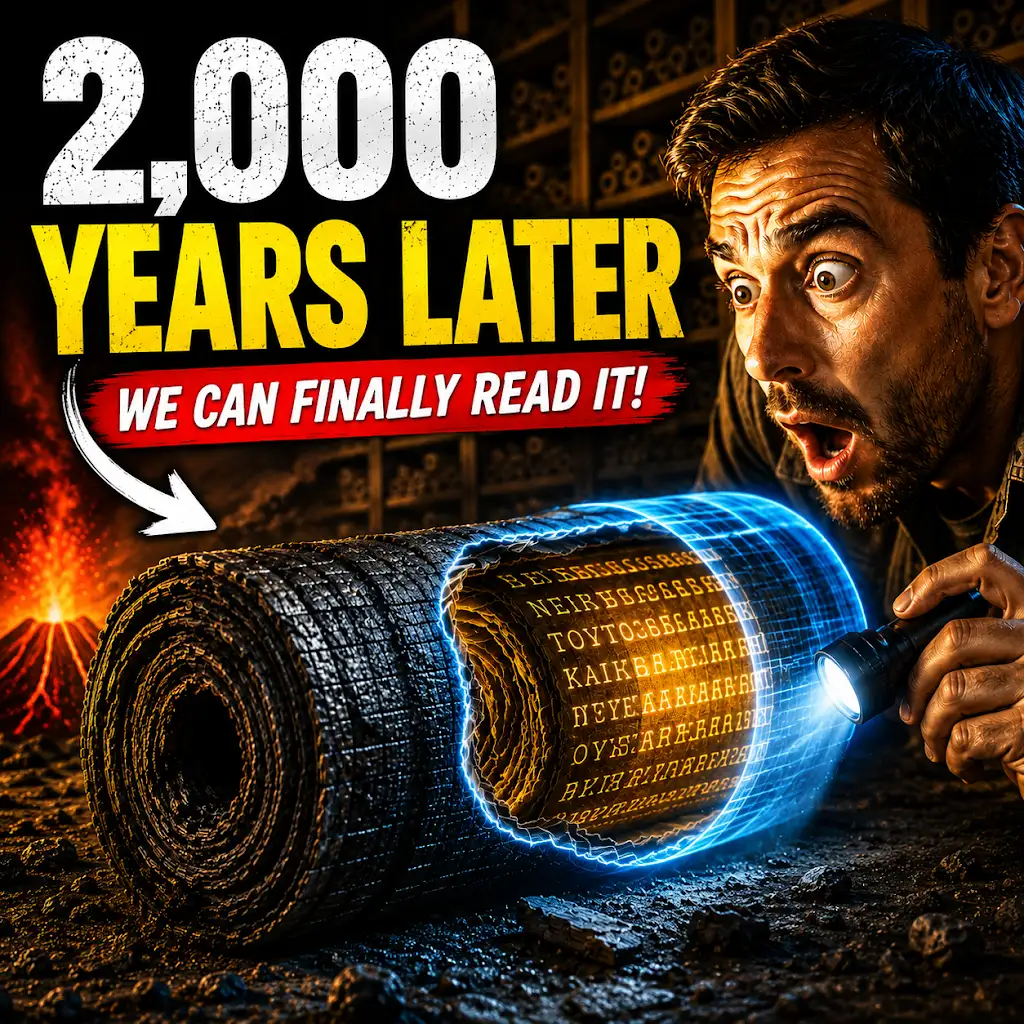
The whisper of ancient papyrus, the scent of aged parchment – these are the sensory anchors that have long defined the experience of engaging with the past. For millennia, the act of reading ancient scrolls has been inextricably linked to the physical opening, unrolling, and careful deciphering of brittle, often fragile, documents. Yet, in a remarkable fusion of cutting-edge science and historical curiosity, a new paradigm is emerging: the ability to read ancient scrolls without ever unsealing them. This revolution in scholarship promises to unlock secrets held within immured texts, preserve invaluable artifacts from further degradation, and redefine our relationship with the tangible remnants of bygone eras.
Ancient scrolls, far from being robust repositories of knowledge, are often exceedingly delicate. The passage of centuries, coupled with environmental factors like humidity, temperature fluctuations, and even the very materials used in their creation, takes an immense toll. Papyrus, made from the pith of the papyrus plant, can become brittle and prone to disintegration upon exposure to air. Parchment, derived from animal skins, can be similarly fragile, susceptible to mold, insect damage, and mechanical stress. These inherent vulnerabilities have long presented a formidable challenge to historians and archaeologists.
The Perils of Unrolling
The very act of unrolling a scroll, seemingly straightforward, is fraught with peril. The adhesive materials that held scrolls together, often made from natural gums or starches, can become fused with the papyrus or parchment over time. Attempting to separate these layers can lead to irreversible tearing, fragmentation, or the loss of crucial inked text. Imagine a document that has remained undisturbed for two thousand years; its internal structure has achieved a precarious equilibrium. Any sudden change in pressure, humidity, or handling can shatter this delicate balance, rendering portions of the text illegible or, worse, destroying them entirely. This was particularly true for scrolls found in archaeological contexts like Herculaneum, where volcanic ash had effectively encased them, leading to a form of petrification.
Hidden Narratives and Lost Worlds
The most tantalizing aspect of unopened scrolls lies in the narratives they contain, narratives that have remained inaccessible for centuries. These are not mere curiosities; they are potential keys to understanding lost languages, forgotten philosophies, scientific advancements that predate our current understanding, and the everyday lives of people from distant epochs. The prospect of revealing these hidden worlds without risking their destruction is a powerful motivator for scientific innovation. The desire to access these secrets, to hear the voices of the past speak once more, has driven researchers to explore unconventional methods.
The Dawn of Non-Invasive Technologies: Unveiling the Invisible
The breakthrough in reading unopened scrolls has been powered by the development and application of advanced non-invasive imaging techniques. These technologies allow researchers to peer through layers of material, detect subtle variations in density and composition, and reconstruct the inked text without any physical interaction with the scroll itself. This paradigm shift moves beyond traditional methods of analysis, which often involved some degree of physical manipulation or destructive testing.
X-ray Tomography: Seeing Through the Layers
One of the cornerstone technologies in this field is X-ray tomography, also known as CT scanning. This technique utilizes a series of X-ray images taken from multiple angles to create a detailed three-dimensional reconstruction of the object. When applied to scrolls, X-ray tomography can differentiate between the organic material of the scroll itself and the carbon-based ink used for writing. The ink, being denser than the papyrus or parchment, absorbs X-rays differently, allowing the software to identify and map out the written characters.
The Power of Density Differences
The success of X-ray tomography hinges on the difference in density between the ink and the substrate. Carbon black, a common ink pigment in antiquity, provides a sufficient contrast to be detected by even relatively low-resolution scans. As the X-ray beam passes through the scroll, different materials attenuate the beam to varying degrees. Computers then process this attenuation data to build a volumetric model, effectively creating a digital “slice” through the scroll. By stacking these slices, a complete 3D representation of the scroll’s contents can be generated.
Reconstructing the 3D Scroll
The true marvel of X-ray tomography lies in its ability to reconstruct the entire scroll in three dimensions. This is crucial because ancient scrolls are often tightly rolled, with layers of papyrus or parchment overlapping each other. The CT scan allows researchers to digitally “unroll” the scroll and then virtually flatten the inscribed layers, making the text legible. This virtual unrolling process is a painstaking but ultimately rewarding endeavor, recreating the original layout and structure of the document.
Synchrotron Imaging: Unlocking Subtler Details
For scrolls that are particularly challenging, or where finer details are crucial, synchrotron imaging offers an even more powerful solution. Synchrotron light sources produce extremely bright, highly focused beams of X-rays that can reveal incredibly subtle variations in material composition and structure. Techniques like synchrotron X-ray fluorescence (XRF) can identify the elemental composition of the ink, while synchrotron X-ray diffraction (XRD) can provide information about the crystalline structure of the materials.
Elemental Analysis of Ink
Synchrotron XRF is particularly effective at identifying the trace elements present in ancient inks. While carbon black was common, some inks might have contained other pigments or binders, such as iron gall ink, which includes iron compounds. Detecting these elements can provide additional clues about the ink’s origin, age, and even the specific scribe or scriptorium that produced the document. This level of detail can be invaluable for provenance studies and for understanding the materials science of antiquity.
High-Resolution Imaging Capabilities
The high brilliance and coherence of synchrotron X-rays allow for imaging at resolutions far exceeding those achievable with conventional laboratory X-ray equipment. This means that even very fine strokes of ink, or faint traces of writing obscured by damage or discoloration, can be captured with remarkable clarity. This capability is especially important for texts written in small scripts or for those where the ink has faded significantly over time.
The Herculaneum Papyri: A Landmark Case Study
The most celebrated and impactful application of these non-invasive technologies has been in the study of the Herculaneum papyri. Discovered in the 18th century, these scrolls, carbonized by the eruption of Mount Vesuvius in 79 AD, were initially thought to be unreadable. Their extremely fragile, charcoal-like state made any attempt at physical unrolling disastrous, leading to their destruction.
The Challenge of Carbonization
The volcanic eruption that preserved the town of Herculaneum also carbonized its papyrus scrolls. This process, while creating an unprecedented archaeological find, also turned the papyri into brittle, black masses. The ink, being carbon-based, blended almost seamlessly with the charred papyrus, making visual decipherment seemingly impossible. For centuries, these “burnt scrolls” remained a tantalizing mystery, a testament to lost knowledge encased in stone.
Breakthroughs in Virtual Unrolling
It was the development of advanced imaging techniques, particularly the application of synchrotron X-ray microtomography, that finally cracked the code. By scanning the carbonized scrolls, researchers were able to detect the subtle density differences between the carbonized papyrus and the carbon-based ink. Sophisticated algorithms were then developed to digitally reconstruct the text, effectively performing a “virtual unrolling” of the scrolls. This breakthrough allowed scholars to read texts that had been hidden for nearly two millennia.
The Role of Machine Learning and AI
The process of virtually unrolling the Herculaneum papyri has been greatly accelerated by the integration of machine learning and artificial intelligence. These AI systems are trained on existing examples of ancient scripts and their corresponding deciphered texts. They can then analyze the complex patterns detected by the imaging technologies and rapidly identify and interpret the letters and words. This significantly reduces the manual effort required for decipherment and allows for the processing of vast amounts of data.
Uncovering Lost Philosophical and Literary Works
The deciphered texts from Herculaneum have already yielded a wealth of new information. Scholars have uncovered previously unknown works by renowned philosophers like Epicurus, as well as entirely new texts from previously unrecorded thinkers. These discoveries are reshaping our understanding of ancient Greek philosophy, literature, and intellectual history. The ability to read these texts without risking their destruction ensures that these newly found treasures will be preserved for future generations.
Preserving the Irreplaceable: Conservation Through Non-Invasive Analysis
Beyond the excitement of deciphering lost texts, the ability to “read without opening” offers a profound benefit for the preservation of existing ancient artifacts. Many historical documents are so fragile that even the slightest handling can cause irreparable damage. Non-invasive techniques provide a way to study them thoroughly without posing any risk.
Minimizing Physical Contact
The fundamental principle here is the avoidance of physical contact. Traditional methods of conservation often involve careful cleaning, stabilization, and sometimes even reconstruction. While these techniques are vital, they inherently involve touching and manipulating the artifact. Non-invasive imaging eliminates this risk entirely. The scroll remains in its protective environment, untouched by human hands, allowing for its long-term preservation.
Protecting Against Handling Damage
The cumulative effect of handling, even by the most skilled conservators, can take its toll on ancient materials. Repeated exposure to environmental changes during examination or digitization can exacerbate existing weaknesses. By opting for non-invasive imaging, the frequency and intensity of such interventions are drastically reduced, safeguarding the artifact from the subtle but cumulative damage of human interaction.
Documenting In-Situ Conditions
Non-invasive imaging also allows for the thorough documentation of a scroll’s condition in situ, or in its original state. This provides an invaluable baseline for future monitoring and conservation efforts. Researchers can precisely map out any existing damage, tears, or areas of degradation without any intervention, creating a detailed record that can be used to track changes over time.
Creating Digital Twins for Study
The digital data generated by these imaging techniques can be considered digital twins of the original artifacts. These digital replicas can be accessed and studied by researchers worldwide, fostering collaboration and democratizing access to historical knowledge. Furthermore, these digital twins can be used for experimental purposes, allowing scholars to simulate different preservation scenarios or explore hypothetical readings without ever touching the original.
The Future of Ancient Textual Studies: A New Era of Discovery
The advent of reading ancient scrolls without opening them marks a profound turning point in the field of ancient textual studies. It is not merely a technological advancement; it is a fundamental shift in how we approach and interact with the material evidence of the past. This new era promises unprecedented discoveries and a deeper, more nuanced understanding of human history.
Expanding the Scope of Research
The implications for future research are vast. Many ancient collections around the world contain unread or partially read scrolls that are too fragile to be physically examined. These non-invasive technologies will unlock these hidden archives, potentially revealing entirely new chapters of human thought, scientific discovery, and cultural exchange. Imagine the impact of being able to safely study the Dead Sea Scrolls in their entirety, or to unlock the secrets of other poorly preserved collections.
Democratizing Access to Knowledge
The ability to create high-resolution digital surrogates of ancient texts also democratizes access to this knowledge. Researchers in institutions with limited resources, or those located geographically far from major archival collections, can now engage with these primary sources. This fosters a more inclusive and collaborative global research community.
Interdisciplinary Collaboration
This field is inherently interdisciplinary, requiring close collaboration between archaeologists, historians, philologists, physicists, computer scientists, and material scientists. The ongoing development of these technologies will undoubtedly be driven by this cross-pollination of expertise, leading to even more innovative solutions in the future.
Ethical Considerations and Best Practices
As with any powerful new technology, ethical considerations are paramount. Ensuring data integrity, responsible use of AI algorithms, and equitable access to the digital resources generated are crucial. Establishing clear guidelines and best practices for the application of these techniques will be essential to maintain the highest standards of scholarly integrity. The goal is not simply to extract information, but to do so in a way that respects the cultural heritage and promotes its long-term preservation.
The ability to read ancient scrolls without opening them is more than a scientific marvel; it is a bridge across time, allowing us to connect with the voices of our ancestors in ways previously unimaginable. It is a testament to human ingenuity and our enduring quest to understand the vast tapestry of our shared history, a quest that now extends beyond the physical boundaries of the past.