The Roman Empire, a civilization that left an indelible mark on the Western world, was built not only on military might and administrative prowess but also on a network of meticulously engineered roads. These arteries of stone and earth facilitated the movement of legions, the transport of goods, and the dissemination of Roman culture, effectively shrinking vast distances and unifying a sprawling dominion. The question of just how far these formidable arteries reached across the ancient world is a testament to the ambition and engineering genius of Rome, revealing a network that was far more extensive and interconnected than many might imagine.
The Foundations of Roman Mobility
The Romans did not invent roads, but they perfected them. Their approach was systematic, driven by military necessity and the desire for efficient administration and trade. The earliest Roman roads, often little more than well-trodden paths, gradually evolved into sophisticated marvels of engineering, designed for durability and all-weather usability.
Early Innovations and Military Imperatives
The initial impetus for Roman road construction stemmed directly from military campaigns. As Roman power expanded, the need to move troops quickly and reliably to quell rebellions or launch new invasions became paramount. The Via Appia, begun in 312 BCE, is often cited as the archetypal Roman road. Its construction, undertaken to facilitate the movement of troops during the Samnite Wars, set a precedent for future projects. The military advantage was undeniable: faster troop deployment meant quicker responses to threats and the ability to maintain control over conquered territories. Beyond mere speed, the Romans understood the importance of a stable and durable infrastructure. Loose gravel or muddy tracks could cripple an army, delaying vital reinforcements or supplies. Therefore, the early emphasis was on solid, well-drained pathways that could withstand the constant passage of heavy legions, supply wagons, and marching feet, regardless of the season.
Engineering Prowess and Construction Techniques
Roman road construction was a highly organized and skilled undertaking. Surveyors, engineers, and vast labor forces, often including soldiers and enslaved people, worked in tandem. The process typically began with clearing and leveling the terrain. Then, a trench was dug, often several feet deep, which was then meticulously filled in layers. The base layer usually consisted of large stones, followed by a layer of smaller stones and rubble, and then a binding layer of gravel or sand. The top surface was typically paved with large, tightly fitted flagstones or cobbles, creating a smooth and remarkably durable roadway. Drainage was a critical consideration, with ditches dug along the sides to channel away rainwater, preventing erosion and maintaining the integrity of the roadbed. Bridges and tunnels were also constructed where necessary, showcasing an advanced understanding of civil engineering principles. The precision with which these roads were laid out, often in remarkably straight lines, speaks to the sophisticated surveying techniques employed, utilizing instruments like the groma to establish right angles and the chorobates for leveling. This meticulous attention to detail ensured that Roman roads were not only functional but also built to last, many of which remain visible and even walkable today, a testament to their enduring quality.
The extensive network of Roman roads, which spanned over 250,000 miles at its peak, played a crucial role in the expansion and administration of the Roman Empire, facilitating trade, military movement, and cultural exchange across vast distances. For a deeper understanding of how infrastructure impacts economic development in modern contexts, you might find it interesting to explore the article on Mexico’s growing role in electric vehicle manufacturing, which highlights how contemporary infrastructure is shaping new industries. You can read more about it here: Mexico’s Growing Role in Electric Vehicle Manufacturing.
The Arteries of Empire: Reaching Across Europe
The Roman road network was not confined to Italy; it extended outward, creating a web that connected the various provinces of the empire, transforming communication, trade, and military control.
The Western Reaches: Britannia and Gaul
In the northwest, the Romans pushed their road-building efforts into the challenging landscapes of Britannia. The construction of roads like Watling Street and Fosse Way was crucial for consolidating Roman rule after the invasion of 43 CE. These roads linked important military installations, administrative centers, and port towns, allowing for the swift movement of legions to suppress local uprisings and the efficient transportation of resources. In Gaul, the Roman road network was even more extensive, forming a vital link between the heart of the empire and its northernmost provinces. Roads such as the Via Domitia, which connected Italy to Hispania via southern Gaul, and the multitude of smaller arteries crisscrossing the region, facilitated the Romanization of the conquered territories. These roads were not merely military routes; they became conduits for trade, bringing Gallic goods to Roman markets and introducing Roman products and culture to Gaul. The network allowed for the efficient extraction of resources, from timber and metals to agricultural produce, and fostered the growth of cities and towns along their routes, many of which still bear the imprint of Roman planning. The sheer scale of this infrastructure in Gaul, covering thousands of kilometers, underscores the deep integration of these territories into the Roman imperial system.
The Northern Frontier: Germania Superior and Inferior
Along the Rhine and Danube rivers, the Romans established a formidable defensive frontier, and their road network played a vital role in supporting this. Roads in Germania Superior and Inferior, such as the route connecting Trier to Cologne, provided essential logistical support for the legions stationed there. These roads allowed for the rapid deployment of troops to respond to incursions from Germanic tribes and facilitated the movement of supplies from the agricultural heartlands of Gaul and the Rhineland. The construction of these roads was a strategic imperative, ensuring that the empire’s northern defenses were well-supplied and capable of rapid reinforcement. The network also facilitated trade and the establishment of Roman settlements, pushing the boundaries of Roman influence further into these territories, even if full Romanization was not achieved in the same way as in Gaul or Britannia. The roads acted as a physical manifestation of Roman control, marking the edge of their dominion and enabling their military and administrative presence to be felt along this crucial frontier.
The Eastern Expansion: Pannonia, Dacia, and the Balkans
To the east, Roman roads extended deep into the Balkans and beyond, connecting the empire to the Danubian provinces and even venturing into Dacia, a territory famously conquered by Emperor Trajan. Roads in Pannonia and Moesia provided vital communication and supply lines for the legions defending the Danube frontier against a multitude of threats from the north and east. These roads facilitated the integration of these strategically important regions, allowing for the movement of troops, the collection of taxes, and the spread of Roman governance. The conquest of Dacia, a region rich in gold, necessitated the construction of impressive engineering feats, including bridges and extensive road networks, to exploit its resources and secure its borders. The Via Traiana, for instance, was a crucial artery for troop movement and resource extraction. The interconnectedness of these roads with the broader Roman network meant that reinforcements and supplies could be moved efficiently across vast distances, allowing Rome to project its power and maintain control over these frontier provinces, which were essential for both defense and economic prosperity.
The Southern and Eastern Connectors: Mediterranean and Beyond
The Roman road network’s reach extended not only to the northern and western frontiers but also south and east, solidifying control over existing territories and facilitating trade and administration across the Mediterranean world.
The Shores of North Africa
Roman presence in North Africa, from Egypt to modern-day Morocco, was also supported by a robust road system. Roads in Africa Proconsularis, Numidia, and Mauretania linked major cities like Carthage, Leptis Magna, and Timgad, facilitating the transport of grain, olive oil, and other vital commodities to Rome and other parts of the empire. These roads were crucial for maintaining Roman authority, collecting taxes, and projecting imperial power into these strategically important regions, which were often referred to as the granaries of Rome. The construction of these roads allowed for efficient governance and the integration of these North African provinces into the Roman economic system, contributing significantly to the empire’s wealth and stability. The well-preserved ruins of Roman cities in North Africa, often built around impressive road networks, stand as a testament to the enduring impact of Roman infrastructure in the region.
The Levant and the East
In the Levant, Roman roads connected important cities such as Antioch, Jerusalem, and Damascus, facilitating trade and the movement of troops to secure the eastern frontier against Parthian and later Sasanian threats. The Via Maris, an ancient trade route that the Romans extensively developed and utilized, played a significant role in connecting the region to the wider Mediterranean world. This network allowed for the efficient movement of goods, ideas, and people, fostering economic prosperity and cultural exchange. The Roman presence in these eastern territories was not merely military; it was also administrative and economic, with roads serving as the backbone of imperial control and integration. The intricate network of roads in this region highlights Rome’s ability to adapt its infrastructure to diverse geographical and political landscapes, ensuring the cohesion of its vast eastern provinces.
The Silk Road and Eastern Connections
While not entirely built by the Romans, the Roman road system connected with and influenced ancient trade routes, most notably the Silk Road. Roman roads provided crucial links to the western terminals of these vast trade networks, enabling the flow of luxury goods, spices, and ideas between the Roman Empire and the distant East. The demand for silk in Rome, for instance, drove significant trade along these routes. Roman merchants and emissaries traveled along these pathways, and while direct Roman road construction might have been limited beyond their immediate territorial boundaries, their infrastructure served as a vital gateway, facilitating the flow of goods and contributing to the interconnectedness of the ancient world. The existence of Roman coinage and artifacts found in regions far beyond the empire’s formal borders testifies to the reach of this trade and the indirect influence of the Roman road network.
Beyond the Paved Highways: The Extent of Roman Influence
The true reach of Roman roads extended beyond the meticulously paved highways. A vast network of secondary routes, dirt tracks, and even well-maintained pathways connected smaller settlements and facilitated local trade, further integrating the empire.
The Unpaved Network: Connecting the Hinterlands
While the grand, paved highways are the most celebrated examples of Roman engineering, they represented only the apex of a much more extensive infrastructure. Thousands of kilometers of secondary roads, often surfaced with compacted earth or gravel, connected smaller towns, villages, and rural estates to the main arteries. These unpaved routes were vital for local commerce, agricultural transport, and the administration of more remote areas. They ensured that even the most distant corners of a province were integrated into the Roman economic and administrative system. The maintenance of these secondary routes, though less elaborate than their paved counterparts, was still a significant undertaking, demonstrating the Roman commitment to widespread connectivity. These pathways formed the capillaries of the empire, feeding into the larger veins of the main roads.
Roman Roads as Centers of Activity
Roman roads were more than just conduits for travel; they were vibrant centers of activity. Along these routes, travelers could find mansiones (official inns) and mutationes (relay stations) for changing horses, providing essential services for official couriers and travelers. Taverns, shops, and even small settlements sprang up along the major roads, catering to the constant flow of people and goods. Milestones, often inscribed with distances and imperial decrees, marked progress and reinforced Roman authority. The construction and maintenance of these roadside amenities were integral to the efficient functioning of the entire network, further extending the practical reach of Roman infrastructure into the daily lives of those living and traveling within the empire.
The Legacy of Roman Roads
The impact of Roman roads on the subsequent development of Europe and North Africa cannot be overstated. Many modern roads follow the routes laid out by the Romans, a testament to their strategic planning and enduring engineering. The Roman road network was a crucial factor in the longevity and success of the empire, enabling efficient governance, military control, and economic prosperity. Its existence facilitated the spread of Roman culture, language, and law, shaping the development of Western civilization for centuries to come. The sheer geographical scope of this network, reaching from the damp moors of Britannia to the arid plains of North Africa and the fertile lands of the Levant, showcases an unparalleled ambition and a profound understanding of the strategic and economic importance of connectivity.
Roman roads were a remarkable feat of engineering that facilitated trade, military movement, and communication across the vast expanse of the Roman Empire, which at its height stretched from Britain to the Middle East. These roads not only connected major cities but also played a crucial role in the integration of diverse cultures within the empire. For a deeper understanding of how historical events shaped the world we know today, you might find it interesting to explore this related article on the significance of pivotal moments in history, which can be found here.
Mapping the Ancient Network: Quantifying the Unquantifiable
| Region | Approximate Distance of Roman Roads (km) | Key Roads | Significance |
|---|---|---|---|
| Italy | 29,000 | Via Appia, Via Flaminia | Core network connecting Rome to major cities and ports |
| Gaul (modern France) | 21,000 | Via Agrippa | Connected major settlements and facilitated military movement |
| Hispania (modern Spain and Portugal) | 15,000 | Via Augusta | Linked coastal cities and mining regions |
| Britannia (modern UK) | 8,000 | Watling Street, Fosse Way | Supported Roman military campaigns and administration |
| Germania | 5,000 | Various military roads | Primarily military roads along the frontier |
| North Africa | 10,000 | Via Hadriana | Connected cities and facilitated trade across the region |
| Eastern Provinces (Asia Minor, Syria) | 12,000 | Via Egnatia extension | Linked eastern provinces to the Mediterranean |
Pinpointing the exact total length of the Roman road network is a challenge due to the passage of time, the disappearance of many routes, and the ongoing nature of archaeological discovery. However,
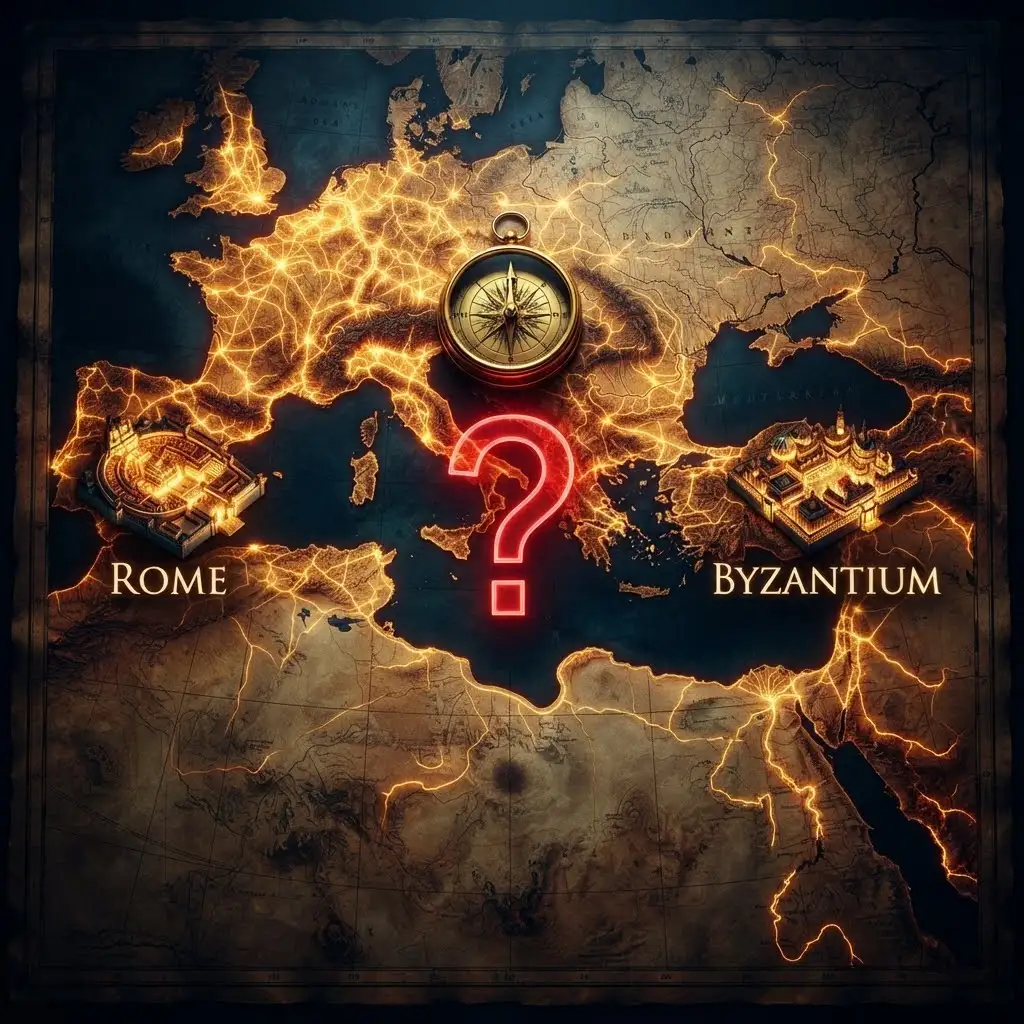
The 2.7% Statistic That Terrifies Roman Historians
FAQs
1. How far did Roman roads reach?
Roman roads stretched over 250,000 miles across the vast Roman Empire, connecting regions from modern-day Britain to North Africa, and from Spain to the Middle East.
2. What was the purpose of Roman roads?
Roman roads were primarily built for military and economic reasons. They facilitated the movement of troops, supplies, and trade goods, enabling the Roman Empire to expand and maintain control over its vast territories.
3. How were Roman roads constructed?
Roman roads were constructed by first digging a trench, then laying a foundation of stones and gravel, followed by layers of concrete and paving stones. The roads were designed to be durable and able to withstand heavy traffic and various weather conditions.
4. Did Roman roads have a significant impact on the development of civilizations?
Yes, Roman roads had a profound impact on the development of civilizations within the Roman Empire and beyond. They facilitated cultural exchange, economic growth, and the spread of Roman influence, as well as enabling the efficient movement of people and goods.
5. Are there any remnants of Roman roads still visible today?
Yes, many parts of the Roman road network are still visible today, particularly in Europe and the Mediterranean region. Some roads have been preserved and incorporated into modern transportation networks, while others have been unearthed through archaeological excavations.