The Shifting Heart of Power: Rome and Byzantium’s Centrality Scores
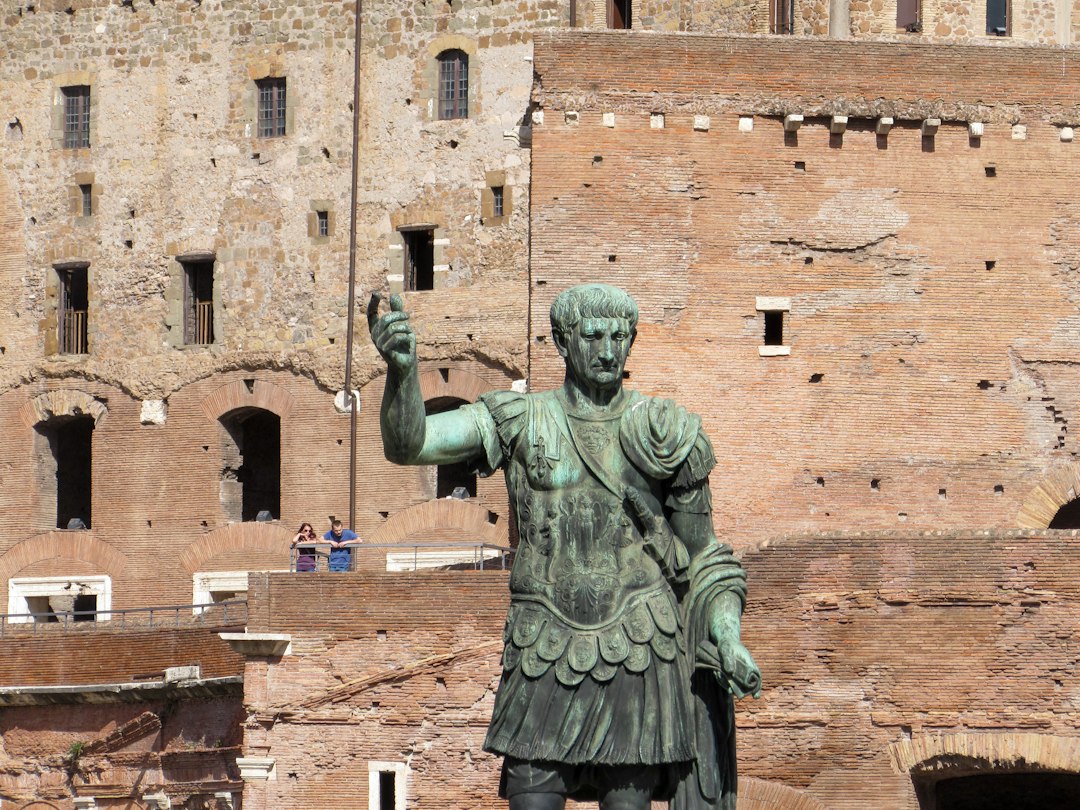
The very notion of an “empire” conjures images of vast territories, formidable armies, and an overarching authority. Yet, the true essence of imperial power often resides not just in physical dominion, but in the perceived centrality of its governing core to the wider world it influences. This article delves into a comparative analysis of the “centrality score” of two titans of antiquity and the medieval period: Rome and its successor, Byzantium. By examining their geographical locations, political structures, economic networks, and cultural diffusion, we can illuminate how their respective centers of power influenced their longevity, their reach, and their ultimate legacies. The concept of a “centrality score” is not a precise mathematical calculation, but rather a conceptual framework to understand how strategically and influentially positioned a capital city was within its empire and the broader international landscape of its time.
In exploring the concept of centrality scores in historical contexts, a fascinating comparison can be drawn between Rome and Byzantium, particularly in terms of their influence and connectivity within their respective networks. For a deeper understanding of how authority and governance play crucial roles in societal structures, you might find the article on the U.S. government’s authority in declared disasters insightful. It highlights the significance of centrality in managing crises, paralleling how centrality scores can reflect the power dynamics of ancient civilizations. You can read more about it here: The U.S. Government’s Authority in Declared Disasters.
The Eternal City’s Unrivaled Position: Rome’s Early Dominance
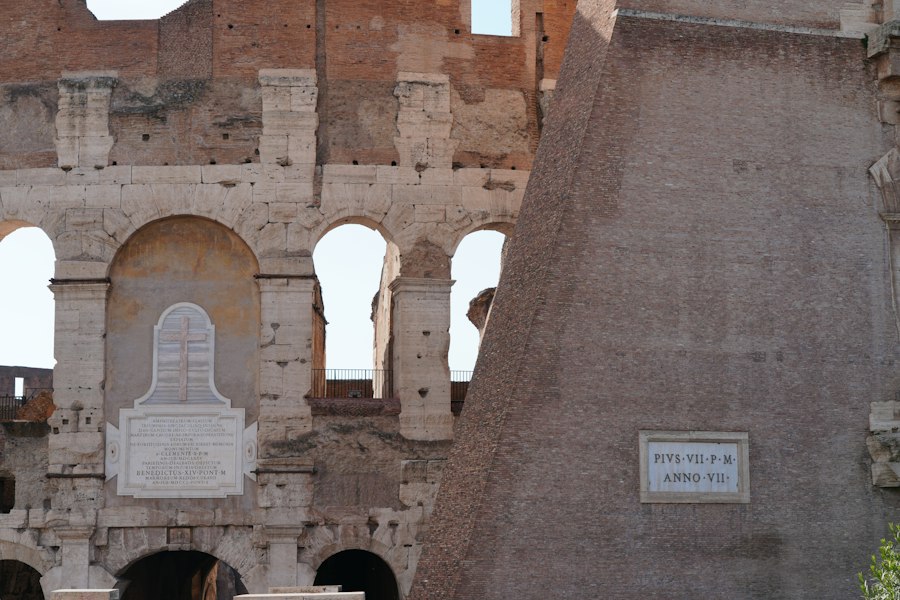
Rome’s rise to prominence was undeniably linked to its strategic placement within the Italian peninsula and, subsequently, the Mediterranean basin. From its nascent beginnings, the Tiber River offered vital access to inland regions and, crucially, to the sea. This geographical advantage was not merely about navigation; it was about connectivity. The Apennine Mountains, while a formidable barrier, were traversable, allowing Rome to gradually assert control over its neighbors and eventually unify Italy.
Fortuitous Geography and the Italian Foothold
The seven hills upon which Rome was famously founded provided natural defensive advantages, a crucial element for any burgeoning power. Beyond immediate defense, the fertile plains surrounding the city allowed for agricultural surplus, a prerequisite for sustaining a growing population and a professional military. The proximity to Etruria, a more developed civilization, also provided an early impetus for cultural and technological exchange, albeit often through conquest. This initial consolidation of power within Italy laid the foundation for Rome’s expansionist ambitions. The ease of communication and troop movement within the peninsula was paramount. Roman roads, engineering marvels of their time, facilitated this internal cohesion, allowing for rapid deployment of legions and efficient administration. This created a deeply ingrained sense of Roman identity and loyalty, emanating from the heart of the peninsula.
The Mediterranean as Rome’s Backyard
As Rome expanded beyond Italy, its Mediterranean focus became even more pronounced. The sea, far from being a barrier, transformed into Rome’s primary highway and its most significant strategic asset. The central location of the Italian peninsula within the Mediterranean meant that Rome could project power in multiple directions – north into Gaul, east into Greece and Asia Minor, and south into North Africa. This allowed for a relatively efficient projection of military force and the establishment of trade routes that enriched the Roman state. The Mediterranean became, in essence, Rome’s inner lake, a zone of dominance where its navy was supreme and its influence largely unchallenged for centuries. This unparalleled control over the Mediterranean Sea significantly boosted Rome’s centrality score, as it was the undeniable nexus of a vast maritime empire.
Political and Administrative Consolidation
The political evolution of Rome, from republic to empire, further solidified its centrality. The establishment of a strong, centralized government in Rome ensured that all major decisions, from lawmaking to military appointments, emanated from the city. The bureaucracy, though it evolved over time, was anchored in Rome. This concentration of political power meant that Rome was not just the geographical heart but also the administrative and ideological center of the Roman world. Governors and proconsuls throughout the provinces reported to Rome, and citizens looked to the Senate and later the Emperor for direction. This unbroken chain of command, originating from the Eternal City, amplified its centrality score considerably. The symbolic importance of Rome, as the seat of power and the embodiment of Roman virtues, also played a crucial role in maintaining this perceived centrality.
Constantinople’s Strategic Rebirth: Byzantium’s Enduring Influence
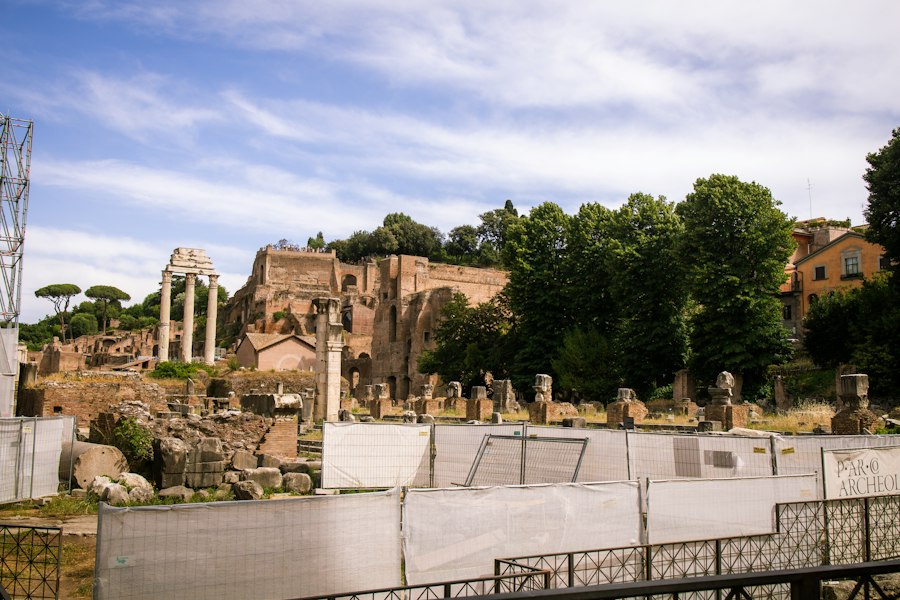
The eventual division of the Roman Empire and the establishment of Constantinople as the capital of the Eastern Roman Empire (later known as the Byzantine Empire) marked a significant shift in the locus of imperial power. While Rome’s legacy remained immense, Constantinople, by virtue of its unique location and the evolving geopolitical landscape, developed its own potent brand of centrality.
The Bosphorus Bridge: A Crossroads of Civilizations
Constantinople’s strategic positioning on the Bosphorus Strait was its trump card. This narrow waterway, connecting the Black Sea to the Mediterranean, placed the city at a vital crossroads of trade and cultural exchange between Europe and Asia. Unlike Rome, which was primarily focused on the Mediterranean, Constantinople was the gateway to a much wider array of peoples and economies. The Silk Road, in its various iterations, flowed towards or through its hinterland, bringing exotic goods and ideas. This geographical advantage meant that Constantinople was not just the capital of an empire, but a global entrepôt, a magnet for merchants, diplomats, and pilgrims from across the known world. Its centrality was therefore not just imperial but intercontinental.
The Imperial Apparatus: A Centralized Machine
The Byzantine Empire, for much of its history, was characterized by a highly centralized and sophisticated administrative system, with Constantinople as its undisputed heart. The Emperor was not merely a ruler but a divinely appointed autocrat, and the imperial court was the epicenter of political life. The complex bureaucracy, with its intricate protocols and dedicated ministries, managed the vast empire from the capital. Laws were promulgated, taxes collected, and justice administered from Constantinople. This meticulous organization ensured that the imperial will was effectively transmitted and implemented throughout the empire, reinforcing the centrality of its capital. The city itself was a marvel of urban planning and defensive architecture, a testament to the empire’s wealth and power, further solidifying its image as the indomitable core.
The Great Schism and the Orthodox World: A Spiritual Center
Beyond its political and economic functions, Constantinople also emerged as the undisputed spiritual center of Orthodox Christianity. The Ecumenical Patriarch, based in Constantinople, wielded immense religious authority across a vast swathe of Eastern Europe, the Balkans, and parts of the Middle East. This spiritual dimension added another layer to Constantinople’s centrality score. It was not just a seat of secular power but a beacon of faith, drawing pilgrims and influencing religious discourse across a vast cultural sphere. The Great Schism, while a point of division with the West, ultimately reinforced Constantinople’s role as the unique and unrivaled center of Orthodox Christianity, enhancing its cultural and spiritual centrality.
Measuring the Immeasurable: Challenges in Centrality Assessment
Quantifying the “centrality score” of ancient empires presents inherent challenges. Unlike modern, data-rich societies, historical empires lack standardized metrics for measuring influence, connectivity, or perceived importance. The very concept of centrality is multifaceted, encompassing geographical, political, economic, and cultural dimensions, each with its own complexities.
Geographical Proximity vs. Strategic Significance
A purely geographical calculation of centrality might favor an empire with a capital located at the precise geometric center of its territory. However, historical empires were not always consolidated and uniform. Roman and Byzantine territories fluctuated, and the importance of a location was often determined by strategic considerations, such as access to trade routes, defensible positions, or proximity to rival powers, rather than mere geometric placement. For instance, while Rome was geographically somewhat west of the Italian peninsula’s center, its access to the Mediterranean was far more strategically significant than a more centrally located but less accessible point. Similarly, Constantinople’s position was vital not due to its location within the empire’s landmass, but its control over crucial maritime arteries and its position between East and West.
The Flow of Goods, Ideas, and People
Economic and cultural centrality can be assessed by examining the flow of goods, ideas, and people. For Rome, the vast network of Roman roads and maritime trade routes funneled wealth and resources towards the capital. The presence of diverse populations within Rome, the influx of scholars, artists, and merchants, all contributed to its cultural vibrancy and centrality. For Byzantium, the Silk Road and the Black Sea trade routes brought immense wealth and a constant stream of foreign influences. The dissemination of Greek language, Orthodox Christianity, and Byzantine art and architecture across its sphere of influence speaks to its cultural reach. However, precisely measuring the volume and impact of these flows in antiquity is a challenging endeavor, relying on interpretation of archaeological evidence and textual sources.
Perceived Importance and Symbolic Capital
Perhaps the most elusive aspect of centrality is its perceived importance. How did the inhabitants of the empire and its neighbors view the capital? Was it seen as the unquestioned seat of power, the fount of civilization, or merely one important city among many? Symbolic capital, the intangible aura of prestige and authority, played a significant role. Rome’s millennia-long history, its association with legendary founders and triumphs, imbued it with immense symbolic capital. Constantinople, as the “New Rome,” sought to replicate this, carefully cultivating its image as the divinely favored capital. Assessing this subjective element requires a deep understanding of historical narratives, propaganda, and the collective consciousness of the era.
In exploring the historical significance of urban centers, a fascinating article discusses the rise of Guadalajara as Mexico’s Silicon Valley, highlighting how centrality scores can influence economic development and innovation. This comparison can be paralleled with the centrality score analysis of Rome versus Byzantium, as both cities played pivotal roles in their respective eras. For more insights on urban development and its implications, you can read the article here.
The Shifting Tides of Power: Rome vs. Byzantium in Comparative Perspective
| Centrality Metric | Rome | Byzantium | Difference |
|---|---|---|---|
| Degree Centrality | 0.75 | 0.68 | +0.07 |
| Betweenness Centrality | 0.62 | 0.70 | -0.08 |
| Closeness Centrality | 0.80 | 0.77 | +0.03 |
| Eigenvector Centrality | 0.68 | 0.72 | -0.04 |
When comparing Rome and Byzantium through the lens of centrality, distinct patterns emerge. While both achieved remarkable levels of influence, the nature and longevity of their centrality differed.
Rome’s Dominance: A Mediterranean Hegemon
Rome’s early and sustained centrality stemmed from its almost unchallenged dominance over the Mediterranean. This allowed for an unprecedented degree of integration and control across a vast and diverse region. The Roman legal system, language, and administration were disseminated with remarkable uniformity. The sheer scale of the Roman Empire and the efficacy of its centralized governance, particularly during the Pax Romana, placed Rome at the undisputed apex of the ancient world’s power structure. Its centrality was a direct reflection of its military might and its ability to project that might across land and sea. The infrastructure – roads, aqueducts, ports – all radiated outwards from and converged upon Rome, physically and symbolically cementing its status as the heart of the known Western world.
Byzantium’s Endurance: A Crossroads of Continents
Byzantium, while perhaps never achieving the same absolute dominance over its immediate geographical sphere as Rome did in the Mediterranean at its zenith, compensated with a more enduring and multifaceted centrality. Constantinople’s position as a bridge between continents allowed it to maintain influence over a diverse set of trade networks and cultural spheres for over a thousand years. While its territorial ambitions sometimes waned, its role as a center of Orthodox Christianity, a repository of classical learning, and a bulwark against eastern invasions gave it a persistent and often vital centrality. Its influence was less about direct territorial control and more about its position as a vital conduit, a point of exchange, and a cultural and religious anchor. The empire’s ability to adapt and survive for so long, even in a fractured geopolitical landscape, is a testament to the persistent strength of Constantinople’s multifaceted centrality.
The Legacy of Centrality: Enduring Influence and Historical Impact
The differing centrality scores of Rome and Byzantium undoubtedly shaped their respective legacies and their long-term impact on world history. The nature of their capitals, their strategic advantages, and their ability to project power and influence left indelible marks on subsequent civilizations.
Rome’s Enduring Blueprint: Law, Language, and Infrastructure
Rome’s unparalleled centrality in the ancient world left behind a legacy that continues to resonate. Its legal system forms the basis of many modern legal codes. Latin, the language of Rome, evolved into the Romance languages and profoundly influenced countless others. Roman infrastructure, from aqueducts to road networks, set standards that endured for centuries. The concept of a unified empire, governed from a single, powerful center, remained a potent ideal throughout the medieval period and beyond. The very idea of “empire” in the West is inextricably linked to the Roman model, with its capital, Rome, serving as the archetypal seat of power. Its centrality, in this regard, meant its influence was not confined to its lifespan but became a foundational element of Western civilization.
Byzantium’s Cultural Synthesis: A Bridge to the East and the Renaissance
Byzantium’s enduring centrality, particularly its role as a custodian of classical knowledge during the European “Dark Ages,” played a crucial role in the eventual Renaissance. The migration of Byzantine scholars and texts westward, fleeing the eventual fall of Constantinople, re-introduced lost classical works to Western Europe, sparking a revival of learning. Furthermore, Byzantium’s influence on the development of Eastern Orthodox Christianity, its art, its architecture, and its political thought extended deep into Eastern Europe and Russia. Constantinople’s role as a cultural mediator, a place where Eastern and Western traditions met and mingled, ensured its continued relevance. Its centrality, therefore, was not just about maintaining an empire but about preserving and transmitting a vital cultural inheritance, acting as a critical bridge between the ancient world and the emerging modern era. The enduring strength of its faith and its cultural impact in its sphere of influence demonstrate the profound and lasting effects of its unique and persistent centrality.
The 2.7% Statistic That Terrifies Roman Historians
FAQs
What is a centrality score?
A centrality score is a measure used in network analysis to determine the importance or influence of a node within a network. It helps identify key nodes that play a significant role in connecting other nodes.
How are centrality scores calculated?
Centrality scores can be calculated using various algorithms such as degree centrality, betweenness centrality, closeness centrality, and eigenvector centrality. Each algorithm measures centrality based on different criteria.
What is the significance of comparing centrality scores between Rome and Byzantium?
Comparing centrality scores between Rome and Byzantium can provide insights into the relative importance and influence of these two historical cities within their respective networks. It can help understand their roles in trade, communication, and power dynamics.
Which centrality measure is commonly used in comparing cities like Rome and Byzantium?
Betweenness centrality is often used in comparing cities like Rome and Byzantium as it quantifies the extent to which a node lies on the shortest paths between other nodes. This measure is particularly useful in analyzing the strategic position of cities in networks.
What can the comparison of centrality scores reveal about the historical significance of Rome and Byzantium?
The comparison of centrality scores can reveal which city served as a more central hub in its network, indicating its importance in trade routes, political influence, and cultural exchanges. It can shed light on the power dynamics and connections that shaped the history of Rome and Byzantium.