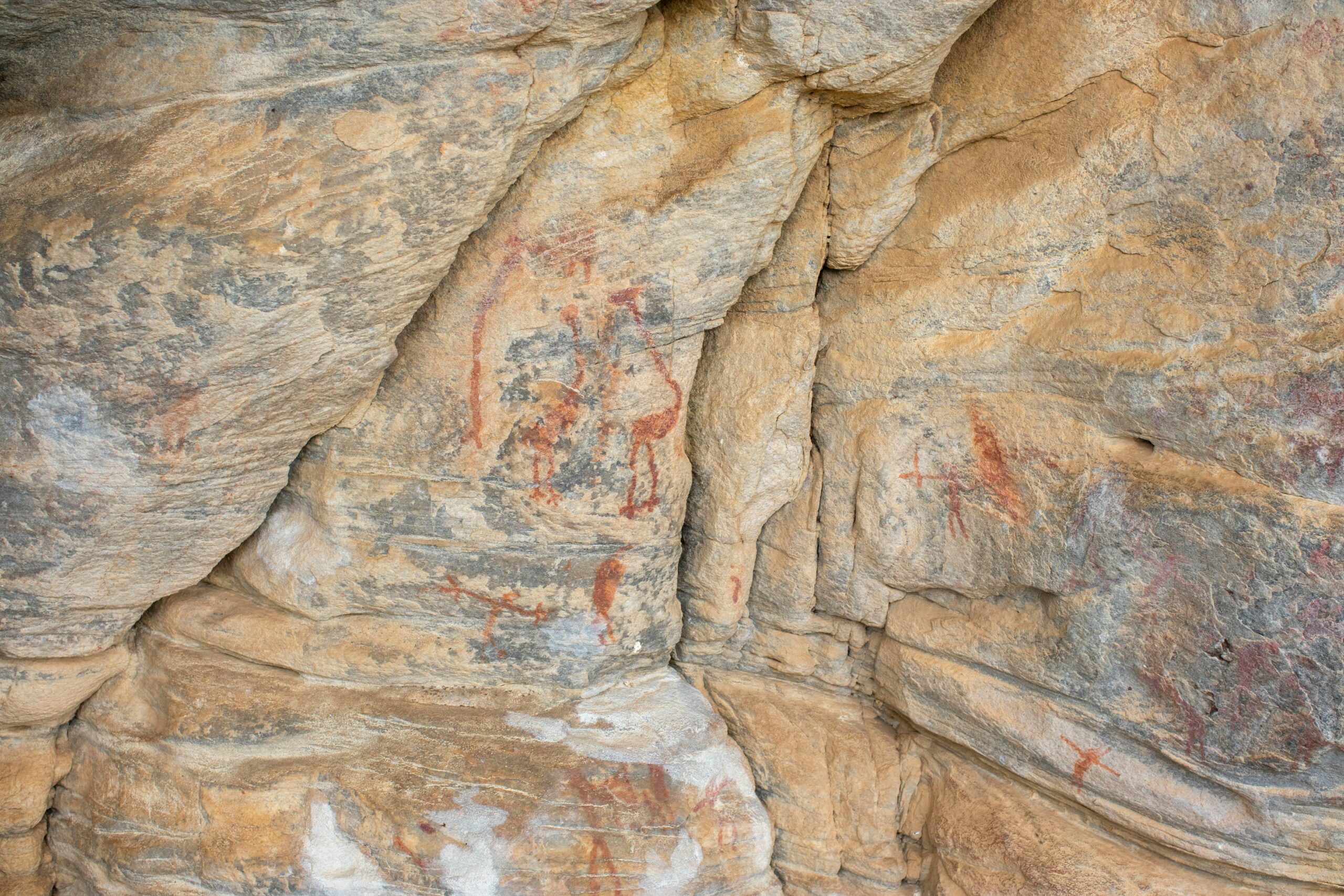
Saharan Rock Art: Ancient Masterpieces in the Desert
The Sahara Desert, a vast expanse of shifting sands and sun-baked plateaus, holds within its seemingly barren embrace a treasure trove of ancient artistry. For millennia, human hands have etched, painted, and engraved their stories onto the rock faces of this dramatic landscape, leaving behind an unparalleled legacy of rock art. These vibrant images, ranging from the earliest abstract symbols to detailed depictions of animal life and human activities, offer a profound glimpse into the lives, beliefs, and cultures of our ancestors who navigated and thrived in what was once a much greener and more hospitable environment. Far from being isolated curiosities, these ancient masterpieces are a testament to the universal human urge to communicate, to record, and to express an understanding of the world.
The sheer scale and sophistication of Saharan rock art are inextricably linked to the dramatic climatic shifts that have shaped this region over vast swathes of time. During the Holocene humid period, roughly from 10,000 to 5,000 years ago, the Sahara was a vastly different place. What is now a desiccated wilderness was once a land of savannas, grasslands, and expansive river systems, supporting a rich and diverse ecosystem. This verdant landscape was a magnet for human populations and animal life, and it is precisely within this window of favorable conditions that much of the most iconic Saharan rock art was created.
The Green Sahara: A Cradle of Civilization and Art
The concept of the “Green Sahara” is crucial for understanding the genesis of this artistic tradition. It was during this period of increased rainfall that large game animals, such as giraffes, elephants, rhinoceroses, and hippopotamuses, roamed freely across the landscape. These majestic creatures are prominently featured in the rock art, often rendered with remarkable naturalism and dynamism.
Depicting Abundance and Diversity
The prevalence of these megafauna in the rock art suggests that the artists lived in close proximity to, and likely depended upon, these animal populations for sustenance and resources. The detailed anatomical accuracy in many of the engravings and paintings speaks to a deep understanding of animal behavior and morphology, honed through direct observation and interaction. The sheer volume of these depictions hints at a societal reverence for the natural world and the animals that inhabited it.
Hunting and Subsistence Strategies
Beyond simply cataloging the fauna, the rock art also provides insights into the hunting practices of these ancient peoples. Scenes of hunters, often depicted with bows and arrows or other implements, are frequently found, illustrating the challenges and triumphs of securing food. These images offer valuable data for archaeologists and anthropologists seeking to reconstruct past subsistence strategies and the technological advancements that enabled them.
The Desertification and Its Artistic Legacy
As the climate gradually shifted and the Sahara began its inexorable trend towards desertification, the environment transformed once more. The lush savannas gave way to scrubland and eventually the sandy deserts we recognize today. This climatic transition had a profound impact on human populations, forcing them to adapt their lifestyles and perhaps influencing their artistic expressions.
Adaptation and Migration
The changing environment likely spurred migrations and the development of new survival strategies. Some rock art sites show a decline in depictions of large game, replaced by more generalized human figures and abstract symbols. This shift might reflect a move towards more mobile, pastoralist lifestyles or a greater focus on smaller game and other resources available in dryer conditions.
The Endurance of Artistic Expression
Despite the increasing harshness of the environment, the tradition of rock art persevered for millennia. This endurance highlights the deep cultural significance of these artistic practices and their ability to adapt to changing circumstances. Even as the landscape became more challenging, the human need to connect with the past, to imbue their surroundings with meaning, and to pass on knowledge through visual means remained strong.
Ancient rock art in the Sahara provides a fascinating glimpse into the lives and beliefs of prehistoric peoples who once inhabited this vast desert region. These artworks, which include intricate carvings and paintings, depict animals, human figures, and various symbols that offer insights into the cultural and environmental changes over millennia. For a broader understanding of how regional histories and identities shape contemporary societies, you might find the article on regional autonomy particularly enlightening. It explores the importance of recognizing and empowering distinct regions, which can be paralleled with the significance of preserving ancient cultural heritage, such as that found in the Sahara. For more information, you can read the article here: Empowering Regions: The Case for Regional Autonomy.
The Murmuring Walls: Styles and Chronologies of Saharan Rock Art
The vast timeframe covered by Saharan rock art has resulted in a rich tapestry of artistic styles, each reflecting different cultural phases, technological capabilities, and aesthetic sensibilities. While precise dating remains a challenge, a general chronological framework has emerged, allowing researchers to trace the evolution of this art form across millennia.
The Bubalus Period: Early Engravings and Symbolism
The earliest known rock art in the Sahara is characterized by engravings, often featuring abstract motifs and powerful depictions of the extinct bovine Bubalus antiquus, a formidable wild cattle species. These early works are thought to date back as far as 8,000 BCE, predating artistic traditions found in many other parts of the world.
The Power of Abstraction
The abstract symbols found in this period, such as geometric patterns and phallic representations, are thought to carry deep symbolic meaning, perhaps related to fertility, creation, or cosmological beliefs. These early abstract expressions hint at a complex cognitive world and a sophisticated understanding of symbolic representation.
The Majestic Bubalus
The Bubalus antiquus, with its impressive horns, dominates many of these early engravings. Its realistic portrayal suggests it was an animal of great importance, perhaps hunted for food, used in rituals, or revered for its strength and power. The meticulous detail in these engravings showcases a mastery of the carving technique.
The Cattle Period: A Pastoral Revolution in Art
Following the Bubalus period, a significant shift occurred with the advent of cattle domestication. The rock art from this era, roughly from the 5th to the 3rd millennium BCE, is characterized by the prominent depiction of domesticated cattle in various poses and contexts. This period also sees the emergence of more lively and dynamic human figures.
The Sacred Herd
Cattle quickly became central to the lives and economies of Saharan peoples, and this reverence is mirrored in the art. Images of cattle are often rendered with great care, highlighting their importance not only as a source of food and wealth but also as symbols of social status and prestige.
Scenes of Daily Life and Ritual
Beyond mere representations of animals, the art from this period begins to depict scenes of daily life, including herding activities, milking, and possibly ritualistic ceremonies involving cattle. The human figures, while often stylized, become more animated, suggesting a growing emphasis on human action and social interaction.
The Horse Period: The Arrival of a New Power
The introduction of the horse to the Sahara, around the 2nd millennium BCE, ushered in another distinct phase in rock art. The horse, with its speed and agility, revolutionized transportation and warfare, and its presence is powerfully reflected in the artwork.
The Noble Steed
Depictions of horses are often dynamic and spirited, capturing their elegance and power on the move. The horses are frequently shown in Gallop or harnessed to chariots, indicating their use in hunting, racing, and warfare.
The Warrior and the Chariot
The horse period art often features warriors, bedecked in elaborate attire and sometimes riding chariots. These images speak to the growing importance of mounted warfare and the development of more complex social hierarchies, where military prowess played a significant role.
The Camel Period: Adapting to the Arid Frontier
As the Sahara continued to dry, the camel became increasingly important for survival and trade. The art from this later period, from around the 1st millennium BCE onwards, reflects this shift, with the camel becoming a dominant motif.
The Ship of the Desert
The camel, perfectly adapted to arid conditions, is depicted in its full glory, carrying goods and people across vast distances. These images highlight the camel’s role in facilitating trade, communication, and the expansion of human settlements into ever more challenging environments.
The Nomadic Lifestyle
The art from the camel period often portrays nomadic groups and their movement across the landscape. These depictions offer valuable insights into the social organization, material culture, and daily routines of the peoples who mastered life in the Sahara’s extreme conditions.
Masters of the Rock Face: Techniques and Materials

The creation of Saharan rock art involved a diverse range of techniques and materials, each requiring skill, patience, and an intimate knowledge of the desert environment. The artists transformed mundane rock surfaces into canvases, employing methods that have ensured the survival of their work for millennia.
Petrosclerosis: The Art of Engraving
Engraving, or petroglyph carving, is one of the oldest and most widespread techniques used in Saharan rock art. This involved incising or pecking away at the surface of the rock to create images.
Tools of the Trade
The tools used for engraving were typically made of harder stones, such as dolerite, which were used to strike or rub against the softer rock surface. The meticulous nature of these carvings suggests that considerable time and effort were invested in each piece.
Preserving the Image
The engraved lines, by removing the weathered outer layer of the rock, often reveal a lighter, fresher surface beneath, creating a stark contrast that enhances the visibility of the image. This technique has proven remarkably durable, allowing many engravings to withstand the ravages of time and erosion.
Pigment and Brush: The Fading Colors of Painting
Rock painting, while perhaps more visually striking initially, is generally more fragile than engraving. However, the surviving examples offer a vibrant glimpse into the palette and artistic choices of the ancient inhabitants.
Earthly Hues: Natural Pigments
The colors used in Saharan rock paintings were derived from natural mineral pigments found in the desert. Reds, ochres, yellows, and blacks were commonly employed, achieved by grinding various clays, iron oxides, and charcoal.
Applications and Binders
These powdered pigments were then mixed with binders, such as water, animal fat, or plant sap, to create a paint that could adhere to the rock surface. The application methods varied, likely involving fingers, brushes made from animal hair or plant fibers, or even chewed sticks.
Beyond the Image: The Context and Meaning
The sheer volume and diversity of Saharan rock art are not merely aesthetic marvels; they are profound cultural documents that offer tantalizing clues about the beliefs, rituals, and social structures of ancient Saharan societies.
Sacred Spaces and Ritual Sites
Many rock art sites are located in areas that appear to have held particular significance, such as near water sources, in caves, or on prominent rock outcrops. This suggests that the creation and viewing of rock art may have been integrated into ritual practices and ceremonies.
Narrative and Mythological Depictions
While some images may represent straightforward observations of the natural world, others clearly convey more complex narratives or mythological themes. The interpretation of these symbolic images remains a vibrant area of research, drawing on comparative mythology and ethnographic parallels.
Identity and Ancestral Connections
Rock art may have also served as a means of expressing group identity, marking territorial boundaries, or commemorating ancestors. The recurring motifs and styles within specific regions suggest discernible cultural affiliations and traditions.
The Silent Tongues: Interpreting the Meanings of Saharan Rock Art

Deciphering the precise meanings behind the ancient pictograms and petroglyphs of the Sahara is a complex and ongoing endeavor. While definitive interpretations are elusive, a combination of stylistic analysis, contextual clues, and ethnographic comparisons allows researchers to construct plausible understandings of their significance.
Animal Symbolism: More Than Just Beasts
The overwhelming presence of animals in Saharan rock art strongly suggests that they held a profound symbolic and spiritual significance beyond their utilitarian value as sources of food.
Totemic Associations and Clan Symbols
It is theorized that certain animals may have served as totemic symbols for different clans or social groups, representing their lineage, spirit guardians, or collective identity. The repeated depiction of specific animals within particular regions could indicate such associations.
Mythological Narratives and Creation Stories
Animals often feature prominently in creation myths and mythological narratives across various cultures. Saharan rock art might have served as a visual medium for preserving and transmitting these important stories, explaining the origins of the world, the natural order, and the relationship between humans and the divine.
Ritualistic and Ceremonial Depictions
Many scenes appear to depict ritualistic activities involving animals, such as sacrifices, hunts with spiritual undertones, or ceremonial dances. These might have been performed to ensure fertility, appease deities, or celebrate important life cycle events.
Human Figures: Actions, Roles, and Beliefs
The human figures sculpted and painted on Saharan rocks offer a window into the lives, activities, and societal structures of these ancient peoples.
Depicting Daily Life and Activities
Scenes of hunting, herding, dancing, and other daily activities provide invaluable information about subsistence strategies, social organization, and the rhythms of life in the ancient Sahara. The depiction of these activities suggests a desire to record and transmit essential knowledge and cultural practices.
Spiritual and Religious Expression
Beyond mere depiction, human figures often appear in contexts suggesting spiritual or religious significance. Elaborate headdresses, dances, and interactions with symbolic elements may point to shamanic practices, rituals performed to connect with the spirit world, or expressions of religious devotion.
Social Hierarchy and Personal Identity
The varying levels of detail and adornment in the depiction of human figures might offer clues about social stratification, status, and individual roles within the community. The representation of specific attire or ornamentation could signify rank, occupation, or ceremony.
Abstract and Geometric Motifs: The Language of the Unseen
While figurative art is abundant, abstract and geometric symbols also form a significant component of Saharan rock art, posing a particular challenge for interpretation.
Early Symbolic Systems
These abstract markings are among the oldest forms of Saharan art and may represent early attempts at developing symbolic language, perhaps related to astronomical observations, mathematical concepts, or spiritual ideas that are not easily visualized in concrete terms.
Fertility and Cosmological Concepts
Certain abstract forms, such as circles, spirals, and linear patterns, are often associated with fertility symbols, cosmic diagrams, or representations of energy flows in various cultural contexts. Their presence in Saharan art could indicate a similar underlying meaning.
Ritual Markers and Boundaries
Abstract symbols might have been used as ritual markers, directional signs, or to demarcate sacred spaces or territorial boundaries. Their repetition and placement could have held specific meanings for those who understood them.
Recent discoveries of ancient rock art in the Sahara have shed light on the region’s rich cultural history and the lives of its early inhabitants. These artworks, which depict various animals and human figures, provide valuable insights into the environmental changes that have occurred over millennia. For a deeper understanding of how historical narratives shape our present, you might find this article on the reshoring impact on the US economy particularly interesting. It explores how past events influence current trends, much like the ancient art influences our understanding of the Sahara’s history. You can read more about it here.
The Enduring Legacy: Saharan Rock Art in the Modern World
| Location | Number of Sites | Age | Themes |
|---|---|---|---|
| Tassili n’Ajjer, Algeria | over 15,000 | 6,000-10,000 years old | Human figures, animals, and geometric designs |
| Ennedi Plateau, Chad | hundreds | 7,000-10,000 years old | Animals, hunting scenes, and rituals |
| Fezzan, Libya | over 1,000 | 6,000-8,000 years old | Animals, humans, and abstract symbols |
The discovery and study of Saharan rock art have had a profound impact on our understanding of human history and prehistory. These ancient masterpieces continue to captivate and inspire, offering not only a scientific resource but also a potent reminder of our shared human heritage.
A Window into Prehistory: Rewriting the Narrative
For decades, the Sahara was perceived as a blank slate in human history. The discovery and extensive documentation of its rock art have dramatically rewritten this narrative, revealing sophisticated cultures and rich artistic traditions that thrived in the region millennia ago.
Challenging Preconceptions of “Primitive” Art
The sheer quality, complexity, and diversity of Saharan rock art challenge simplistic notions of “primitive” art. The naturalistic depictions, abstract symbolism, and narrative sequences demonstrate a high level of cognitive ability, artistic skill, and cultural sophistication.
Understanding Human Migration and Adaptation
The chronological and stylistic variations in Saharan rock art provide crucial data for understanding human migration patterns, adaptation to changing environments, and the diffusion of cultural practices across vast geographical areas.
Contemporary Relevance and Cultural Heritage
The legacy of Saharan rock art extends beyond its historical significance. It remains a vital part of the cultural heritage of the peoples who inhabit these regions and holds increasing relevance in the modern world.
Indigenous Knowledge and Cultural Identity
For indigenous communities in the Sahara, rock art is often seen as a tangible link to their ancestors, their history, and their cultural identity. Efforts are underway to involve local communities in the preservation and interpretation of these sites.
Tourism and Economic Opportunities
Recognizing the immense cultural and aesthetic value of rock art, many Saharan countries are developing strategies to promote heritage tourism. This has the potential to bring economic benefits to local communities while also raising awareness and fostering appreciation for these ancient treasures.
Conservation and Protection Challenges
However, the conservation of Saharan rock art faces significant challenges. Environmental factors like erosion and climate change, as well as human-induced threats such as vandalism and unsustainable tourism, pose serious risks to these irreplaceable artworks. International cooperation and robust conservation efforts are crucial to safeguarding this global heritage for future generations.
In conclusion, Saharan rock art is much more than a collection of ancient images; it is a vibrant, dynamic testament to human ingenuity, creativity, and resilience. These silent storytellers, etched and painted onto the desert rocks, continue to speak across millennia, inviting us to explore the depths of our shared past and to appreciate the enduring power of human expression in the face of time and the elements.

The Ancient World Buried Beneath the Sahara
FAQs
What is ancient rock art in the Sahara?
Ancient rock art in the Sahara refers to the prehistoric paintings and engravings found on the rocks and cave walls in the Sahara Desert. These artworks are believed to date back thousands of years and provide valuable insights into the lives and cultures of ancient civilizations.
Where is ancient rock art in the Sahara located?
Ancient rock art in the Sahara can be found in various countries across the Sahara Desert, including Algeria, Libya, Niger, and Chad. These artworks are often located in remote and hard-to-reach areas, preserving them from modern development and allowing them to survive for thousands of years.
What do the ancient rock art in the Sahara depict?
The ancient rock art in the Sahara depicts a wide range of subjects, including human figures, animals, hunting scenes, and geometric patterns. These artworks provide valuable insights into the daily lives, beliefs, and cultural practices of the ancient people who created them.
What is the significance of ancient rock art in the Sahara?
Ancient rock art in the Sahara is significant as it provides a window into the past, allowing researchers to study the history, art, and culture of ancient civilizations. These artworks also contribute to our understanding of human creativity and expression throughout history.
How are ancient rock art sites in the Sahara being preserved?
Efforts to preserve ancient rock art sites in the Sahara include measures to protect them from vandalism, erosion, and climate change. This may involve the establishment of protected areas, the development of sustainable tourism practices, and the implementation of conservation and monitoring programs.