
A colossal, forgotten installation, meticulously hidden beneath the unforgiving expanse of the Greenland ice sheet, has been brought to light. For decades, this subterranean behemoth, a testament to the Cold War’s feverish paranoia, lay dormant, its existence obscured by nature’s most formidable cloak. Now, through a combination of advanced radar technology and persistent archival research, the secrets of Project Iceworm, and the sprawling nuclear missile base it concealed, are finally beginning to thaw.
The narrative of this frozen fortress begins in the stark geopolitical landscape of the late 1950s. The Cold War was at its zenith, a global chess match played with nuclear arsenals and ideological dogma. The United States, acutely aware of the vulnerability of its existing missile silos to a Soviet surprise attack, began to explore audacious new strategies for deploying its intercontinental ballistic missiles (ICBMs). The idea was to create a mobile, undetectable launch platform, one that could be repositioned with relative ease and remain out of the direct reach of enemy reconnaissance.
A Strategic Imperative: The Need for a Mobile Deterrent
The prevailing doctrine of nuclear deterrence hinged on the concept of Mutually Assured Destruction (MAD). To maintain this delicate balance, both superpowers needed to possess a second-strike capability – the ability to absorb a first strike and retaliate with devastating force. Traditional ICBM silos, while hardened, were still fixed targets. Advances in Soviet surveillance, including spy satellites and advanced aerial reconnaissance, made these fixed sites increasingly vulnerable to pre-emptive strikes. The Strategic Air Command (SAC) recognized the urgent need for a system that could overcome these limitations.
The Greenland Advantage: An Unconventional Locus
Greenland, with its vast, largely uninhabited interior covered by a thick ice sheet, presented itself as an unlikely but strategically advantageous location. The sheer thickness of the ice offered a natural shield against detection, and its remote nature meant minimal civilian presence or potential interference. The idea was to establish a network of launch tunnels beneath the ice, allowing ICBMs to be moved to various positions and launched without warning. This would create a mobile, virtually undetectable nuclear deterrent, a phantom weapon that could strike deep into Soviet territory.
The Dawn of a Concept: From Idea to Operation
The initial concept, born out of a desire for strategic innovation, was as audacious as it was ambitious. Project Iceworm, officially known as the “Strategic Air Command (SAC) Base Camp Century,” was conceived as a self-sufficient, underground city, a marvel of military engineering that would house personnel, support facilities, and, most importantly, launch capabilities for nuclear-tipped missiles. The project was shrouded in secrecy, its true purpose masked by a cover story of scientific research.
Recent discoveries have shed light on the Cold War nuclear base hidden beneath the ice, revealing fascinating insights into the era’s military strategies and technological advancements. This intriguing topic is further explored in a related article that delves into the mysteries of archaeoacoustics, examining how sound and acoustics can provide a deeper understanding of historical sites and their significance. For more information, you can read the article here: Uncovering the Mysteries of Archaeoacoustics.
Unearthing the Ghost City: The Unveiling of Camp Century
For years, Camp Century existed as a legend, a whisper among researchers and geologists who had encountered unusual structures and infrastructure beneath the ice. The official narrative centered on a “scientific research station,” a façade that cleverly concealed the military ambitions driving its creation. It was the advent of high-resolution ground-penetrating radar (GPR) and the meticulous analysis of declassified documents that finally peeled back the layers of ice and deception.
The Ice Penetrator: Radar’s Revealing Gaze
The true breakthrough in uncovering the extent of Camp Century came with the application of sophisticated GPR technology. This non-invasive method uses radio waves to map the subsurface, revealing anomalies and structures hidden from view. As scientists and military historians scanned the vast, icy plains of northwestern Greenland, they began to detect a series of interconnected tunnels, cavernous spaces, and what appeared to be infrastructure far more complex than any mere scientific outpost would require. The sheer scale of these detected structures hinted at something far more significant.
Deciphering the Documents: A Trail of Classified Information
Simultaneously, a dedicated effort to declassify and analyze Cold War archives provided crucial corroboration. Documents pertaining to Project Iceworm, once buried deep within secure vaults, began to surface. These documents detailed the project’s planning, its logistical challenges, and its ultimate, albeit limited, operational status. They painted a picture of a highly ambitious undertaking, driven by the existential threat of nuclear war and the relentless pursuit of strategic superiority.
The Echoes of the Past: What Was Found?
What the radar and declassified documents revealed was not just a single installation, but a sprawling network. Beneath tens of meters of ice lay an elaborate system of tunnels, some reportedly up to 35 meters wide and 30 meters high, carved out of the ice itself. These tunnels were designed to house and transport ICBMs, complete with barracks for hundreds of personnel, power generation facilities, and even a greenhouse. The site was a fully functional, albeit subterranean, city, a testament to the ingenuity and the extreme measures taken during the Cold War.
Beneath the Surface: The Architecture of a Frozen Fortress
The design and construction of Camp Century were a remarkable feat of engineering, pushing the boundaries of what was thought possible in such an extreme environment. The very ice that served as its concealment also presented the primary construction challenge.
Carving a Metropolis from Ice: Innovative Construction Techniques
The construction involved excavating massive tunnels directly into the ice. This was not simply digging; it required careful management of ice mechanics and thermodynamics. Specialized machinery was developed to cut, melt, and remove vast quantities of ice. The tunnels were then often lined with prefabricated structures and support beams to ensure stability and prevent collapse, a constant concern in an environment where ice is constantly shifting and reforming.
A Self-Sufficient Ecosystem: Power, Life Support, and Infrastructure
Camp Century was envisioned as a self-sustaining entity, capable of operating independently for extended periods. Power was generated by a small nuclear reactor, a powerful testament to the era’s embrace of nuclear technology. Life support systems, including ventilation and heating, were critical for the survival of the personnel stationed there. The infrastructure also included facilities for waste disposal, water management, and even recreational spaces to maintain morale in the isolated and challenging conditions.
The Missile Silos: The Heart of the Operation
The primary purpose of Camp Century, however, was its missile launch capability. While the project never reached its full operational potential with deployed missiles, the infrastructure for launching them was present. The tunnels were designed to allow for the movement of ICBMs, and launch facilities were conceptualized and, to some extent, constructed. The idea was that missiles could be brought to designated launch points within the tunnels and then fired upwards through the ice.
The Shadow of the Cold War: The Strategic Implications and Ultimate Fate
Project Iceworm was a direct product of the Cold War’s intense strategic competition. Its existence, had it been fully realized, would have represented a significant shift in the nuclear balance of power, and its ultimate abandonment speaks to the immense practical and environmental challenges it faced.
The Nuclear Deterrent: A Phantom Arsenal?
The theoretical advantage of Camp Century was its invulnerability and mobility. A Soviet attack would struggle to locate and neutralize the missiles hidden beneath the ice. This would have provided the United States with a highly credible second-strike capability, a powerful deterrent against any Soviet aggression. However, the project was plagued by technical difficulties and the immense cost of maintaining such an operation in such a harsh environment.
The Unforeseen Consequences: Environmental Concerns and Decommissioning Challenges
While the project was initially conceived as a triumph of engineering, its long-term environmental impact became a growing concern. The heat generated by the base, combined with the sheer weight of the structures, caused the ice to melt and shift, leading to tunnel collapse and structural instability. The prospect of decommissioning the base and its aging nuclear reactor, along with its stored waste, presented a significant environmental hazard. The waste products, if not properly managed, could eventually leach into the surrounding environment as the ice melts.
A Frozen Relic: Abandonment and the Passage of Time
By the late 1960s, the immense logistical and financial burdens, coupled with the inherent instability of the ice environment, led to the decision to abandon Project Iceworm. The base was officially decommissioned, and its personnel were withdrawn. However, the infrastructure, including the nuclear reactor and its associated waste, was left behind, buried beneath the ever-thickening ice. The site was effectively sealed, its secrets once again locked away by nature.
Recent discoveries have shed light on the Cold War nuclear base hidden beneath the ice, revealing the extent of military operations during that tense period. This intriguing topic connects to broader discussions about technological advancements and their implications, as explored in a related article on revolutionary technology. For those interested in how past innovations continue to shape our present, you can read more about it here. The interplay between historical events and modern technology offers a fascinating perspective on our current world.
The Legacy of Iceworm: Lessons from a Subterranean Past
| Location | Depth | Year Built | Purpose |
|---|---|---|---|
| Greenland | 2000 feet | 1959 | Nuclear missile launch site |
| Antarctica | Unknown | 1960s | Secret military base |
The rediscovery of Project Iceworm offers a profound glimpse into the extreme measures undertaken during the Cold War. It serves as a stark reminder of the pervasive fear and the immense resources dedicated to maintaining a nuclear standoff.
A Testament to Human Ingenuity and Hubris
Camp Century stands as a monument to both human ingenuity and a certain degree of hubris. The ability to construct and operate such a complex facility in one of the Earth’s most inhospitable environments is a testament to engineering prowess. However, the project also highlights the dangers of unchecked ambition and the potential for unforeseen consequences when attempting to dominate nature.
The Persistent Threat: Environmental Concerns of a Frozen Legacy
The abandonment of Camp Century has left a lingering environmental concern. The radioactive waste and other hazardous materials stored within the base pose a potential threat as the Greenland ice sheet continues to melt due to climate change. As the ice recedes, these forgotten relics of the Cold War could be exposed, requiring significant international effort to mitigate any environmental damage.
A New Era of Scrutiny: The Need for Transparency and International Cooperation
The unearthing of Camp Century underscores the importance of transparency and international cooperation in addressing the legacies of the Cold War. As the world grapples with climate change and the potential emergence of buried hazards, a collaborative approach is essential. The ongoing efforts to monitor and, in the future, potentially remediate sites like Camp Century highlight the continuing relevance of international dialogue and scientific collaboration. The secrets buried beneath the ice are now surfacing, demanding attention and a commitment to responsible stewardship of our planet’s fragile environment.
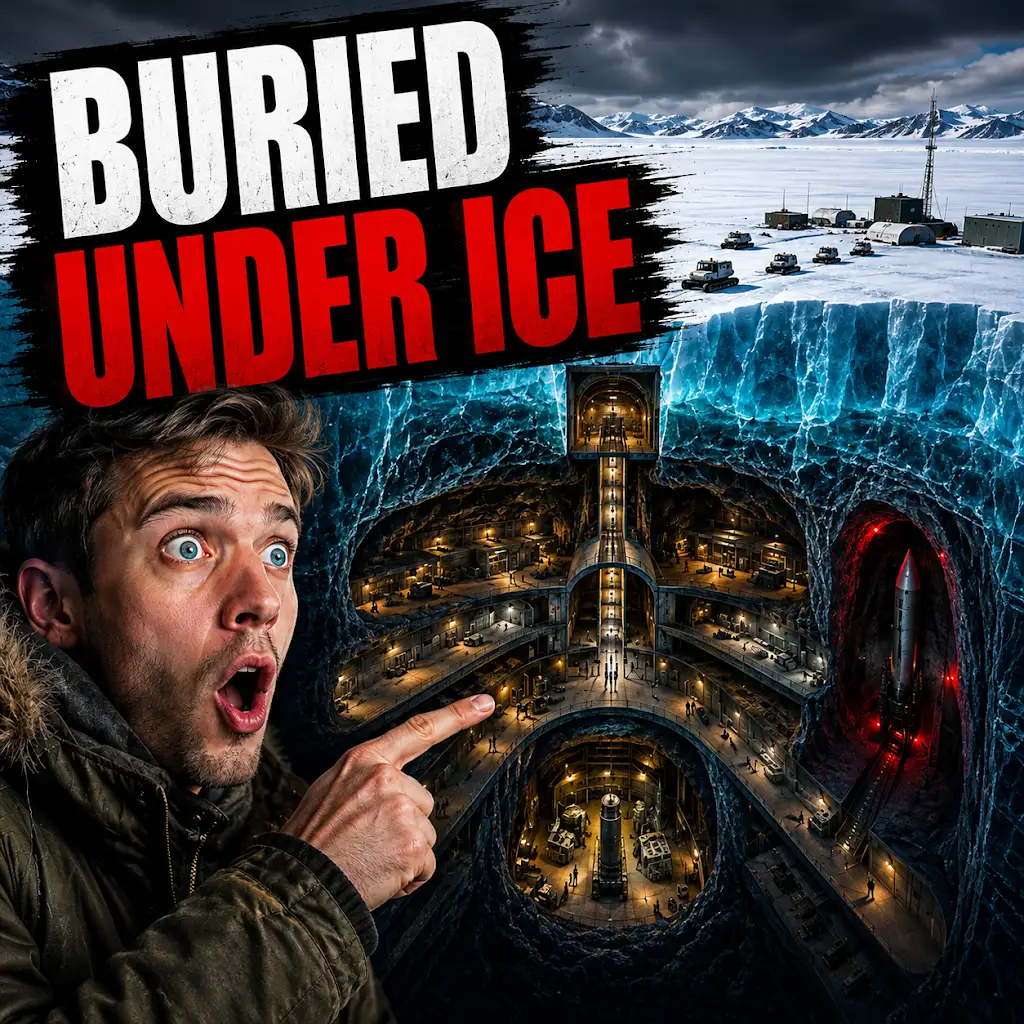
The U.S. Built a Nuclear City Under Greenland. The Ice Won.
FAQs
What is the Cold War nuclear base beneath the ice?
The Cold War nuclear base beneath the ice refers to a secret military installation built by the United States during the Cold War era. It was constructed beneath the ice of Greenland and was designed to house and launch nuclear missiles in the event of a conflict with the Soviet Union.
Where is the Cold War nuclear base located?
The Cold War nuclear base is located beneath the ice of Greenland, specifically in the northern part of the island. The exact location of the base has been kept secret for many years, and its existence was only recently revealed to the public.
When was the Cold War nuclear base constructed?
The construction of the Cold War nuclear base beneath the ice took place during the 1950s and 1960s, at the height of the Cold War between the United States and the Soviet Union. It was part of a larger effort by the U.S. military to establish strategic missile bases around the world.
Why was the Cold War nuclear base built beneath the ice?
The decision to build the nuclear base beneath the ice was driven by the need for secrecy and security. By locating the base beneath the ice of Greenland, the U.S. military hoped to conceal its existence from the Soviet Union and protect it from potential attacks.
How was the Cold War nuclear base discovered?
The Cold War nuclear base beneath the ice was discovered through declassified documents and satellite imagery. Researchers and historians pieced together information from various sources to uncover the existence of the base, shedding light on this previously unknown chapter of Cold War history.