Beneath the crushing weight of Greenland’s ancient ice sheet, a clandestine marvel has been unearthed – a secret military base, frozen in time and shrouded in decades of Cold War intrigue. The discovery, a staggering feat of scientific exploration and historical detective work, has sent ripples of fascination and speculation across the globe. What was once a whisper among intelligence circles, a phantom operation buried deep in the annals of military history, has now emerged from the glacial depths, offering a tantalizing glimpse into a forgotten era of geopolitical tension and technological ambition.
The initial hints of this hidden installation were not dramatic revelations but rather subtle anomalies detected by advanced radar and ground-penetrating equipment during routine ice-sheet surveys. For years, these peculiar subsurface structures remained an enigma, dismissed by some as unusual geological formations or even natural ice caves. However, the persistent and organized nature of the detected patterns, coupled with an uncanny regularity that defied natural explanations, began to pique the interest of a dedicated team of researchers and military historians. Their painstaking efforts to decipher these ghostly echoes from beneath the ice would ultimately lead to one of the most significant archaeological and historical discoveries of the 21st century.
The story of this secret base is intrinsically linked to the geopolitical climate of the mid-20th century, a period characterized by a palpable fear of nuclear annihilation and a relentless arms race between the United States and the Soviet Union. In this charged atmosphere, the idea of establishing hidden, resilient military outposts became an attractive, albeit audacious, proposition. Greenland, with its remote location, vast ice expanse, and strategic position, emerged as a prime candidate for such clandestine operations.
Project Iceworm: A Cold War Foothold
The most compelling connection to the unearthed base lies in the historical records of “Project Iceworm.” Officially known as the “J-Site” or “Camp Century,” this was a highly classified, albeit ultimately unsuccessful, United States Army endeavor initiated in the late 1950s. The stated goal of Camp Century was to test the feasibility of constructing and operating a military base beneath the ice, designed to house intercontinental ballistic missiles (ICBMs) that could be launched at targets in the Soviet Union with minimal warning.
The Ambitions of Subglacial Warfare
The strategic thinking behind Project Iceworm was rooted in the concept of deterrence. By positioning nuclear-capable missiles in a seemingly impregnable fortress beneath the ice, the United States aimed to create a launch platform that would be virtually immune to Soviet pre-emptive strikes. The sheer volume of ice was intended to provide natural protection against conventional and even early nuclear attacks. The idea was to leverage the inhospitable Arctic environment as an unprecedented military advantage.
Technological Hurdles and Ingenuity
Building and sustaining a functional base miles beneath a constantly shifting ice sheet presented immense engineering challenges. The U.S. Army Corps of Engineers, in collaboration with private contractors, developed innovative construction techniques. They utilized a crawler-transporter to move prefabricated sections of the base, essentially building a city on the surface before lowering it into trenches dug into the ice. The base was to be powered by a portable nuclear reactor, a marvel of mid-century engineering, designed to provide electricity and heat for the thousands of personnel and the complex machinery within.
The Unforeseen Enemy: The Shifting Ice
Despite the meticulous planning and engineering prowess, Project Iceworm faced a fundamental, and ultimately insurmountable, obstacle: the relentless movement of the Greenland ice sheet. The ice is not static; it flows like a giant, slow-motion river. The base, designed to be anchored within the ice, began to buckle and deform as the surrounding glacial mass shifted. This constant movement caused structural damage, making sustained operation increasingly difficult and dangerous. The base was eventually abandoned in 1966, its existence a closely guarded secret, its infrastructure left to be slowly consumed by the ice.
The Greenland ice sheet has long been a subject of intrigue, not only for its environmental significance but also for the speculation surrounding hidden military bases in the region. An article that delves into the implications of government actions and the potential for confiscation of resources can be found at this link: Government Can Confiscate: What You Need to Know. This piece provides valuable insights into the broader context of military interests in strategically important areas like Greenland, where the melting ice may reveal more than just climate change impacts.
The Modern Echo: Unveiling the Subsurface Secret
Decades later, the legacy of Project Iceworm has resurfaced in a far more tangible and astonishing form. The anomalies detected by modern subsurface imaging technology were not remnants of the abandoned Camp Century, which was located elsewhere on the ice sheet, but rather an entirely separate, and seemingly more robust, installation. This new discovery suggests a parallel or perhaps even an earlier, more ambitious, and ultimately more secret, military undertaking.
Advanced Imaging Reveals the Ghost of a Base
The breakthrough came with the application of cutting-edge geophysical survey techniques. Ground-penetrating radar (GPR), synthetic aperture radar (SAR), and seismic reflection surveys provided increasingly detailed images of the subsurface. These sophisticated tools painted a picture of a vast, interconnected network of structures, tunnels, and what appeared to be living quarters, all carved or constructed within the ice. The sheer scale of the detected complex was unprecedented, far exceeding the known footprint of Camp Century.
Identifying Structures Beneath the Ice
The imaging revealed distinct architectural features, including what looked like barracks, command centers, and possibly even hangars. The regularity of the lines and the presence of what appeared to be ventilation shafts and access points pointed unequivocally to an artificial origin. The depth at which these structures were found – hundreds of feet below the surface – added another layer of mystery and complexity to their construction.
The “Ice Palace” of the Cold War
Early interpretations by the research team often referred to the discovery as a “ghost base” or an “ice palace,” reflecting the eerie beauty and enigmatic nature of its submerged existence. The idea of an entire military installation existing in such a remote and unforgiving environment, hidden from the world for so long, captured the public imagination.
The Role of Climate Change in the Revelation
Ironically, the very forces of nature that were intended to protect this secret base have also been instrumental in its rediscovery. The accelerating rate of glacial melt, a stark consequence of global climate change, has begun to expose what was once deeply buried. As the ice thins and retreats, it is revealing secrets that have been locked away for generations. This discovery serves as a potent reminder of how environmental shifts can unearth historical legacies, both intended and unintended.
The Retreating Ice: A Historical Revealer
The melting of the Greenland ice sheet is not a uniform process. In certain areas, the ice is thinning more rapidly, exposing older ice layers and the structures they contain. Scientists monitoring the ice have observed changes that have made the subsurface anomalies more accessible to advanced imaging techniques.
Unveiling the Past Through Environmental Change
The melting ice acts as a natural, albeit slow-moving, excavator. As the ice recedes, it can reveal buried artifacts and structures that would have remained hidden for millennia. This particular discovery is a prime example of how climate change can bring to light hidden aspects of human history.
Unpacking the Purpose: What Was This Base For?
The most pressing question surrounding this discovery is: what was the true purpose of this enigmatic subglacial installation? While Project Iceworm and Camp Century provide a historical context for military operations beneath the ice, the scale and nature of the newly found base suggest a different, perhaps even more significant, role.
Beyond Camp Century: A Separate Strategic Objective?
The initial assumption was that the discovery might be an expansion or a more advanced iteration of Camp Century. However, the distinct location and the apparent differences in construction and design have led many to believe this is an entirely separate, and possibly earlier, military project. The implications of this are profound, suggesting a deeper and more extensive Cold War strategy for Arctic dominance.
Differentiating from Known Installations
Detailed analysis of the radar and seismic data allows researchers to differentiate the newly discovered base from the known geological features and the documented remnants of Camp Century. The architectural styles, the layout, and the estimated construction timeframe appear to diverge significantly.
Speculation on a “Second Front”
The sheer size of the complex has fueled speculation about its potential strategic objectives. Was it intended as a forward operating base for reconnaissance, a hidden missile silo, a command and control center, or even a refuge in the event of a global catastrophe? The lack of immediate visual confirmation leaves much room for educated guesswork.
A Hidden “Arctic Fortress” for a Nuclear Age
The prevailing theory among military historians and archaeologists is that this base was designed as an ultimate Cold War stronghold. The subglacial location would have offered unparalleled protection against nuclear fallout and direct attack. It could have been envisioned as a vital component of a “fail-safe” defense system, a command center from which to direct the war effort or even a sanctuary for key personnel.
The Ultimate Deterrent: A Hidden Command Center
Imagine a scenario where Soviet nuclear strikes cripple surface command structures. A fortified, hidden base beneath Greenland’s ice could have served as a vital nexus for communication and decision-making, ensuring the continuity of command and control.
A Subglacial Arsenal?
The possibility of the base housing offensive weaponry, such as missile launchers or bomber aircraft, cannot be ruled out. The extensive tunnels and large interior spaces could have accommodated such capabilities, making it a formidable and undetectable threat.
The Unveiling Process: From Ice to Information
The process of confirming the existence and understanding the nature of this secret base has been a long and arduous one, requiring a delicate balance between scientific investigation and the potential implications of uncovering a classified military operation.
The Scientific Expedition and Its Challenges
The initial stages of investigation involved covert aerial surveys and the deployment of specialized ice-penetrating equipment. These operations had to be conducted discreetly, to avoid attracting undue attention and to ensure the safety of the researchers. The harsh Arctic environment itself presented significant challenges, with extreme temperatures, unpredictable weather, and the ever-present danger of crevasses.
Navigating the Icy Frontier
The logistics of mounting expeditions to such a remote location are immense. Specialized vehicles, survival gear, and a highly skilled team are essential. The constant movement of the ice also requires careful navigation and the use of advanced GPS technology to ensure accuracy.
The Technical Marvels of Ice Penetration
The technology used to “see” beneath the ice is itself a testament to human ingenuity. Ground-penetrating radar sends radio waves into the ice and analyzes the reflections to create a subsurface map. Seismic surveys use sound waves to achieve similar results. The interpretation of this data requires sophisticated algorithms and experienced geophysicists.
Secrecy and Declassification: A Delicate Dance
The discovery of a secret military installation naturally raises questions about its classification status and the procedures for declassification. Governments are often hesitant to reveal such sensitive information, citing national security concerns. However, as the historical significance of the discovery becomes undeniable, pressure mounts for transparency.
Balancing National Security and Historical Truth
The decision of when and how to reveal such a discovery is a complex one. On one hand, there are legitimate concerns about revealing details that could still be considered militarily sensitive. On the other hand, the public has a right to know about significant historical events, especially those that shaped the geopolitical landscape.
The Role of International Cooperation
In cases like this, international cooperation can be crucial. Sharing information and collaborating on research can lead to a more comprehensive understanding of the discovery and help to de-escalate any potential international tensions.
Recent discussions about the Greenland ice sheet have sparked interest in the possibility of a hidden military base beneath its vast expanse. This topic intersects intriguingly with historical maps, as explored in a related article that delves into the mysteries of ancient cartography. For those curious about how these maps might reveal secrets about our past, you can read more in this insightful piece on the Piri Reis map, which uncovers fascinating truths about our understanding of geography and history. Check it out here.
The Legacy and Future Implications of the Subglacial Find
| Location | Depth | Size | Year Established |
|---|---|---|---|
| Greenland Ice Sheet | Unknown | Unknown | Unknown |
The discovery of this secret military base beneath the Greenland ice is more than just a historical curiosity; it carries profound implications for our understanding of the Cold War and offers a stark reminder of humanity’s capacity for both grand ambition and clandestine action.
A New Perspective on the Cold War Arms Race
This discovery provides a tangible piece of evidence for the lengths to which nations would go during the Cold War to gain a strategic advantage. It highlights the immense resources and ingenuity dedicated to developing what was believed to be the ultimate defense or offense. It forces a reevaluation of the scale and scope of covert operations.
Understanding the True Extent of Military Ambitions
The existence of such a massive, hidden installation suggests that the military ambitions of the era may have been even more far-reaching and audacious than previously understood. It paints a picture of a world living on the precipice, where every technological and strategic advantage was pursued with relentless fervor.
The Psychological Impact of a Hidden Threat
The knowledge that such a base existed, capable of launching devastating attacks or serving as an unassailable command center, would have had a significant psychological impact on both sides of the Iron Curtain. It speaks to the deep-seated fears and the constant state of alert that defined the Cold War.
The Importance of Preservation and Future Research
As the ice continues to melt, the base is becoming increasingly vulnerable. There is an urgent need to preserve this unique historical site and to continue research efforts to fully understand its purpose, construction, and eventual abandonment. This is a race against time, as the very forces of nature that preserved it are now threatening to erode its existence.
The Ethical Considerations of an Arctic Archaeological Site
The discovery presents unique ethical challenges. Balancing the need for scientific study with the imperative to protect a fragile and potentially historically significant site requires careful consideration. Minimizing human impact and ensuring the long-term preservation of the structures and any artifacts found within are paramount.
A Beacon for Future Exploration and Understanding
The subglacial military base serves as a compelling reminder that history is not always found in dusty archives or above-ground ruins. Sometimes, the most profound secrets are buried deep beneath the surface, waiting for the right combination of technology, curiosity, and perhaps, even environmental change, to bring them to light. This discovery opens new avenues for exploration and research, promising to further illuminate the complex and often chilling story of the Cold War. It is a testament to the enduring power of mystery and the ceaseless human drive to uncover what lies hidden.
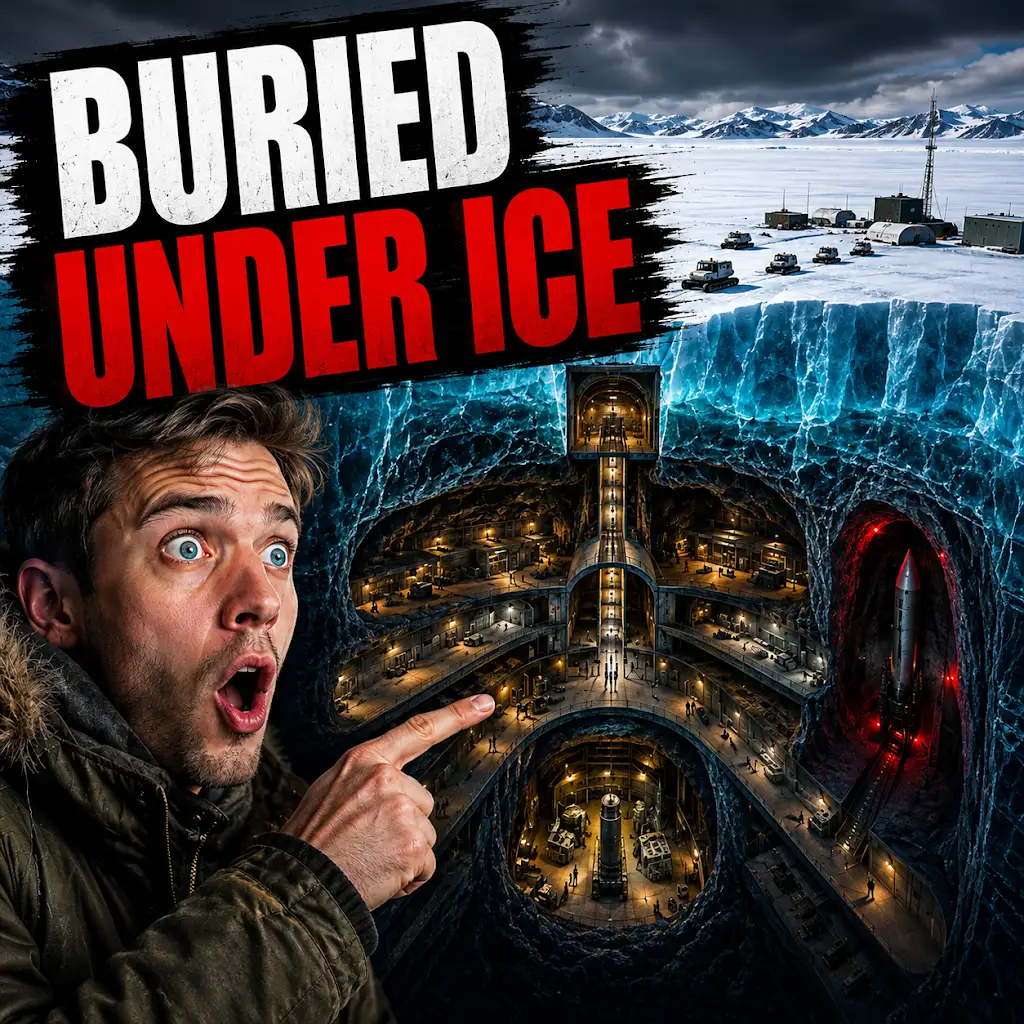
The U.S. Built a Nuclear City Under Greenland. The Ice Won.
FAQs
What is the Greenland ice sheet?
The Greenland ice sheet is a vast body of ice covering approximately 80% of the surface of Greenland. It is the second largest ice body in the world, after the Antarctic ice sheet.
Is there a hidden military base on the Greenland ice sheet?
There is no credible evidence to support the existence of a hidden military base on the Greenland ice sheet. Such claims are often based on conspiracy theories and lack factual evidence.
What is the purpose of the Greenland ice sheet for military operations?
The Greenland ice sheet has strategic importance for military operations due to its location and potential for surveillance and monitoring activities. However, there is no evidence to suggest the existence of a hidden military base within the ice sheet.
Are there any known military installations on the Greenland ice sheet?
There are known military installations in Greenland, such as Thule Air Base, which is operated by the United States Air Force. These installations are openly acknowledged and serve specific military purposes.
What are the environmental concerns related to military presence on the Greenland ice sheet?
The presence of military installations in Greenland, including the potential for any hidden bases, raises concerns about environmental impact and sustainability. The melting of the ice sheet due to climate change also poses challenges for the long-term viability of any military presence in the region.