
The vast, seemingly immutable expanse of Greenland’s ice sheet holds more than just ancient ice and the echoes of a prehistoric world. Beneath its shimmering surface, a chilling legacy of the Cold War lies buried, a testament to the paranoia and technological ambition that once defined global politics. Whispers of secret military installations, particularly those involving nuclear capabilities, have long circulated in hushed tones, fueling speculation and intrigue. While much of this remains shrouded in conjecture, a growing body of evidence and historical documentation points to the unnerving reality that hidden within the Arctic’s frozen embrace are secrets that could have fundamentally altered the course of history. This article delves into the most compelling aspects of these alleged secret nuclear missile sites in Greenland, examining the historical context, the known operations, the ongoing search for lost secrets, and the potential implications of their discovery.
The Strategic Imperative: Why Greenland?
The Cold War was a geopolitical chess match played out on a global scale, with the Arctic emerging as a critical strategic battleground. Greenland, with its immense size and proximity to North America, occupied a particularly pivotal position in the strategic calculations of both the United States and the Soviet Union. The vast, sparsely populated territory offered an ideal canvas for clandestine military operations, far from prying eyes and shielded by extreme weather conditions.
The Dawn of the Nuclear Age and the Missile Gap
The advent of nuclear weapons and intercontinental ballistic missiles (ICBMs) in the mid-20th century fundamentally reshaped military strategy. The concept of “mutually assured destruction” (MAD) became a chilling reality, and both superpowers invested heavily in developing delivery systems capable of striking deep into enemy territory. The immense distances involved in a potential conflict between the US and the USSR meant that the Arctic region, and specifically Greenland, became a prime location for establishing early warning systems and potential launch sites.
Early Warning Systems: The Eyes and Ears of the North
In the early years of the Cold War, before the advent of sophisticated satellite technology, the primary means of detecting incoming Soviet bombers and missiles were ground-based radar installations. Greenland’s strategic location made it an invaluable component of the North American Air Defense Command (NORAD) system. The establishment of numerous radar sites across the island, often in extremely remote and challenging environments, served as the first line of defense against a potential Soviet aerial assault.
Project Iceworm: A Subterranean Dream, a Frozen Nightmare
Perhaps the most audacious and widely known project conceived for Greenland during the Cold War was Project Iceworm. Officially designated as a cover for a network of scientific research stations, the true objective of Project Iceworm was far more sinister. The United States envisioned constructing a vast network of underground tunnels beneath the Greenland ice sheet, designed to house and launch as many as 600 Minuteman intercontinental ballistic missiles.
The Illusion of Secrecy: Technical Challenges and Unforeseen Obstacles
The sheer ambition of Project Iceworm was matched only by its logistical and technical complexities. The idea was to carve out a vast subterranean city within the ice, complete with living quarters, power generation, and missile launch facilities. However, the dynamic nature of glaciers proved to be a formidable foe. The constant movement and shifting of the ice meant that tunnels and facilities were subject to immense pressure and distortion, rendering them unstable and incredibly difficult to maintain.
####### The Unseen Dangers: Environmental Impact and Lingering Contamination
Beyond the immediate operational challenges, Project Iceworm also posed significant environmental risks. The construction and subsequent abandonment of such a massive project within a pristine and fragile Arctic ecosystem raised concerns about potential contamination from fuel, lubricants, and other hazardous materials. While the full extent of any environmental damage remains a subject of ongoing investigation, the possibility of lingering pollutants beneath the ice is a disquieting thought.
Recent discoveries have shed light on the intriguing possibility of nuclear missiles hidden beneath the ice of Greenland, raising questions about the historical implications and the geopolitical landscape of the Cold War era. This topic is further explored in a related article that delves into unexplained ancient artifacts and the mysteries of the past, providing a broader context for understanding how such hidden elements can shape our perception of history. For more information, you can read the article here: Unexplained Ancient Artifacts: Mysteries of the Past.
Operation Crested Arrow: The Unseen Nuclear Arsenal
While Project Iceworm remains the most famous, and perhaps the most ambitious, of Greenland’s Cold War secrets, evidence suggests the presence of other, less publicized, nuclear-related activities. Operation Crested Arrow, a lesser-known initiative, further highlights the strategic importance placed on Greenland as a potential launchpad for nuclear strikes.
The Unveiling of Hidden Launch Sites
Operation Crested Arrow, though not as widely documented as Project Iceworm, is believed to have involved the clandestine establishment of launch facilities for nuclear-capable cruise missiles. The rationale behind such an operation would have been to provide a deployable and relatively covert means of projecting nuclear power into Soviet airspace. Unlike the fixed and highly visible nature of ICBM silos, cruise missiles offered a degree of mobility and surprise.
The Danish Connection: A Nation Caught in the Middle
The existence of American military installations, particularly those with nuclear implications, on Danish soil (Greenland is an autonomous territory within the Kingdom of Denmark) was a source of considerable political tension. Denmark, a NATO member, was officially a nuclear-free zone. The clandestine nature of these operations meant that the Danish government was either complicit in the deception or was kept deliberately in the dark, a situation that could have had severe diplomatic repercussions.
The Role of the Danish Government: A Delicate Dance of Diplomacy and Secrecy
The historical record suggests a complex and often contradictory approach by the Danish government. While publicly adhering to a non-nuclear stance, there were periods of tacit acceptance, or at least a willingness to overlook certain American military activities, particularly in the name of collective defense against the Soviet Union. The precise level of Danish knowledge and consent regarding Operation Crested Arrow and other sensitive operations remains a subject of historical debate and interpretation.
The Lost and the Found: Searching for the Ghosts of the Past
The passage of time and the unforgiving nature of the Arctic environment have done little to erase the physical remnants of these Cold War endeavors. However, the constant movement of the ice and the remote locations make their discovery a monumental task. Modern technology, however, is slowly beginning to shed light on these buried secrets, offering glimpses into the past.
Ground-Penetrating Radar and Satellite Imagery: Peering Through the Ice
Advancements in remote sensing technologies have become indispensable in the search for these hidden installations. Ground-penetrating radar (GPR) can be used to map subsurface structures and identify anomalies within the ice. Similarly, high-resolution satellite imagery can reveal subtle changes in the ice surface that might indicate the presence of buried facilities.
The Thule Air Base Connection: A Gateway to Arctic Secrets
The Thule Air Base, established in the 1950s, served as a crucial hub for American military operations in Greenland. Its strategic location and existing infrastructure made it a natural staging ground for clandestine projects. While Thule itself was not a missile launch site, it is believed to have played a significant role in supporting and facilitating operations like Project Iceworm and potentially Operation Crested Arrow.
The Discovery of Lost Nuclear Weapons: A Chilling Reminder
One of the most alarming discoveries related to the forgotten military installations in Greenland was the accidental uncovering of a crashed B-52 bomber carrying nuclear weapons during the infamous 1968 Thule air disaster. While not a direct missile launch site, this incident underscored the very real presence of nuclear materials in the Arctic and the inherent risks associated with these operations. The search for debris and potential radioactive contamination from this crash continues to this day.
The Lingering Threat: Environmental and Security Implications
The discovery of secret nuclear missile sites, even if long abandoned, carries significant implications, both in terms of environmental concerns and ongoing security considerations. The Arctic, already a region facing rapid environmental change, could be further impacted by the re-emergence of forgotten military hazards.
The Arctic’s Fragile Ecosystem: A New Frontier for Contamination
The Greenland ice sheet is not static; it is a dynamic and constantly shifting body of ice. As the climate warms and glaciers recede, previously buried structures and materials could be exposed to the environment. The potential for leakage of fuels, lubricants, and even radioactive materials from abandoned military sites poses a serious threat to the delicate Arctic ecosystem, which is already under immense pressure from climate change.
The Risk of Re-Emergence: Melting Ice and Unforeseen Consequences
As global temperatures rise and the Greenland ice sheet continues to melt at an alarming rate, the possibility of forgotten military installations being exposed is becoming a tangible concern. This could lead to the release of hazardous substances into the environment, impacting marine life, terrestrial ecosystems, and potentially even human populations in coastal areas.
International Cooperation and Monitoring: A Shared Responsibility
Addressing the potential threats posed by these hidden Cold War relics requires a concerted international effort. Sharing data, coordinating research initiatives, and developing joint monitoring programs are crucial steps in mitigating any environmental or security risks. The Arctic Council, a high-level intergovernmental forum promoting cooperation among Arctic states, could play a vital role in facilitating such collaboration.
Recent discoveries have shed light on the potential existence of nuclear missiles hidden beneath the ice of Greenland, raising concerns about the implications for global security. This intriguing topic is further explored in a related article that delves into the historical context and the strategic significance of such hidden arsenals. For a deeper understanding of how these developments could impact international relations, you can read more in this insightful piece here.
The Unwritten Chapters: The Ongoing Quest for Truth
Despite decades of research and the gradual unveiling of some of Greenland’s Cold War secrets, much remains unknown. The vastness of the ice sheet and the deliberate secrecy surrounding these operations mean that the full extent of the buried legacy is likely yet to be uncovered.
The Scars of the Cold War: A Historical Reckoning
The ongoing search for these hidden sites is not merely an academic pursuit; it is a vital process of historical reckoning. Understanding the scale and nature of these clandestine operations provides crucial insights into the paranoia, ambition, and ethical compromises of the Cold War era. It serves as a stark reminder of the potential for humanity to engage in activities with profound and long-lasting consequences.
The Ethical Dilemma: Disclosure vs. Stability
The question of how to handle the discovery of such sites presents complex ethical dilemmas. While full disclosure is important for historical accuracy and transparency, the revelation of certain sensitive information could potentially reignite geopolitical tensions or create new security concerns. Striking a balance between openness and responsible management of information is paramount.
The Future of Arctic Security: Learning from the Past
The secrets buried beneath Greenland’s ice are more than just relics of a bygone era; they are potent reminders of the fragility of peace and the enduring consequences of geopolitical conflict. As the world navigates a new era of global challenges, understanding and learning from the hidden history of the Arctic can offer valuable lessons for ensuring a more secure and sustainable future. The quest for truth beneath the ice continues, a silent testament to the enduring power of the past and its potential to shape our present and future.
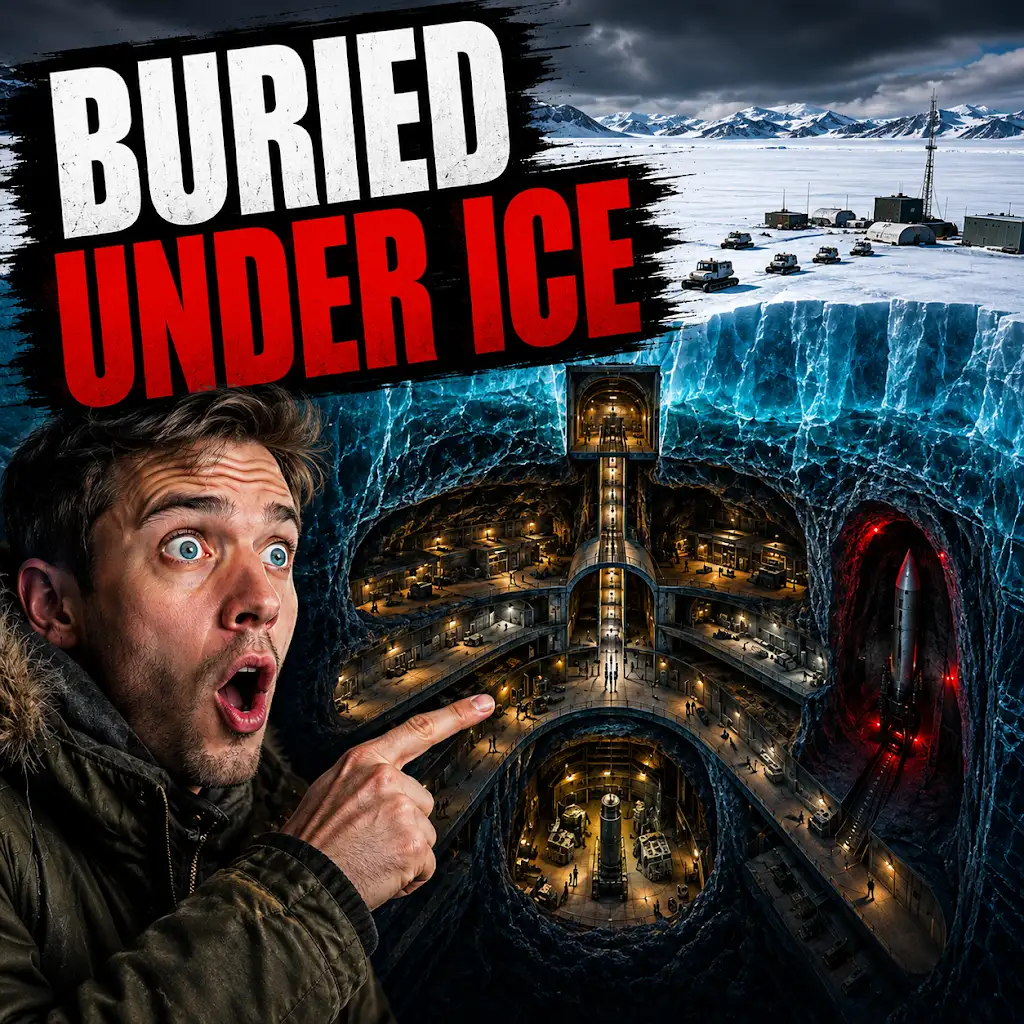
The U.S. Built a Nuclear City Under Greenland. The Ice Won.
FAQs
What is the article about?
The article discusses the discovery of nuclear missiles hidden beneath the ice in Greenland.
How were the nuclear missiles hidden beneath the ice in Greenland discovered?
The nuclear missiles were discovered using declassified Cold War-era satellite images and modern technology that can penetrate ice and snow to reveal hidden structures.
Why were the nuclear missiles hidden beneath the ice in Greenland?
During the Cold War, the United States strategically positioned nuclear missiles in Greenland to deter potential Soviet aggression and to have a strategic advantage in the event of a nuclear conflict.
What is the significance of the discovery of the nuclear missiles in Greenland?
The discovery sheds light on the extent of Cold War-era military activities and the potential environmental impact of the hidden nuclear missiles on the surrounding area.
What are the implications of the hidden nuclear missiles in Greenland for the present day?
The discovery raises questions about the long-term environmental and geopolitical implications of the hidden nuclear missiles, as well as the need for continued monitoring and assessment of similar sites around the world.