
Secret Project Iceworm: Nuclear Missiles in Greenland
The chilling winds of the Arctic have long held their secrets, but few are as audacious and unsettling as that of Project Iceworm. Beneath the vast, seemingly impenetrable ice sheet of Greenland lay a clandestine endeavor by the United States military to house a network of intercontinental ballistic missile (ICBM) launch sites, capable of striking deep into the heart of the Soviet Union. This ambitious and ultimately abandoned plan, conceived during the height of the Cold War, represented a daring gamble with both geology and geopolitics, a testament to the lengths to which superpowers would go to gain a strategic advantage.
The mid-20th century was defined by the palpable tension of the Cold War, a global ideological struggle between the United States and the Soviet Union. The escalating arms race, particularly in the realm of nuclear weaponry, spurred a constant search for strategic advantages. Both nations recognized the critical importance of placing their nuclear deterrent forces within range of the other’s primary military and industrial centers.
The Tyranny of Distance and the ICBM Race
The advent of the Intercontinental Ballistic Missile (ICBM) revolutionized strategic thinking. These powerful rockets, capable of carrying nuclear warheads across continents, offered the promise of rapid and devastating retaliation. However, the initial deployment of ICBMs presented significant challenges. Launch sites were vulnerable to pre-emptive strikes, and their fixed nature made them easier targets. This led to a drive for hardened silos and mobile launch platforms, but a more radical idea began to emerge: an underground launch complex.
The Strategic Imperative: Reaching the Soviet Heartland
From the perspective of the United States, the vast expanse of the Soviet Union presented a formidable target. While bombers and early missile systems could reach some Soviet installations, the desire for a robust and survivable deterrent meant having the ability to strike at Moscow, Leningrad (now St. Petersburg), and other key strategic locations with a high degree of confidence. The geographical proximity offered by Greenland, a Danish territory and strategically vital island, seemed to present an unparalleled opportunity.
The Dawn of a Novel Concept: The Ice as a Shield
The concept of Project Iceworm was born from the intersection of strategic necessity and a unique geological advantage. Greenland’s massive ice sheet, kilometers thick in places, offered an unprecedented natural shield. The idea was to burrow tunnels and missile silos directly into the ice, creating a virtually undetectable and highly survivable launch platform. This would place American ICBMs within striking distance of Soviet targets, while simultaneously making them incredibly difficult for the Soviets to locate and destroy.
Project Iceworm, a covert operation during the Cold War, aimed to establish a network of nuclear missile sites beneath the Greenland ice sheet. This ambitious project highlights the lengths to which nations will go to secure strategic advantages in a tense geopolitical climate. For a deeper understanding of how political fragmentation can influence military strategies and international relations, you can read a related article on the topic at The Impact of Political Fragmentation.
The Technical Challenges of an Icy Frontier
Beneath the seemingly static surface of the Greenland ice sheet lay a dynamic and unforgiving environment. Project Iceworm was not merely about digging holes; it was a monumental feat of engineering and logistics, pushing the boundaries of what was then technologically possible. The very nature of ice, its constant movement and susceptibility to temperature fluctuations, presented unique and formidable challenges.
Engineering in a Frozen World: Tunnels and Silos
The core of Project Iceworm involved excavating a vast network of tunnels and missile silos within the ice. This was a Herculean task, requiring specialized drilling equipment and techniques adapted to the extreme cold and the ever-shifting nature of glacial ice. The tunnels were designed to be wide enough to accommodate missile transporters and personnel, while the silos themselves would house the ICBMs, ready for immediate launch.
The Threat of Ice Movement: A Constant Battle
Perhaps the most significant technical hurdle was the inherent movement of the ice sheet. Glaciers are not static; they flow, albeit slowly, driven by gravity and the accumulation of snow. This glacial flow meant that any structure built within the ice would be subjected to immense pressures and would inevitably be deformed or destroyed over time. Project Iceworm planners had to account for this movement, designing structures that could theoretically adapt or be maintained, a daunting prospect.
Temperature Extremes and Material Science
The Arctic environment posed extreme temperature challenges. The equipment used for excavation and construction had to withstand temperatures far below freezing, and materials used in the construction of the tunnels and silos needed to be resilient to extreme cold without becoming brittle. The psychological toll on the personnel working in such an isolated and hostile environment was also a significant consideration.
Logistics and Supply Chains in the Arctic
Establishing and maintaining a secret military base in such a remote location presented immense logistical hurdles. The project required a constant flow of personnel, equipment, fuel, and supplies, all transported across vast distances and through challenging Arctic weather. This reliance on a complex and vulnerable supply chain was a significant vulnerability in itself.
The Role of the U.S. Army Corps of Engineers
The U.S. Army Corps of Engineers was tasked with the monumental undertaking of designing and constructing the subterranean facilities. Their expertise in tunneling, engineering, and military construction was put to the ultimate test in this unprecedented environment.
The Unseen Support: Supply Flights and Naval Operations
The success of Project Iceworm hinged on a continuous and discreet supply chain. This likely involved specialized transport aircraft and naval vessels capable of operating in Arctic waters, all operating under extreme secrecy to avoid detection.
Secrecy and Deception: The Shadow of the Cold War

Project Iceworm was, by its very nature, a deeply classified undertaking. The strategic implications of such a powerful and survivable nuclear arsenal, if discovered by the Soviet Union, could have dramatically altered the global balance of power and potentially ignited a devastating conflict. Maintaining absolute secrecy was paramount, and this led to elaborate measures of deception.
The Veil of Classification: Operation Iceworm’s Cover
The project operated under a stringent veil of classification, with its existence known only to a select few in the highest echelons of the U.S. government and military. The sheer audacity of the plan likely contributed to its secrecy, as the concept itself might have been viewed as too outlandish for widespread discussion.
The Danish Connection: Navigating International Waters
Greenland, though a territory of Denmark, was crucial to the project’s strategic placement. This involved delicate diplomatic maneuvering and secret agreements with the Danish government, ensuring their tacit approval and cooperation without revealing the true nature of the American activities.
The Public Façade: The Ice Cap Station
To mask the true purpose of the operations, a cover story was established. The Americans maintained a publicly acknowledged presence in Greenland under the guise of scientific research and meteorological monitoring. The establishment of “Camp Century” and other installations served as a plausible front for the extensive construction and logistical activities.
Scientific Research as a smokescreen
The narrative of scientific exploration and data collection provided a convenient and believable cover for the extensive drilling and construction activities. Researchers studying ice cores, glaciology, and Arctic weather patterns were a plausible presence, their activities easily mistaken for benign scientific endeavor.
Military Presence as a Supporting Role
While the true purpose was hidden, a visible military presence was necessary to manage the project. This military component was framed as supporting the scientific mission, a common practice for military forces operating in remote and strategically sensitive areas.
The Unforeseen Enemy: The Unstable Ice

Despite the meticulous planning and cutting-edge engineering, Project Iceworm ultimately succumbed to an enemy far more powerful and unpredictable than any Soviet missile: the very ice it sought to harness. The dynamic nature of the Greenland ice sheet proved to be an insurmountable obstacle.
The Constant Creep of the Glacier
The slow but relentless movement of the ice sheet exerted immense pressure on the constructed tunnels and silos. Structures that were once stable would begin to buckle, warp, and deform as the ice flowed around them. Maintaining the integrity of the launch facilities became a constant and ultimately futile battle.
Structural Deformation and Instability
As the ice shifted, the carefully excavated tunnels and silos experienced structural deformation. The immense pressures could cause walls to collapse, ceilings to sag, and launch mechanisms to become jammed. The constant need for repairs and stabilization would have been an enormous undertaking.
The Risk of Collapse and Catastrophe
The continuous movement of the ice presented the terrifying prospect of a catastrophic collapse, potentially burying the entire complex and its nuclear payload deep within the glacier, or worse, triggering an accidental launch.
The Peril of Melting and Subglacial Water
As global temperatures began to rise, even in the Arctic, the ice sheet became more susceptible to melting. Subglacial water channels could form, creating a lubricating layer that accelerated ice flow and introduced the risk of flooding within the subterranean complex.
The Threat of Contamination
The presence of nuclear warheads within a melting and potentially unstable ice mass also raised concerns about long-term environmental contamination should the complex ever be compromised.
Project Iceworm, a covert operation during the Cold War, aimed to deploy nuclear missiles beneath the ice of Greenland, highlighting the strategic military interests in the Arctic region. This ambitious project, which sought to leverage the vast ice sheets for missile storage, has drawn parallels to other historical military endeavors. For instance, an intriguing analysis of the Piri Reis map and its implications for military strategy can be found in a related article that discusses the U.S. Air Force’s studies on ancient cartography and its relevance to modern geopolitics. You can read more about this fascinating connection in the article here.
The End of Project Iceworm: A Cold War Relic
| Aspect | Details |
|---|---|
| Project Name | Project Iceworm |
| Location | Under Greenland |
| Objective | Deployment of nuclear missiles |
| Duration | 1959-1967 |
| Concealment | Under the Greenland Ice Sheet |
| Abandonment | Due to ice movement and logistical issues |
By the late 1960s, the growing realization of the insurmountable technical challenges and the increasing cost of maintaining the project led to its eventual abandonment. Project Iceworm, once a symbol of American strategic ambition, was relegated to the annals of Cold War history, a testament to the limits of human engineering in the face of nature’s power.
The Decision to Withdraw: A Pragmatic Realization
The immense financial and logistical burden, coupled with the undeniable evidence of the ice’s destructive power, made the continued pursuit of Project Iceworm untenable. The strategic advantage it promised was increasingly outweighed by the risks and costs involved.
The High Cost of an Unstable Foundation
The constant need for repairs, the specialized equipment required for operations in the extreme cold, and the logistical complexities all contributed to an exorbitant cost that even the wealthy United States government found difficult to justify for a project facing such inherent instability.
The Growing Understanding of Glaciology
As scientific understanding of glaciers and ice sheets advanced, the true extent of the challenges posed by ice movement and deformation became clearer. This increased knowledge likely contributed to the growing realization that the project was fundamentally flawed.
The Legacy of the Frozen Missiles
While Project Iceworm was never operational and its missiles were never deployed, its existence left a significant imprint. It stands as a stark reminder of the paranoia and the extreme measures considered during the Cold War, a period when the threat of nuclear annihilation loomed large.
A Ghostly Echo in the Ice
The abandoned tunnels and facilities, slowly being consumed by the ice, serve as a ghostly echo of a forgotten ambition. The possibility remains that remnants of the project, including potentially nuclear material, could resurface as the ice sheet continues to melt.
Lessons Learned for Future Arctic Operations
The experience of Project Iceworm provided invaluable lessons for future military and civilian operations in the Arctic, highlighting the critical importance of understanding and respecting the unique environmental conditions and the dynamic nature of ice. It underscored the need for careful geological and environmental assessments before undertaking large-scale projects in such fragile ecosystems. Project Iceworm, a testament to human ingenuity and ambition, ultimately became a casualty of the unforgiving power of nature, a chilling reminder of the Cold War’s perilous reach beneath the frozen surface of Greenland.
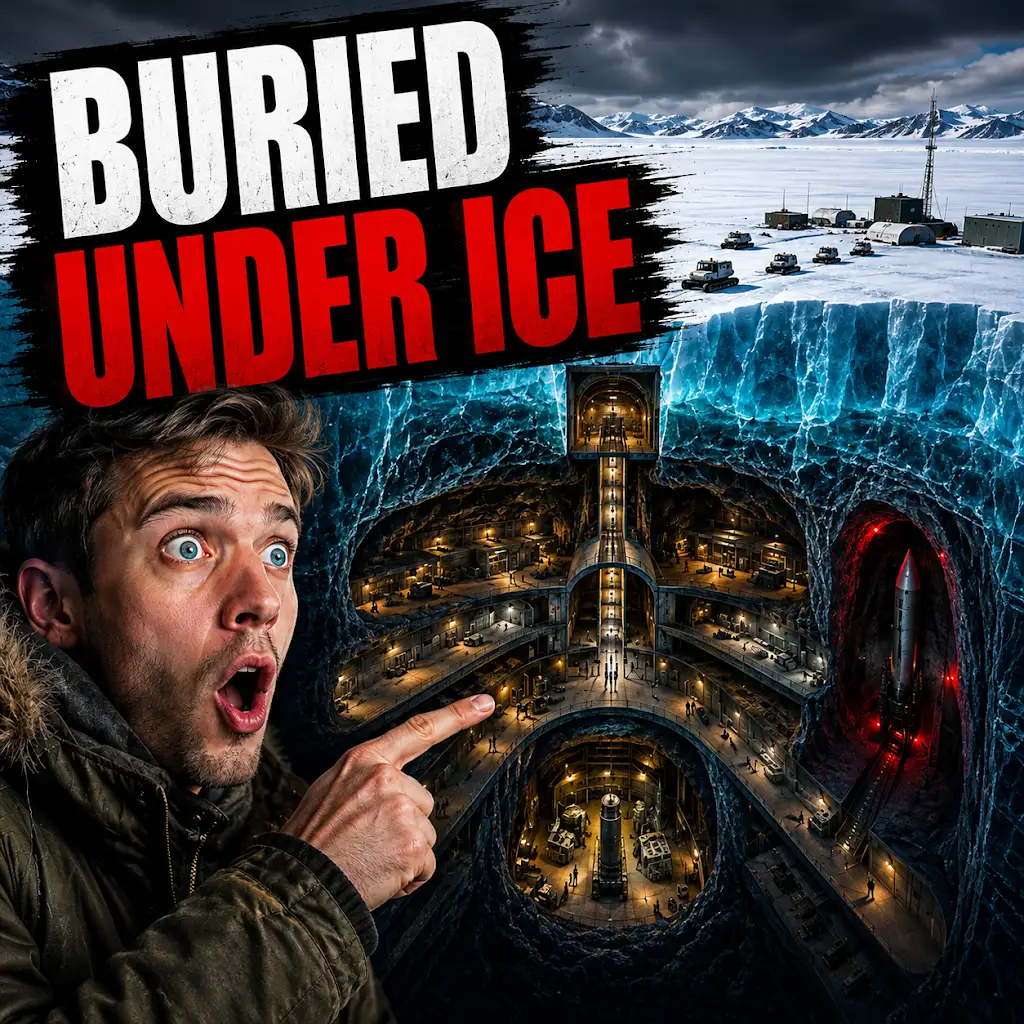
The U.S. Built a Nuclear City Under Greenland. The Ice Won.
FAQs
What was Project Iceworm?
Project Iceworm was a top-secret United States Army program during the Cold War to build a network of mobile nuclear missile launch sites under the Greenland ice sheet.
Where were the nuclear missiles located?
The nuclear missiles were located under the Greenland ice sheet, with the main base of operations being Camp Century, which was built in northwestern Greenland.
What was the purpose of the nuclear missiles in Greenland?
The purpose of the nuclear missiles in Greenland was to provide a strategic deterrent against potential Soviet aggression during the Cold War, as well as to establish a presence in the Arctic region.
Did Project Iceworm have any environmental impact?
Yes, Project Iceworm had significant environmental impact, as the nuclear reactor at Camp Century led to the release of radioactive coolant into the surrounding ice and snow, raising concerns about potential contamination.
What ultimately led to the abandonment of Project Iceworm?
Project Iceworm was ultimately abandoned due to the unstable and unpredictable nature of the Greenland ice sheet, which made the construction and maintenance of the missile sites impractical and risky. Additionally, the signing of the 1963 Treaty of Kangerlussuaq between the United States and Denmark led to the removal of the nuclear missiles and the abandonment of Camp Century.