A chilling discovery has sent ripples of speculation and unease across the globe. Deep beneath the unforgiving ice of Greenland, a sprawling, clandestine military installation, codenamed “Project Iceworm,” has been unearthed. For decades, this hidden complex lay dormant, a testament to Cold War ambitions and a stark reminder of humanity’s capacity for secret endeavors. The revelation of its existence has ignited a firestorm of questions, prompting investigations into its purpose, its creators, and the implications for modern geopolitics.
A Fleeting Whisper in the Arctic Wind
For years, whispers and fragmented reports circulated within intelligence communities and among a few intrepid Arctic explorers. Tales of unusual seismic activity, unexplained magnetic anomalies, and faint, persistent radio signals emanating from remote sectors of Greenland were dismissed as folklore or misinterpretations of natural phenomena. These whispers, however, were the nascent tremors preceding a seismic revelation. The sheer isolation and harsh environment of Greenland had, until recently, served as an effective veil, shielding this colossal secret from prying eyes.
The Breakthrough: Advanced Imaging and Satellite Reconnaissance
The breakthrough that finally peeled back the icy curtain was not a dramatic expedition, but rather a meticulous analysis of an unprecedented volume of data. A new generation of satellite imaging technology, coupled with sophisticated ground-penetrating radar and advanced sonar, allowed researchers to peer deeper than ever before. Anomalies in the ice sheet, too regular and too geometrically precise to be natural, began to emerge. These patterns, initially detected by civilian scientific missions analyzing glacial melt, caught the attention of military intelligence agencies. Further focused analysis, employing state-of-the-art equipment, confirmed the presence of an extensive subterranean network, far too complex and artificial to be anything other than a man-made structure.
Initial Excavation and Confirmation
The initial confirmation was a painstaking and hazardous process. A small, highly specialized team, operating under extreme secrecy, was deployed to the suspected location. Using specialized ice-drilling equipment, they meticulously bored into the permafrost and ice. The first visual evidence was a shock: a reinforced concrete wall, impossibly smooth and impossibly deep within the ice. Subsequent drilling revealed vast chambers, interconnected tunnels, and what appeared to be heavy industrial machinery, all perfectly preserved by the cryogenic temperatures. The scale of the undertaking was immediately apparent, dwarfing any previously known subterranean military installations.
The discovery of an underground military base beneath the Greenland ice has sparked significant interest and speculation regarding its origins and purpose. This topic aligns closely with the exploration of lost technologies and their implications in modern times. For a deeper understanding of how such hidden structures might relate to historical advancements, you can read more in the article titled “Unlocking the Mysteries of Lost Tech” available at this link.
Echoes of the Cold War: The Genesis of Project Iceworm
Strategic Imperatives in a Bipolar World
The origins of Project Iceworm are undeniably rooted in the intense geopolitical rivalry of the Cold War. The United States and the Soviet Union were locked in a desperate race for strategic superiority, each seeking to gain an unassailable advantage over the other. Greenland, with its strategic location between North America and Europe, its vast, largely uninhabited territory, and its significant ice cover, presented a unique proposition. The ability to establish a hidden, hardened military presence that could withstand a nuclear attack and project power globally was a tantalizing prospect.
The “Ice Station” Concept: A Shield Against Annihilation
The core concept behind Project Iceworm, as pieced together from recovered fragmented documents, was to create a virtually indestructible military base, an “ice station” capable of surviving a full-scale nuclear exchange. The thick ice sheet of Greenland was envisioned as the ultimate camouflage and a formidable defense against conventional and nuclear weaponry. The idea was to have a hidden command and control center, missile silos, and logistical support facilities, all entombed within the frozen earth, ready to be activated in the event of a global conflict.
The Engineering Marvel: Conquering the Arctic Environment
Building such a colossal structure in the hostile Arctic environment was an engineering feat of unparalleled magnitude. The challenges were immense: extreme cold, permafrost instability, blizzards, and the sheer logistical nightmare of transporting materials and personnel. Recovered technical schematics reveal innovative solutions to these problems, including advanced insulation techniques, geothermal heating systems to prevent ice melt around critical structures, and sophisticated ventilation systems designed to operate in sub-zero temperatures. The scale of concrete poured, steel erected, and machinery installed is testament to a massive, multi-year effort involving thousands of individuals.
Unveiling the Purpose: More Than Just a Bunker?
Missile Silos and Strategic Deterrence
One of the most significant discoveries within Project Iceworm is the presence of what appear to be numerous, well-preserved missile silos. These silos, designed to house intercontinental ballistic missiles (ICBMs), suggest that the base was intended to be a key component of America’s strategic nuclear deterrent. The implication is that Greenland was to serve as a launchpad for missiles capable of reaching targets deep within Soviet territory, a terrifying escalation of the Cold War arms race. The ability to launch such weapons from a hidden, hardened location would have presented a significant tactical advantage and a potent symbol of power.
Command and Control Facilities: The Nerve Center of Operations
Beyond missile capabilities, the base also appears to have housed extensive command and control facilities. Vast operations rooms, equipped with communication arrays, monitoring stations, and data processing centers, have been uncovered. These facilities suggest that Project Iceworm was not merely a passive launchpad but a fully functional operational hub, designed to coordinate military activities across vast distances and to maintain communication even in the most dire of circumstances. The preserved state of some of these communication systems hints at a potential to reactivate them, raising further concerns.
Research and Development: The Unknown Frontier
Perhaps the most perplexing aspect of Project Iceworm are the indications of extensive research and development facilities. While some equipment points to conventional military operations, other areas contain enigmatic machinery and laboratories with no readily apparent military application. Speculation abounds that Project Iceworm may have also been a clandestine hub for experimental technologies, including advanced weaponry, meteorological manipulation, or even early attempts at exotic energy sources. The possibility of research into areas beyond conventional military science adds a layer of profound mystery and potential future implications.
The Political Fallout: A Global Reckoning

International Condemnation and Calls for Transparency
The revelation of Project Iceworm has triggered a swift and severe international backlash. Nations, particularly those with Arctic interests, have voiced outrage and demanded full transparency from the United States. The discovery, made public through leaks and subsequent confirmation, has ignited a firestorm of accusations regarding clandestine military operations and a lack of accountability. Calls for international oversight and a thorough investigation into the base’s purpose and potential current status are echoing from capitals around the world.
The Greenlandic Perspective: A Stolen Future?
For the indigenous population of Greenland, the discovery is a deeply unsettling reminder of their nation’s colonial past and their ongoing struggle for self-determination. The existence of such a massive, secret military installation built on their land without their knowledge or consent is viewed as a profound violation. There are growing demands for reparations, for access to the site, and for a greater say in the future of Greenland’s resources and its strategic importance. The discovery has amplified calls for full independence and a rejection of any further foreign military presence.
Implications for Arms Control and Geopolitical Stability
The existence of a massive, hidden military installation, potentially still functional in some capacity, has profound implications for current arms control treaties and global geopolitical stability. The very idea that such a significant strategic asset could have been built and maintained in secret for decades raises questions about the effectiveness of existing verification mechanisms. The discovery could reignite tensions between major powers and lead to a renewed arms race as nations scramble to understand and counter any perceived threats posed by such hidden capabilities.
Recent discussions surrounding the underground military base beneath the Greenland ice have sparked interest in the potential for lost ancient technology. Many researchers believe that such hidden structures could be linked to advanced civilizations that once thrived in the region. For a deeper exploration of this intriguing topic, you can read more about it in the article on lost ancient technology. This connection between modern military operations and ancient mysteries continues to captivate both historians and conspiracy theorists alike.
The Future of Project Iceworm: To Thaw or to Seal?
| Location | Depth | Size | Purpose |
|---|---|---|---|
| Greenland | Unknown | Unknown | Military operations, research |
The Dilemma of Decommissioning
The question of what to do with Project Iceworm now looms large. Decommissioning such a massive and potentially hazardous installation presents a monumental challenge. The sheer scale of the complex, its location deep beneath tons of ice, and the potential presence of hazardous materials or even dormant weaponry make any attempt at safe dismantling incredibly complex and costly. The environmental impact of disturbing such a pristine Arctic environment must also be a significant consideration.
The Temptation of Re-activation
Conversely, the sheer technological investment and strategic potential of Project Iceworm undoubtedly presents a temptation. Could parts of the base be reactivated for modern military purposes, or even for scientific research? The infrastructure is already in place, albeit in a frozen state. The potential for a hardened, off-grid command center or a launch facility capable of surviving future conflicts is a prospect that cannot be entirely dismissed by military strategists, raising further ethical and security concerns.
A Legacy of Secrets: The Unfolding Narrative
The discovery of Project Iceworm is not an ending, but a beginning. It is a story still unfolding, a testament to the hidden histories that lie beneath the surface of our world. The full implications of this subterranean behemoth are yet to be understood, and the decisions made regarding its future will undoubtedly shape the geopolitical landscape for years to come. Whether it becomes a relic of the past, a source of historical knowledge, or a renewed point of contention, Project Iceworm has irrevocably altered our perception of the Arctic and the enduring shadows of human ambition.
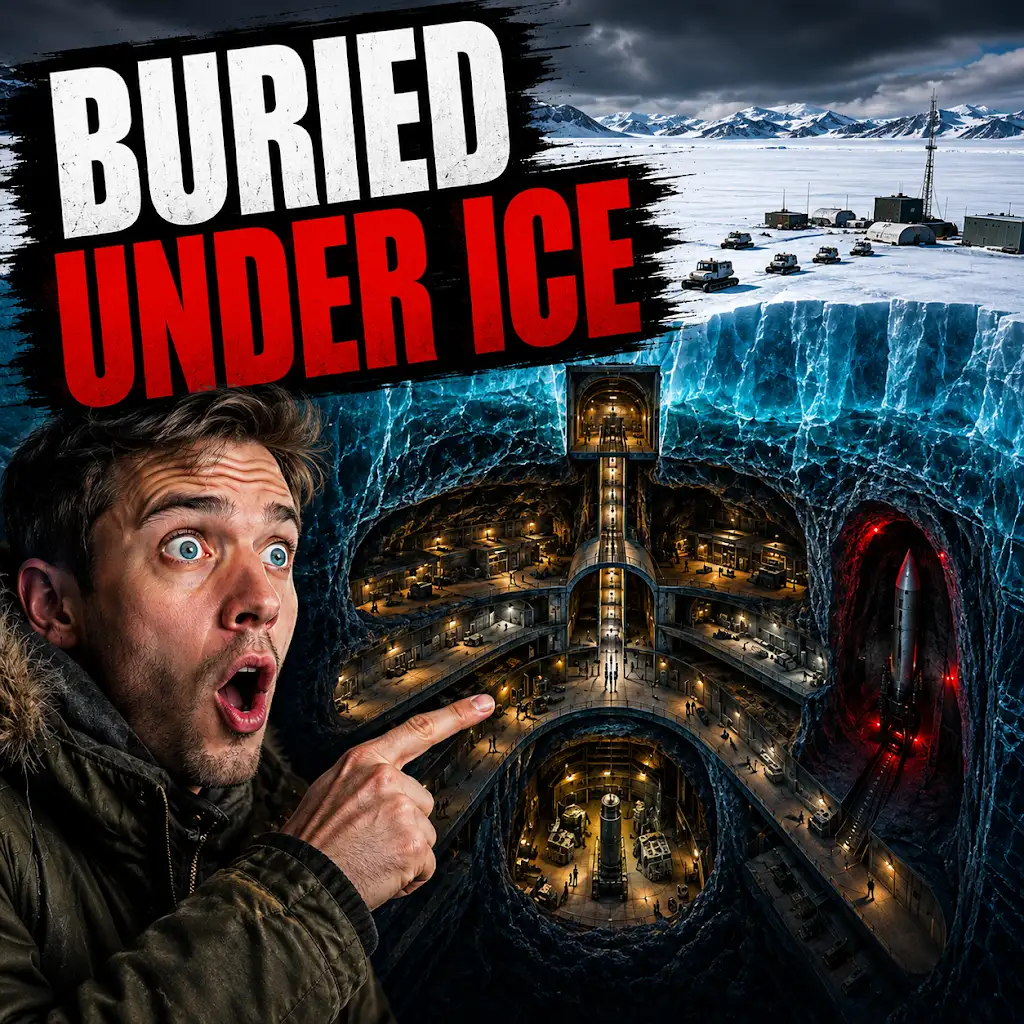
The U.S. Built a Nuclear City Under Greenland. The Ice Won.
FAQs
1. Is there an underground military base beneath the Greenland ice?
Yes, there have been reports and speculation about the existence of an underground military base beneath the Greenland ice. However, there is no official confirmation or evidence to support these claims.
2. What purpose would an underground military base serve beneath the Greenland ice?
An underground military base beneath the Greenland ice could potentially serve as a strategic location for military operations, research, or surveillance. It could also provide a secure and hidden location for sensitive military activities.
3. How feasible is it to construct and maintain an underground military base beneath the Greenland ice?
Constructing and maintaining an underground military base beneath the Greenland ice would pose significant technical and logistical challenges. The extreme cold, shifting ice, and remote location would make it a complex and costly endeavor.
4. What are the potential environmental impacts of an underground military base beneath the Greenland ice?
The construction and operation of an underground military base beneath the Greenland ice could have potential environmental impacts, including disruption to the ice sheet and local ecosystems. It would be important to carefully consider and mitigate these impacts.
5. Are there any international regulations or treaties that would govern the construction of an underground military base beneath the Greenland ice?
The construction of an underground military base beneath the Greenland ice would likely be subject to international regulations and treaties, particularly those related to environmental protection and territorial sovereignty. It would be important for any such project to comply with these regulations and treaties.