The frozen expanse of Greenland, a vast canvas of white and blue, harbors secrets as ancient and formidable as the ice itself. Beneath its seemingly impenetrable glaciers, whispers of a forgotten era lie entombed, remnants of a military endeavor shrouded in the mists of Cold War paranoia. This is the story of “Project Iceworm,” and the abandoned military base that became a ghost in the frozen north.
The icy winds that sweep across Greenland are not the only forces that have shaped its history. During the height of the Cold War, a chilling geopolitical tension between the United States and the Soviet Union fueled ambitious, often audacious, projects designed to gain a strategic advantage. One such project, born from a cocktail of fear and foresight, was codenamed “Project Iceworm.” Its objective was audacious: to construct a network of ballistic missile launch sites hidden beneath the vast ice sheet of Greenland. The logic was simple, yet terrifyingly effective: a base camouflaged by nature, impervious to detection and immune to conventional attack.
A Strategic Gambit in the Arctic
The Arctic, once a remote and largely ignored region, became a critical strategic theater during the Cold War. Its proximity to both superpowers made it a prime location for early warning systems and, more ominously, for the placement of nuclear missiles. Greenland, with its vast and uninhabited interior, presented a unique opportunity for the United States to establish a forward operating base, capable of striking targets deep within Soviet territory with minimal warning. The idea of burying missile silos under ice offered an unparalleled level of concealment, making the base a phantom threat to the USSR and a virtually unassailable asset for the US.
The Dream of Sub-glacial Dominance
The ambition behind Project Iceworm extended beyond mere missile deployment. The planners envisioned a sprawling, self-sufficient city beneath the ice, a testament to human ingenuity and a symbol of American technological prowess. This subterranean metropolis was conceived to house thousands of personnel, complete with living quarters, workshops, and even recreational facilities. The ultimate goal was to create a permanent, undetectable military presence in the Arctic, capable of projecting power for decades to come. The sheer scale of the undertaking, however, was as staggering as the frozen landscape it sought to conquer.
Recent discoveries have shed light on an abandoned military base buried under the ice of Greenland, raising questions about its historical significance and potential implications for modern geopolitics. This intriguing topic is further explored in a related article that discusses the economic impact of nearshoring and how it might influence military strategies in the Arctic region. For more insights, you can read the full article here: Nearshoring: The Economic Impact.
The Engineering Marvels and the Unforeseen Challenges
Constructing a military base beneath thousands of feet of ice was a feat that pushed the boundaries of engineering and resourcefulness. The initial plan involved carving out a network of tunnels and caverns from the ice itself, creating a self-supporting structure that could withstand the immense pressures of the glacier. The concept was not to melt the ice, but to utilize its inherent properties as a shield and a building material. This required innovative techniques for excavation, ventilation, and power generation in an environment where conventional methods were often rendered useless.
Tunnels of Ice: A Fragile Foundation
The primary method of construction involved excavating kilometers of tunnels, each designed to house barracks, missile silos, and essential infrastructure. Specialized boring machines were deployed, capable of chewing through the dense glacial ice. The ice itself was treated as a construction material, with the excavated ice being used to reinforce the tunnel walls and ceilings. The engineers grappled with the constant threat of collapse, as the immense weight of the ice above exerted constant pressure. Maintaining stable temperatures and managing meltwater were also critical challenges that demanded ingenious solutions.
Temperature Control and Insulation
Keeping the base operational required an elaborate system of climate control. The natural frigidity of Greenland was a double-edged sword. While it provided a cooling effect, preventing the ice from melting prematurely, it also presented the risk of freezing the base solid. Sophisticated heating and ventilation systems were implemented to maintain habitable temperatures for the personnel and to prevent critical equipment from succumbing to the extreme cold. The insulation of the tunnels was paramount, preventing heat loss and energy wastage.
Powering the Subterranean City
Providing a reliable power source for a base buried under ice was a monumental task. The initial plans relied on a combination of diesel generators and potentially even a small nuclear reactor, though the latter was never fully realized due to safety concerns and logistical hurdles. The sheer energy demands of heating, lighting, and operating machinery in such an extreme environment meant that power generation was a constant operational concern. The logistical challenges of transporting fuel and maintaining the generators in the harsh Arctic conditions were immense.
The Ghost of Camp Century: A Tangible Legacy
While Project Iceworm never reached its full, ambitious potential, one of its most significant components was brought to life: Camp Century. Established in 1959, Camp Century was a pioneering outpost designed to test the feasibility of establishing and sustaining a large military presence beneath the Greenland ice sheet. It served as a testing ground for construction techniques, operational procedures, and the psychological impact of living in such an isolated and extreme environment. Though ultimately abandoned, Camp Century left behind a tangible, albeit decaying, legacy.
A City of Snow and Steel
Camp Century was far more than just a few tents. It was a sprawling network of interconnected modules and tunnels, carved out of the ice. The base housed a hospital, a chapel, a barber shop, a gym, and even a newspaper. It was an ambitious attempt to replicate a semblance of normal life in an environment that was anything but normal. The modules were constructed from prefabricated steel, designed to be easily transported and assembled. These were then covered by the excavated ice, creating a protective and insulating shell.
Life Beneath the Glacier
The soldiers stationed at Camp Century experienced a unique and challenging existence. They lived and worked in a world of perpetual twilight, with only artificial light to mark the passage of time. The constant hum of machinery was the soundtrack to their lives, a reminder of the complex systems keeping them alive. The isolation was profound, with limited contact with the outside world. Yet, for the engineers and scientists, it was a period of intense discovery and innovation, pushing the boundaries of what was thought possible.
The Unforeseen Ice Creep
The greatest enemy of Camp Century, and indeed of Project Iceworm, was not military attack but the very ice it was built upon. The Greenland ice sheet is a dynamic entity, constantly flowing and shifting. The engineers had accounted for some ice movement, but the reality of the glacial creep proved to be far more relentless and unpredictable than anticipated. The tunnels began to buckle and deform, the modules started to sink, and the ice above exerted ever-increasing pressure.
The Unraveling of Project Iceworm
Despite the initial enthusiasm and the considerable resources invested, Project Iceworm was plagued by a series of insurmountable challenges. The engineering hurdles proved more complex than initially conceived, and the environmental realities of the Arctic began to assert their dominance. The dream of a hidden, invincible base gradually began to unravel.
The Shifting Ice: A Constant Threat
The relentless movement of the ice sheet proved to be the ultimate undoing of the sub-glacial base. As the ice flowed, it exerted immense pressure on the tunnels and structures, causing them to deform and collapse. The engineers’ attempts to mitigate these effects, such as using adjustable supports, proved to be temporary solutions against a force of nature. The base was effectively being squeezed out of existence by the very ice that was meant to conceal and protect it.
Structural Integrity and Maintenance Nightmares
Maintaining the structural integrity of the tunnels and modules became an increasingly difficult and costly endeavor. The constant need for repairs and adjustments diverted resources and personnel from other critical tasks. The sheer scale of the base meant that even small areas of instability could have cascading effects, threatening the entire complex. The logistical nightmare of transporting repair materials and personnel to such a remote and hostile location added further complexity.
The Financial Drain and Shifting Priorities
Beyond the engineering and environmental challenges, Project Iceworm also became a significant financial burden. The ambitious scope of the project, coupled with the unforeseen difficulties, led to escalating costs. As the Cold War evolved and new technological advancements emerged, the strategic value of a sub-glacial missile base began to be questioned. Other defense initiatives and missile technologies offered more flexible and cost-effective solutions. The ever-increasing financial drain, coupled with the growing realization of the project’s inherent instability, led to a reassessment of its viability.
A Changing Geopolitical Landscape
The geopolitical landscape of the Cold War was not static. The development of intercontinental ballistic missiles (ICBMs) and submarine-launched ballistic missiles (SLBMs) offered alternative and arguably more effective means of nuclear deterrence. The perceived need for a static, fixed missile base under Greenland ice diminished as these more mobile and survivable systems gained prominence. The immense investment required for Project Iceworm began to seem less strategic in the face of evolving military doctrine.
Recent discoveries have shed light on an abandoned military base hidden beneath the ice of Greenland, raising questions about its historical significance and the technologies it may hold. Researchers are now exploring the implications of this find, particularly in relation to ancient technologies that could be relevant in today’s world. For a deeper understanding of how such technologies can be unlocked in times of scarcity, you can read more in this insightful article on the topic. Check it out here: ancient technology.
The Frozen Tomb: The Fate of the Abandoned Base
In 1966, after less than a decade of operation, Camp Century was officially decommissioned and abandoned. The dream of a hidden city beneath the ice was put to rest, leaving behind a silent testament to human ambition and the unforgiving power of nature. The infrastructure was left to the mercy of the ice, slowly being crushed and consumed by the glacier.
A Ghostly Relic Beneath the Ice
Today, what remains of Camp Century lies entombed beneath thousands of feet of ice. The original tunnels and modules are likely distorted beyond recognition, buried deep within the flowing glacier. The radioactive waste, including spent nuclear fuel from a small experimental reactor, poses a long-term environmental concern, a lingering reminder of the technological hubris that once occupied this frozen landscape. While direct access is virtually impossible, the lingering presence of the base continues to spark scientific curiosity and speculation.
Scientific Expeditions and Future Concerns
While the base itself is inaccessible, scientists have conducted studies on the Greenland ice sheet, using radar and seismic imaging to understand the dynamics of the glacier and to map the buried remnants of Camp Century. These expeditions provide valuable insights into glacial behavior and climate change, while also raising concerns about the potential for the stored waste to be released into the environment as the ice melts. The abandoned base has become an unintended, yet significant, subject of scientific research.
The Mystery and the Allure of the Frozen Past
The story of Project Iceworm and its abandoned base under the Greenland ice continues to fascinate. It is a tale of daring innovation, Cold War anxieties, and the ultimate triumph of nature over human endeavor. The secrets buried beneath the ice offer a glimpse into a unique chapter of history, a reminder of the extraordinary lengths to which nations will go in the pursuit of strategic advantage, and the enduring power of the natural world to reclaim its dominion. The abandoned military base, a silent sentinel in the frozen north, continues to hold its secrets, a ghostly echo of a forgotten era.
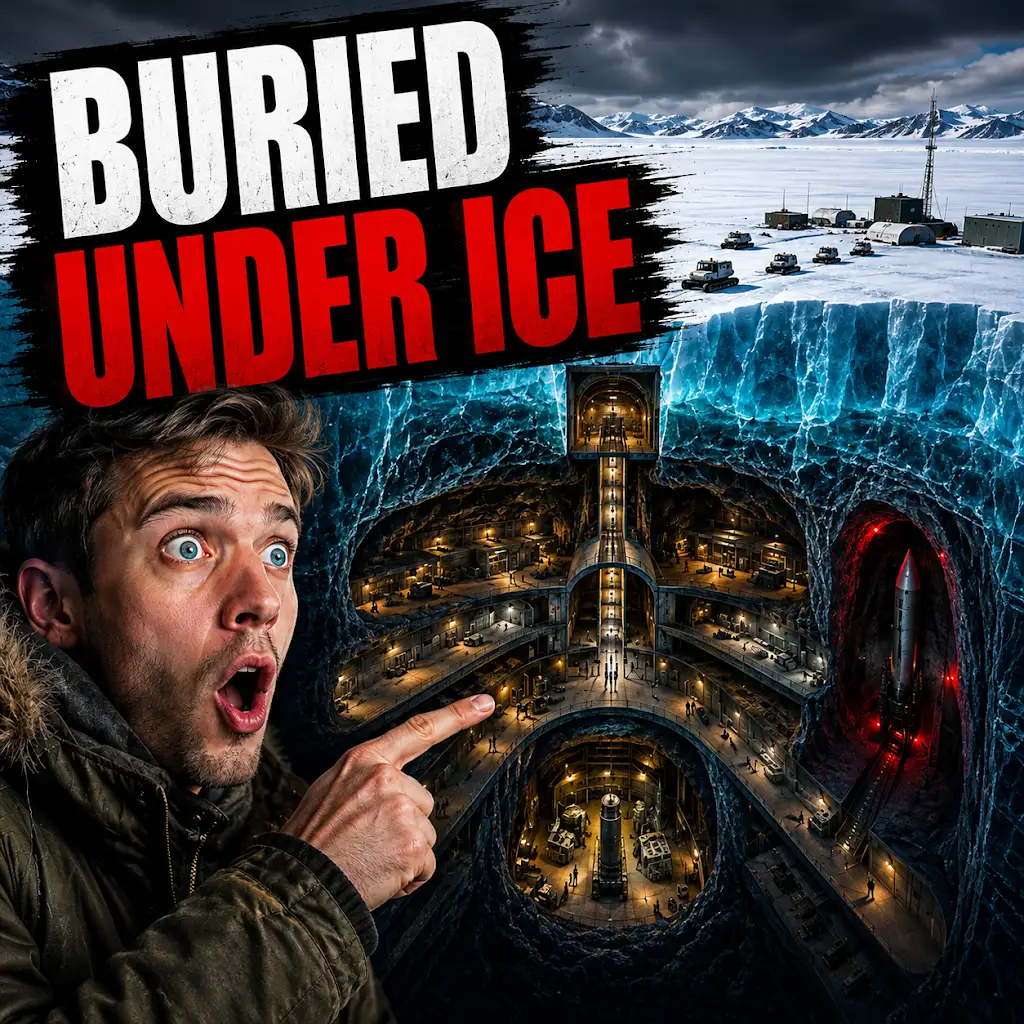
The U.S. Built a Nuclear City Under Greenland. The Ice Won.
FAQs
1. What is the abandoned military base under Greenland ice?
The abandoned military base under Greenland ice refers to a Cold War-era military installation that was built by the United States in 1959 as part of the Distant Early Warning (DEW) line. It was used to detect and provide early warning of any incoming Soviet aircraft or missiles.
2. Why was the military base abandoned?
The military base was abandoned in 1966 due to the harsh Arctic conditions and the high cost of maintaining the facility. The shifting ice and harsh weather made it difficult to sustain the base, leading to its eventual abandonment.
3. What is the current state of the abandoned military base?
The abandoned military base is currently buried under layers of ice and snow in Greenland. Over the years, the ice has covered the base, preserving it in a frozen state.
4. Are there any plans to excavate or explore the abandoned military base?
There have been discussions and plans to excavate and explore the abandoned military base, as it presents an opportunity to study the environmental and geological changes in the region. However, the logistics and costs of such an endeavor present significant challenges.
5. What significance does the abandoned military base hold?
The abandoned military base holds historical and scientific significance, as it provides a glimpse into the Cold War era and the strategic military operations in the Arctic. Additionally, studying the base could offer valuable insights into the impact of climate change on the region.