
Echoes of the Hunt: Dawn of Stone Age Weaponry
The Stone Age, a vast and foundational epoch in human history, is inextricably linked to the ingenuity and adaptability of its inhabitants. Central to their survival and flourishing was the development and refinement of hunting weapons and essential tool kits. These were not mere objects; they were extensions of the human will, painstakingly crafted from readily available natural materials, and they represent a pivotal leap in our ancestors’ ability to procure sustenance, defend themselves, and ultimately, to shape their environment. The story of Stone Age hunting weaponry is a testament to early human intellect, observation, and the relentless drive for survival in a world teeming with both opportunity and peril. From the simplest sharpened stones to increasingly sophisticated projectile technologies, these tools laid the groundwork for all subsequent human technological advancement.
The very definition of the Stone Age hinges on the predominant use of stone for tool manufacture. This epoch is broadly divided into three phases: the Lower Paleolithic, Middle Paleolithic, and Upper Paleolithic, each characterized by distinct advancements in lithic technology and weaponry. While the term “weapon” might evoke images of aggression, it’s crucial to remember that in the Stone Age context, these implements were primarily tools for survival. Hunting was a necessity, providing meat, hides, and other vital resources. Defense against predators, both animal and potentially human, was also a significant factor driving the evolution of these tools. The intricate relationship between tool development and the demands of the hunter-gatherer lifestyle is a recurring theme throughout this period.
The earliest hominins, such as Homo habilis, were already adept at creating basic stone tools. These were likely used for a variety of tasks, including butchering carcasses scavenged from predators, breaking bones for marrow, and perhaps even for rudimentary defense. The pebble tools, such as those found at Olduvai Gorge, represent the nascent stages of this technological journey. However, it is with the emergence of Homo erectus that we see a more deliberate and sophisticated approach to toolmaking, leading to the development of more specialized hunting implements. The Acheulean handaxe, a bifacially flaked stone tool, became iconic of this period. While its exact function is debated, it was undoubtedly a versatile tool capable of chopping, scraping, and potentially even throwing, making it a valuable asset for early hunters.
The transition to the Middle Paleolithic saw the rise of the Mousterian tool industry, associated with Neanderthals. This era witnessed a greater degree of standardization and refinement in tool design. Techniques like prepared-core methods, such as Levallois technology, allowed for the predictable production of sharp flakes that could be further shaped into points, scrapers, and knives. This period also marks a growing reliance on projectile technology, although the evidence for widespread projectile hunting remains a subject of ongoing research. Nonetheless, the increased sophistication of lithic technology during this time suggests a growing capacity for more effective hunting strategies, potentially involving cooperative efforts and a deeper understanding of animal behavior.
The Upper Paleolithic, perhaps the most dynamic period of Stone Age technological innovation, is often associated with the appearance of Homo sapiens. This era witnessed a “revolution” in toolmaking, with a wider array of specialized tools and the introduction of new materials like bone, antler, and ivory. The development of the spear-thrower (atlatl) and the bow and arrow fundamentally altered hunting dynamics, allowing for increased range, accuracy, and safety for the hunter. This period also saw the emergence of more elaborate hunting strategies, including the use of traps, nets, and even coordinated group hunts, facilitated by the improved weaponry and increased social complexity.
In exploring the evolution of early human technology, the development of Stone Age hunting weapons and tool kits plays a crucial role in understanding how our ancestors adapted to their environment. For a deeper insight into the technological advancements that have shaped human survival, you might find the article on securing satellites and defending deep space assets particularly intriguing, as it highlights the ongoing evolution of tools and strategies in the face of new challenges. You can read more about it here: Securing Satellites: Defending Deep Space Assets.
The Art of the Sharpened Edge: Early Stone Tools for the Hunt
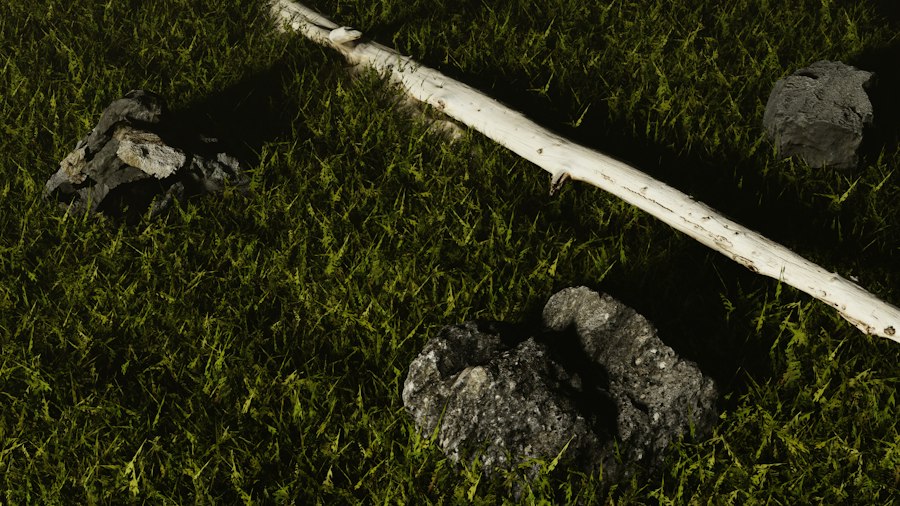
The genesis of Stone Age hunting weaponry lies in the fundamental human ability to manipulate their environment to their advantage. The earliest forms of tools, while seemingly crude by modern standards, were revolutionary for their time, transforming passive survival into active procurement. The very act of shaping stone required foresight, planning, and a keen understanding of material properties. This was the dawn of applied science, where observation of fracture mechanics and the selection of appropriate raw materials were paramount to success.
Shaping the First Cutting Tools
The earliest hominin toolkits were characterized by their simplicity. Pebble tools, often referred to as Oldowan tools, were the hallmark of this era. These were typically unifacially worked stones, meaning only one side was flaked to create a cutting edge or a point. The process involved striking one stone (a hammerstone) against another (a core) to detach flakes. While these tools were likely used for a multitude of purposes, including butchering, scraping, and processing plant materials, their application in hunting cannot be overstated. A sharp edge, however rudimentary, would have been invaluable for dismembering carcasses, skinning animals, and potentially even for defense against smaller predators. The efficiency of these tools, despite their simple form, represented a significant evolutionary advantage.
The development of the Acheulean handaxe by Homo erectus marked a considerable leap forward. This bifacially worked tool, often teardrop-shaped, possessed a broad, sharp edge capable of more robust tasks. Handaxes were meticulously crafted, exhibiting a symmetry and a degree of intentionality that suggests a more advanced cognitive capacity. Their versatility made them indispensable for hunting. They could be used for chopping through bone to access marrow, for scraping hides to prepare them for clothing or shelter, and for shaping other wooden tools and implements. While the handaxe itself might not have been a primary projectile weapon in the modern sense, its weight and shape could have lent themselves to throwing, particularly at stationary or slow-moving prey. The sheer number of handaxes found at many Paleolithic sites suggests their importance and widespread use across different hominin groups.
The Refinement of Flake Technology
The Middle Paleolithic witnessed a significant evolution in lithic technology, primarily associated with Neanderthals and their Mousterian toolkits. This era saw the refinement of techniques that allowed for the production of standardized, sharp flakes from prepared cores. The Levallois technique, a prime example, involved carefully shaping a core stone in a specific way before striking off a predetermined flake. This resulted in flakes that were consistently shaped and possessed keen cutting edges. These flakes were then further modified into a variety of specialized tools.
These refined flakes were expertly hafted onto wooden shafts, creating a range of cutting and piercing implements. Scrapers, with their carefully shaped retouched edges, were crucial for preparing animal hides, a vital resource for clothing, shelter, and containers. Points, often made from these sharp flakes, could be attached to spears, transforming them into more effective hunting weapons capable of inflicting deeper wounds. The increased precision and efficiency of these tools suggest a more systematic and successful approach to hunting. While direct evidence of projectile hunting from this period is often sparse, the development of such pointed tools strongly implies their use in thrusting or throwing spears at game. The ability to create multiple sharp points from a single core also meant that hunters could carry a greater supply of ready-to-use weaponry, enhancing their effectiveness in the field.
Projectile Power: Launching Lethality from a Distance

The introduction and refinement of projectile weaponry marked a paradigm shift in Stone Age hunting. The ability to strike prey from a distance not only increased the hunter’s safety by reducing the risk of close encounters but also opened up new possibilities for hunting larger and faster game. This technological leap required not only the development of effective projectile heads but also the means to propel them with force and accuracy.
The Spear and its Evolution
The spear, in its simplest form, is a sharpened stick. However, Stone Age peoples elevated this basic concept into a formidable hunting tool. The development of well-crafted stone points, expertly attached to wooden shafts, transformed the spear into a lethal weapon. These points, whether leaf-shaped, tanged, or barbed, were designed to penetrate the hide and flesh of animals, causing significant damage and incapacitation. The shafts themselves were often made from straight, strong wood, sometimes fire-hardened to increase durability.
Early spears were likely used for thrusting, either in close combat with smaller animals or in coordinated group hunts against larger prey. However, the true potential of the spear was unlocked with the development of more sophisticated launching mechanisms. The spear-thrower, or atlatl, a device that uses leverage to propel a spear with much greater force and distance than human arm alone, was a groundbreaking innovation. The atlatl typically consisted of a shaft of wood or bone with a hook or spur at one end that engaged the nock of a spear. By swinging the atlatl, a hunter could impart significant momentum to the spear, dramatically increasing its range and impact. Evidence for the widespread use of atlatls comes from numerous archaeological sites, particularly in the Upper Paleolithic, where they are often depicted in cave art and found as physical artifacts.
The Revolutionary Bow and Arrow
The bow and arrow represent perhaps the most significant advancement in Stone Age projectile weaponry. While its exact origins are debated, the bow and arrow became widespread during the Upper Paleolithic. This system offered several distinct advantages over the spear and atlatl. The bow, typically made from a flexible piece of wood with a string made from animal sinew or plant fibers, stored potential energy that was released to propel the arrow. Arrows, shorter and lighter than spears, were more aerodynamic and could be fired with incredible speed and accuracy.
The development of the bow and arrow required a sophisticated understanding of material properties, including the elasticity of wood and the tensile strength of string. Furthermore, the creation of specialized arrowheads, often made from finely flaked stone, bone, or antler, demanded considerable skill. These arrowheads could be small and razor-sharp for maximum penetration, or barbed to prevent dislodgement. The ability to quickly and repeatedly fire arrows allowed hunters to engage prey from even greater distances and with increased success rates. The bow and arrow also offered a significant advantage in hunting smaller, faster game, which were more difficult to approach with spears. The introduction of the bow and arrow undoubtedly transformed hunting strategies, enabling more efficient resource acquisition and contributing to the expansion of human populations.
Beyond Projectiles: Ancillary Hunting Tools and Techniques
While striking and piercing implements are often the most visible aspects of Stone Age hunting technology, a comprehensive understanding of their toolkit requires acknowledging the supporting cast of ancillary tools and the ingenious techniques that complemented their weaponry. These often-overlooked elements were crucial for maximizing success, ensuring safety, and processing the spoils of the hunt.
The Art of the Trap and Net
Hunting was not solely about direct confrontation with weapons. Stone Age peoples were adept at employing a variety of indirect hunting methods, including traps and nets. These ingenious devices allowed hunters to capture prey with minimal direct risk and effort, and they were particularly effective for smaller game, birds, and fish.
Traps varied widely in design and complexity, often tailored to the specific prey and environment. Pitfalls, dug into animal trails, were a simple yet effective method for capturing ground-dwelling animals. Snares, made from plant fibers or animal sinew, could be set to ensnare unsuspecting creatures as they moved through their territory. More elaborate traps, such as deadfalls where a heavy object was triggered to fall on the prey, also likely existed. The construction of these traps required knowledge of animal behavior, their migratory patterns, and their physical limitations.
Nets, woven from plant fibers or animal hides, were another vital component of the Stone Age hunter’s arsenal. They were used for fishing in rivers and lakes, as well as for capturing birds and small mammals. The ability to weave strong and durable nets demonstrates a sophisticated understanding of fiber manipulation and knot-tying techniques. The use of nets allowed for the efficient harvesting of aquatic resources, a crucial food source for many Stone Age communities.
Essential Processing and Maintenance Kits
Once prey was successfully captured, a new set of tools became indispensable for processing the kill. The hunter’s kit was not just about procurement; it was also about the efficient utilization of every resource. This involved a range of tools for skinning, butchering, and preparing the animal for consumption and other uses.
Sharp stone flakes, knives, and scrapers were paramount for removing hides. These hides were then essential for clothing, shelter, and the creation of other tools. Butchering tools, such as bifaces and heavier chopping implements, were used to dismember the carcass. The ability to break bones was also important, as marrow was a nutritious food source.
Furthermore, the maintenance of hunting weapons was a critical aspect of Stone Age life. This included tools for sharpening stone points and blades, such as fine-grained abraders and retouchers. Antler and bone were also used for creating awls and needles, essential for repairing clothing, making containers, and crafting other necessary items. The entire toolkit, from the spearhead to the awl, represented a holistic approach to survival, where each component played a vital role in the hunter’s success and the community’s well-being.
The development of hunting weapons and tool kits during the Stone Age played a crucial role in the survival and advancement of early human societies. These primitive tools not only facilitated hunting but also laid the groundwork for future technological innovations. For those interested in exploring how the evolution of human societies has been influenced by various factors, including the effectiveness of governance, a related article can be found here: the rise of failed government states. This piece delves into how societal structures impact human progress, much like the way early tools shaped the trajectory of our ancestors.
The Material World: Stone, Bone, and Beyond
| Weapon/Tool | Material | Estimated Age (Years Ago) | Primary Use | Typical Length/Size | Region Found |
|---|---|---|---|---|---|
| Hand Axe | Flint/Stone | 1,500,000 – 200,000 | Cutting, chopping, butchering | 15-30 cm | Africa, Europe, Asia |
| Spears | Wooden shaft with stone or bone tip | 400,000 – 40,000 | Hunting large game | 1.5-3 meters | Worldwide |
| Atlatl (Spear-Thrower) | Wood, bone, or antler | 20,000 – 10,000 | Increasing spear throwing distance and force | 30-50 cm | Europe, Americas |
| Bow and Arrow | Wood, sinew, stone or bone arrowheads | 50,000 – 10,000 | Hunting small to medium game | Bow: 1-1.5 meters; Arrow: 60-90 cm | Worldwide |
| Flint Knives | Flint/Chert | 300,000 – 10,000 | Cutting and skinning | 5-15 cm | Worldwide |
| Bone Needles | Bone | 50,000 – 10,000 | Sewing hides and clothing | 3-7 cm | Europe, Asia |
| Scrapers | Flint/Stone | 300,000 – 10,000 | Cleaning hides and woodworking | 5-10 cm | Worldwide |
The very name “Stone Age” highlights the primary material that defined this era of human technological development. However, the ingenuity of Stone Age peoples extended beyond mere stone flaking to encompass a remarkable understanding and utilization of other readily available natural resources. Bone, antler, ivory, wood, and plant fibers all played crucial roles in the creation of their sophisticated hunting weapons and essential tool kits.
The Dominance of Lithic Technology
Stone, due to its abundance and its ability to be fractured into sharp edges, was the cornerstone of Stone Age toolmaking. The selection of appropriate stone types was a critical skill. Different stones possess varying degrees of hardness, brittleness, and conchoidal fracture properties (the way they break), all of which influence their suitability for tool production. Flint, chert, obsidian, and various types of quartzite were highly prized for their ability to yield sharp edges.
The process of knapping, the art of striking stone to shape it, was refined over millennia. From the simple percussion of early pebble tools to the more controlled pressure flaking used to create fine points and blades in the Upper Paleolithic, this technique was central to weapon production. Lithic analysis, the study of stone tools, provides invaluable insights into the technological capabilities, resource procurement strategies, and even the social networks of Stone Age peoples. The distribution of specific lithic materials across vast distances often indicates trade or migration patterns. The meticulous craftsmanship evident in many stone projectile points and cutting tools speaks to the immense skill and dedication of these early artisans.
The Versatility of Organic Materials
While stone provided the cutting edges and projectile points, organic materials provided the substance and flexibility for many of the most effective hunting tools. Wood was extensively used for spear shafts, bows, and handles. The selection of appropriate wood species, known for their strength, straightness, and elasticity, was crucial for the functionality of these implements. Fire was often used to harden wooden shafts, increasing their durability and resistance to rot.
Bone, antler, and ivory offered a wealth of possibilities. These materials are strong, durable, and can be worked into a variety of shapes and sizes. Antler, in particular, was highly valued for its toughness and its natural curvature, making it ideal for crafting spear-thrower hooks, harpoon barbs, and even the intricate parts of early composite tools. Bone could be fashioned into awls, needles, and decorative elements, and also used for producing sharpened points for spears and arrows. Ivory, though perhaps less common and more labor-intensive to acquire and work, offered exceptional strength and a smooth finish, lending itself to the creation of particularly robust and aesthetically pleasing tools and weapons. The integration of stone elements with organic shafts and components marked a significant advancement in the complexity and effectiveness of Stone Age hunting technology.
The evolution of stone age hunting weapons and tool kits played a crucial role in the survival and development of early human societies. These primitive tools not only enhanced hunting efficiency but also laid the groundwork for future technological advancements. For a deeper understanding of how early humans navigated their environment and adapted to challenges, you can explore this fascinating article on mapping the world before discovery, which provides insights into the broader context of human innovation. Check it out here.
The Hunter-Gatherer Lifestyle: Tools for Survival and Adaptation
The development and use of Stone Age hunting weapons and tool kits were not abstract pursuits; they were intrinsically woven into the fabric of the hunter-gatherer lifestyle. These tools were the primary means by which humans interacted with their environment, procured sustenance, and adapted to diverse ecological niches. The effectiveness of their weaponry directly influenced their diet, their settlement patterns, their social structures, and their very survival.
Diet and Resource Procurement
The hunting success enabled by these tools had a profound impact on the diet of Stone Age peoples. The ability to hunt larger mammals provided a rich source of protein, fats, and essential nutrients that were vital for human growth and development. The diversification of prey, from large herbivores to smaller game and birds, allowed for a more resilient food supply and reduced reliance on any single resource. Furthermore, the processing of hides provided materials for clothing and shelter, protecting early humans from the elements and enabling them to inhabit a wider range of environments. The development of fishing tools, such as bone hooks and net weights, further expanded their dietary options and contributed to the stability of their food sources, particularly in coastal and riverine communities.
The sophistication of their toolkits also dictated the types of environments they could effectively exploit. A community with advanced projectile weaponry and trap-making skills could thrive in open grasslands, while those with effective fishing tools would be concentrated near water bodies. The ability to butcher and process carcasses efficiently also meant that larger kills could be managed, supporting larger social groups and fostering more complex community structures.
Social Organization and Knowledge Transfer
The demands of hunting often necessitated cooperation and communication among individuals. Group hunts, particularly for large or dangerous game, required coordinated strategies, signaling, and a shared understanding of roles. This fostered social cohesion, strengthened bonds within communities, and promoted the development of complex social hierarchies and leadership roles. The sharing of hunting techniques and knowledge was crucial for the survival of the group and was likely passed down through generations via oral traditions and direct mentorship.
The creation and maintenance of these tools also played a significant role in social organization. Specialized skills in lithic knapping, woodworking, or bone carving may have led to the emergence of artisans or craft specialists within the community. The procurement of raw materials, such as transporting suitable stones over long distances, could also have fostered inter-group interactions and the development of trade networks. The very act of sharing and using these tools reinforced social bonds and contributed to the collective identity of a group.
The enduring legacy of Stone Age hunting weapons and tool kits is undeniable. They represent a critical turning point in human evolution, demonstrating our ancestors’ remarkable capacity for innovation, adaptation, and problem-solving. These tools were not just objects of utility; they were the embodiment of human ingenuity, the drivers of survival, and the silent witnesses to the dawning of our species’ technological journey.

20,000 Years Ago | The Coldest Journey in Human History
FAQs
What were some common stone age hunting weapons?
Common stone age hunting weapons included spears, bows and arrows, atlatls (spear throwers), slingshots, and knives made from sharpened stones.
How were stone age hunting tools made?
Stone age hunting tools were typically made by chipping away at rocks to create sharp edges. Flint, obsidian, and chert were commonly used materials for making hunting tools.
What role did stone age hunting weapons play in survival?
Stone age hunting weapons were crucial for survival as they allowed early humans to hunt for food, defend themselves from predators, and provide materials for clothing and shelter.
Were stone age hunting weapons used for more than just hunting?
Yes, stone age hunting weapons were also used for self-defense, cutting wood, skinning animals, and various other tasks necessary for survival in the stone age.
How did stone age hunting weapons evolve over time?
Stone age hunting weapons evolved from simple tools like sharpened sticks to more advanced weapons like bows and arrows, showing advancements in technology and hunting strategies over time.