The dawn of humanity was a relentless struggle for existence, a period characterized by an unyielding environment and the constant threat of predators. In this era, known as the Stone Age, the development and mastery of tools and weapons were not merely conveniences; they were the very bedrock of survival. Without these rudimentary but ingenious creations, early hominins would have struggled to secure food, defend themselves, find shelter, and ultimately, thrive. The evolution of their toolkits mirrors the evolution of their intelligence, their adaptability, and their increasing ability to shape their surroundings to their advantage. These early innovations, born out of necessity and observation, laid the foundation for all subsequent technological advancements and fundamentally altered the trajectory of human history.
Shaping the World: The Genesis of Stone Tools
The earliest evidence of tool use dates back over 2.5 million years, firmly establishing the Stone Age as a period defined by lithic technology. The simple act of striking one stone against another, a technique known as knapping, unlocked a world of possibilities for early humans. This seemingly basic process, refined over millennia, allowed for the creation of sharp edges, pointed tips, and flat surfaces, transforming raw materials into instruments of survival. The understanding of fracture mechanics, the ability to predict how a stone would break, was an intellectual leap of immense significance. This knowledge, passed down through generations, enabled the production of increasingly sophisticated tools, each designed for a specific purpose.
The Hammerstone: The Architect’s First Tool
The most fundamental of all stone tools was the hammerstone. These were typically rounded, fist-sized rocks that served as both a tool and a weapon. Their primary function was to strike other stones, initiating the process of flaking and shaping. By using a hammerstone, early hominins could detach sharp flakes from a larger core, creating cutting edges. These hammerstones were also used to crack nuts and bones to access nutrient-rich marrow, and to pound plant materials to make them more digestible. The selection of the right type of stone was crucial; hard, dense rocks like quartzite and chert were favored for their ability to withstand repeated impact and produce sharp fragments.
The Acheulean Handaxe: A Masterpiece of Early Design
As human cognitive abilities grew, so did the complexity of their tools. The Acheulean handaxe, which emerged around 1.7 million years ago and persisted for over a million years, is a testament to this increasing sophistication. These teardrop-shaped tools, meticulously crafted on both sides (bifacially worked), represented a significant leap in technological advancement. The symmetry and controlled flaking required to produce a functional handaxe suggest a level of planning and foresight previously unseen. Handaxes were incredibly versatile, serving as choppers, scrapers, and digging tools. They could be used to butcher carcasses, strip bark from trees, dig for roots and tubers, and even as a rudimentary projectile weapon. The widespread distribution of Acheulean handaxes across continents highlights the mobility and adaptability of early Homo erectus.
The Art of Flaking: Creating Sharp Edges
The core of Stone Age toolmaking lay in the art of flaking. This involved a precise and controlled process of striking a core stone with a hammerstone or a softer material like bone or antler (percussion flaking). The goal was to detach sharp-edged flakes that could then be used as knives or further shaped into more specialized tools. The angle of impact, the force applied, and the type of material all influenced the size and shape of the resulting flake. This iterative process of striking and observing allowed early humans to learn the properties of different stones and to master the techniques required for effective tool production.
Microburins and Microliths: The Dawn of Precision
Later in the Stone Age, particularly during the Mesolithic period, a new level of precision emerged with the development of microburins and microliths. Microburins were small, intentionally broken pieces of flint, often used to create notches in tools or to prepare them for hafting onto a shaft. Microliths were tiny, razor-sharp stone blades that were incredibly effective for cutting and piercing. These small tools were often hafted into slots in bone, antler, or wooden handles, creating composite tools like knives, sickles, and spears. The efficiency and effectiveness of these small, sharp blades revolutionized hunting and gathering practices.
In exploring the fascinating world of Stone Age survival tools and weapons, one can draw intriguing parallels to modern challenges faced in building and defending habitats in extreme environments. For instance, the article on building and defending a lunar base discusses the innovative strategies required to ensure safety and sustainability in space, much like the early humans who crafted tools for survival. To learn more about these future challenges and how they relate to our understanding of survival tactics, you can read the article here: Building and Defending the Lunar Base: Future Challenges.
Sustaining Life: Tools for Daily Necessities
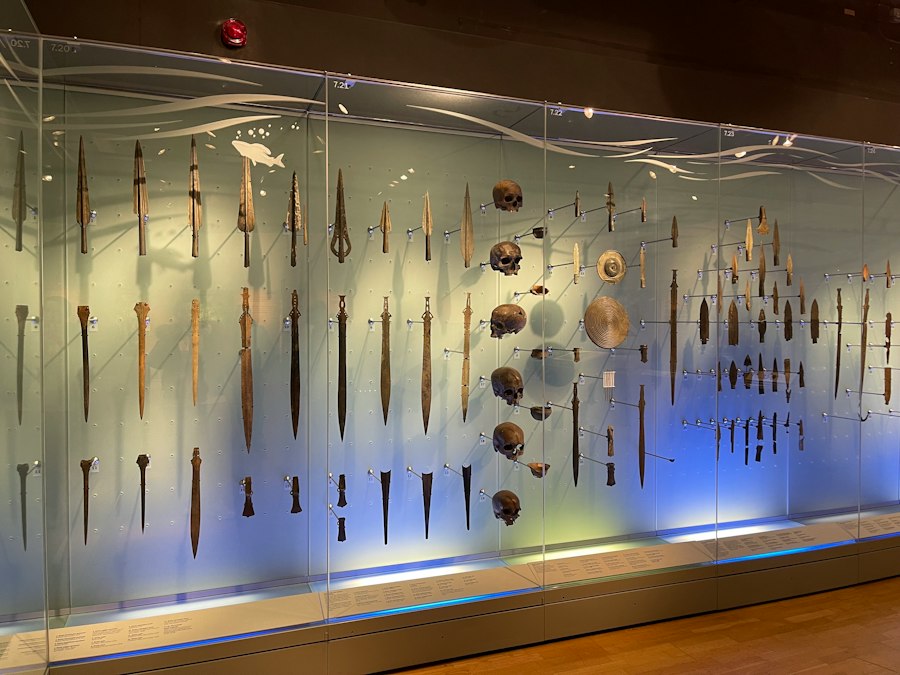
Beyond the creation of sharp cutting edges, Stone Age humans developed a diverse array of tools essential for their daily survival. These instruments facilitated the procurement and processing of food, the construction of shelter, and the management of fire, all vital components of a precarious existence. The ingenuity displayed in crafting these items underscores the deep understanding early humans had of their environment and the resources it provided.
Scrapers and Awls: Processing Materials
Scrapers, typically flakes with a blunted edge, were indispensable for preparing animal hides. These tools allowed early humans to remove flesh and fat from skins, making them pliable and suitable for clothing, shelter construction, and carrying containers. The scraping motion, repeated over time, softened the hide, making it more durable and comfortable. Awls, pointed tools made by sharpening bone or stone, were used for puncturing holes in hides and wood. This allowed for the sewing of skins together to create clothing and the lashing of materials to construct shelters.
Digging Sticks and Spears: Accessing the Earth’s Bounty
The earth offered a wealth of sustenance, but accessing it required specialized tools. Digging sticks, sharpened at one end, were used to unearth roots, tubers, and other edible plants. These simple yet effective tools allowed early humans to tap into a reliable food source, particularly during times when hunting was less successful. Spears, while often categorized as weapons, also served a crucial role in obtaining food. The sharpened point, whether made of stone or fire-hardened wood, allowed for the effective hunting of animals. Furthermore, spears could be used to dig for burrowing animals or to probe for edible grubs.
Grinding Stones: Transforming Raw Food
The advent of grinding stones marked a significant advancement in food preparation. These consisted of two stones: a larger, stationary base stone (a quern) and a smaller, movable upper stone (a handstone or saddle quern). Early humans used these to grind seeds, nuts, and grains into flour or paste, making them more digestible and increasing the nutritional value of their diet. This process allowed for the consumption of a wider variety of plant-based foods and was a crucial step towards more settled lifestyles and the eventual development of agriculture.
The Art of the Hunt: Weapons for Defense and Provision

The most dramatic and visible application of Stone Age technology was in the realm of weapons. The ability to hunt effectively was paramount for securing protein and other essential nutrients, while the capacity to defend against predators and rival groups was equally critical for survival. The evolution of weapons reflects a growing understanding of physics, projectile motion, and strategic application.
The Spear: A Versatile Extension of the Arm
The spear, a staple weapon throughout much of the Stone Age, evolved from simple sharpened sticks to more sophisticated designs. Early spears featured fire-hardened tips, while later versions incorporated stone points, carefully chipped into sharp, barbed shapes. These stone points were often hafted onto wooden shafts, creating a balanced and effective projectile. Spears were used for both thrusting and throwing, allowing hunters to engage prey at a distance or to deliver a fatal blow at close range. The development of longer, more balanced spears, coupled with the ability to throw them with accuracy, significantly increased hunting success rates.
The Bow and Arrow: A Revolutionary Advancement
The invention of the bow and arrow, appearing later in the Stone Age, particularly during the Upper Paleolithic and Mesolithic periods, was a monumental leap in hunting technology. This innovation allowed for even greater projectile range and accuracy, enabling hunters to target smaller, faster prey from a safer distance. The bow, typically made from flexible wood and strung with animal sinew or gut, stored kinetic energy that was released with great force when the arrow was loosed. The arrows themselves, often tipped with small, razor-sharp microliths, were lethal. This combination dramatically changed the dynamics of hunting, making it safer and more efficient.
The Atlatl: A Precursor to the Bow
Before the widespread adoption of the bow and arrow, the atlatl, or spear-thrower, served a similar purpose. This tool consisted of a long, flat piece of wood or bone with a hook or spur at one end designed to engage the butt of a spear. By using the atlatl, hunters could effectively increase the leverage and therefore the velocity of their thrown spears, achieving greater distances and impact force. The atlatl was a significant technological innovation that bridged the gap between simple hand-thrown spears and the more advanced bow and arrow.
Clubs and Projectile Stones: Close-Quarters Defense
For close-quarters combat, whether against dangerous animals or human adversaries, clubs and projectile stones were essential. Clubs, made from heavy pieces of wood or stone, were used to deliver powerful bludgeoning blows. Projectile stones, often found naturally or shaped into more aerodynamic forms, were hurled at targets. While less sophisticated than spears or arrows, these simple weapons were effective in disorienting or incapacitating an attacker, providing a crucial line of defense.
The Importance of Fire: Tools for Warmth, Light, and Cooking
Fire was arguably the most significant discovery of the Stone Age, and the tools associated with its control and utilization were equally transformative. Fire provided warmth in frigid climates, light in the darkness, and most importantly, the ability to cook food. Cooking not only made food more palatable and easier to digest but also killed harmful bacteria and parasites, significantly improving human health and longevity. The tools that facilitated fire-making and its application were central to human adaptation and expansion.
Fire-Making Tools: Igniting the Flame
The ability to reliably create fire was a painstaking process that required specialized tools. One common method involved friction, using a fire drill or bow drill. A spindle, made of a hard wood, was rapidly rotated against a soft wood hearth board, generating friction and heat that eventually ignited tinder. Another method involved striking certain types of stone, like flint and pyrite, together to produce sparks that could be caught by tinder. The discovery and mastery of these fire-making techniques allowed early humans to control this powerful element, bringing it into their settlements and harnessing its many benefits.
Cooking Vessels: Transforming Raw Ingredients
As fire became more prevalent, so did the need for tools to utilize it effectively for cooking. While early cooking may have involved simply placing food directly onto hot embers or stones, the development of more sophisticated methods emerged. Large stones, heated in the fire, could be used to cook food placed upon them. In some cases, pit ovens were created, where food was placed in a hole in the ground, covered with hot stones, and then buried to cook slowly. While not “tools” in the conventional sense, these techniques demonstrate an understanding of heat transfer and the application of fire for food preparation.
Containers for Water and Food: Transporting Vital Resources
The ability to transport water and food was crucial, especially when venturing away from settlements or water sources. Early humans fashioned rudimentary containers from natural materials. Animal skins, expertly prepared, could be formed into pouches or bladders for carrying liquids. Gourd shells, when hollowed out, provided natural bowls for collecting and transporting food and water. While these were not always “stone” tools, they represent the broader toolkit of survival, developed in conjunction with lithic technology.
In exploring the ingenuity of early humans, one cannot overlook the significance of stone age survival tools and weapons, which played a crucial role in their daily lives. These primitive implements not only aided in hunting and gathering but also showcased the resourcefulness of our ancestors in adapting to their environment. For a deeper understanding of how climate changes influenced human survival strategies, you might find this article on Greenland’s climate history particularly enlightening. It reveals how environmental shifts impacted the development of tools and weapons during the Stone Age, highlighting the intricate relationship between climate and human innovation.
The Broader Toolkit: Shelter, Art, and Symbolic Expression
| Tool/Weapon | Material | Primary Use | Estimated Age (Years Ago) | Typical Size |
|---|---|---|---|---|
| Hand Axe | Flint/Stone | Cutting, chopping wood and meat | 1,500,000 – 200,000 | 15-30 cm |
| Spear | Wood shaft with stone or bone tip | Hunting large animals | 400,000 – 40,000 | 1.5-2 meters |
| Bow and Arrow | Wood, sinew, stone arrowheads | Hunting small to medium game | 70,000 – 10,000 | Bow: 1-1.5 meters; Arrow: 50-70 cm |
| Flint Knife | Flint | Cutting and scraping hides | 300,000 – 10,000 | 5-15 cm |
| Bone Harpoon | Bone | Fishing and hunting aquatic animals | 90,000 – 10,000 | 20-40 cm |
| Hammerstone | Rounded stone | Shaping other tools, breaking bones | 2,000,000 – 100,000 | 10-20 cm |
The Stone Age was not solely about the grim pursuit of survival; it was also a period of increasing complexity in social structures, symbolic thought, and artistic expression. While stone tools dominated the material culture, other materials were utilized, and the creation of objects that served purposes beyond immediate utility began to emerge. These developments hint at a growing capacity for abstract thought and a desire for more than just basic existence.
Bone and Antler Tools: Versatility from Animal Resources
Animal bones and antlers provided a rich source of material for toolmaking, complementing stone. These materials could be shaped into points for needles, awls, and spearheads. Polished bone tools, such as harpoon heads and fishhooks, demonstrate a remarkable level of craftsmanship and indicate a reliance on aquatic resources. Antlers, with their inherent strength and shape, were particularly useful for creating tools like adzes and chisels, which allowed for more precise woodworking. The development of bone needles, for instance, was crucial for sewing together animal hides to create more sophisticated clothing and shelters.
Wooden Tools: The Fragile Foundation
Wood was an abundant and versatile material in the Stone Age, though its perishable nature means less evidence survives. Sharpened wooden spears, digging sticks, and clubs were undoubtedly common. Evidence from sites like Schöningen in Germany has yielded remarkably well-preserved wooden spears dating back over 300,000 years, demonstrating the early mastery of woodworking. Wooden bowls, containers, and parts of shelters were likely also commonplace. The ability to shape and manipulate wood, often using stone tools, was essential for creating a wide range of useful objects.
Early Art and Ornamentation: The Dawn of Symbolism
While not strictly tools for survival, the emergence of early art and ornamentation speaks volumes about the developing minds of Stone Age humans. Engraved bone and stone objects, cave paintings, and personal adornments like beads and pendants suggest a capacity for symbolic thought and a desire for aesthetic expression. These creations, though not directly involved in procuring food or defending against predators, may have played roles in social cohesion, religious practices, or the transmission of knowledge. The meticulous carving of small figurines or the careful execution of cave art required a level of skill and patience that indicates a mind capable of abstract thought and creative endeavors, a crucial step in the journey towards modern humanity.

20,000 Years Ago | The Coldest Journey in Human History
FAQs
What were some common stone age survival tools?
Common stone age survival tools included hand axes, spears, knives, scrapers, and arrowheads. These tools were typically made from materials such as flint, obsidian, and bone.
How were stone age tools and weapons made?
Stone age tools and weapons were typically made through a process called flint knapping, which involved striking stones together to create sharp edges. Tools were also crafted from bone, antler, and wood using techniques such as carving and shaping.
What were stone age weapons used for?
Stone age weapons were primarily used for hunting animals for food, clothing, and shelter. They were also used for self-defense against predators and other human groups.
How did stone age people use fire for survival?
Stone age people used fire for cooking food, providing warmth, and protection from predators. Fire was also used for making tools, hardening spear points, and creating light in dark environments.
What role did stone age survival tools and weapons play in human evolution?
Stone age survival tools and weapons played a crucial role in human evolution by enabling early humans to hunt, defend themselves, and adapt to different environments. The development of these tools marked significant advancements in technology and survival skills for our ancestors.