
The phenomenon of stone row moisture condensation, while seemingly straightforward, is underpinned by several fundamental principles of physics and environmental science. To fully grasp the logic behind why moisture accumulates on these ancient structures, a detailed examination of the contributing factors is necessary. This article will delve into the atmospheric conditions, material properties, and physical processes that lead to condensation on stone rows, providing a scientific perspective for the interested reader.
Understanding condensation begins with understanding the air around the stone row. Air, though appearing invisible and empty, is a reservoir for water vapor, the gaseous form of water. The amount of water vapor air can hold is dependent on its temperature; warmer air can hold significantly more water vapor than colder air. This concept is crucial in unraveling the mystery of stone row condensation.
Humidity and Relative Humidity
Relative Humidity Defined
The term used to quantify the amount of water vapor present in the air relative to the maximum it can hold at a specific temperature is relative humidity. It’s typically expressed as a percentage. For instance, 70% relative humidity means the air is holding 70% of the water vapor it could hold at that particular temperature.
Factors Influencing Humidity
Several factors influence the humidity in the vicinity of a stone row. These include general atmospheric conditions, proximity to bodies of water, and the presence of vegetation. Overcast skies can trap moisture, leading to higher humidity levels. Similarly, areas near rivers, lakes, or the sea will experience naturally higher humidity due to evaporation. Forests and dense vegetation release water vapor through a process called transpiration, further contributing to ambient humidity. The microclimate surrounding a stone row can therefore vary significantly depending on its geographical context.
The Concept of Dew Point
Defining Dew Point
The dew point is the temperature to which air must be cooled, at constant pressure and water vapor content, for saturation to occur (i.e., the relative humidity to reach 100%). At this temperature, the air can no longer hold all of its water vapor in gaseous form.
Dew Point and Condensation Formation
When the temperature of a surface, such as a stone in a stone row, drops to or below the dew point of the surrounding air, condensation will occur. The water vapor in the air will transition from its gaseous state to its liquid state, forming dew droplets on the surface. Think of it like a cold glass of water on a warm, humid day. The glass itself doesn’t leak; rather, the water vapor in the air cools upon contact with the cold glass and transforms into liquid water, creating the familiar condensation. The stone row, particularly during cooler periods, acts in a similar fashion.
In exploring the intricacies of stone row moisture condensation logic, it is fascinating to consider how ancient civilizations utilized advanced technologies to manage environmental challenges. A related article that delves into the innovations of lost civilizations can be found at this link: Advanced Tech in Lost Civilizations: Uncovering Ancient Innovations. This resource highlights the remarkable engineering feats and methods employed by our ancestors, shedding light on their understanding of moisture management and its implications for agriculture and architecture.
Stone Properties and Heat Transfer
The material composition and physical characteristics of the stones themselves play a pivotal role in how they interact with atmospheric moisture. Stone, while appearing solid and inert, is a dynamic medium that exchanges heat with its environment.
Thermal Conductivity of Stone
Conduction Explained
Thermal conductivity refers to a material’s ability to conduct heat. Some materials, like metals, are excellent conductors, meaning they transfer heat quickly. Others, like wood or insulation, are poor conductors (good insulators), transferring heat slowly. Stone exhibits varying degrees of thermal conductivity depending on its specific type, mineral composition, and porosity.
Stone Rows as Thermal Bridges
In the context of a stone row, the stones act as a thermal bridge between the air and the ground, and crucially, between the sun’s heat and the cooler night air. During the day, solar radiation can warm the exposed surfaces of the stones. However, stone is generally a less efficient conductor of heat than, for example, metal. This means that while the surface of the stone might warm up, the inner parts and the connection to the cooler earth can act as a heat sink, drawing away thermal energy.
Specific Heat Capacity and Thermal Inertia
Defining Specific Heat Capacity
The specific heat capacity of a substance is the amount of heat required to raise the temperature of one unit of mass by one degree Celsius (or Kelvin). Materials with high specific heat capacity require a lot of energy to change their temperature and also release a lot of energy when they cool down.
Stone’s Thermal Inertia
Stone typically possesses a relatively high specific heat capacity compared to air. This property contributes to thermal inertia. Thermal inertia is the resistance to temperature change. This means that stone takes longer to heat up in the sun and also longer to cool down after the sun has set or when the ambient temperature drops. This lag in temperature change is a key factor in condensation.
During the day, the stones absorb solar energy, but their thermal inertia means they don’t immediately reach the same high temperatures as, say, an asphalt surface. As evening approaches and the ambient air temperature begins to fall, the stones, with their retained heat, will cool down more slowly. However, their cooling rate is still influenced by their ability to radiate heat and conduct it to the cooler surrounding air.
Porosity and Surface Area
The Role of Pores
Many types of stone are porous, meaning they have small holes or cavities within their structure. These pores can absorb and retain moisture. When the surface of the stone cools below the dew point, the water vapor that has condensed on the exterior can also be drawn into these pores through capillary action, effectively increasing the amount of moisture associated with the stone row.
Surface Texture and Irregularities
The surface texture and the presence of natural irregularities on the stones themselves can also influence condensation. Rough or textured surfaces provide more nucleation sites – tiny points where water vapor molecules can begin to aggregate and form liquid droplets. A smooth, polished surface might experience less initial condensation than a rough, weathered one, all other factors being equal. The intricate patterns of lichen and moss that often adorn ancient stone rows can further increase the effective surface area and the number of nucleation sites.
The Daily Thermal Cycle and Condensation Formation
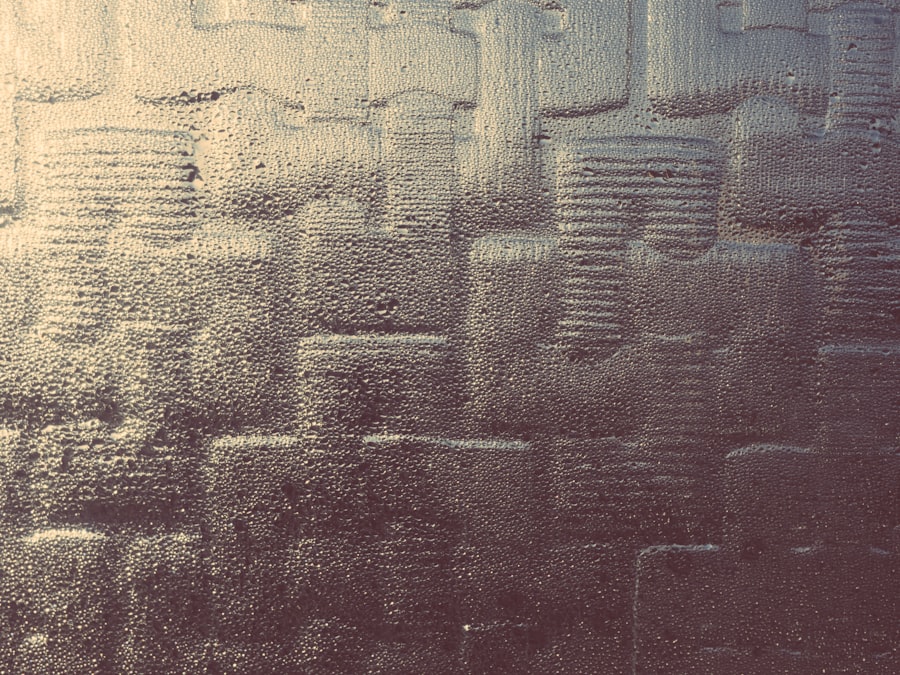
The constant interplay of heating and cooling throughout a 24-hour period is the primary driver of condensation on stone rows. The transition from day to night presents the ideal conditions for moisture to appear.
Daytime Heating and Cooling
Solar Radiation Input
During daylight hours, stone rows are exposed to solar radiation. The amount of energy absorbed depends on the stone’s color, angle of exposure, and the intensity of the sunlight. While the stones absorb this energy and their surface temperature rises, they also tend to lose heat through convection (transfer of heat to the air) and radiation.
Radiative Cooling
As the sun begins to set, the primary source of heat energy is removed. The stones then begin to cool down. This cooling occurs through two main mechanisms: radiation and convection. Stones radiate thermal energy out into the atmosphere, particularly towards the clear night sky. This process is more efficient when the sky is clear and there are no clouds to trap outgoing radiation.
Nighttime Temperature Drop
The combination of the cessation of solar heating and ongoing radiative cooling causes the temperature of the stones to drop. This drop can be significant, especially on clear nights where the “clear sky effect” allows for rapid heat loss. The rate at which the stones cool is influenced by their thermal inertia; they retain some of the day’s heat for a period, but eventually succumb to the prevailing ambient temperature and radiative losses.
The Critical Point: Reaching the Dew Point
Surface Temperature vs. Air Temperature
As the stones cool, their surface temperature will eventually approach or fall below the temperature of the surrounding air. The critical moment for condensation is when the surface temperature of the stone equals or dips below the dew point of the air that is in contact with it.
Nucleation and Droplet Growth
Once the surface is sufficiently cool, water vapor molecules in the air that come into contact with the stone will lose enough kinetic energy to condense into liquid water. These initial tiny droplets are formed on specific points on the stone’s surface, known as nucleation sites. These sites can be microscopic imperfections, dust particles, or even the aforementioned pores. Once formed, these droplets will grow larger as more water vapor from the surrounding air condenses onto them. This is a continuous process as long as the surface remains at or below the dew point.
Microclimatic Influences and Topographical Factors

The immediate environment surrounding a stone row plays a significant role in shaping the local air temperature and humidity, thereby influencing condensation patterns.
Altitude and Exposure
The Effect of Elevation
Higher altitudes generally experience cooler temperatures regardless of the time of day. This means that stone rows situated at higher elevations are more likely to experience conditions where the air temperature consistently approaches or falls below the dew point, facilitating condensation. Furthermore, exposed locations at high altitudes can be subject to stronger winds, which can affect both heating and cooling rates.
Wind Patterns and Shelter
Air Movement and Heat Exchange
Wind plays a dual role. On one hand, it can bring warmer air in, potentially increasing the dew point and reducing condensation. On the other hand, wind can enhance convective heat loss from the stones, accelerating their cooling and therefore potentially promoting condensation if the air brought in is humid and still above the dew point. Conversely, sheltered locations, such as valleys or areas protected by dense foliage, can experience more stagnant air. This can lead to higher local humidity and a greater likelihood of cooler air pooling near the ground, increasing the chance of the stones reaching their dew point.
Vegetation and Soil Moisture
Transpiration and Evaporation
The presence of surrounding vegetation can significantly impact local microclimates. Trees and grasses release water vapor through transpiration, increasing the humidity of the air. Similarly, damp soil releases moisture through evaporation. These processes contribute to a generally more humid environment around the stone row, making it more likely that the dew point will be reached during cooler periods. In arid or semi-arid regions, the presence of even sparse vegetation can create a noticeable difference in local humidity compared to completely barren ground. In moister climates, dense forests can create a consistently damp atmosphere.
Topographical Features and Air Drainage
Valleys and Basins
Topographical features such as valleys and natural basins can act as traps for cold air. Cold air is denser than warm air and tends to sink. During clear, calm nights, cold air will drain down slopes and collect in low-lying areas. If a stone row is situated within such a feature, it is likely to be bathed in this cooler, potentially more humid air, increasing the probability of condensation forming on its surfaces. This effect is often referred to as a “frost hollow” for frost formation, but the principle is the same for dew.
In exploring the intricacies of stone row moisture condensation logic, one can gain valuable insights into ancient engineering techniques and their applications. A fascinating article that delves into the advanced technologies of ancient civilizations can be found at this link, which discusses how these methods may have contributed to the sustainability of structures over time. Understanding these principles not only sheds light on historical practices but also inspires modern approaches to environmental design.
Long-Term Exposure and Environmental Factors
| Parameter | Description | Typical Value / Range | Unit | Notes |
|---|---|---|---|---|
| Surface Temperature | Temperature of the stone row surface | 5 – 25 | °C | Measured to assess condensation risk |
| Ambient Temperature | Temperature of surrounding air | 10 – 30 | °C | Influences condensation formation |
| Relative Humidity | Moisture content in the air | 40 – 90 | % | Higher values increase condensation likelihood |
| Dew Point Temperature | Temperature at which air becomes saturated | 8 – 20 | °C | Calculated from ambient temp and humidity |
| Condensation Threshold | Surface temperature below which condensation occurs | Equal to or less than dew point | °C | Key logic for moisture condensation detection |
| Moisture Accumulation Rate | Rate at which moisture condenses on stone row | 0.1 – 0.5 | g/m²/hr | Depends on environmental conditions |
| Airflow Rate | Speed of air movement over stone row | 0.1 – 2.0 | m/s | Higher airflow reduces condensation |
Beyond the daily cycles, the long-term exposure to the environment can also influence how a stone row interacts with moisture.
Weathering and Surface Changes
Erosion and Patination
Over centuries and millennia, stone rows are subject to weathering. This includes erosion by wind and rain, as well as chemical processes that can alter the surface of the stone. Erosion can wear down the surface, potentially making it smoother in some areas and exposing fresher, more porous material in others. Patination, the development of a surface layer due to weathering and biological growth, can also change the thermal properties and porosity of the stone. A well-patinated surface with lichens might have more nucleation sites than a freshly fractured stone.
Impact of Pollution
Acid Rain and Surface Contamination
Atmospheric pollutants, including those contributing to acid rain, can alter the chemical composition of the stone’s surface. Acidic deposition can etch the stone and create a more porous, reactive surface. This can, in turn, affect how the stone interacts with moisture and how readily condensation forms. Surface contamination from airborne particles can also provide additional nucleation sites for droplet formation.
Biological Growth
Lichens, Mosses, and Algae
The growth of lichens, mosses, and various algae on the surface of the stones is a common sight. These organisms thrive in damp environments and their presence can significantly influence condensation. They increase the surface area, trap moisture, and can alter the thermal reflectivity of the stone. The hygroscopic nature of some of these biological growths means they can attract and hold water molecules, promoting condensation. In essence, they create a miniature, damp ecosystem on the surface of each stone.
Seasonal Variations
Winter and Summer Cycles
The frequency and intensity of condensation on stone rows will vary significantly with the seasons. In winter, with longer nights, lower ambient temperatures, and often higher humidity (especially in coastal or low-lying areas), condensation (frost and dew) is likely to be more frequent and persistent. Summer days might be warmer, leading to higher dew points, but the shorter nights and intense daytime heating can lead to less overall condensation unless there are periods of unseasonably cool, humid weather. Autumn and spring can present a mix of conditions, with cool nights and potentially humid air, leading to significant dew formation.
In conclusion, the logic behind stone row moisture condensation is a complex interplay of atmospheric science, material properties, and environmental interactions. It is not merely the presence of moisture but the specific conditions under which that moisture is encouraged to transition from an invisible gas to visible droplets on the ancient stones. By understanding the dew point, the thermal behavior of stone, and the influence of the surrounding environment, one can appreciate the scientific elegance of this common, yet often overlooked, natural phenomenon.
FAQs
What causes moisture condensation on stone rows?
Moisture condensation on stone rows typically occurs when warm, humid air comes into contact with the cooler surface of the stones. This temperature difference causes water vapor in the air to condense into liquid droplets on the stone surfaces.
How does the design of a stone row affect moisture condensation?
The design, including the spacing and orientation of the stones, influences airflow and temperature regulation around the stones. Proper ventilation and drainage can reduce moisture buildup, while tightly packed or poorly ventilated stone rows are more prone to condensation.
What are the potential effects of moisture condensation on stone rows?
Excess moisture can lead to stone deterioration, promote biological growth like moss or mold, and cause structural weakening over time. It may also affect the aesthetic appearance of the stone row.
How can moisture condensation on stone rows be prevented or managed?
Prevention strategies include ensuring adequate ventilation, using moisture-resistant materials, applying water-repellent sealants, and maintaining proper drainage around the stone rows to minimize water accumulation.
Is moisture condensation on stone rows a common issue in certain climates?
Yes, moisture condensation is more common in humid or temperate climates where temperature fluctuations between day and night are significant, leading to frequent dew formation on stone surfaces.