
The dust motes danced in the dim light of the archives, illuminating the painstaking work of scholars dedicated to deciphering the whispers of a civilization long gone. The Sumerian tablets, small fragments of clay etched with cuneiform script, are not merely historical curiosities; they are windows into the very dawn of human civilization, offering profound insights into the minds, lives, and societal structures of the people who laid the foundations for so much of what we recognize as modern life. These ancient texts, painstakingly unearthed from the sands of Mesopotamia, have been the subject of intense scholarly scrutiny for centuries, yielding a wealth of information that continues to reshape our understanding of early human ingenuity, governance, religion, and even literature.
Unearthing the Cradle of Civilization: The Discovery and Significance of Sumerian Tablets
The story of the Sumerian tablets is intrinsically linked to the broader narrative of Mesopotamian archaeology. The region, often referred to as the “Cradle of Civilization,” has yielded an astonishing array of artifacts, among which the clay tablets hold a paramount position. Their discovery was not a singular event but a gradual process, unfolding over decades as excavations progressed through the ancient city-states of Sumer. Early explorers and archaeologists, driven by a thirst for knowledge and the allure of uncovering lost empires, began to unearth these baked clay documents in the mid-19th century. The initial excitement was tempered by the sheer challenge of decipherment. The cuneiform script, a system of wedge-shaped marks impressed into wet clay, was a language that had fallen silent for millennia.
The Labyrinth of Cuneiform: Decipherment and its Pioneers
The decipherment of cuneiform was a monumental intellectual achievement, a testament to the dedication and analytical prowess of scholars like Henry Rawlinson, Edward Hincks, and Julius Oppert. Working with bilingual inscriptions, most famously the Behistun Inscription, which contained the same text in Old Persian, Elamite, and Babylonian (a Semitic language related to Sumerian), they were able to crack the code. Rawlinson’s breakthrough with the Old Persian portion, a known language, provided a crucial Rosetta Stone. From there, the painstaking process of identifying phonetic values, grammatical structures, and vocabulary began. This arduous journey, spanning decades, opened up a vast corpus of Sumerian literature, administrative records, legal codes, and religious texts. The significance of this decipherment cannot be overstated; it transformed Sumerian from an unknown, lost tongue into a spoken, albeit reconstructed, language that could once again communicate its ancient wisdom.
The Nature of the Tablets: Materials, Formats, and Longevity
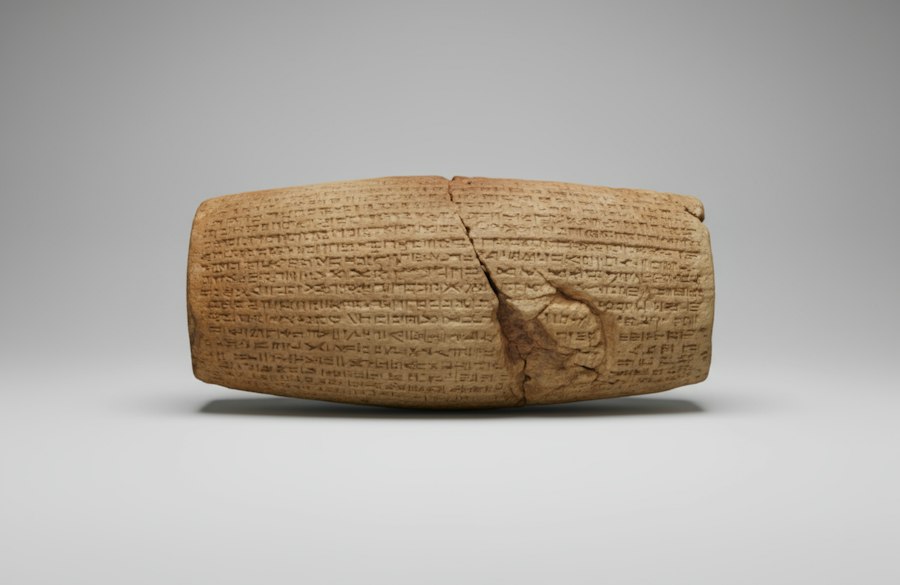
The Sumerian tablets themselves are as varied as the information they contain. Primarily made from readily available clay, they were shaped into manageable sizes, ranging from small administrative receipts to larger, more formal historical or literary compositions. The cuneiform script was incised into the wet clay using a stylus, typically made from reeds. The tablets were then either air-dried or, more commonly, baked in kilns. This baking process was crucial for their preservation, transforming fragile clay into durable artifacts that have withstood the ravages of time and burial. The sheer number of surviving tablets – hundreds of thousands – attests to their widespread use and the importance placed on recording information in Sumerian society. Their resilience has allowed them to endure for over four millennia, providing an unbroken chain of evidence for the development of this ancient civilization.
Scholars have long debated the significance of Sumerian tablets in understanding early human civilization, as these artifacts provide invaluable insights into the social, economic, and religious practices of ancient Mesopotamia. A related article discusses how the world map has evolved and changed across the globe, highlighting the importance of historical documents like Sumerian tablets in shaping our understanding of geography and culture over time. For more information, you can read the article here: World Map Evolves: Changes Across the Globe.
The Administrative Pulse of Sumer: Economy, Governance, and Law
Perhaps the most abundant category of Sumerian tablets comprises administrative and economic records. These texts offer an unparalleled glimpse into the daily workings of the Sumerian city-states, revealing sophisticated systems of management, trade, and taxation that would not be out of place in much later societies. The scribes, a highly respected class, were the backbone of this administrative machinery, diligently recording every transaction, every allocation of resources, and every decree.
The Bureaucratic Engine: Records of Trade, Labor, and Taxation
From the earliest periods of Sumerian history, tablets detail the movement of goods – barley, wool, precious metals, livestock – both within and between city-states. They document the organization of labor, the allocation of rations to workers, and the management of agricultural lands. Receipts for goods, inventories of stored items, and contracts for services are commonplace. Taxation, in various forms, was clearly a vital component of Sumerian governance. Tablets record levies on agricultural produce, livestock, and even individuals, demonstrating a centralized system designed to fund public works, maintain the temples, and support the ruling elite. The precision and detail within these economic records speak volumes about the Sumerians’ advanced understanding of accounting and resource management, laying the groundwork for later economic practices.
The Foundation of Order: Early Legal Codes and Judicial Processes
Beyond mere economic transactions, Sumerian tablets also illuminate the development of legal systems. While Hammurabi’s Code from Babylon is more famous, earlier Sumerian legal tablets provide crucial context. They reveal a system of laws designed to maintain social order, resolve disputes, and establish justice. These texts detail laws concerning property rights, inheritance, marriage, and contracts. They also offer insights into judicial procedures, including the role of witnesses, oaths, and punishments. The concept of codified law, where rules were written down and accessible, was a significant step in the evolution of human governance, and the Sumerian tablets demonstrate its early implementation. The principles embedded in these ancient legal documents, such as the importance of evidence and due process, resonate even in modern legal frameworks.
The Power of the Palace and Temple: Structures of Authority
The tablets consistently highlight the dual pillars of Sumerian authority: the palace and the temple. While the exact relationship between these two institutions varied across different city-states and over time, both played central roles in administration and economic life. Temple complexes were not just religious centers but also major landowners, employing large numbers of people and engaging in extensive trade. Palaces served as the seats of secular power, issuing decrees, organizing military campaigns, and administering justice. The tablets document the vast resources controlled by both institutions, including land, labor, and goods. They also record the interaction between these powers, from the allocation of temple lands by the king to the contributions of the temple to the state’s treasury. Understanding this intricate relationship is key to grasping the social and political landscape of Sumer.
Echoes of the Divine and the Human: Religion, Mythology, and Ritual
The spiritual lives of the Sumerians are vividly portrayed in a substantial collection of religious texts, hymns, prayers, and mythological narratives inscribed on their tablets. These writings offer a profound understanding of their worldview, their pantheon of gods, and their attempts to appease and understand the forces that governed their lives and the cosmos.
The Pantheon of Sumer: Gods, Goddesses, and Their Domains
Sumerian religion was polytheistic, with a vast array of deities presiding over different aspects of the natural world and human affairs. The tablets reveal a complex cosmology, with gods like An (sky god and king of the gods), Enlil (god of wind and storms), Enki (god of water and wisdom), and Inanna (goddess of love, war, and fertility) playing prominent roles. These deities were not abstract entities but were anthropomorphized, possessing human emotions, desires, and even failings. Their relationships, conflicts, and interventions in human affairs are central themes in Sumerian mythology. The tablets detail their various domains, their relationships with one another, and the rituals performed to honor them. Understanding this pantheon is essential for comprehending the cultural fabric of Sumerian society and its attempts to find meaning in the universe.
The Whispers of Creation and Chaos: Sumerian Mythology
The Sumerian tablets contain some of the earliest known mythological narratives in human history. These epics, such as the creation myth and the flood story (which predates the biblical account in Genesis), explore fundamental questions about existence, the origins of humanity, and the relationship between mortals and the divine. The Epic of Gilgamesh, though its most complete form is Akkadian, draws heavily on earlier Sumerian legends about the legendary king of Uruk. These myths often feature heroic deeds, divine interventions, and explorations of themes like mortality, suffering, and the search for immortality. They provide invaluable insights into the Sumerians’ understanding of the natural world, their fears, their hopes, and their moral codes. The literary qualities of these ancient stories, their enduring themes, and their influence on later religious and literary traditions continue to captivate scholars and general readers alike.
The Sacred Rites: Temple Rituals and Priesthood
The religious tablets also meticulously describe the rituals and ceremonies performed in the temples. These were not simply acts of worship but elaborate affairs involving offerings, sacrifices, prayers, and purification rites. The tablets detail the specific procedures, the vestments worn by priests, the timing of festivals, and the hymns sung in honor of the gods. The priesthood held a significant position in Sumerian society, acting as intermediaries between the divine and the human realms. They were responsible for maintaining the temples, performing sacrifices, and interpreting omens. The economic records often reveal the substantial resources dedicated to supporting the priesthood and their activities, underscoring the integral role of religion in Sumerian life and governance.
The Flourishing of Letters: Sumerian Literature and Intellectual Pursuits
While administrative and religious texts form a significant portion of the unearthed tablets, the Sumerian literary corpus is equally compelling, revealing a society that valued storytelling, poetry, and intellectual inquiry. These texts showcase the early development of narrative forms, lyric poetry, and even educational materials, demonstrating a rich intellectual and artistic tradition.
The Birth of Storytelling: Epics, Myths, and Legends
The Sumerian literary tradition is remarkably diverse. Beyond the mythological epics, scholars have identified hymns praising deities and kings, laments mourning the destruction of cities, proverbs offering wisdom, and even fables featuring animals. These texts provide not only entertainment but also social commentary and moral instruction. The Sumerian King List, for example, attempts to trace the lineage of kings from mythical times to more historical periods, reflecting a desire to understand and legitimize political authority. The literary style, though ancient, often displays a sophisticated use of metaphor, imagery, and narrative structure, indicating a mature artistic sensibility.
The Genesis of Education: School Texts and Scholarly Endeavors
The discovery of so-called “school tablets” provides direct evidence of formal education in Sumer. These texts, often featuring copies of literary works, dictionaries, and mathematical problems, were used by scribes in training. They reveal the curriculum of ancient Sumerian schools and the methods of instruction. The existence of these educational materials speaks to a societal value placed on literacy and specialized knowledge. Furthermore, tablets related to mathematics, astronomy, and medicine demonstrate a burgeoning scientific curiosity. Sumerian astronomers, for instance, developed sophisticated calendars and observed celestial phenomena. Mathematical tablets reveal their understanding of arithmetic and geometry, essential for their administrative and architectural endeavors.
The Personal Voice: Letters and Wisdom Literature
While official records and grand epics dominate, a smaller but significant number of tablets offer glimpses into personal correspondence and wisdom literature. Letters, though often brief, can reveal aspects of social relationships, business dealings, and even personal concerns. Wisdom literature, in the form of proverbs and admonitions, offers insights into Sumerian ethics, values, and their reflections on the human condition. These more personal texts provide a crucial counterpoint to the grand narratives of kings and gods, humanizing the ancient Sumerians and allowing scholars to connect with their individual thoughts and experiences.
Scholars have long been fascinated by the intricate details found in Sumerian tablets, which offer invaluable insights into the early civilization’s culture, economy, and governance. A recent article highlights the importance of preserving ancient texts and artifacts, drawing parallels to modern practices in securing communication lines in space exploration. For a deeper understanding of how contemporary methods can inform the preservation of historical documents, you can read more about it in this insightful piece on securing cislunar communication lines. This connection between past and present underscores the ongoing relevance of ancient knowledge in our technological advancements.
The Enduring Legacy: Sumerian Influence on Later Civilizations
| Scholar | Field | Key Observation | Significance | Publication Year |
|---|---|---|---|---|
| Samuel Noah Kramer | Assyriology | Sumerian tablets reveal the earliest known writing system and literature | Established Sumerian as the cradle of writing and civilization | 1963 |
| Jean Bottéro | Ancient Near Eastern Studies | Tablets provide insight into daily life, religion, and economy of Sumer | Expanded understanding of social and cultural practices | 1992 |
| Harriet Crawford | Archaeology | Tablets show administrative and legal systems in early urban societies | Highlighted complexity of Sumerian governance and law | 2004 |
| Gianni Marchesi | Linguistics | Decipherment of Sumerian language through tablets is crucial for understanding Mesopotamian history | Provided linguistic framework for ancient Near Eastern studies | 2010 |
| Joan Goodnick Westenholz | Religious Studies | Tablets contain hymns and myths that illuminate Sumerian religious beliefs | Enhanced knowledge of ancient Mesopotamian spirituality | 1997 |
The impact of Sumerian civilization extends far beyond the geographical confines of ancient Mesopotamia. The innovations and cultural developments pioneered by the Sumerians laid the groundwork for subsequent civilizations in the region and, through them, influenced the broader trajectory of human history. Scholars of Sumerian tablets are not just studying a lost world; they are tracing the roots of many fundamental aspects of our own society.
The Threads of Language and Writing Systems
The cuneiform script, invented by the Sumerians, was adopted and adapted by many other cultures in the ancient Near East, including the Akkadians, Babylonians, Assyrians, and Hittites. This shared writing system facilitated communication and the exchange of knowledge across vast distances and diverse populations. The principles of Sumerian grammar and vocabulary also influenced the development of later Semitic languages. The very act of systematically recording information, a practice perfected by the Sumerians, became a cornerstone of civilization.
Seeds of Law, Governance, and Urbanism
As discussed earlier, Sumerian legal codes and administrative structures provided a model for subsequent Mesopotamian states. The concept of a codified legal system, the organization of complex bureaucracies, and the principles of urban planning and governance all found early expression in Sumer. The development of city-states, with their complex social hierarchies, specialized labor, and monumental architecture, was a Sumerian innovation that profoundly shaped the political and social landscape of the ancient world.
The Ripples of Religion and Mythology
The religious beliefs and mythological narratives of the Sumerians had a significant and lasting impact on the development of religious thought in the Near East. Elements of Sumerian cosmology, creation stories, and flood myths can be found echoed in the religious traditions of later cultures, including those that would profoundly influence Western civilization. The anthropomorphic nature of their gods, their pantheon structure, and their rituals all contributed to a broader religious heritage that continued to evolve and transform over millennia. The Sumerian tablets, therefore, are not just relics of the past; they are vital documents that illuminate the foundational stages of human civilization, offering scholars ongoing opportunities to unravel the complexities of our shared human story and appreciate the enduring power of human intellect and creativity.

The Anunnaki Origin Story Changes When You Read the Tablets
FAQs
What are Sumerian tablets?
Sumerian tablets are ancient clay tablets inscribed with cuneiform script, the earliest known form of writing. They were used by the Sumerians in Mesopotamia for various purposes, including recording transactions, literature, and religious texts.
What do scholars say about the significance of Sumerian tablets?
Scholars consider Sumerian tablets to be invaluable sources of information about the ancient Sumerian civilization. They provide insights into Sumerian culture, history, religion, and daily life, helping researchers better understand the development of early human societies.
How do scholars analyze Sumerian tablets?
Scholars analyze Sumerian tablets by deciphering the cuneiform script and translating the text into modern languages. They also study the content of the tablets in context with other archaeological findings to gain a comprehensive understanding of the Sumerian civilization.
What are some common themes found in Sumerian tablets?
Common themes found in Sumerian tablets include myths and legends, religious rituals, administrative records, legal codes, and literary works. These tablets offer a diverse range of information that sheds light on various aspects of Sumerian society.
What can we learn from the study of Sumerian tablets?
The study of Sumerian tablets provides valuable insights into the origins of writing, the development of early civilizations, social structures, economic systems, religious beliefs, and technological advancements of the ancient Sumerians. It helps us piece together the puzzle of human history and cultural evolution.