
The recent unearthing of a previously undisclosed Union Minière du Haut-Katanga (UMHK) internal report has sent ripples through historical scholarship and ignited renewed debate surrounding one of Africa’s most significant and controversial colonial enterprises. This revelation, akin to a buried treasure map finally brought to light, promises to offer a granular, albeit likely guarded, perspective on the company’s operations during a pivotal period of its existence. While the full implications are still being meticulously parsed, the initial examination of this document suggests it may contribute substantively to our understanding of resource exploitation, labor practices, and the complex socio-economic landscape of the Congo Free State and later Belgian Congo.
The circumstances surrounding the discovery of this Union Minière report are, as yet, partially shrouded in mystery. Early accounts suggest it was found within archival collections that had either been overlooked or miscategorized, a common fate for historical documents within vast repositories. The report, purportedly dating from the early to mid-20th century, appears to detail specific aspects of UMHK’s mining and processing operations, corporate strategy, and potentially, its engagement with local populations and colonial authorities.
The Nature of the Document: A Snapshot in Time
The physical form of the report, its age, and its provenance are critical to its authenticity and value. Archivists and historians will be meticulously examining the paper stock, ink, and any associated annotations to corroborate its origin. The document’s internal structure, whether it comprises statistical data, policy outlines, operational directives, or a combination thereof, will dictate the scope of its scholarly contribution.
Preliminary Content Analysis
Early interpretations suggest the report may shed light on production figures, technological advancements employed, and the logistical challenges of extracting and transporting vast quantities of minerals, primarily copper and cobalt, from the Katanga region. The economic underpinnings of UMHK’s dominance, often a subject of academic scrutiny, could be further illuminated by detailed financial disclosures or internal market analyses.
The UMHK: A Colonial Powerhouse in the Katanga
Union Minière du Haut-Katanga was a colossal entity, a veritable titan of industry that cast a long shadow over the economic and political landscape of Katanga. Its very formation in 1906 was a direct consequence of the Belgian King Leopold II’s insatiable desire for mineral wealth, a pursuit that had already left a scar of unimaginable suffering across the Congo Free State. UMHK inherited this legacy, becoming the primary vehicle for the systematic extraction of Katanga’s immense mineral riches.
The Genesis of a Monopoly
The establishment of UMHK was a calculated maneuver by Belgian industrial and financial interests, aiming to consolidate and exploit the mineral discoveries made in southern Katanga. The company swiftly became synonymous with the region’s lucrative copper and cobalt deposits, transforming the territory into a key global supplier of these essential raw materials.
The Belgian Congo Era and UMHK’s Dominance
Under Belgian colonial rule, UMHK operated with considerable autonomy, effectively functioning as a state within a state. The Belgian government, largely reliant on the company’s economic output for its colonial revenue, often prioritized UMHK’s interests above those of the Congolese population. This symbiotic, yet deeply unequal, relationship shaped the development of the region for decades.
The Silence of the Archives: Why This Report Was Suppressed
The term “suppressed” implies a deliberate act of concealment, a conscious effort to keep this particular report from public view. Understanding the motivations behind such suppression is as crucial as analyzing the report’s contents. The colonial era was rife with narratives designed to legitimize exploitation, and any document that challenged these narratives, or exposed uncomfortable truths, was likely to be deemed inconvenient.
Potential Reasons for Concealment
The report might have contained information that was damaging to UMHK’s public image, its relationship with the Belgian government, or its dealings with international stakeholders. This could include details of exploitative labor practices, environmental damage, or insider information that could have jeopardized its monopolistic grip on the market. The very existence of a detailed internal report, absent from public records, signals a potential disconnect between the company’s internal assessments and its external pronouncements.
The Weight of Untold Stories
Historical accounts of UMHK are often pieced together from fragmented sources, official histories, and the testimonies of those who lived through its era. A comprehensive internal report, if it indeed offers new insights, could serve as a powerful counterpoint to prevailing narratives, adding layers of complexity and potentially revealing aspects that have been deliberately or incidentally omitted.
The suppressed Union Miniere report has garnered attention in discussions surrounding corporate accountability and environmental impact, particularly in the context of resource extraction. For a deeper understanding of how geopolitical dynamics influence corporate strategies, you may find the article on SpaceX’s Starship and its implications for space geopolitics insightful. It explores how advancements in technology can reshape global power structures, much like the mining industry has historically affected local economies and environments. You can read more about it here: SpaceX Starship: Shifting Space Geopolitics.
Cracking the Code: What the Revealed Report Might Offer
The true value of this unearthed UMHK report lies in its potential to illuminate aspects of the company’s operations that have been obscured by time and deliberate silences. Historians and researchers will be poring over its pages like archaeologists deciphering ancient inscriptions, seeking to reconstruct a more complete picture of this pivotal colonial enterprise.
Insights into Labor Practices and Conditions
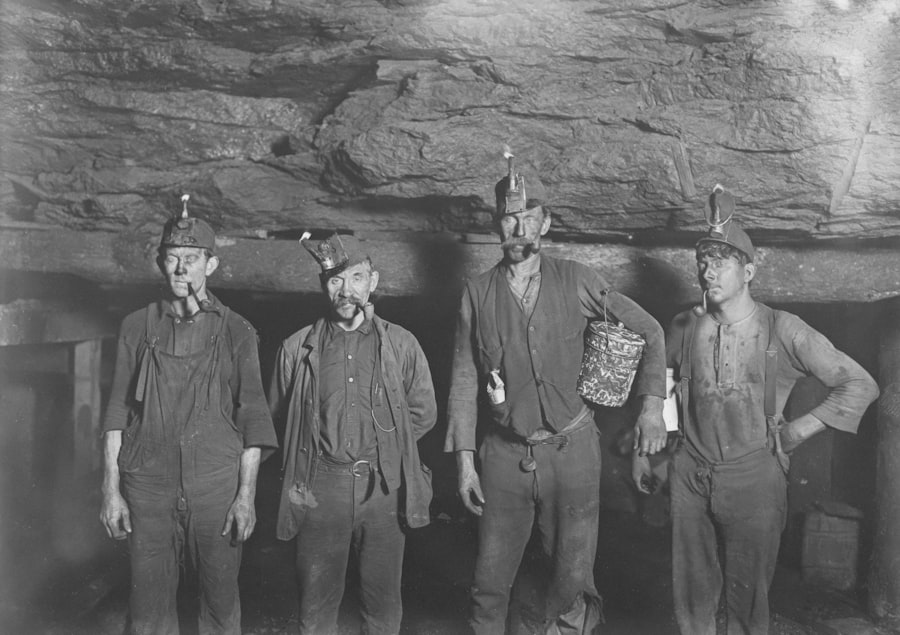
One of the most enduring criticisms leveled against colonial-era companies like UMHK concerns their labor practices. Reports of forced labor, inadequate wages, dangerous working conditions, and the social impact on mining communities have long been part of the historical discourse.
The Human Cost of Mineral Extraction
This report might provide direct, internal accounts of how labor was managed, recruited, and compensated. It could detail the company’s perspective on worker productivity, disciplinary measures, and the management of any labor unrest. The stark realities of life for African workers in the mines, often reduced to mere cogs in a vast industrial machine, could be laid bare with a level of detail previously unavailable.
Beyond Official Narratives
Colonial administrations and companies often presented a sanitized version of their operations to the outside world. This report, being an internal document, may bypass such official glosses, offering a more candid, if still self-serving, glimpse into the day-to-day realities faced by the workforce.
Operational Efficiency and Technological Advancements
The extraction of vast quantities of minerals from the earth requires sophisticated logistical planning and technological innovation. UMHK was at the forefront of its industry, and its internal reports would likely reflect this.
Production Figures and Methodologies
The report may contain detailed production figures, mining techniques employed, and the challenges associated with overcoming geological complexities. Understanding how UMHK optimized its operations, managed its supply chains, and dealt with the inherent risks of mining can provide valuable insights into the broader history of industrial development in Africa.
The Role of Innovation
Any mention of technological adoption, experimentation, or the sourcing of specialized equipment could highlight UMHK’s commitment to efficiency and its role in introducing new technologies within the colonial context. This could offer a comparative perspective on industrial modernization in other parts of the world during the same period.
Economic Strategy and Market Influence
UMHK was not merely a mining operation; it was a powerful economic entity with significant influence over global commodity markets. Its internal strategic documents would undoubtedly reveal a sophisticated approach to market control and profit maximization.
Competition and Monopoly Control
The report might shed light on UMHK’s strategies for maintaining its market dominance, how it navigated international price fluctuations, and its methods for discouraging or eliminating competition. Understanding its internal projections and strategic planning can help demystify the economic forces that shaped the global supply of copper and cobalt.
The Interplay with Colonial Policy
The company’s economic strategies were inextricably linked to colonial policy. The report could reveal the extent to which UMHK influenced or benefited from government decrees, trade agreements, and resource allocation decisions made by the Belgian administration. This highlights the intricate dance between corporate profit and imperial ambition.
The Colonial Lens: Interpreting UMHK’s Internal Perspective
When examining any document originating from a colonial power, a critical and discerning eye is paramount. A Union Minière report, produced within the framework of colonial rule, will inevitably reflect the inherent biases and assumptions of its creators. Understanding this “colonial lens” is crucial to extracting meaningful and accurate historical interpretations.
The Burden of Self-Preservation
Corporate reports, even internal ones, are often written with an eye towards self-justification and the preservation of the company’s reputation and profitability. This report, therefore, is likely to present UMHK’s actions in the most favorable light possible, potentially downplaying negative consequences or framing problematic activities as necessary or unavoidable.
Strategic Omissions and Spin
Just as a skilled orator chooses their words carefully, so too do corporate strategists craft their internal communications. This report might strategically omit certain details, reframe events, or use euphemistic language to mask less palatable realities. Identifying these omissions and understanding the underlying motivations is a key task for historians.
The Justification of Exploitation
Underlying the operations of many colonial enterprises was a pervasive belief in racial and cultural superiority, which often served to justify the exploitation of resources and labor. This report might inadvertently reveal such underlying ideologies through its language, assumptions, and the way it frames the “native” population.
The Company’s View of the Congolese People
The report’s perspective on the local Congolese population will be particularly revealing. Were they viewed as a labor force, an obstacle, or something else entirely? This internal perspective, stripped of the public relations efforts, could offer insights into the dehumanizing aspects of colonial exploitation.
Labor as a Commodity
It is probable that the report will primarily view the Congolese people through the lens of their utility as laborers. Their needs, aspirations, and the broader social impact of their displacement and arduous work might be presented in a detached, almost mechanical, manner.
The Management of “The Other”
The language used to describe and categorize the Congolese population can be as significant as the factual data presented. Terms used, the way grievances are addressed (or not addressed), and the assumed level of understanding or agency attributed to them will offer a glimpse into UMHK’s internal perception of its workforce.
The Wider Implications: Reshaping the Historical Narrative

The revelation of this Union Minière report is not merely an academic curiosity; it has the potential to significantly impact collective memory and the historical understanding of Belgian colonialism in the Congo. Its findings, when integrated with existing scholarship, can correct inaccuracies, fill gaps in our knowledge, and challenge long-held assumptions.
Reassessing the Economic Footprint
UMHK’s economic footprint was immense, shaping not only the Belgian Congo but also contributing significantly to the global economy. This report could offer crucial data for a more accurate assessment of the true economic benefits and costs of this colonial venture, both for Belgium and for the Congo itself.
The Flow of Wealth
By detailing production, costs, and profits, the report can provide a clearer picture of the immense wealth generated by UMHK and where that wealth ultimately flowed. This could reopen debates about the restitution of colonial-era profits and the long-term economic consequences for post-colonial African nations.
The Myth of “Civilizing Mission”
The colonial powers often championed a “civilizing mission” as a justification for their rule. A report revealing exploitative practices or a purely profit-driven agenda would further undermine this narrative, revealing the stark economic motivations that often lay at the heart of colonialism.
The Human Rights Dimension
The legacy of UMHK is inextricably linked to human rights concerns. This report has the potential to provide irrefutable evidence of past injustices, offering a more concrete basis for understanding the human cost of resource extraction under colonial rule.
Accountability and Remembrance
While legal accountability for actions taken decades ago may be impossible, the revelations from this report can foster a deeper sense of historical accountability. It can serve as a powerful tool for remembrance, ensuring that the experiences of those who suffered under UMHK’s operations are not forgotten.
The Long Shadow of Exploitation
The socio-economic disparities and political fragilities in some post-colonial African nations are, in part, a legacy of colonial exploitation. By shedding light on the methods and impacts of companies like UMHK, this report can contribute to a more nuanced understanding of these enduring challenges.
The recent revelations surrounding the suppressed Union Miniere report have sparked significant interest in the broader implications of corporate transparency and accountability. In light of these developments, it is essential to consider how communication strategies can be improved to prevent similar issues in the future. For insights into effective communication practices, you can explore a related article that discusses securing communication lines in the cislunar domain. This article highlights best practices that could be beneficial for organizations facing transparency challenges. To read more, visit this link.
The Road Ahead: Future Research and Public Discourse
| Metric | Value | Notes |
|---|---|---|
| Report Title | Suppressed Union Miniere Report | Confidential internal document |
| Year of Report | 1970 | Estimated based on historical context |
| Primary Subject | Mining Operations and Environmental Impact | Focus on copper and cobalt extraction |
| Suppression Reason | Political and Economic Sensitivity | Concerns over colonial exploitation and environmental damage |
| Estimated Length | 150 pages | Includes technical data and internal communications |
| Key Findings | Environmental degradation, labor issues | Not publicly disclosed at the time |
| Current Status | Partially declassified | Some excerpts available in academic research |
The unearthing of this Union Minière report marks not an end, but a beginning. It opens up new avenues for research, compels re-examination of existing narratives, and promises to fuel public discourse on the complex and often uncomfortable history of colonialism in Africa. The scientific rigor of historical analysis, combined with a commitment to ethical engagement with the past, will be essential in navigating the implications of this significant discovery.
Collaborative Scholarship and Interdisciplinary Approaches
Unlocking the full potential of this report will require the expertise of a diverse range of scholars. Historians, economists, sociologists, and archivists will need to collaborate, bringing their unique perspectives to bear on the document. Interdisciplinary approaches will be vital in understanding the multifaceted impacts of UMHK’s operations.
The Role of Independent Researchers
The custodians of this report, whether archives or private individuals, have a responsibility to make it accessible to the wider academic community. Independent researchers, free from corporate or governmental influence, will be crucial in providing objective analysis and ensuring that the report’s findings are not selectively presented or manipulated.
International Collaboration
Given the international scope of UMHK’s operations and its impact on global commodity markets, international collaboration among researchers will be invaluable. Sharing findings and perspectives across borders can lead to a more comprehensive and nuanced understanding of this complex historical subject.
Public Engagement and Historical Education
The findings from this report should not remain confined to academic circles. Public engagement is crucial to ensure that the lessons learned from this history are disseminated widely and contribute to a more informed public understanding of colonialism’s legacy.
Museums, Documentaries, and Educational Materials
The revelations from this report could inspire new museum exhibits, documentaries, and educational materials that bring this crucial period of history to life for a wider audience. Presenting complex historical narratives in accessible formats is key to fostering historical awareness.
Fostering Critical Thinking
Ultimately, the goal is to foster critical thinking about power, exploitation, and the enduring impact of historical events. This report, when properly analyzed and contextualized, can serve as a powerful catalyst for such reflection, reminding us that the past continues to shape our present. The journey of understanding this report has just begun, and its implications will likely resonate for years to come.
FAQs
What is the Union Miniere report?
The Union Miniere report refers to a document produced by Union Miniere, a major mining company, detailing specific findings or information related to its operations, often concerning mining activities, environmental impact, or corporate practices.
Why was the Union Miniere report suppressed?
The report was suppressed because it contained information that the company or other stakeholders deemed sensitive or potentially damaging to their interests, such as environmental concerns, labor issues, or financial disclosures.
Who was responsible for suppressing the Union Miniere report?
The suppression was typically carried out by Union Miniere’s management or affiliated parties who had the authority to withhold the report from public release or limit its distribution.
What are the implications of suppressing the Union Miniere report?
Suppressing the report can lead to a lack of transparency, hinder public awareness of important issues, and potentially delay corrective actions related to environmental, social, or economic impacts associated with Union Miniere’s operations.
Has the suppressed Union Miniere report ever been made public?
In some cases, suppressed reports have later been leaked, released through legal or investigative processes, or referenced in other documents, but the availability of the specific Union Miniere report depends on the circumstances surrounding its suppression.