The sands of time conceal a multitude of enigmas, but few resonate with the profound sense of antiquity and enduring mystery as the one discovered in the Anatolian highlands: Göbekli Tepe, the “Navel of the World.” This monumental archaeological site, unearthed over decades, challenges our most fundamental assumptions about early human civilization, pushing back the known timeline of complex societies and sophisticated ritualistic practices by millennia. It is a testament to the ingenuity and spiritual depth of people who lived at the very dawn of settled human existence, leaving behind a puzzle that continues to captivate and confound scholars and the public alike.
The story of Göbekli Tepe’s discovery is as remarkable as the site itself. For decades, local shepherds and farmers had noticed unusual stone formations on a prominent hill. These were dismissed as natural outcrops or perhaps the remnants of mundane structures. The true nature of the site remained hidden until Klaus Schmidt, a German archaeologist, became fascinated by the anomalies in the early 1990s. His systematic excavations, beginning in 1995, would unveil a landscape unlike anything previously imagined from the Pre-Pottery Neolithic period.
A Serendipitous Beginning
The initial investigations at Göbekli Tepe were not driven by the expectation of uncovering a monumental religious complex. Schmidt and his team were intrigued by surface finds, including flint tools and fragmented pottery, which hinted at human activity. However, it was the systematic mapping and geophysical surveys that revealed the presence of numerous circular and oval structures hidden beneath the soil. These were not simple dwellings; they were large, deliberately constructed enclosures.
The Pillars of the Past
As excavations progressed, the true scale of Göbekli Tepe began to emerge. Massive, T-shaped stone pillars, some weighing as much as 20 tons and standing over 18 feet tall, were systematically uncovered. These monoliths were not roughly hewn stones; they were skillfully shaped and carved with intricate reliefs of animals – lions, boars, foxes, snakes, and birds – as well as abstract symbols. The sheer effort and organization required to quarry, transport, shape, and erect these colossal stones in an era predating the invention of pottery, the wheel, and metallurgy, was astounding.
The exploration of ancient mysteries continues to captivate historians and archaeologists alike, particularly with the recent findings related to a 12,000-year-old civilization that challenges our understanding of early human societies. For those interested in how ancient cultures can influence modern dynamics, a fascinating read can be found in the article discussing the future of trade relations between the U.S. and Mexico, which highlights the importance of historical context in shaping contemporary interactions. You can read more about it here: Charting the Future of U.S.-Mexico Trade Relations.
Redefining the Neolithic Revolution
Göbekli Tepe fundamentally alters our understanding of the transition from a hunter-gatherer lifestyle to settled agriculture, commonly referred to as the Neolithic Revolution. For generations, the prevailing theory posited that settled life, the development of complex social structures, and organized religion were direct consequences of the domestication of plants and animals. Göbekli Tepe, however, suggests a reverse causality or at least a symbiotic relationship.
Hunter-Gatherers as Builders
The archaeological evidence from Göbekli Tepe strongly indicates that its creators were primarily hunter-gatherers. Radiocarbon dating places its construction and use between approximately 9600 and 8200 BCE. At this time, agriculture was either in its nascent stages or had not yet become a dominant force in the region. This means that societies capable of organizing labor on an unprecedented scale, undertaking massive construction projects, and engaging in complex symbolic thought were seemingly hunter-gatherer communities. This challenges the traditional view that advanced societal organization was a prerequisite for such undertakings.
The Social Imperative
The prevailing hypothesis now is that the desire and need to build and maintain these monumental ritual centers may have been a driving force behind the development of settled life and agriculture. The coordination required to quarry, transport, and erect the massive pillars, as well as the sustained commitment to constructing and re-using these enclosures over centuries, would have necessitated a level of social cohesion and organization that might have spurred the development of more sedentary lifestyles and the cultivation of food resources to sustain larger, more permanent communities.
The Sacred Heart of the Ancient World
The most striking aspect of Göbekli Tepe is its undeniable ritualistic and spiritual significance. The site is not a settlement; there is no evidence of permanent living quarters, hearths, or domestic refuse piles that would suggest a residential community. Instead, the numerous circular enclosures, each centered around two larger, more elaborate pillars, strongly point towards a function as a communal gathering place for religious or ceremonial purposes.
Circular Sanctuaries
The recurring architectural motif at Göbekli Tepe is the circular enclosure. These enclosures, often referred to as “temples” or “sanctuaries,” vary in size but consistently feature a ring of massive, T-shaped limestone pillars. The smaller pillars, often numerous, stand between the two dominant central monoliths. The orientation of these enclosures, the details of the carvings, and the overall layout suggest a deliberate and carefully planned design, all serving a common purpose.
The Enigmatic Animal Carvings
The animal reliefs adorning the pillars are a focal point of intense study and speculation. They are not merely decorative; they are rich in symbolism. The creatures depicted – wild boar, aurochs, foxes, gazelles, lions, vultures, snakes – were likely significant in the cosmology and belief systems of the people who created them. Some scholars believe these animals represent deities, spirits, or totemic figures. The absence of depictions of humans, with the notable exception of abstract symbols that some interpret as human figures or stylized representations, further emphasizes the non-domesticated, perhaps spiritual or cosmic, focus of the site. The presence of a vulture carving near a pillar known for its abstract symbols has led to theories connecting the site to sky burial rituals.
Abstract Symbols and Their Meanings
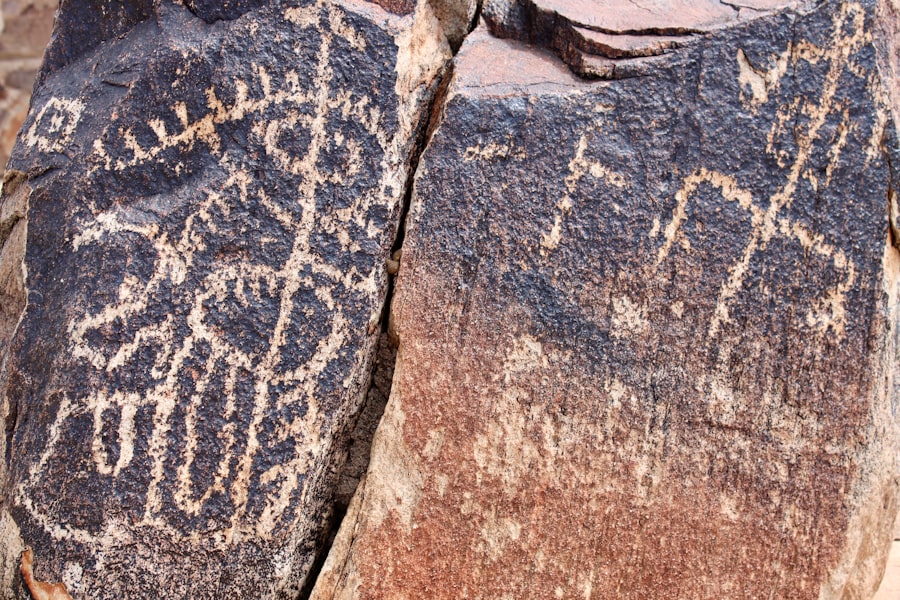
Beyond the animal depictions, Göbekli Tepe features a series of enigmatic abstract symbols. These include crosses, H-shapes, and other geometric forms. Their precise meaning remains elusive, but they are thought to represent a form of proto-writing, astronomical alignments, or spiritual concepts. The repetition of certain symbols suggests they held particular importance within the belief system. Deciphering these symbols is one of the most significant ongoing challenges in understanding Göbekli Tepe.
The Mystery of Abandonment

One of the most perplexing aspects of Göbekli Tepe is its eventual and seemingly deliberate abandonment. After centuries of use and monumental construction, the site was systematically backfilled. The massive stone enclosures were intentionally buried, layer by layer, with earth and debris. This act of burial was not haphazard; it was a meticulous process, suggesting a conscious decision to preserve or perhaps to seal away the sacred spaces.
The Great Burial
The backfilling of Göbekli Tepe is one of its most extraordinary features. The entire complex, including its monumental pillars, was covered by soil and rubble, effectively burying it for over 10,000 years. This prevented its further erosion and preservation for future discovery. The reasons behind this massive undertaking are unknown, but it speaks to a profound respect for the site and its purposes, even in its cessation of use.
Theories of Decline and Transition
Various theories attempt to explain the abandonment. One possibility is a shift in religious practices or beliefs that rendered the old sacred sites obsolete. Another theory suggests that environmental changes or societal upheavals may have led to a migration of the people who used the site, rendering it inaccessible or irrelevant. The transition to increasingly settled agricultural life, with its own developing religious traditions and centers of worship, might also have played a role in the gradual decline of Göbekli Tepe’s importance. The fact that it was buried rather than simply left to decay suggests a ritualistic closure, a final act of reverence.
The discovery of a 12,000-year-old ancient mystery has captivated archaeologists and historians alike, shedding light on the complex societies that existed long before recorded history. This intriguing find raises questions about early human civilization and its development. For those interested in understanding the broader implications of ancient societies on contemporary issues, a related article on navigating international relations offers key strategies for success in today’s interconnected world. You can read more about it here.
Enduring Questions and Future Discoveries
| Aspect | Details |
|---|---|
| Age | 12000 years old |
| Location | Various ancient sites around the world |
| Artifacts | Stone carvings, pottery, tools, and other objects |
| Research | Ongoing studies by archaeologists and historians |
| Theories | Various hypotheses about the purpose and origin of the ancient mystery |
Despite decades of intensive research, Göbekli Tepe continues to guard many of its secrets. The vastness of the site, with only a fraction excavated, suggests that many more discoveries await. The ongoing research promises to further refine our understanding of this ancient civilization and its place in human history.
The Purpose of the Pillars
The central function of the T-shaped pillars remains a subject of intense debate. Are they anthropomorphic figures representing deities or ancestors? Are they symbolic representations of cosmic forces or gateways to the spiritual realm? Their scale and placement within the ritual enclosures suggest a profound significance, but definitive answers remain elusive.
The Social Structure of the Builders
Understanding the social organization of the people who built and used Göbekli Tepe is crucial. How did they coordinate such massive labor efforts? What was their societal hierarchy? The evidence points to a complex, organized society, but the specifics of their governance and social stratification are still largely unknown.
The Lost Knowledge
Perhaps the most profound mystery lies in the lost knowledge that Göbekli Tepe represents. The sophisticated understanding of architecture, engineering, astronomy, and symbolic representation evident at the site suggests a level of cognitive development and cultural richness that predates our current timelines. The challenge for archaeologists and anthropologists is to reconstruct this lost knowledge and integrate it into our understanding of humanity’s journey. The continuing excavation and analysis of Göbekli Tepe promise to reveal more chapters of this ancient, 12,000-year-old mystery, pushing the boundaries of our knowledge and forever altering our perception of the past.

The World Beyond Göbekli Tepe Is Far Bigger Than We Thought
FAQs
What is the 12000 year old ancient mystery?
The 12000 year old ancient mystery refers to a discovery of a mysterious structure that dates back to around 12000 years ago, which has puzzled archaeologists and historians.
Where was the 12000 year old ancient mystery discovered?
The 12000 year old ancient mystery was discovered in a remote region, and the exact location has not been disclosed to the public to protect the site from looters and vandals.
What makes the 12000 year old ancient mystery significant?
The 12000 year old ancient mystery is significant because it challenges existing theories about ancient civilizations and their capabilities, and it provides new insights into the history of human civilization.
What are some theories about the purpose of the 12000 year old ancient mystery?
Some theories about the purpose of the 12000 year old ancient mystery suggest that it may have served as a ceremonial or religious site, while others speculate that it could have had astronomical or agricultural significance.
What are the next steps in investigating the 12000 year old ancient mystery?
The next steps in investigating the 12000 year old ancient mystery involve conducting further archaeological research, using advanced technologies to analyze the site, and collaborating with experts from various fields to unravel its secrets.