The wind, a relentless sculptor of ice and snow, whispers secrets across the desolate Greenland ice sheet. It carries the ghosts of forgotten endeavors, the echoes of ambition entombed in a world of white. Here, buried beneath decades of frozen precipitation, lie the abandoned remains of Camp Century, a testament to a bygone era of Cold War ingenuity and a stark reminder of nature’s enduring power. This once-thriving military installation, a marvel of engineering in its time, has succumbed to the slow, inexorable march of glaciation, leaving behind a spectral presence on the frozen frontier.
Camp Century, officially known as “U.S. Army Arctic Research Laboratory,” was conceived and constructed during the height of the Cold War, a period of intense geopolitical tension between the United States and the Soviet Union. The Arctic, with its vast, unexplored territories and strategic proximity to both superpowers, became a critical theater in this global ideological struggle. The United States recognized the immense strategic value of establishing a permanent presence in this remote and unforgiving environment, not only for military observation and potential operations but also for scientific exploration.
The Genesis of a Subsurface City
The concept for Camp Century emerged in the late 1950s, driven by a desire to test the feasibility of constructing and operating a large military base in an arctic environment. The primary objective was to establish a base that could serve as a staging area for potential missile launches and a hub for intelligence gathering. The idea of building an underground facility was not merely a matter of preference but a necessity dictated by the extreme conditions. Surface structures would be vulnerable to the brutal winds, heavy snowfall, and extreme cold, making them impractical for long-term habitation and operation. Thus, the ambitious plan to carve a city beneath the ice began to take shape.
The Engineering Challenge: A Marvel of Pre-Fabrication
The engineering challenges associated with building Camp Century were immense. The site, located approximately 150 miles inland from the northwest coast of Greenland, was chosen for its relatively stable ice sheet, though this stability was always a relative term in such a dynamic environment. The design called for a network of interconnected tunnels, excavated into the ice, which would house living quarters, workshops, power generation facilities, and even a hospital. The entire camp was to be built using pre-fabricated modules, transported from the United States and assembled on-site. This approach allowed for a more efficient construction process in the harsh arctic climate, minimizing the amount of time spent working exposed to the elements.
The Tunneling Process: Carving Through Ice
The excavation of the tunnels was a monumental undertaking. Specialized boring machines, designed to cut through compacted snow and ice, were employed. These machines, essentially massive drills, ground their way through the frozen terrain, creating the pathways that would form the backbone of the camp. The excavated ice was then used as building material, compacted and shaped to form the walls and ceilings of the tunnels, providing a degree of insulation and structural integrity. The process was slow, arduous, and required constant adaptation to the unpredictable nature of the ice.
Camp Century, once a secret military base in Greenland, has largely succumbed to the forces of nature, with its remnants now buried under layers of ice. As climate change continues to impact the Arctic region, the site serves as a poignant reminder of the past and the shifting landscape. For those interested in the intricate processes of crafting and the historical significance of materials, a related article can be found at The Art of Crafting Damascus Steel, which explores the artistry and heritage behind a different kind of legacy.
Life Under the Ice: A Microcosm of Arctic Society
Despite its remote and challenging location, Camp Century became a vibrant, albeit temporary, community. Over its operational lifespan, it housed hundreds of military personnel, scientists, and support staff. Life within the ice tunnels presented a unique set of challenges and routines, fostering a distinct subculture among its inhabitants.
Daily Rhythms in a Frozen World
The daily lives of those stationed at Camp Century were shaped by the extreme environment. The constant darkness of the polar night, followed by periods of perpetual daylight, created distinct circadian rhythms. Inside the illuminated tunnels, a semblance of normalcy was maintained. Personnel worked in shifts, performing a variety of duties, from operating machinery and maintaining infrastructure to conducting scientific research. Recreation and social activities were crucial for maintaining morale. These included movie nights in communal areas, card games, and the sharing of stories and experiences.
Maintaining Morale: The Human Element
The psychological toll of isolation and confinement in such an extreme environment was a significant consideration. Commanders and support staff made concerted efforts to foster a sense of community and purpose. Regular communication with the outside world, though limited by satellite technology of the era, was vital. Letters, infrequent phone calls, and the arrival of supply planes provided crucial connections to family and friends. The shared experience of living and working in such an extraordinary place also created strong bonds between the personnel. They were pioneers, facing the unknown together.
Scientific Endeavors: Beyond Military Objectives
While Camp Century was primarily a military installation, it also served as a vital hub for scientific research. The unique arctic environment offered unparalleled opportunities for studying meteorology, glaciology, geology, and even the aurora borealis. Scientists stationed at the camp conducted groundbreaking research that contributed significantly to our understanding of the Earth’s polar regions.
Studying the Ice Sheet: Unraveling Earth’s History
One of the most significant scientific endeavors at Camp Century involved the deep ice drilling project. The goal was to extract ice cores that could provide a historical record of Earth’s climate. These ice cores, layered like the rings of a tree, contained trapped air bubbles and impurities that offered invaluable insights into past atmospheric conditions, temperature fluctuations, and even volcanic activity spanning hundreds of thousands of years. This research was instrumental in understanding climate change and its historical drivers.
The Ice Core Project: A Window into the Past
The extraction of ice cores from a depth of over a mile was a remarkable feat of scientific and engineering collaboration. The process required specialized equipment and meticulous care to preserve the integrity of the samples. These cores, painstakingly analyzed, have become a cornerstone of paleoclimatology, providing crucial data for climate models and our understanding of long-term environmental trends. They are a tangible legacy of Camp Century’s scientific contribution.
Arctic Ecology and Environmental Monitoring
Beyond glaciology, Camp Century also facilitated research into the unique arctic ecosystem. Personnel studied the behavior of arctic wildlife, the impact of human presence on the fragile environment, and conducted meteorological observations that contributed to weather forecasting and climate modeling. The camp acted as a base for expeditions into the surrounding wilderness, allowing for a broader scope of environmental data collection.
The Retreat of Ice: A Slow Burial
The very element that made Camp Century possible – the ice sheet – also became its undoing. The constant accumulation of snow and ice, while initially providing the medium for construction, eventually began to exert overwhelming pressure on the underground structures. The gradual thickening of the ice sheet led to the deformation and eventual collapse of some of the tunnels.
The Creep of Glaciers: Nature’s Relentless Force
Glaciers are not static entities; they flow and move, albeit at a glacial pace. Over time, the immense weight of the ice sheet caused the buried structures of Camp Century to be compressed and distorted. The tunnels, originally designed with a certain degree of flexibility, were subjected to stresses that eventually proved too much for their structural integrity. The gradual deformation of the ice meant that the camp was slowly, but surely, being swallowed by its frozen environment.
Structural Challenges: Adapting to the Dynamic Ice
The engineers who designed Camp Century were aware of the challenges posed by the moving ice. They incorporated features to allow for some degree of movement and expansion. However, the long-term effects of sustained pressure and the continuous accumulation of ice proved to be more significant than perhaps initially anticipated. The constant need for maintenance and repair to counteract the ice’s embrace became increasingly difficult and ultimately unsustainable.
Abandonment and the Passage of Time
By the late 1960s, the strategic landscape had shifted, and the cost of maintaining such an isolated and complex facility became a significant factor. Coupled with the increasing challenges posed by the encroaching ice, the decision was made to decommission Camp Century. What followed was a gradual abandonment, leaving the once-bustling base to the mercy of the elements.
The Decommissioning Process: Leaving No Trace (or so they thought)
The process of decommissioning Camp Century involved the removal of all usable equipment and supplies. The aim was to leave the site as clean as possible, minimizing any potential environmental impact. However, the logistical challenges of operating in such a remote location meant that some items were inevitably left behind. The remaining structures were then intended to be left to the natural processes of the ice sheet, to be slowly buried and preserved.
The Unintended Legacy: Environmental Concerns
While the intention was to leave a minimal footprint, the abandonment of Camp Century raised some environmental concerns. The presence of materials like fuel and waste beneath the ice presented a potential long-term risk. As the ice sheet shifts and melts, these materials could eventually be released into the environment. This has led to renewed interest in the site and calls for monitoring and potential remediation efforts.
Camp Century, a once-secret U.S. military base in Greenland, has become a subject of intrigue as its remnants are slowly being revealed due to climate change. The melting ice is exposing the structures and artifacts that were buried for decades, raising concerns about the potential environmental impact of the materials left behind. For a broader perspective on how shifting climates are influencing various regions, you might find this article on the shift to southern U.S. manufacturing interesting. It discusses how industries are adapting in response to changing environmental conditions, much like the challenges posed by the legacy of Camp Century. You can read more about it here.
The Spectral City: A Modern-Day Archaeological Site
Today, Camp Century exists as a ghost town beneath the Greenland ice sheet. Decades of snow accumulation have buried it deep, transforming it from a functional base into a unique archaeological site. The story of its rise and fall is a compelling narrative of human ambition, technological prowess, and the humbling power of nature.
Rediscovery and Renewed Interest
In recent years, advances in radar technology have allowed researchers to “see” beneath the ice and map the buried structures of Camp Century. This has sparked a renewed interest in the site, not only from a historical perspective but also for its scientific potential. The ice cores drilled by the original inhabitants are still being studied, and the buried camp itself offers a unique opportunity to study the effects of long-term ice deformation.
The Future of Camp Century: Preservation and Research
The future of Camp Century remains a subject of ongoing discussion. Some advocate for further research and potential preservation efforts, while others highlight the environmental risks associated with its abandonment. Regardless of the ultimate decisions, Camp Century stands as a powerful reminder of humanity’s attempts to conquer even the most challenging environments, and a poignant testament to the enduring and transformative forces of the natural world. Its story, etched in ice, continues to be unearthed, revealing lessons for the present and the future. The spectral city, slumbering beneath the snow, still has much to tell.
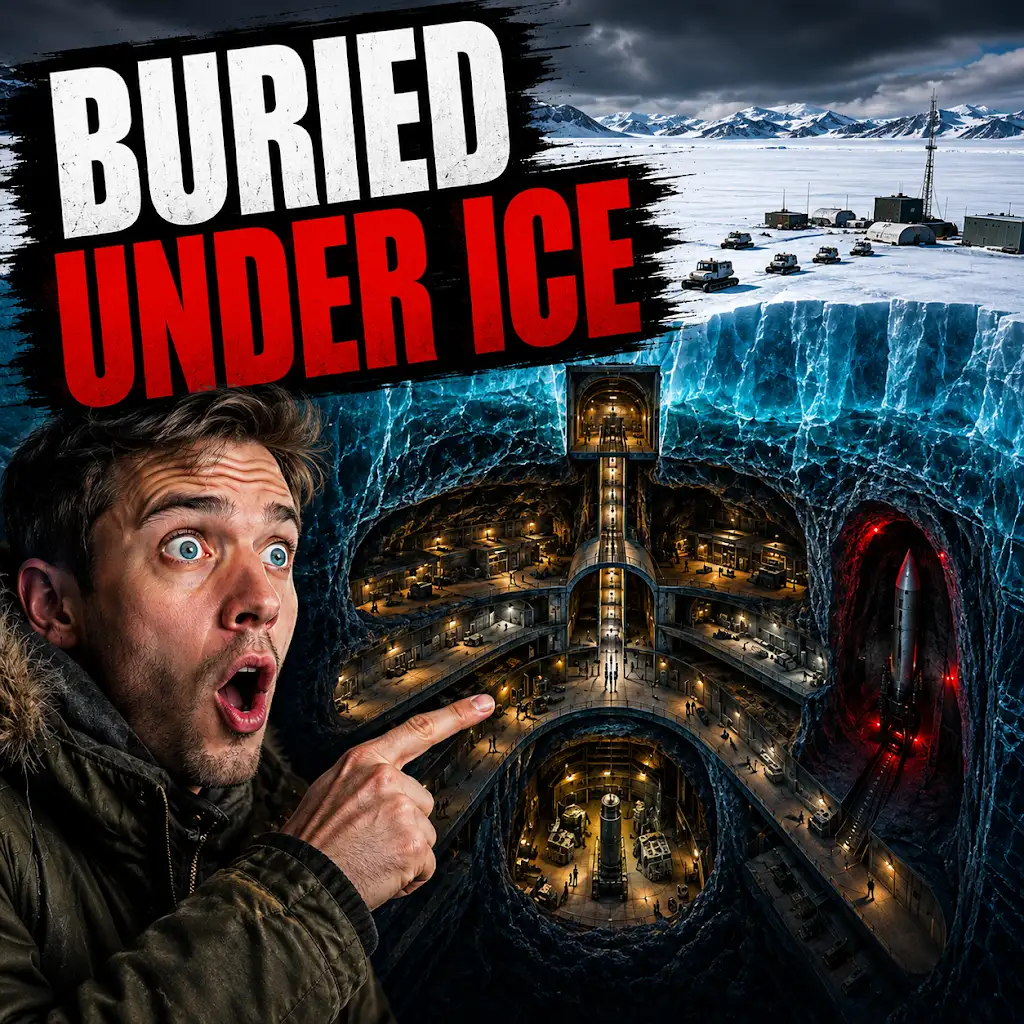
The U.S. Built a Nuclear City Under Greenland. The Ice Won.
FAQs
1. What is Camp Century?
Camp Century was a military base built by the United States in Greenland during the Cold War. It was constructed in 1959 as part of a secret project called “Project Iceworm” and was intended to house and support a network of ballistic missiles.
2. What remains of Camp Century today?
Today, Camp Century remains abandoned and largely buried beneath the ice and snow of Greenland. The camp was abandoned in 1967 due to the unstable ice sheet and the environmental impact of the base’s waste. The remaining structures and equipment are now entombed in the ice.
3. Is Camp Century still a point of interest for researchers and scientists?
Yes, Camp Century continues to be of interest to researchers and scientists due to the environmental and geopolitical implications of its remains. The melting ice in Greenland has raised concerns about the potential release of pollutants and radioactive waste from the camp, and there are ongoing discussions about how to address these issues.
4. What are the environmental concerns associated with Camp Century?
The main environmental concern associated with Camp Century is the potential release of pollutants and radioactive waste as the ice sheet melts. The camp was abandoned with little consideration for the long-term impact of its waste, and there are fears that the melting ice could expose these contaminants, posing a threat to the surrounding environment and communities.
5. What are the geopolitical implications of Camp Century’s remains?
The remains of Camp Century have raised geopolitical concerns, particularly between the United States and Denmark, as Greenland is an autonomous territory of Denmark. The legal and diplomatic implications of addressing the environmental and security issues associated with the camp’s remains are still being debated.