
The vast, unforgiving expanse of the Arctic has always presented formidable challenges to human endeavor. For centuries, explorers and scientists have braved its brutal climate, its treacherous ice, and its profound isolation in pursuit of knowledge, resources, or strategic advantage. Among the most ambitious, and ultimately abandoned, undertakings in this frozen frontier was Project Iceworm, a clandestine Cold War initiative that sought to establish a permanent military base beneath the Greenland ice sheet. The story of Project Iceworm is a stark testament to the overwhelming power of the Arctic environment and the limitations of even the most advanced technological ambitions when confronted by nature’s immutable forces.
Project Iceworm, codenamed “Camp Century,” was conceived in the late 1950s by the United States military. The overarching goal was to create a forward operating base deep within the Arctic, capable of housing troops, aircraft, and nuclear missiles, all hidden from Soviet surveillance beneath a protective layer of ice. The strategic implications were significant: a permanent presence in the high Arctic would offer a considerable advantage in the escalating Cold War, providing a launchpad for potential missile strikes and a crucial staging area for intelligence gathering.
Strategic Imperatives of the Cold War
The geopolitical landscape of the late 1950s was defined by a palpable tension between the United States and the Soviet Union. The arms race was in full swing, and both superpowers were constantly seeking to outmaneuver the other. The Arctic, once a remote and largely ignored region, was suddenly thrust into strategic prominence. Its proximity to both continents made it a critical theater for potential conflict. The ability to deploy and maintain military assets in this region, undetected, was seen as a game-changer. Project Iceworm was born out of this urgent need for strategic superiority. The idea was not just to build a base, but to build one that was virtually invisible, immune to conventional detection and attack.
The Allure of the Ice Sheet
The Greenland ice sheet offered a unique and seemingly ideal solution to the challenges of Arctic military operations. Its sheer thickness – in some places exceeding a mile – provided a natural shield against both aerial and ground-based reconnaissance. Furthermore, the constant, dynamic movement of the ice was envisioned as a way to further obscure any subterranean installations. The initial feasibility studies suggested that the ice could be excavated and maintained, creating a habitable environment within its frozen depths. This vision of a hidden, resilient fortress beneath the ice was a powerful draw for military planners.
Technological Optimism of the Era
The post-World War II era was characterized by a surge of technological optimism. Innovations in rocketry, nuclear power, and material science fueled a belief that virtually any engineering challenge could be overcome. Project Iceworm was a product of this era, a bold undertaking that leveraged the perceived invincibility of American ingenuity. The belief was that with sufficient resources and determination, human beings could conquer even the most formidable natural barriers. This optimism, while driving progress in many fields, also contributed to an underestimation of the inherent complexities of the Arctic environment.
Project Iceworm, a covert initiative during the Cold War aimed at establishing a network of nuclear missile bases beneath the Greenland ice sheet, was ultimately abandoned due to a combination of logistical challenges, environmental concerns, and shifting military priorities. The complexities of operating in such a harsh and remote environment proved to be insurmountable, leading to the project’s cancellation. For a deeper understanding of how military strategies have evolved over time and the implications of such projects, you can read a related article on the historical context of military operations in the link provided: Unraveling the Civil War: A Deep Analysis.
The Engineering Marvel: Building Camp Century
The construction of Camp Century was a remarkable feat of engineering, despite its ultimate failure. The project involved the creation of a vast network of tunnels and prefabricated modules, all painstakingly assembled beneath thousands of feet of ice. It was a testament to the ingenuity and determination of the engineers and construction workers who braved the harsh Arctic conditions to bring this audacious vision to life.
Excavation and Tunneling in Permafrost
The first and most critical step was to excavate the ice. This was achieved through a combination of cutting and melting techniques. Specialized machinery, designed to operate in sub-zero temperatures, was deployed to carve out the initial access tunnels. The sheer scale of the operation was immense, requiring the removal of millions of tons of ice. The constant threat of ice shifts and collapses added another layer of complexity and danger to the excavation process. The engineers had to contend with the dynamic nature of the ice sheet, understanding its flow and anticipating its movements to ensure the stability of the tunnels.
Prefabricated Modules and Infrastructure
Once the tunnels were established, prefabricated modules were lowered into place and assembled to form the living quarters, command centers, and support facilities. These modules were designed to withstand the extreme cold and pressure of the ice. The base was equipped with a nuclear reactor for power, providing a self-sufficient energy source. This was crucial for a remote installation where traditional power sources would be impractical or impossible to maintain. The infrastructure included living quarters, workshops, medical facilities, and even a cinema, creating a surprisingly comprehensive, albeit austere, environment for the personnel stationed there.
The Subglacial Ecosystem
The very act of establishing a base within the ice created a unique, albeit artificial, subglacial ecosystem. While the primary focus was on military utility, the scientific potential of such an endeavor was also recognized. Samples of ice cores extracted during the excavation provided invaluable insights into the Earth’s past climate. These cores, some dating back hundreds of thousands of years, offered a detailed record of atmospheric conditions, volcanic activity, and temperature fluctuations, making Camp Century a vital, albeit unintended, hub for glaciological research.
The Unforeseen Forces of the Arctic
Despite the impressive engineering, the fundamental challenge of Project Iceworm lay in its underestimation of the Arctic’s relentless and dynamic nature. The ice sheet was not a static, inert mass as initially presumed, but a constantly shifting and flowing entity, exhibiting forces that ultimately proved too powerful to contain.
The Perils of Glacial Movement
The most significant challenge was the inherent movement of the Greenland ice sheet. Glaciers are not solid, unmoving blocks; they flow like slow-moving rivers under the immense pressure of their own weight and the forces of gravity. Camp Century, built on the assumption of a stable platform, was directly in the path of this glacial flow. The ice sheet moved, albeit slowly, and this movement exerted immense pressure on the structures. The tunnels began to deform, and the prefabricated modules were subjected to crushing forces. The very stability that was meant to be provided by the ice was, in fact, its undoing.
Ice Deformation and Structural Integrity
The constant pressure from the moving ice led to significant ice deformation around the base. The tunnels, initially designed to be robust, began to buckle and warp. The prefabricated modules, despite their strong construction, were also subjected to extreme stress. The engineers had to constantly monitor and reinforce the structures, but the relentless pressure of the ice made this an increasingly losing battle. The fundamental flaw was attempting to build a static structure within a dynamic, flowing medium. The ice was not simply a roof; it was an active, powerful force shaping the very ground on which the base was built.
The Thawing and Freezing Cycle
The Arctic environment also presented a persistent challenge in the form of the thawing and freezing cycle, particularly at the fringes of the ice sheet and in the surrounding permafrost. While Camp Century was located deep within the ice, the surface layers and the surrounding ground were subject to seasonal fluctuations. This could lead to instability, ground movement, and the ingress of water, which could freeze and expand, further stressing the structures. Managing the temperature and ensuring the integrity of the base against these cyclical forces was an ongoing and ultimately insurmountable problem.
The Unraveling of Project Iceworm
As the years progressed, the persistent challenges posed by the Arctic environment began to take their toll on Camp Century. The dream of an impregnable subglacial fortress began to crumble under the weight of natural forces, leading to the eventual abandonment of the project.
Escalating Maintenance and Repair Costs
The constant need for maintenance and repair due to ice movement and structural deformation became increasingly expensive and resource-intensive. The military had to dedicate significant personnel and equipment to reinforce the base, a task that grew more arduous with each passing year. The initial vision of a low-maintenance, hidden base was replaced by a continuous struggle against the environment. The costs associated with these repairs began to outweigh the perceived strategic benefits, raising questions about the project’s long-term viability.
The Discovery of Nuclear Contamination
A critical turning point in the project’s downfall was the discovery of potential nuclear contamination. The base housed a small nuclear reactor, and concerns arose about the potential for leaks or accidental releases of radioactive material into the fragile Arctic environment. The ice sheet, which was intended to be a protective shield, also posed a significant risk: any contamination could be locked away for centuries, creating a long-term environmental hazard. This threat added a new and alarming dimension to the project’s problems, further bolstering the arguments for its closure.
The Inevitable Decision to Withdraw
By the early 1960s, it became clear that Project Iceworm was no longer a viable undertaking. The immense engineering challenges, coupled with the escalating costs and the growing concerns about nuclear contamination, made its continued operation untenable. In 1966, the U.S. Army officially announced the closure of Camp Century. The decision marked the end of a bold experiment, a stark reminder of the limitations of human ambition when confronted by the raw power of nature. The base was eventually abandoned, left to the slow, inexorable embrace of the ice.
Project Iceworm, a Cold War-era initiative aimed at establishing a network of underground military bases in Greenland, ultimately never came to fruition due to a combination of logistical challenges and shifting strategic priorities. The ambitious plan faced numerous obstacles, including the harsh Arctic environment and concerns about international relations. For a deeper understanding of how geopolitical factors influence large-scale projects, you might find it interesting to explore how Mexico is becoming a key player in the electric vehicle manufacturing sector, as detailed in this article on Mexico’s growing role in electric vehicle manufacturing.
The Arctic’s Lasting Lessons
| Reasons | Details |
|---|---|
| Technical Challenges | The extreme cold and shifting ice made construction difficult and costly. |
| Environmental Concerns | The potential impact on the environment and local wildlife raised significant opposition. |
| Logistical Issues | Transporting materials and personnel to the remote location proved to be a major challenge. |
| Cost Overruns | The project’s expenses exceeded initial estimates, leading to budget concerns. |
| Political Considerations | Changing priorities and geopolitical shifts led to a reevaluation of the project’s necessity. |
The abandonment of Project Iceworm offered profound and enduring lessons about the Arctic and the limits of human intervention in its pristine and powerful environment. It underscored the importance of understanding and respecting the natural forces at play in such extreme regions.
The Supremacy of Natural Forces
The failure of Project Iceworm served as a powerful demonstration of the supremacy of natural forces over human engineering. The ice sheet, a seemingly passive mass, revealed itself to be a dynamic and potent entity, capable of exerting pressures that could overcome even the most robust human constructions. It was a humbling lesson for a technological era that often assumed human ingenuity could conquer any obstacle. The Arctic, in its immensity and raw power, dictated terms that could not be ignored.
The Fragility of the Arctic Ecosystem
The project also highlighted the extreme fragility of the Arctic ecosystem. The potential for nuclear contamination, even if never fully realized, demonstrated how easily human activities could have long-lasting and detrimental impacts on this unique environment. The concept of a “hidden” base, while appealing from a strategic perspective, proved to be a dangerous illusion when considering the potential for environmental damage that could be inadvertently locked away within the ice for millennia.
Redefining Arctic Exploration and Operations
The legacy of Project Iceworm shifted the paradigm for future Arctic exploration and military operations. It fostered a greater appreciation for the complexities of the region and emphasized the need for more sustainable and environmentally conscious approaches. Subsequent endeavors have generally focused on surface-level operations, or on mobile platforms, acknowledging the inherent difficulties and risks of permanent subglacial installations. The lessons learned from Camp Century continue to inform strategies and planning for any human activity in the polar regions, ensuring that future ambitions are tempered with a healthy respect for the Arctic’s formidable might.
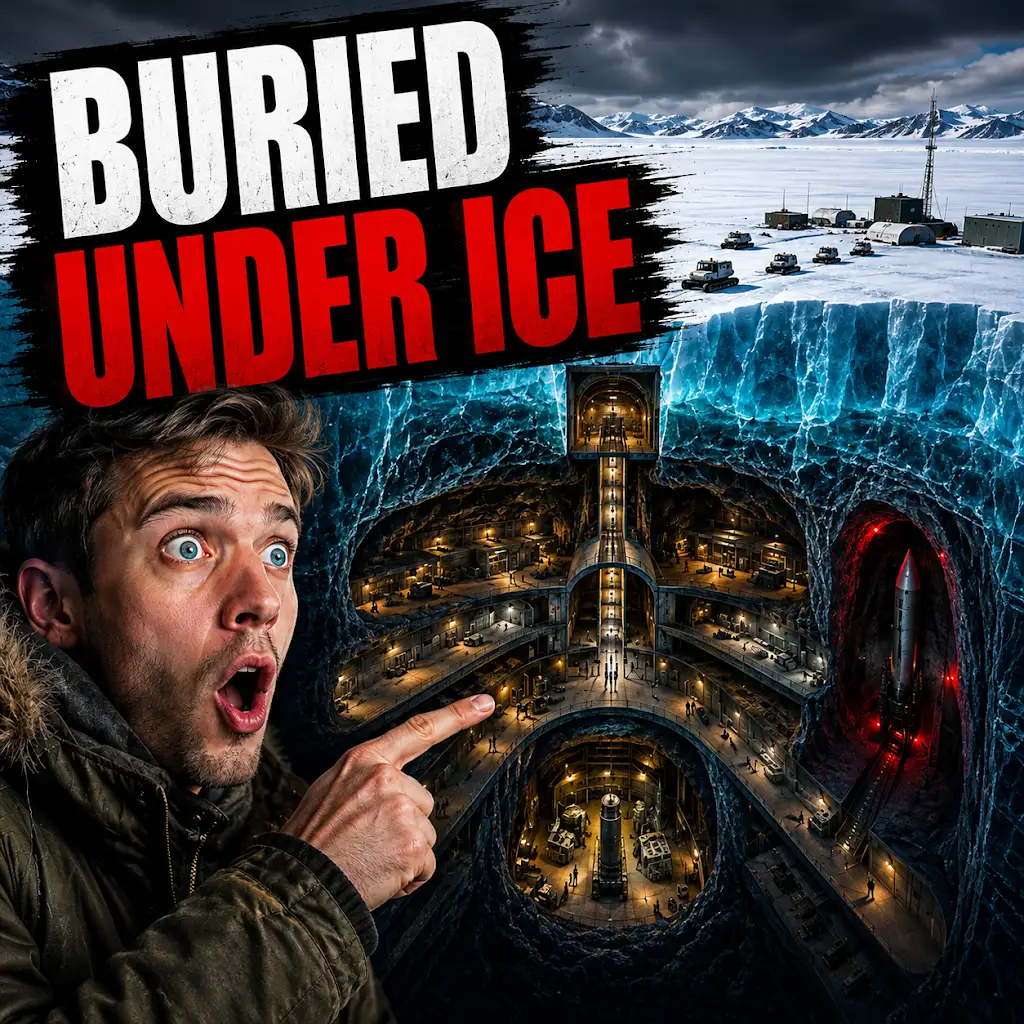
The U.S. Built a Nuclear City Under Greenland. The Ice Won.
FAQs
What was Project Iceworm?
Project Iceworm was a top-secret United States Army program during the Cold War to build a network of mobile nuclear missile launch sites under the Greenland ice sheet.
Why was Project Iceworm never built?
Project Iceworm was never fully realized due to technical and logistical challenges, as well as shifting political and strategic priorities. The ice sheet was found to be too unstable for the construction of the planned underground facilities.
What were the environmental concerns surrounding Project Iceworm?
The construction and operation of Project Iceworm would have posed significant environmental risks, including potential contamination of the surrounding ice and water due to the presence of nuclear materials.
What was the political impact of Project Iceworm’s cancellation?
The cancellation of Project Iceworm had political implications, as it led to strained relations between the United States and Denmark, which had jurisdiction over Greenland. The Danish government was not informed of the full scope of the project, leading to diplomatic tensions.
What is the legacy of Project Iceworm?
The legacy of Project Iceworm includes the environmental impact of the abandoned military infrastructure and the broader implications for Cold War military strategy. The remnants of the project continue to pose environmental and logistical challenges in Greenland.