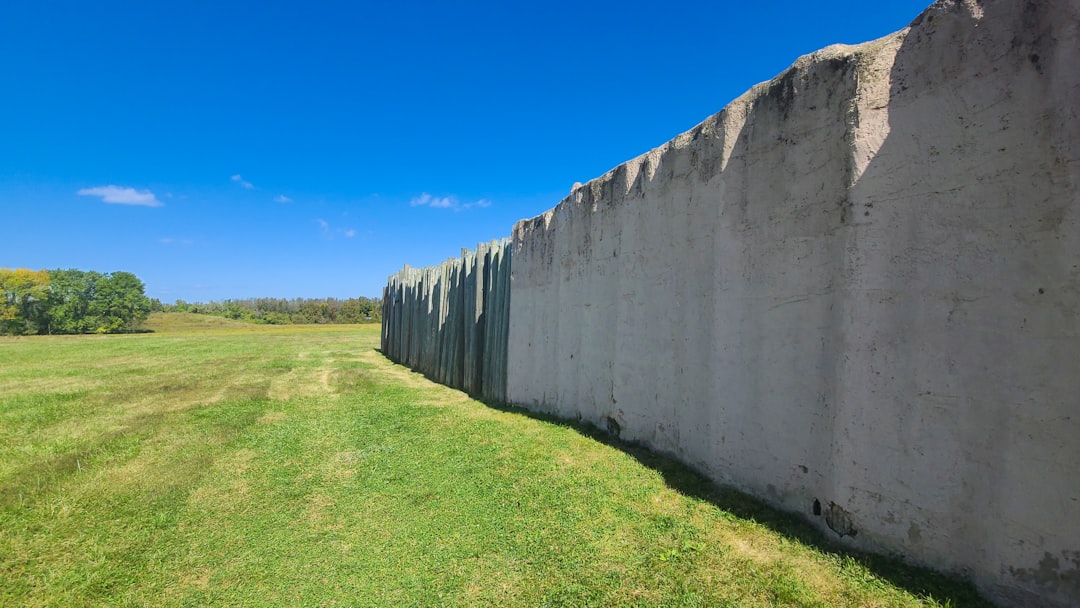
Cahokia, a name that echoes with the whispers of a lost civilization, stands as a testament to the ingenuity and societal complexity of the Mississippian people. Situated in what is now southwestern Illinois, across the Mississippi River from modern-day St. Louis, this once-thriving metropolis was the heart of a vast network of settlements that stretched across the fertile river valleys of the American Midwest and South. For centuries, Cahokia flourished, a beacon of indigenous culture, political power, and sophisticated urban planning, before its eventual decline and abandonment, leaving behind a legacy of monumental earthworks and enduring mysteries.
The Rise of a Mississippian Metropolis
The story of Cahokia is intrinsically linked to the broader Mississippian culture, a widespread cultural period that emerged around 800 CE and lasted until about 1600 CE across a significant portion of eastern North America. The Mississippians were characterized by their development of complex societies, often organized into chiefdoms, and their reliance on intensive maize agriculture. They are perhaps most famous for their distinctive mound-building practices, creating elaborate earth structures for ceremonial, burial, and residential purposes.
Cahokia, however, rose to prominence above other Mississippian centers. Its strategic location at the confluence of the Mississippi, Missouri, and Illinois rivers provided unparalleled access to fertile agricultural land and vital trade routes. This geographical advantage allowed for the efficient production and distribution of surplus food, primarily maize, beans, and squash, which formed the caloric backbone of their diet. This agricultural surplus was the engine that fueled Cahokia’s growth, enabling a larger population and the specialization of labor.
Early Beginnings and Gradual Growth
The initial settlement at the Cahokia site dates back to around 700 CE, with its earliest inhabitants forming small agricultural villages. These early communities, while exhibiting some Mississippian traits, were modest in scale and ambition compared to what Cahokia would become. The following centuries saw a gradual increase in population and the development of more organized social structures. Archaeological evidence suggests a slow but steady expansion, with villages coalescing and the first, smaller mounds beginning to appear.
This period of gradual growth laid the foundation for the dramatic transformation that would occur in the subsequent centuries. The accumulation of agricultural wealth and the increasing social complexity fostered a climate ripe for the emergence of a powerful center. The stage was set for Cahokia to become the dominant force in the region, attracting people and resources from afar.
The Apex of Power and Population
The true flourishing of Cahokia, its golden age, is generally placed between 1050 and 1350 CE. During this period, the city reached its peak population, with estimates ranging from 10,000 to 20,000 inhabitants within the city limits, and perhaps as many as 50,000 to 100,000 people living in the greater Cahokia region. This made it one of the largest urban centers in the world at the time, comparable in size to contemporary European cities.
The city’s layout was meticulously planned, centered around the colossal Monk’s Mound, the largest prehistoric earthwork in the Americas. The sheer scale of Monk’s Mound, a stepped pyramid covering over 14 acres and rising 100 feet, speaks to the immense labor and organizational capacity of the Cahokian people. Surrounding Monk’s Mound were hundreds of other mounds, including platform mounds, ridge-top mounds, and conical mounds, each serving a distinct purpose. This urban planning was not arbitrary; it reflected a profound understanding of astronomy, cosmology, and social hierarchy.
Cahokia was a remarkable pre-Columbian city that thrived in what is now the American Midwest, showcasing the advanced societal structures of its inhabitants. The people of Cahokia, known for their impressive earthen mounds and complex urban planning, played a significant role in the cultural and economic exchanges of the time. For those interested in exploring the connections between ancient civilizations and their navigational practices, a related article can be found here: Exploring Antarctica: Ancient Mariners & Maps. This article delves into the maritime knowledge of ancient cultures, providing a broader context for understanding the sophisticated societies that existed across the globe.
The Heart of the City: Monk’s Mound and the Grand Plaza
Monk’s Mound is the undeniable centerpiece of Cahokia, a monumental achievement that continues to awe and inspire. Its construction was a multi-generational endeavor, with evidence of at least four major phases of building. Thousands of basketfuls of earth, meticulously transported and compacted, were needed to create its imposing structure. The top of Monk’s Mound was once crowned with a massive wooden structure, likely a temple or the residence of the paramount chief, offering a commanding view of the city and the surrounding landscape.
Construction and Significance of Monk’s Mound
The construction of Monk’s Mound was a feat of engineering and social organization. It required a coordinated effort from a large labor force, demonstrating a hierarchical structure capable of mobilizing and directing thousands of individuals. The precise placement of the mound, its orientation, and the careful construction of its terraces suggest a deep understanding of land management and spatial planning. The sheer volume of earth moved and the labor invested underscore the immense social and religious significance attributed to this structure.
Theories abound regarding the purpose of Monk’s Mound. It is widely believed to have served as the primary administrative and ceremonial center of Cahokia. Its elevated position would have made it a visible symbol of power and authority, visible for miles around. The presence of structures on its summit further suggests its role as a focal point for religious rituals and political gatherings.
The Grand Plaza: A Hub of Activity
Adjacent to Monk’s Mound lay the Grand Plaza, a vast, open expanse that served as the primary public space of Cahokia. This sprawling plaza, covering an estimated 35 acres, was the scene of bustling activity, from daily commerce and social interaction to important ceremonies and gatherings. The plaza was carefully maintained, with evidence of regular leveling and clearing, indicating its importance as a communal space.
The Grand Plaza was not merely a vacant lot; it was a dynamic stage for the performance of Cahokian life. It was here that people would have traded goods, exchanged information, and participated in public events. Its proximity to Monk’s Mound further cemented its role as a central hub, connecting the sacred and the secular aspects of Cahokian society. The sheer size of the plaza suggests a population that was accustomed to gathering in large numbers, a characteristic of a well-developed urban environment.
Social and Political Organization
The existence of such a large and complex urban center implies a sophisticated social and political structure. Cahokia was not a simple village; it was a chiefdom, likely ruled by a paramount chief who held significant authority over the surrounding region. Evidence of social stratification is abundant, with distinct differences in burial practices and housing indicating varying levels of wealth and status.
Hierarchy and Social Stratification
Archaeological findings reveal a clear social hierarchy at Cahokia. Elite burials, often found in larger mounds or accompanied by rich grave goods such as copper ornaments, shell beads, and finely crafted pottery, stand in stark contrast to simpler burials with fewer possessions. This indicates a society with distinct social classes, with a ruling elite at the top and a larger population of commoners below.
The layout of the city itself also reflects this hierarchy. Residences of the elite were often larger and more elaborately constructed, sometimes situated on smaller platform mounds. The concentration of valuable artifacts within specific areas of the city further supports the idea of social stratification and the accumulation of wealth by a select few.
The Role of the Chief and the Elite
The paramount chief, or chiefs, likely held immense power, controlling vast resources and dictating the labor of their subjects. Their authority was likely legitimized through religious beliefs and their ability to ensure the prosperity of the community, particularly through successful agricultural yields. The construction of monumental structures like Monk’s Mound would have been a direct reflection of their power and ability to command the labor of the populace.
The elite class, likely comprising religious leaders, political advisors, and wealthy merchants, would have supported the chief’s rule and benefited from the societal structure. Their roles were crucial in maintaining the complex operations of the city, from religious ceremonies to trade and resource management. The intricate network of trade that connected Cahokia to distant regions would have been facilitated by this elite class, who likely controlled the flow of valuable goods.
Daily Life and Subsistence
Despite the monumental architecture and complex social structures, the daily lives of the majority of Cahokians were rooted in the rhythm of agriculture and the demands of communal living. Their diet, as mentioned, was heavily reliant on maize, supplemented by beans, squash, and a variety of wild resources.
Agriculture and Food Production
Maize, the staple crop, was cultivated using sophisticated techniques. The fertile river bottoms provided ideal conditions for its growth, and the Mississippians developed tools and methods to maximize their yields. The surplus of food was crucial, not only for sustaining the large population of Cahokia but also for providing the resources necessary for monumental construction projects and for supporting a non-agricultural workforce.
Beyond maize, the Cahokians were skilled hunters and gatherers. They hunted deer, bison, and other game, and gathered nuts, berries, and other edible plants. Fishing in the abundant rivers and streams also played a significant role in their diet, providing a valuable source of protein. This diverse subsistence strategy contributed to the overall resilience and prosperity of the Cahokian civilization.
Craftsmanship and Trade Networks
The Cahokians were also accomplished artisans. They produced finely crafted pottery, often decorated with intricate designs, and created tools from stone, bone, and shell. Copper was a particularly important material, used to create ornaments, tools, and ceremonial objects. The extraction and processing of copper, often from distant sources like the Great Lakes region, indicate extensive trade networks.
Cahokia was a major hub in a vast trade network that extended hundreds of miles in all directions. Shells from the Gulf Coast, copper from the north, and stone for tools from various quarry sites were all traded into Cahokia, while Cahokian goods, such as pottery and agricultural products, were exported outwards. This extensive trade not only brought valuable resources into the city but also facilitated the exchange of ideas and cultural practices, further enriching Cahokian society.
Cahokia, a pre-Columbian Native American city located near present-day St. Louis, was home to a diverse population that thrived between 600 and 1400 AD. The inhabitants of Cahokia are believed to have developed complex social structures and extensive trade networks, which contributed to their cultural richness. For a deeper understanding of how societies manage their resources and interests, you might find it interesting to explore the legal frameworks that protect sovereign interests, as discussed in this article on nationalization. This connection highlights the importance of governance in both historical and contemporary contexts. You can read more about it here.
The Decline and Abandonment of Cahokia
The reasons behind the eventual decline and abandonment of Cahokia remain one of its most enduring mysteries. By the 14th century, the once-thriving metropolis began to show signs of stress, and by the 15th century, it was largely deserted.
Theories of Decline: Environmental and Social Factors
Numerous theories have been proposed to explain Cahokia’s demise. One prominent theory suggests environmental degradation. Intensive agriculture, coupled with deforestation for fuel and construction, may have led to soil erosion, reduced agricultural productivity, and increased flooding. Overpopulation could have strained the environment beyond its carrying capacity.
Social unrest or conflict is another possibility. The complex social hierarchy, if disrupted or challenged, could have led to internal strife. Competition for resources, or external pressures from neighboring groups, might have also played a role. Some scholars suggest that a combination of these factors, rather than a single cause, led to the city’s downfall.
The Legacy of Cahokia
Despite its abandonment, the legacy of Cahokia endures. The monumental earthworks, particularly Monk’s Mound, stand as a powerful reminder of the achievements of the Mississippian people. Archaeological research continues to uncover new insights into their culture, society, and their remarkable ability to adapt and thrive.
Cahokia is now a UNESCO World Heritage Site, recognized for its outstanding universal value. Ongoing archaeological work and ongoing preservation efforts aim to protect this invaluable historical treasure and to share its story with the world. The study of Cahokia provides a crucial window into a sophisticated indigenous civilization that predates European contact, challenging previous notions about the complexity of pre-Columbian North America and highlighting the profound achievements of the Mississippian people. It serves as a silent, yet powerful, testament to a vibrant and dynamic past.

A City Bigger Than London Once Stood in America. Then It Vanished.
FAQs

Who lived in Cahokia?
Cahokia was inhabited by a Native American civilization known as the Mississippian culture.
What time period did the Mississippian culture live in Cahokia?
The Mississippian culture lived in Cahokia from approximately 700 to 1400 AD.
What was the population of Cahokia?
At its peak, Cahokia is estimated to have had a population of around 10,000 to 20,000 people, making it one of the largest cities in the world at that time.
What were the main features of Cahokia?
Cahokia was known for its large earthen mounds, including Monks Mound, which is the largest pre-Columbian earthwork in the Americas. The city also had a sophisticated urban layout, with plazas, residential areas, and ceremonial spaces.
What happened to the people of Cahokia?
The decline of Cahokia is not fully understood, but it is believed to have been influenced by factors such as environmental changes, social and political upheaval, and possibly warfare. The people of Cahokia dispersed and the city was eventually abandoned.