The story of Cambodia, a land woven from emerald rice paddies and the shadows of forgotten empires, is a tapestry of profound longevity and astonishing cultural achievement. Its ancient history, stretching back millennia, showcases a remarkable arc of development, from nascent statehood to the zenith of one of Southeast Asia’s most influential civilizations. This chronicle is not merely a dry recitation of dates and dynasties; it is an exploration of how geography, trade, religion, and innovation coalesced to forge a unique cultural identity that continues to resonate.
Long before the grand temples of Angkor dominated the landscape, the fertile plains of Cambodia were fertile ground for the emergence of complex societies. Archaeological evidence, coupled with ancient Chinese chronicles, points to distinct cultural developments in the region from prehistoric times. The transition from hunter-gatherer communities to settled agricultural life, facilitated by the rich alluvial soils of the Mekong River, laid the foundation for more organized polities.
Early Settled Life and the Mekong Delta’s Influence
The development of rice cultivation was a pivotal moment. The ability to produce surplus food allowed for population growth and the specialization of labor. Villages gradually coalesced into larger settlements, and proto-urban centers began to emerge. The Mekong River, a lifeblood of the region, provided not only sustenance but also a vital artery for trade and communication. Its vast network of waterways connected inland communities with the coast, facilitating early exchanges of goods and ideas.
The Enigmatic Kingdom of Funan (c. 1st to 6th Centuries CE)
The first clearly identifiable state in the region, often referred to as Funan, emerges from the mists of time primarily through accounts written by Chinese envoys. While its exact ethnic composition remains a subject of scholarly debate, Funan controlled a significant portion of what is now southern Cambodia, parts of Thailand, Vietnam, and the Malay Peninsula. Its strategic location on key maritime trade routes was crucial to its prosperity.
Legendary Origins and Early Governance
Funan’s origin stories, as recorded by the Chinese diplomat Kang Tai in the 3rd century CE, speak of a Brahman priest, Kaundinya, who married a local Nāga princess, Soma. This mythical union is often interpreted as representing the fusion of Indian cultural influences with indigenous traditions, a recurring theme in the history of Southeast Asia. Chinese accounts describe a sophisticated administrative system, with officials and a hierarchical structure, indicating a well-established kingdom rather than a collection of scattered tribes.
The Economic Engine: Trade and Maritime Power
Funan’s economic power was rooted in its control of maritime trade. It served as a crucial entrepôt for goods moving between India and China, as well as other parts of Southeast Asia. Commodities such as spices, precious stones, textiles, and exotic animals passed through its ports. The kingdom’s access to the sea and its ability to organize maritime expeditions were central to its wealth and influence. Chinese records detail Funanese junks sailing to distant lands.
Religious Landscape: Brahmanism and Early Buddhism
The religious life of Funan was characterized by a blend of indigenous animistic beliefs and the introduction of Indian religious traditions. Brahmanism, with its pantheon of Sanskrit-speaking deities, held significant sway, evidenced by the discovery of inscriptions and statues of Hindu gods such as Shiva and Vishnu. However, Buddhism also began to establish a foothold, with evidence suggesting both Mahayana and Theravada branches were present. This religious syncretism would continue to shape Cambodian spirituality for centuries.
The history of ancient Cambodia is a fascinating subject that encompasses the rise and fall of the Khmer Empire, known for its remarkable achievements in architecture, art, and culture. For those interested in exploring the complexities of historical narratives, a related article can be found at Understanding the Risks of Mexico’s Supply Chain, which, while focusing on modern issues, highlights the importance of historical context in understanding contemporary challenges.
The Transition: Chenla and the Shifting Tides of Power
Following the decline of Funan, a new polity, known as Chenla, rose to prominence. Chenla, often described as a successor state to Funan, initially appeared as two distinct but related entities: “Land Chenla” and “Water Chenla.” The exact timeline and nature of the transition from Funan to Chenla are subjects of ongoing archaeological and historical research.
The Rise of Chenla: Unification and Consolidation
Chenla emerged as a powerful force in the region, gradually absorbing or displacing Funanese influence. Unlike Funan, which was heavily reliant on maritime trade, Chenla’s power base appears to have been more continental, with its influence extending further inland. Inscriptions from the Chenla period provide valuable insights into its kings, administration, and territorial extent.
The “Two Chenlas” and Their Relationship
The historical understanding of Chenla often involves a division into “Land Chenla” in the north and “Water Chenla” in the south. While their precise geographical boundaries and political relationship remain debated, it is generally believed that they eventually unified or that one eventually subjugated the other, leading to a more consolidated kingdom. This period saw a gradual shift in the center of power from the coastal regions to more inland areas.
Inscriptions as Historical Witnesses
Stone inscriptions, written in Sanskrit and Old Khmer, are a primary source of information for the Chenla period. These inscriptions often commemorate royal decrees, land grants, and religious endowments, offering glimpses into the social structure, economy, and religious practices of the time. They reveal the names of kings, their queens, and prominent officials, alongside details about the construction of temples and charitable works.
The Influence of Indianization Continues
The process of Indianization, which had begun to take root during the Funan period, continued to deepen during Chenla. Sanskrit remained the language of religion, administration, and elite culture. Brahmanical rituals and the worship of Hindu deities were prevalent, but Buddhist influences also persisted and evolved. This cultural synthesis laid the groundwork for the elaborate religious and artistic expressions of the subsequent Khmer Empire.
The Golden Age: The Rise and Zenith of the Khmer Empire (9th to 15th Centuries CE)
The most celebrated period in Cambodian history is undoubtedly the era of the Khmer Empire, also known as Angkor. From its foundational moments in the 9th century CE to its eventual decline, the Khmer Empire presided over an astonishing period of architectural, artistic, religious, and political achievement that left an indelible mark on Southeast Asia and the world.
The Founding of Angkor: Jayavarman II and a New Era
The traditional founding of the Khmer Empire is attributed to King Jayavarman II in 802 CE. He established his capital in the Angkor region and, in a significant symbolic act, declared himself a devaraja (god-king). This ritual act, likely performed on Mount Kulen, marked a declaration of independence from Java (likely the Srivijayan empire) and the beginning of a new era of Khmer sovereignty.
The Devaraja Cult and Royal Legitimacy
The concept of the devaraja played a crucial role in legitimizing Khmer kingship and fostering a sense of national unity. It linked the monarch directly to the divine, elevating them to a position of supreme authority and spiritual leadership. The cult involved elaborate rituals and the construction of temples dedicated to the devaraja, which also served as symbolic representations of Mount Meru, the cosmic mountain of Hindu cosmology.
The Early Angkorian Dynasties and Political Consolidation
Following Jayavarman II, a succession of powerful kings consolidated the empire’s territorial reach and political influence. Early dynasties focused on establishing strong central governance, expanding agricultural infrastructure, and building monumental temples that served as expressions of royal power and religious devotion. This period saw the foundations laid for the vast administrative and economic machinery that would sustain the empire.
The Architectural Marvels of Angkor: Temples as Cosmic Maps
The Khmer Empire is most renowned for its breathtaking architectural achievements, particularly the vast temple complexes in the Angkor region. These structures are not merely religious sites; they are intricately designed microcosms of the universe, reflecting deep philosophical and cosmological beliefs.
Angkor Wat: The Pinnacle of Khmer Architecture
Angkor Wat, built in the early 12th century by King Suryavarman II, stands as the undisputed masterpiece of Khmer architecture and one of the most iconic religious monuments in the world. Originally dedicated to Vishnu, it later transitioned to a Buddhist temple. Its vast scale, intricate bas-reliefs depicting Hindu epics and historical events, and its symmetrical layout exemplify the zenith of Khmer artistic and engineering prowess. The moat surrounding Angkor Wat symbolizes the cosmic ocean.
Angkor Thom and the Bayon: A Multitude of Faces
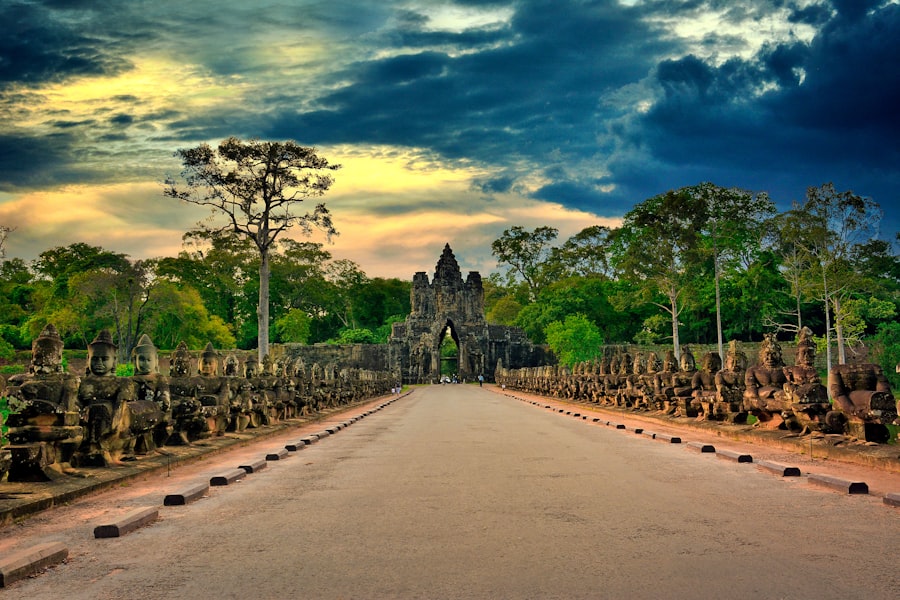
Angkor Thom, the last great capital city of the Khmer Empire, was built by King Jayavarman VII in the late 12th or early 13th century. Within its walls lies the enigmatic Bayon temple. Famous for its serene, colossal faces carved into its many towers, the Bayon is believed to represent Jayavarman VII himself, embodying the bodhisattva Avalokiteshvara, or a combination of royal and divine attributes. Its architectural style is a marked departure from the earlier Hindu-influenced temples, signaling a strong embrace of Mahayana Buddhism.
Other Significant Temples and Their Significance
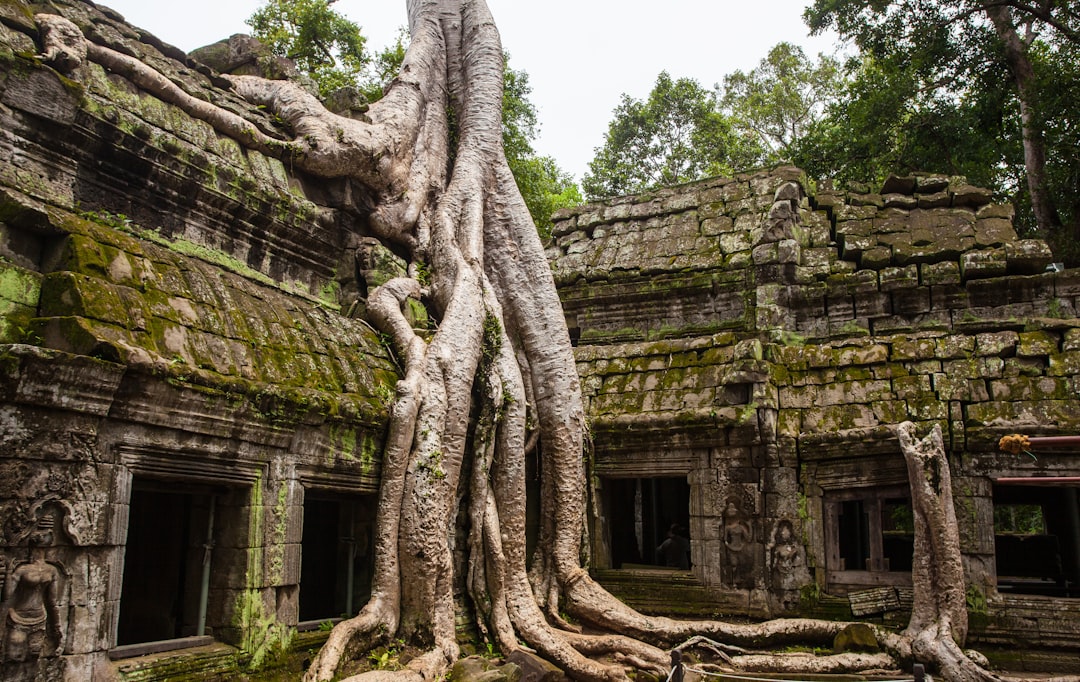
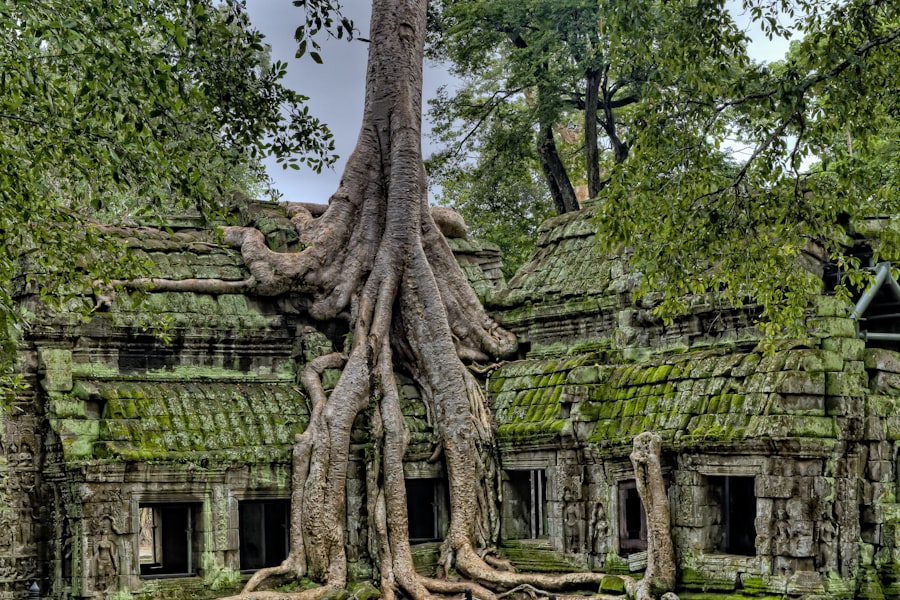
Beyond Angkor Wat and Angkor Thom, a multitude of other magnificent temples dot the landscape around Angkor, each with its unique architectural style and historical significance. Ta Prohm, famously left partially overgrown by jungle, offers a poignant glimpse into the empire’s eventual decline. Banteay Srei, known for its exquisite pink sandstone carvings, showcases a delicate and intricate artistic style. Preah Khan, Neak Pean, and Pre Rup are just a few examples of the vast array of religious structures that reflect the empire’s immense wealth, devotion, and artistic vision.
Society, Economy, and Daily Life in the Empire
The Khmer Empire was a complex society with a sophisticated administrative system that supported its vast urban centers and extensive agricultural output. The lives of ordinary people were deeply intertwined with the cycles of agriculture and the demands of the state.
The Agricultural Backbone: Rice Cultivation and Irrigation Systems
The empire’s prosperity was fundamentally built upon its mastery of rice cultivation. The Khmer developed an elaborate and sophisticated system of canals, reservoirs (barays), and moats to manage water resources for irrigation. This allowed for multiple harvests per year and sustained a large population. The sheer scale of these hydrological engineering feats is a testament to their ingenuity and organizational capacity.
Trade Networks and Economic Exchange
While the empire’s heartland was inland, the Khmer were engaged in extensive trade networks, both internal and external. They traded for goods they lacked, such as precious metals and certain luxury items, and exported agricultural produce and forest products. Maritime trade routes connected them to China, India, and other Southeast Asian kingdoms, facilitated by their control of access to the sea.
Religious Pluralism and Patronage
As mentioned, the religious landscape of the Khmer Empire was characterized by a dynamic interplay between Hinduism and Buddhism. While early kings favored Hinduism, especially Shaivism, later rulers, particularly Jayavarman VII, championed Mahayana Buddhism. This period of religious coexistence and patronage led to the construction of temples dedicated to both traditions, often integrated within the same complexes. The eventual transition to Theravada Buddhism in later centuries would further shape Cambodian spiritual identity.
The Gradual Decline and the Shifting Winds
Despite its immense power and cultural achievements, the Khmer Empire began to experience a slow and gradual decline. The reasons for this decline are multifaceted and debated by historians, but a combination of internal and external factors likely contributed to its eventual fragmentation.
Internal Strains: Overextension and Economic Pressures
The immense cost of maintaining the vast temple complexes and the elaborate infrastructure required for agriculture and administration likely placed a significant strain on the empire’s resources. Overextension of its territorial dominion could have also led to administrative challenges and increased defense expenditures. Internal political struggles and succession disputes may have also weakened the central authority.
External Pressures: The Rise of Neighboring Kingdoms
The encroaching power of neighboring kingdoms, particularly the Siamese (Thai) kingdoms to the west and the Vietnamese to the east, posed a significant external threat. The growing military strength and territorial ambitions of these emergent powers gradually chipped away at Khmer territory and influence. The sack of Angkor by Siamese forces in the 15th century is often cited as a symbolic turning point in the empire’s decline.
The Siamese Threat and the Fall of Angkor
Historical accounts suggest repeated incursions by Siamese forces into Khmer territory, culminating in the decisive attack and eventual fall of Angkor in the mid-15th century. This event marked the end of the Angkorian period as the political and cultural capital and led to a significant shift in the balance of power in the region. The Khmer elites and court were forced to relocate their capital further south.
The Impact of Shifting Trade Routes and Geopolitics
Changes in regional trade routes and the rise of new maritime powers may have also contributed to the decline of Angkor’s economic dominance. As coastal entrepôts gained prominence, the inland capital, despite its impressive infrastructure, may have become less central to regional economic networks.
The history of ancient Cambodia is a fascinating subject that reveals the rich cultural heritage and architectural marvels of the Khmer Empire. For those interested in exploring how ancient civilizations navigated and documented their world, a related article discusses the intriguing Piri Reis map and its implications for understanding historical geography. You can read more about this topic in the article titled Uncovering Ancient Mysteries: Piri Reis Map and Charles Hapgood, which sheds light on the connections between ancient maps and the civilizations that created them.
The Legacy of an Ancient Civilization: Enduring Influence
| Time Period | Significant Events |
|---|---|
| Funan Kingdom (1st to 6th century) | Establishment of the first unified Khmer state, trade with India and China, adoption of Hinduism and Buddhism |
| Chenla Kingdom (6th to 9th century) | Split into Land Chenla and Water Chenla, expansion of Khmer influence, construction of temples |
| Khmer Empire (9th to 15th century) | Construction of Angkor Wat and other temples, peak of Khmer civilization, conflicts with neighboring empires |
| Post-Angkor Period (15th to 19th century) | Decline of Khmer Empire, colonization by European powers, establishment of modern Cambodia |
Though the Khmer Empire eventually faded from its peak of power, its legacy remains profoundly embedded in Cambodian identity and Southeast Asian history. The monumental ruins of Angkor stand as a tangible testament to its past glory, drawing millions of visitors and inspiring awe.
The Enduring Cultural Fabric
The cultural achievements of the ancient Khmer, including their art, architecture, religious practices, and administration, have left an indelible mark on Cambodia. The Khmer language, with its Sanskrit-derived vocabulary, and the enduring influence of Brahmanism and Buddhism are living manifestations of this ancient heritage. The traditional dance forms and artistic motifs still draw inspiration from the bas-reliefs of Angkor.
Angkor: A World Heritage and a Symbol of National Pride
Angkor Wat and the surrounding Angkor Archaeological Park are recognized as UNESCO World Heritage sites, a testament to their universal significance. For Cambodia, Angkor is not just a historical site; it is a potent symbol of national pride and a reminder of a glorious past that continues to inspire resilience and cultural renewal. The iconic silhouette of Angkor Wat is featured on the Cambodian flag, underscoring its deep connection to the nation’s identity.
The Continued Study and Appreciation of Ancient Cambodia
The study of ancient Cambodia continues to evolve with ongoing archaeological excavations, epigraphic research, and scholarly interpretation. Each new discovery offers further insights into the complexities of these ancient civilizations, their innovations, and their eventual transformations. The history of Funan, Chenla, and the Khmer Empire is a crucial chapter in understanding the rich and diverse tapestry of Southeast Asian history, a testament to human ingenuity, artistic vision, and the enduring power of cultural heritage.

The Machine That Kept Angkor Alive
FAQs
What is the history of ancient Cambodia?
Ancient Cambodia, also known as the Khmer Empire, was a powerful and influential civilization in Southeast Asia from the 9th to the 15th century. It was known for its impressive architecture, particularly the famous Angkor Wat temple complex.
What were the major achievements of ancient Cambodia?
Ancient Cambodia was known for its advanced irrigation systems, impressive city planning, and intricate stone carvings. The Khmer Empire also had a sophisticated understanding of astronomy and mathematics.
What were the main religious beliefs of ancient Cambodia?
The main religious beliefs of ancient Cambodia were a blend of Hinduism and Buddhism. The rulers of the Khmer Empire were known for their patronage of these religions, and many temples and monuments were dedicated to Hindu and Buddhist deities.
What led to the decline of ancient Cambodia?
The decline of ancient Cambodia can be attributed to a combination of factors, including environmental degradation, internal power struggles, and external invasions. The empire eventually fell to the Siamese and the Ayutthaya Kingdom in the 15th century.
What is the legacy of ancient Cambodia?
The legacy of ancient Cambodia can be seen in the impressive architectural and artistic achievements of the Khmer Empire, particularly the iconic Angkor Wat temple complex. The influence of ancient Cambodia can also be seen in the modern-day culture and traditions of Cambodia.