The Ancient Landscape of Egypt: Millions of Years Ago
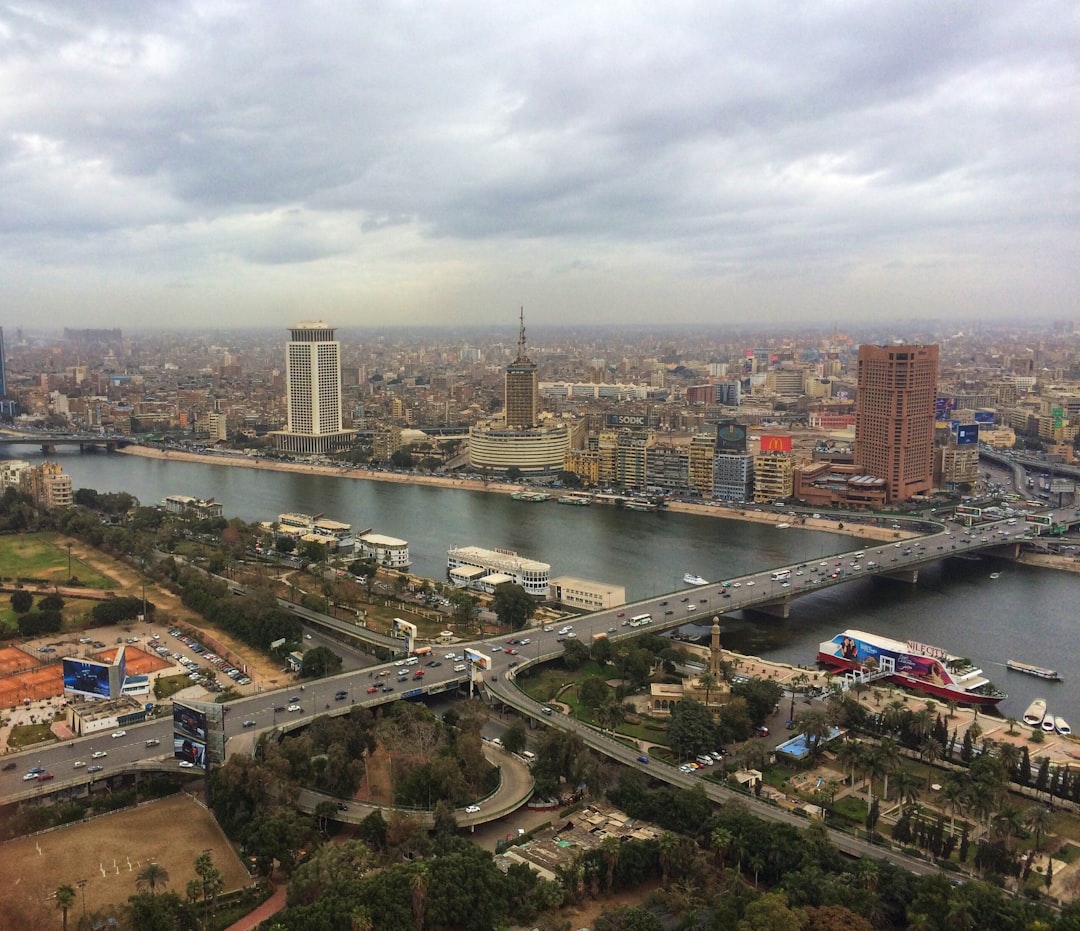
For millennia, Egypt has conjured images of towering pyramids, Sphinxes, and fertile Nile deltas, a testament to a civilization that shaped the very course of human history. Yet, this iconic land, so deeply etched in our collective imagination, was once a canvas vastly different from the one we know today. To truly comprehend the enduring legacy of Egypt, one must journey back, not just centuries or millennia, but millions of years, to an era when its landscapes were sculpted by forces far grander and more primal than any pharaoh’s chisel. This ancient world, a realm of colossal rivers, shifting seas, and evolving life, laid the geological and ecological foundations upon which one of humanity’s most remarkable civilizations would eventually rise.
The Nile, the lifeblood of modern Egypt, has a lineage stretching back to epochs unimaginably distant. Its story is not one of a single, constant river, but of a dynamic, evolving waterway whose course and character changed dramatically over millions of years.
The Ancestral Channels
Long before the familiar serpentine path of the Nile carved its way through the desert, precursor rivers snaked across what is now Egypt. These ancient waterways, often referred to as proto-Nile systems, were shaped by the tectonic forces that gradually uplifted the African continent and the changing patterns of rainfall across the vast Sahara. Geologists theorize that in the early to mid-Miocene (around 23 to 5 million years ago), a complex network of rivers likely drained towards the Mediterranean, with some channels potentially flowing through the regions that would later become the Nile Valley. These early rivers, fed by more extensive monsoon systems in the African interior, would have been significantly wider and more powerful than their later iterations.
The Birth of the Modern Nile
The formation of the modern Nile, as we broadly understand its lineage, is a story closely tied to the dramatic geological shifts that occurred in East Africa, particularly the creation of the East African Rift System. As this colossal rift widened and deepened, it altered drainage patterns, redirecting water flows towards the northeast. The tectonic uplift associated with these events, coupled with ongoing climatic fluctuations, played a crucial role in channeling water into a singular, grand river system. While the exact timing is debated, many geologists believe that a significant phase of Nile formation, characterized by a more established northward flow, began in the late Miocene or Pliocene (roughly 5 to 2.6 million years ago). This proto-Nile, though perhaps not as extensive as the river of later periods, began to establish the core drainage axis that would define Egypt for millennia to come.
The Shaping Power of Water
The sheer volume of water and sediment carried by these ancient rivers was immense. They were not mere trickles but powerful erosive forces, carving out the initial depressions and valleys that would eventually form the Nile Valley and Delta. The landscape was a dynamic tapestry of shifting channels, vast floodplains, and braided river systems. These environments provided vital habitats for early life, offering sources of water and nutrients that supported diverse ecosystems. The erosion and deposition of sediment by these rivers also created the fertile alluvial soils that would become the bedrock of Egyptian agriculture in later eras, a legacy of water’s ancient artistry.
Millions of years ago, Egypt was a vastly different landscape, characterized by lush greenery and diverse wildlife, long before the arid desert conditions we see today. This transformation was influenced by various geological and climatic changes over millennia. To delve deeper into the fascinating history of ancient civilizations and their innovations, you can read more in the article titled “Uncovering Ancient Tech: Lost Civilizations & Innovations” available at this link.
A Sea of Change: The Tethys and its Legacy
The northern reaches of ancient Egypt, and indeed much of North Africa and the Middle East, were once submerged beneath a vast prehistoric ocean known as the Tethys Sea. The influence of this ancient sea on Egypt’s geological makeup and its fossil record is profound, leaving behind a rich tapestry of marine life and sedimentary formations.
The Vanishing Ocean
The Tethys Sea was not a static body of water; it waxed and waned over millions of years, a testament to the ongoing geological dance of continents. From the Jurassic through the Cretaceous and into the Tertiary periods (roughly 200 to 23 million years ago), the Tethys occupied a vast expanse, connecting the Atlantic and Pacific Oceans and separating the supercontinents of Laurasia and Gondwana. As the African and Eurasian plates converged, the Tethys Sea gradually shrank, its waters retreating and leaving behind thick deposits of marine sediments.
The Richness of the Fossil Record
The sediments laid down by the Tethys Sea are a treasure trove of fossilized marine life. In regions like the Fayoum Depression, the Western Desert, and the Sinai Peninsula, paleontologists have unearthed an astonishing array of marine fossils, offering glimpses into a long-vanished underwater world. These discoveries include the remains of whales, dolphins, sharks, sea turtles, and countless invertebrates such as mollusks and corals. The famous Wadi Al-Hitan (Valley of the Whales) in the Fayoum, a UNESCO World Heritage site, preserves an unparalleled collection of fossilized whales from the Eocene epoch, showcasing a pivotal period in whale evolution when these majestic creatures transitioned from land to sea.
Shaping the Landforms
The retreating Tethys Sea left behind not just fossils but also significant geological formations. Vast limestone plateaus, formed from the accumulation of marine shells and skeletal remains, characterize much of Egypt’s desert landscape. These porous rocks are responsible for the formation of numerous oases, where groundwater, often remnants of ancient rainfall trapped within the rock layers, resurfaces. The erosion of these marine-derived rocks by wind and water over millions of years has sculpted dramatic desert features, including flat-topped mesas, canyons, and vast plains, all bearing the imprint of the ancient ocean.
The Desert Blooms: Prehistoric Climates and Vegetation
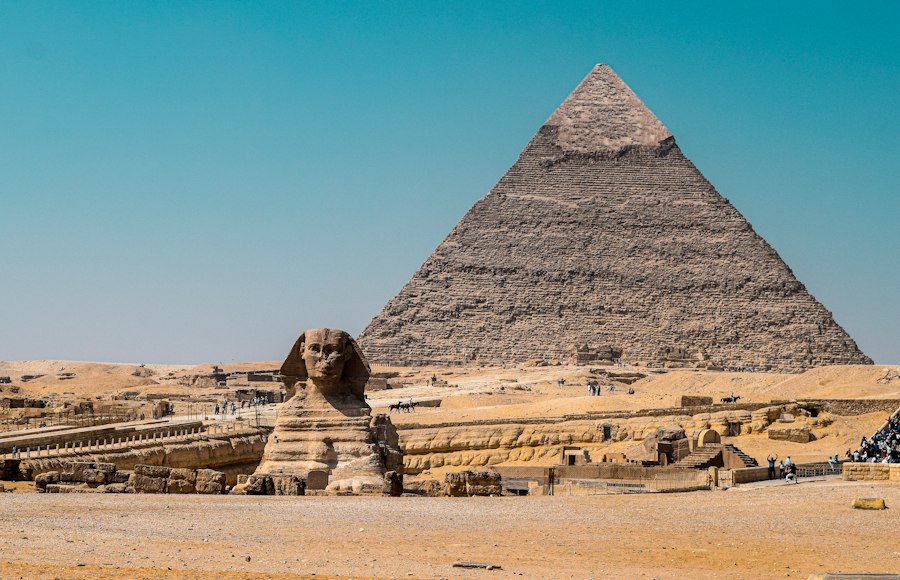
The arid deserts that dominate much of Egypt today were not always so. Millions of years ago, the climate of North Africa was far more clement, supporting diverse ecosystems and a wealth of plant and animal life that has largely disappeared.
The Sahara’s Green Past
Evidence from paleoclimatology suggests that during various periods in the Earth’s history, particularly in the early to mid-Pleistocene (roughly 2.6 million to 11,700 years ago), the Sahara Desert experienced significantly wetter conditions. These “Green Sahara” periods were characterized by increased rainfall, supporting savannas, grasslands, and even woodland environments. This dramatic shift in climate was driven by variations in the Earth’s orbit and axial tilt, which influenced the intensity and location of monsoon systems that brought rain to the region.
Flora of a Lost World
During these wetter epochs, the vegetation of ancient Egypt would have been remarkably different. Imagine vast grasslands teeming with herbivores, interspersed with acacia woodlands and riparian forests along the burgeoning Nile. Fossil pollen and charcoal deposits provide clues to the types of plants that once thrived. Trees like wild figs, date palms, and various acacia species likely dominated, alongside a rich diversity of grasses, shrubs, and herbaceous plants. These ecosystems would have supported a complex food web, far removed from the sparse vegetation of today.
The Cycle of Aridification
However, these periods of verdant abundance were not permanent. As the Earth’s orbital parameters shifted, the monsoons retreated, and the Sahara began its slow, inexorable march towards the hyper-arid conditions we observe today. This cycle of aridification and occasional re-greening has shaped the evolutionary history of the region, forcing species to adapt, migrate, or perish. The remnants of these ancient plant communities can still be found in isolated pockets of higher rainfall or in the genetic adaptations of surviving species.
The Age of Giants: Prehistoric Fauna of Egypt
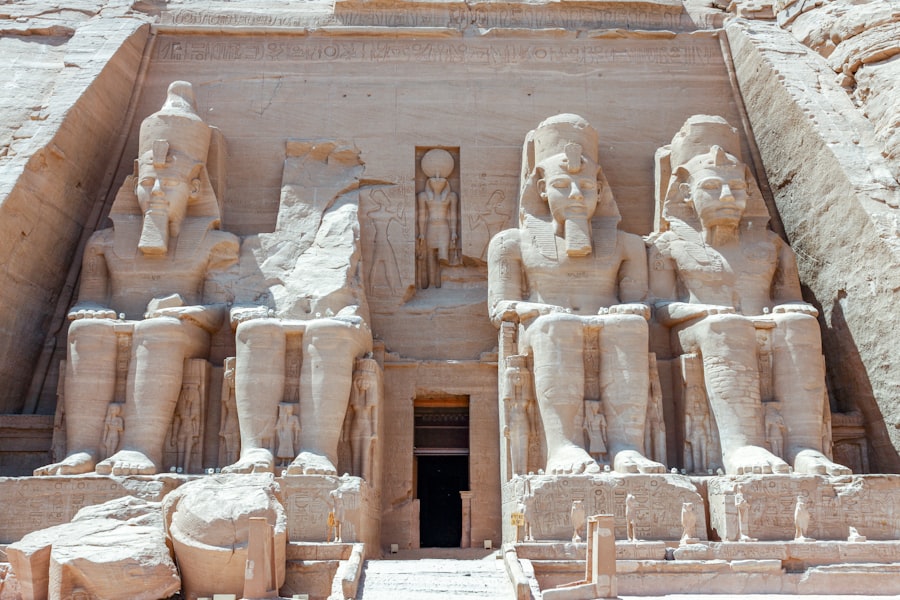
The diverse landscapes of ancient Egypt, from the verdant floodplains of its ancient rivers to the submerged Tethys Sea, provided habitats for an astonishing array of fauna, many of which are now long extinct.
Megafauna of the Nile Valley
During the wetter periods and the early stages of the Nile’s formation, the river valleys and their surrounding floodplains likely teemed with large herbivores and their predators. While the direct fossil evidence for colossal megafauna like mammoths and mastodons specifically within the Nile Valley is less abundant compared to some other regions, the ecological conditions were certainly conducive to their presence. Evidence from neighboring North African regions and the broader Afro-Arabian landmass suggests that diverse populations of large bovids, giraffids, antelopes, and ancient equids (horses and zebras) would have grazed these ancient landscapes. Imagine herds of colossal elephants, perhaps relatives of the modern African elephant but potentially larger, alongside species of hippopotami and rhinoceros that were adapted to these fertile riverine environments.
The Reign of Predators
Accompanying these herbivores would have been a range of formidable predators. Saber-toothed cats, lions, hyenas, and various canids would have stalked the savannas and woodlands. The presence of these apex predators played a crucial role in regulating herbivore populations and shaping the dynamics of the ancient ecosystems. The fossil record, though still being uncovered and studied, hints at a rich and diverse mammalian fauna that occupied the ecological niches of this ancient land.
The Marine Giants
As previously mentioned, the Tethys Sea hosted its own set of giants. The fossil discoveries in Egypt provide compelling evidence for the existence of enormous marine reptiles, including large sharks and potentially ancient crocodilians, that patrolled the prehistoric waters. The aforementioned fossil whales, such as Basilosaurus, were formidable predators of the Eocene seas, reaching lengths of up to 18 meters. These creatures, now long extinct, were integral components of the ancient Egyptian marine food web.
Millions of years ago, Egypt was a vastly different landscape, characterized by lush greenery and diverse wildlife, as detailed in a fascinating article about the ancient environment of the region. This transformation over time has shaped not only the geography but also the cultural evolution of its people. To explore more about how historical narratives have been influenced by various factors, you can read this insightful piece on the history of information control here.
The Unseen Architects: Geological Forces and Landscape Formation
| Period | Time Frame | Climate | Geography |
|---|---|---|---|
| Paleozoic Era | 541-252 million years ago | Warm and tropical | Underwater with coral reefs |
| Mesozoic Era | 252-66 million years ago | Varied from warm to hot | Transition from underwater to desert |
| Cenozoic Era | 66 million years ago to present | Varied from hot to arid | Desert and some fertile areas along the Nile |
The grand narratives of rivers and seas are underpinned by the relentless, slow-motion forces of geology. Plate tectonics, erosion, and deposition have been the unseen architects, meticulously sculpting the Egyptian landscape over millions of years.
The African Uplift
The gradual uplift of the African continent, a process driven by deep-seated mantle plumes and tectonic forces, has played a pivotal role in shaping Egypt’s topography. This uplift increased the gradient of the land, accelerating the erosive power of rivers and influencing drainage patterns. The formation of the East African Rift System, a monumental geological feature, had profound consequences for the entire region, including Egypt, by altering hydrological regimes and contributing to the eventual formation of the Nile River.
Wind and Water as Sculptors
Once the broad outlines of the land were established by tectonic activity and the retreat of ancient seas, the relentless forces of erosion began their work. Wind, particularly in the arid desert regions, has sculpted iconic landforms such as vast sand dunes, yardangs (eroded rock formations), and desert pavement. Water, in its various forms, has also been a powerful agent of change. Flash floods, though infrequent today, would have been more common during wetter periods, carving out wadis and canyons. The steady, persistent flow of the ancient Nile and its tributaries continuously reworked its floodplain, depositing fertile silts and shaping the valley floor.
The Layers of Time: Sedimentary Basins
The sedimentary basins of Egypt, particularly those associated with the Nile Valley and Delta, are a testament to millions of years of deposition. Layers of sand, silt, clay, and gravel have accumulated, burying older landscapes and preserving the geological and paleontological record. These sedimentary sequences are akin to pages in a history book, each layer telling a story of ancient environments, climates, and the life that inhabited them. The study of these formations allows geologists to reconstruct the Earth’s history and understand the processes that have shaped the land we see today. The bedrock beneath the sands of Egypt holds secrets of its ancient past, a continuous geological narrative stretching back into the deep time of Earth’s history.

They Found a Shark Graveyard in the Egyptian Desert
FAQs
1. What was the climate like in ancient Egypt millions of years ago?
During the time of the dinosaurs, Egypt was covered by warm, shallow seas and experienced a tropical climate. The land was lush and green, with abundant plant and animal life.
2. What kind of animals lived in ancient Egypt millions of years ago?
Ancient Egypt was home to a diverse range of prehistoric animals, including dinosaurs such as Spinosaurus and Aegyptosaurus, as well as marine reptiles like the giant sea turtle Archelon and the fearsome mosasaur.
3. What did the landscape of ancient Egypt look like millions of years ago?
The landscape of ancient Egypt was vastly different from what we see today. Instead of deserts, the land was covered in lush forests, rivers, and swamps. The coastline was also much different, with the presence of shallow seas and marine life.
4. Were there any significant geological events that shaped ancient Egypt millions of years ago?
During the Mesozoic Era, which lasted from about 252 to 66 million years ago, Egypt experienced significant geological events such as the formation of the Tethys Sea and the uplift of the Arabian-Nubian Shield. These events played a crucial role in shaping the landscape and biodiversity of ancient Egypt.
5. How do scientists know what ancient Egypt looked like millions of years ago?
Scientists use a variety of methods to reconstruct ancient environments, including studying fossils, geological formations, and sedimentary rocks. By piecing together these clues, researchers can create a detailed picture of what Egypt looked like millions of years ago.